Latest

Winter Release: Commerce at the Speed of AI

Learn More
Akeneo-Logo Akeneo-Logo

The Top 10 Akeneo Case Studies of 2023

Akeneo News

The Top 10 Akeneo Case Studies of 2023

As we enter the 10th day of PXMas, we thought we’d present a compilation of ten customer case studies that highlight different aspects of Akeneo’s technology. From medical equipment to apparel and fashion to office supplies retailers, these narratives not only showcase the diversity of industries we touch but also exemplify the power of exceptional product experiences (PX) in transforming businesses worldwide.

‘Tis the season of reflection and celebration, and as we approach the 10th day of PXMas, we find ourselves immersed in the stories that have defined our journey this year. 

In the spirit of gratitude and learning, we thought we’d present a compilation of ten customer case studies that highlight different aspects of Akeneo’s technology. These narratives not only showcase the diversity of industries we touch but also exemplify the power of exceptional product experiences (PX) in transforming businesses worldwide.

All of these case studies are available for download if you’d like to dig deeper into the use case – and as always, if you’d like to reach out to a PX expert directly, we’re always here to help!


1. Staples

As a world-renowned brand, Staples is the go-to office retailer for businesses of all sizes, offering products and services designed to support working and learning. From printers to office furniture to technology and more, Staples is a one-stop-shop for corporate headquarters and home offices alike.

But this hasn’t always been the case – with more and more folks working from home, Staples realized that while their B2B offering was still strong, their B2C digital commerce offering needed some support. So they turned to Akeneo to help.

With our modern PIM technology, Staples was able to:

  • Manage twice as many products in less time without increasing the size of their team
  • Enhance teamwork and collaboration through easily shareable dashboards and quick product data insights
  • Improve data quality, consistency, and accuracy while reducing time-to-market


2. ASSA ABLOY

You may not recognize the name, but chances are you’ve interacted with their brand a number of times. ASSA ABLOY is a global leader in innovative access solutions and security technologies, offering a comprehensive range of products and services including door locks, access control systems, entrance automation, secure identity solutions, and mobile access technologies.

ASSA ABLOY utilized Akeneo PIM and Shared Catalogs to:

  • Introduce a mobile app that provided customers with a digital place to research, compare, and purchase products, empowering customers to better themselves in their field of expertise
  • Reduce employee workload by over 40 hours a week  and decreased incoming support calls by 20%, enabling teammates to focus on high value activities
  • Rapidly pivot to meet new market challenges by creating a single source of truth for customers and internal teams alike to access product data, increasing page views by 27% and reducing the number of users leaving the site by 16%.
  • Improve upsell and cross-sell opportunities with an improved customer and product data record

We streamlined our entire process into Shared Catalogs – what used to take us 2 weeks now takes 2 hours.

Matt Caffery Solutions Architect

ASSA ABLOY


3. Leatherman

For 40+ years, Leatherman Tools has been providing multitools for consumers around the world. From everyday essentials to knives, accessories, and apparel, Leatherman is committed to providing consumers with the best multipurpose products to help them solve expected and unexpected problems in everyday life.

At the core of Leatherman’s strategy lies the aspiration to foster closer bonds with consumers and elevate their experiences at every interaction point. Their journey towards direct-to-consumer (D2C) excellence has primarily revolved around their in-house eCommerce platform and Amazon FBA, with ambitious plans to expand their presence in marketplaces and international eCommerce domains.

However, Leatherman found itself shackled by a legacy Product Information Management (PIM) system that had outlived its usefulness. Designed to meet their needs a decade ago, the PIM solution had grown into an impediment as Leatherman’s product portfolio, sales channels, teams, processes, and technology had evolved.

After comparing several PIM solutions against over 100 stringent requirements, only one solution rose to the top: Akeneo PIM.

Leatherman Tools implemented Akeneo technology into their tech stack in just under 5 months, and was immediately able to:

  • Save time for team members, enabling them to focus on complex, critical tasks
  • Enhance confidence in data integrity
  • Increase speed to market
  • Empower team members to effectively utilize the tool in just a few months
  • Streamline efficiency through features like Product Models, rule creation, and product families


4. INTERSPORT

In 2016, INTERSPORT embarked on a digitalization journey, recognizing the need to adapt to the evolving retail landscape. 

As part of this transformation, they established their own eCommerce platform, envisioning it as a dynamic platform that would effectively showcase their extensive range of in-store offerings. The primary goal was to leverage the digital medium to emphasize the breadth and quality of their product portfolio, however the available product data primarily catered to the in-store experience and was not suited for an effective eCommerce strategy.

While the in-store product information served its purpose within the brick-and-mortar environment, it fell short in meeting the demands and requirements of a thriving online retail presence. Recognizing the importance of a comprehensive and tailored approach to eCommerce, INTERSPORT realized the need for a more robust solution that would bridge the gap between their physical stores and their digital platform. This realization set the stage for the exploration and adoption of a suitable PIM system to enable a successful digital transformation and align their offerings with the evolving expectations of online customers.

With Akeneo and Unifai technology, INTERSPORT was able to achieve:

  • 50% Reduction in Classification Time: INTERSPORT cut the time it took to classify new products in half, allowing their teams to focus on more strategic tasks.
  • 95% Improved Classification Accuracy: Unifai’s AI technology provided unmatched precision, ensuring that INTERSPORT’s product data was as accurate and up-to-date as ever.
  • 18 Hours Saved Per Week: The freed-up time equated to 18 extra hours per week for the data integration team and buyers to dedicate to higher-value activities.
  • 30% Efficiency Boost: The product classification process became 30% more efficient, leading to faster decision-making and product placement.
  • Data Accuracy for Business Operations: Accurate data is the backbone of any retail operation, particularly for budget tracking and sell-out/stock tracking. The accuracy of Unifai’s AI model ensured Intersport’s business ran smoothly.


5. Smallable

Globally renowned Family Concept Store, Smallable embarked on a remarkable journey to redefine its product management and content enrichment strategies. With an extensive inventory boasting over 1 million products from 1,000 international designer brands, Smallable grappled with the challenge of efficiently overseeing this vast catalog and localizing product content to different markets and geographies.

Smallable surmounted these obstacles and ushered in a new era of operational efficiency, reduced production timelines, and elevated customer experiences with the aid of Akeneo technology.

In particular, Smallable utilized Akeneo’s best-of-breed technology to:

  • Streamline product information management across millions of SKUs, expanding their product catalog offering without investing in a larger team
  • Automatically create product attributes to enrich the customer experience and reduce return rates
  • Improve production times and time-to-market due to improved team communication, publishing anywhere from 50 to 500 products a day.
  • Integrate and communicate seamlessly with Smallable’s existing technology stack

With Akeneo, our time-to-market for most products is less than two days – if we get the product on Monday, we can publish it by Thursday.

Asmaa Dakessian Product Information Supervisor

Smallable

6. Rexel

In a market where information is power, Rexel, a leading electrical supplies distributor, was looking for cutting-edge technology that would elevate their customer experience. With a staggering 2.5 million products in their catalog, the challenge was to ensure each item’s data met the highest standards.

Enter the collaboration of Unifai and Akeneo PIM. Leveraging the prowess of Unifai’s AI technology, Rexel embarked on a mission to enrich 800,000 products to the international classification standard for technical standards, ETIM. The result was not just compliance but a mastery of precision.

Unifai’s AI technology not only achieved a remarkable 98% accuracy in suggesting content gaps or missing data, but also defied expectations by benchmarking 12,000 ETIM classifications in just three months.

Rexel’s utilization of our two solutions stands as a testament that shows that when forward-thinking distributors embrace technology, the customer experience reaches new heights. Rexel’s journey with Unifai and Akeneo PIM exemplifies the power of AI in transforming challenges into triumphs and solidifying their position as leaders in the ever-evolving landscape of electrical supplies distribution.


7. Bath Depot

After seeing a 400% increase in online transactions during the pandemic, Canadian retailer of bathroom and kitchen renovation products Bath Depot turned to Akeneo and Valtech to focus on improving their eCommerce offering. 

This investment enabled the company to:

  • Provide enhanced digital shopping experiences to its customers, with detailed descriptions, visuals, and specifications to help inform purchasing decisions. 
  • Offer exciting hybrid and custom shopping journeys for customers such as in-store demos and stock availability for every product across every channel, as well as a range of shipping options, including ship-to-store, in-store pick-up, and curbside options, which allows customers to choose the option that best suited their needs. 
  •  Automatically localize country, language, and pricing information for all of their products
  • Enrich and launch more than 500 products online in less than three weeks, easily managing and distributing product information to all their sales channels, including their eCommerce website and physical stores.


8. Verkkokauppa.com

As their name literally translates to “eCommerce”, it’s no surprise that Verkkokauppa.com has been a retail powerhouse in Finland since 1992. With a unique blend of physical stores and a bustling eCommerce shopping experience, Verkkokauppa.com offers a diverse range of products, including computers, home electronics, toys, gaming, and navigation products, and boasts an extensive catalog of over 60,000 products, selling both directly to consumers and to other businesses.

Verkkokauppa.com sought out a PIM solution that would support their vast catalog of products, integrate seamlessly with their existing technology stack, and provide a more compelling experience for their customers.

This eCommerce powerhouse harnessed Akeneo technology to unlock the next level of customer experiences with smarter cross-sell and upsell opportunities, enhanced internal efficiency, and scalable product experience management.

We needed a PIM that could support 60,000 products without limitations. Akeneo was the one solution that met all those needs.

Teo Laiho PIM Specialist

Verkkokauppa.com

9. Shop Apotheke

Today, Shop Apotheke Europe operates online pharmacies in Germany, Austria, France, Belgium, Italy, Spain, the Netherlands, and Switzerland. Shop Apotheke Europe delivers a wide range of over 120,000 original products to over 4.5 million active customers quickly and at attractive prices. The company’s goals are to drive growth, optimize processes, streamline the organization, and enable their consumers to receive the same experience online as in the local pharmacy.

However, this only works when customers in the online pharmacy shop find comprehensive product information such as applications, dosage, side effects, interactions, reviews, and more. The interaction between the ERP and Shop Apotheke Europe’s home-grown PIM development soon became unmanageable due to its lack of flexibility, requiring repeated programming efforts for adjustments. Additionally, the system was not stable, and outages became frequent.

Due to the time-consuming data preparation and maintenance, the product lead times were long – too long to respond quickly. Furthermore, product data quality suffered from a lack of transparency, making it difficult to expand the product range. The goal was to replace the home-grown system with a new, stable, and flexible PIM, streamline workflows, simplify data maintenance, and generate transparency so that international expansion could be advanced on solid foundations.

Akeneo’s open-source PIM technology and built-in community of product experience (PX) experts enabled Shop Apotheke Europe to enhance their digital presence across seven countries and manage over 500,000 SKUs with efficiency and speed.


10. Kolmi Hopen

After the COVID-19 Pandemic, leading manufacturer of protective equipment Kolmi Hopen had to meet an unprecedented level of demand at an unprecedented speed. Meeting this demand would require a faster enrichment process and increased productivity, however, the company had historically relied heavily on Excel for data management. Finding product information involved coordinating with different teams and cross-checking data on their ERP system, a process that was time-consuming and labor-intensive.

Internally, employees had to dedicate significant hours and resources to find the necessary product information. The process was also difficult for external stakeholders, with distributors struggling to access updated, centralized information that is translated and localized to their specific regions.

With products that must meet very specific and demanding standards, product information management became a strategic element in Kolmi Hopen’s plan to differentiate itself in the market, as well as to provide added value to its customers. And so they turned to Akeneo.

It’s a standard requirement for our customers that we are compliant with regulations and quickly share product information with them. We can do so now, thanks to Akeneo.

Margaux Audiau Marketing Project Manager

Kolmi Hopen

12 Days of PXMas

As we wrap up and tie a bow around our 10th day of PXMas, one thing becomes abundantly clear: the power of exceptional customer experiences transcends industries and borders. These ten case studies are not just success stories; they are testaments to the transformative impact that a focus on customer and product experience can have.

As we celebrate these milestones, we’re reminded that each brand and retailer has its unique tale of innovation and customer-centricity. From personalized AI-driven recommendations to sustainable practices enhancing brand loyalty, these stories underscore the diverse ways brands can elevate themselves in the eyes of their customers.

We wanted to express our heartfelt gratitude to the customers who entrusted us with their narratives. Their success is our motivation to continue championing excellence in the realm of customer experiences. Here’s to a new year filled with more stories, innovations, and partnerships that redefine the possibilities of retail!

Casey Paxton, Content Marketing Manager

Akeneo

Akeneo’s Winning Streak: Eight Achievements to Spotlight for 2023

Akeneo News

Akeneo’s Winning Streak: Eight Achievements to Spotlight for 2023

On Day 8 of PXMas, discover eight of the awards Akeneo has received over the past year, recognizing everything from our composable technology to excellence in UX to customer support initiatives.

In the realm of Product Experience (PX) Strategy, the team here at Akeneo have recently clinched a remarkable tally of eight prestigious awards in the past year, helping to solidify our presence as a PX powerhouse. These accolades validate our commitment to excellence for both our customers and our partners, positioning ourselves as a leader within the industry. 

Without further ado, let’s delve into the details of each achievement!


1. Ventana Research Value Index Leader in PXM Research

Akeneo’s prowess in PXM has been acknowledged by Ventana Research in their 2023 Market Perspective as an overall Value Index Leader, solidifying its position in the field. This recognition reflects Akeneo’s dedication to providing unparalleled value in the realm of product experience. 

The PXM Value Index is a measure of a vendor’s ability to fulfill a buyer’s PXM needs using their software. By incorporating customer expectations and demands for vendor selection, Ventana Research generates a complete report, helping organizations evaluate the efficiency and effectiveness of PIM tools in delivering engaging digital experiences through PXM best practices. This quantitative, research-based index assessed Akeneo and 15 other PIM vendors across seven categories, comprising five Product Experience categories and two Customer Experience categories: Adaptability, Capability, Manageability, Reliability, and Usability were related to product experience, while Validation and TCO/ROI pertained to customer experience.

If you’re interested in learning more, you can read further here


2. Globee Awards for American Business Company of the Year – Retail

Akeneo stands tall as the GOLD GLOBEE® WINNER Company of the Year – Retail, as honored by the prestigious Globee Awards for American Business. This award underlines Akeneo’s impact and influence in shaping the retail landscape. 

Akeneo secured the coveted title in recognition of the impact that Akeneo Product Cloud has on the retail industry. The category-defining Akeneo Product Cloud is a composable solution that centralizes, enriches and activates every element of the complete product record in order to optimize the product experiences that appear on any customer touch point. It provides retailers, distributors and brands with this centralized system of record for all product information, for every team and every sales channel that collects and activates data to create high-quality product descriptions and information that deliver consistent, compelling and comprehensive product experiences to customers.


3. Stevie® Award Silver Medalist Winner

A Silver Medal from the esteemed Stevie® Awards for Most Innovative Tech Company of the Year – Up to 2,500 Employees further cements Akeneo’s excellence. This recognition acknowledges Akeneo’s outstanding achievements, innovation, and dedication to customer success. 

According to the judges, “Akeneo has demonstrated outstanding progress as a leading player in the Product Experience Management (PXM) space. Offering a comprehensive and composable SaaS-based solution, Akeneo Product Cloud, the company facilitates seamless product experiences across various channels, empowering businesses to drive growth. Their open platform and innovative product information management (PIM) solution have made them a trusted partner for leading brands and retailers globally.”


4. SoftwareReviews 2023 PIM Software Awards Gold Medalist Winner

The Gold Medalist accolade from SoftwareReviews 2023 PIM Software Awards places Akeneo at the forefront of Product Information Management. It signifies Akeneo’s commitment to delivering top-notch PIM solutions.


5. The Software Report’s Top 100 Software Companies

Akeneo secures its position among the elite with inclusion in The Software Report’s Top 100 Software Companies. This acknowledgment highlights Akeneo’s significant contributions to the software industry. 

This esteemed awards publication has earned a reputation as the foremost authority on the best companies within the software industry. The process of selection involves carefully examining the feedback received from nominations and conducting in-depth research into a company’s background, which includes publicly available information as well as insights from platforms such as Glassdoor, G2, Capterra, and other sources. 

Backed by a comprehensive approach, the Software Report considers a multitude of factors, including product functionality, customer satisfaction, corporate reputation, innovative capabilities, organizational depth, ESG involvement, and long-term viability, among numerous other criteria. Irrespective of the company’s size or age, this year’s awardees, including Akeneo, are making a significant impact on the software industry within their specific domains, all while providing exceptional value to their customers.


6. BEST UX IN ECOMMERCE Bronze Award eCommerce

Akeneo’s commitment to providing an exceptional user experience in the eCommerce space is recognized with the Bronze Award for Best UX in eCommerce. This accolade reinforces Akeneo’s focus on user-centric design and functionality. 

Taking place annually, these awards bring together some of the best industry minds celebrating this dynamic and fast-paced world of eCommerce. Open to organizations of all sizes and locations, the awards recognize commitment, creativity, passion, and innovation. Awards are independently judged to the highest of standards by some of the industry’s key players, and Akeneo was fortunate enough to be recognized for our UX offering!


7. 2023 Best Customer Support Badge from Software Advice

Akeneo’s dedication to customer support is highlighted by the receipt of the 2023 Best Customer Support Badge from Software Advice. This recognition underscores Akeneo’s commitment to ensuring customer success. 

Software Advice synthesizes verified end-user reviews to recognize the most highly-rated products in a specific software category, helping software buyers make more informed purchase decisions. Akeneo Product Cloud earned an overall rating of 4.7 (out of 5). 

Big thanks to all our customers for this specific award! It would not have been possible without your constant support and feedback.


8. G2 Leader in PIM

Akeneo’s consistency as a G2 Leader in PIM for four consecutive years is a testament to its sustained excellence. This long-term recognition showcases Akeneo’s ongoing impact and leadership in the Product Information Management space

What sets us apart? As the leading PIM platform for four years running, we’re dedicated to building product experiences that drive growth and scalability. We’re honored to be validated by our customers’ trust and the evolving market’s demand for innovative, intelligent solutions. 

G2, one of the largest software marketplaces, represents the voice of real software users. Our rankings are a testament to our close partnership with our customers and our focus on enabling omnichannel customer experiences through amazing product experiences. We’re deeply thankful to our customers for their support, and we’d like to express our gratitude to the entire Akeneo team for their dedication to delivering exceptional outcomes!


12 Days of PXMas

While we’ve only highlighted a handful of the awards, these accolades that we’ve received as the Akeneo team this past year paint a picture of a company not just thriving but excelling in the dynamic landscape of product experiences and beyond. 

As we celebrate these victories, it’s evident that our commitment to innovation, customer satisfaction, and industry leadership continues to set new standards within PX Strategy and pave the way forward for exceptional customer and product experiences.With all that said and done, eight awards means that we’ve officially reached day eight of our twelve days of PXMas – stay tuned to see what’s in store for the last four! And as always, feel free to reach out to a PX expert today if you have any questions, or are interested in learning more.

Kateri Osborne, Growth Marketing & Global Campaigns Manager

Akeneo

What is a MACH-Certified PIM & Why Do You Need One?

Composable Commerce

What is a MACH-Certified PIM & Why Do You Need One?

Headless commerce provides the scalability and flexibility that brands and retailers need to grow, but requires a strong foundation of product information management (PIM). How do you decipher which PIM tool best supports your migration?

Change is hard; whether it’s your collection of records or that decade-old coffee machine you’re still holding on to, it can be difficult to let go of the past and accept new technological innovations. But when it comes to your eCommerce tech stack, clutching on to legacy platforms and outdated processes can lead to more harm than good.  With global online spending projected to hit $6.3 trillion by the end of the year and expected to make up almost 22% of global retail sales, there is a huge and ever-growing eCommerce market available at your fingertips. But if you don’t have the infrastructure in place to take advantage of this massive market, your growth and scalability will be severely stunted. We at Akeneo have seen a lot of interest in the market to move to new commerce technology architectures that bring the agility and flexibility that brands and retailers need to tackle the growth challenges of today and tomorrow. Traditional commerce architecture offers an all-in-one solution from a single vendor, providing the basic capabilities needed to activate an eCommerce site. And while this worked for a while to provide a singular, standard digital experience to consumers, the digital landscape has expanded at such a mind-boggling rate that traditional architecture just can’t keep up anymore.  Headless (sometimes known as composable) commerce architecture provides a modular, best-of-breed approach that enables organizations to grow and scale as they need.  

What is headless commerce architecture?

Headless commerce architecture is a development approach that enables organizations to activate their entire product record across every channel by leveraging best-of-breed commerce vendors composed together into a singular, custom-built application. This type of software model allows teams to create an ecosystem that is customized to meet their organization’s specific business needs. Instead of the traditional, monolithic approach, headless architecture communicates via API. Each individual solution can be updated or replaced at any time without disrupting the rest of the system, meaning that your eCommerce stack is flexible and can scale to meet your needs.
Headless architecture vs monolithic architecture
  Headless commerce works by decoupling and then orchestrating front-facing capabilities from back-office applications and integrations, allowing brands and retailers to implement new product information across all channels at a much faster rate than before without having to touch the back-end infrastructure.  Not only does this bring greater agility and control to brands and retailers, but it also means that less technical knowledge is needed to push product information updates and new features. The decoupled nature of headless commerce means that your tech stack is modular and adaptable; you get to select which technologies fit your needs best and can replace or update platforms as needed without disrupting your eCommerce experience.  With a headless architecture, brands are able to:
  • Create compelling, coherent, and consistent product experiences across every channel
  • Accelerate time-to-market
  • Expand into more markets and territories with ease
  • Scale the tech stack as the organization grows and changes. 
 

Headless Commerce & PIM

Now that we understand the benefits of a headless commerce architecture, you may be ready to jump on the composable bandwagon right away, and that’s great! But transitioning from a traditional architecture to a headless one can be intimidating and difficult, especially if your organization isn’t mature enough to have the required resources to make the switch on-time and within budget. From the types of data needed to the people and processes involved to the related technologies that need to be integrated into this new architecture, there are many factors that need to be taken into account when considering the transition to headless architecture. Where should you even start? The recommended first step is to get the underlying product data and content organized and ready for migration. There are two main reasons for this: one, product information is a critical foundation to how you deliver product experiences, irrespective of the architecture used or the channel it appears on. As more and more digital touchpoints emerge every single day, we can no longer predict where or when a consumer will first discover or interact with a business, so establishing and maintaining consistent and compelling product experiences across every channel is crucial.  With a traditional architecture, this is extremely difficult. Personalizing and syndicating product information across channels with a monolithic platform is nearly impossible, and requires a lot of redundant labor and manual efforts. Headless commerce eases and automates this process, but requires a strong foundation of product information to be truly successful. After all, product information can’t be activated across all channels if we don’t even know where it lives. Secondly, the modular nature of headless commerce means it’s made up of individual, best-of-breed applications, each handling a specific aspect of the overall shopping experience (recommendations, merchandising, shopping cart, payment, and so on). Product information flows through many of those applications, all of which are orchestrated via standardized APIs. Therefore, the product information needs to be well-structured, consistent, complete, accurate (and of course, compelling) to be handled reliably and correctly. This is where a Product Information Management (PIM) tool comes into play. Creating a central repository of product information allows your team to manage, organize, and optimize your product data to more easily flow through your other technologies and syndicate to your channels. Not all PIM solutions are created equal. To implement a transition to a headless architecture, you need a modern PIM that is built to support such a modular structure.

The MACH Alliance

Founded in 2020, the MACH Alliance is a not-for-profit institution that advocates for open and best-of-breed technology ecosystems. MACH stands for:
  • Microservices-based: Individual pieces of business functionality that are independently developed, deployed, and managed.
  • API-first: All functionality of the product is exposed through an API.
  • Cloud-native: SaaS that leverages the cloud, beyond storage and hosting, including elastic scaling and automatically updating.
  • Headless: Front-end presentation is decoupled from backend logic and channel, programming language, and is framework agnostic.
The MACH Alliance is a global community of individuals and businesses that have come together under these guiding principles. Their mission is to future-proof and propel current and future digital experiences with open and connected enterprise technology. The vendor-neutral alliance drives awareness of the benefits of modern, best-in-class ecosystems that provide flexibility and openness as a key differentiator and driver of competitive advantage.  With their focus on modularity and best-of-breed applications, organizations who are members of the MACH Alliance are guaranteed to help support your transition to a headless architecture.  

Akeneo & MACH

In March of 2022, Akeneo joined several of our established technology partners by becoming a certified Independent Software Vendor (ISV) member of the MACH Alliance. Openness and innovative integrations lie at the heart of Akeneo’s PIM software, and we’ve been accredited for embracing MACH philosophies and deliver MACH-certified services.

MACH technologies are the cornerstone for organizations looking to build sustainable, future-ready commerce and business models. Akeneo deserves this certification as another example of a true MACH champion that represents the category well through its operations and PIM architecture.

Sonja Keerl President

MACH Alliance
By offering a composable SaaS solution, Akeneo allows your team to break down product information silos and provides a strong foundation of product data that easily communicates with all your existing and potential technologies, opening the door to a smooth transition to a headless architecture. Future-proofing your business means that you need to be able to create compelling and consistent product experiences across all your owned and unowned channels, and that is significantly more simple when you have a modular, headless approach that allows you to plug-and-play technologies as you scale. But jumping straight into this transition without a solid foundation of product information can spell trouble. Implementing a MACH-certified PIM, like Akeneo, allows your team to centralize, organize, and optimize your product information and set you up for a successful migration to headless architecture. If you’re interested in discovering how a MACH-certified PIM can help you transition to a headless architecture, please don’t hesitate to reach out to us today.

Akeneo Product Cloud

Discover how Akeneo’s MACH-certified PIM can prepare you for a successful migration to a headless architecture.

Casey Paxton, Content Marketing Manager

Akeneo

Perfect Your PIM Selection Process

Product Experience

Perfect Your PIM Selection Process

In the fast-paced world of digital commerce, selecting the right Product Information Management (PIM) solution transcends the realm of technology features. It’s an intricate dance between the robustness of the tool, the adaptability to your company’s processes, and the ease of adoption for future key users. Contrary to common belief, rushing into platform procurement before a thorough “discovery” or “study” phase can lead to costly missteps.

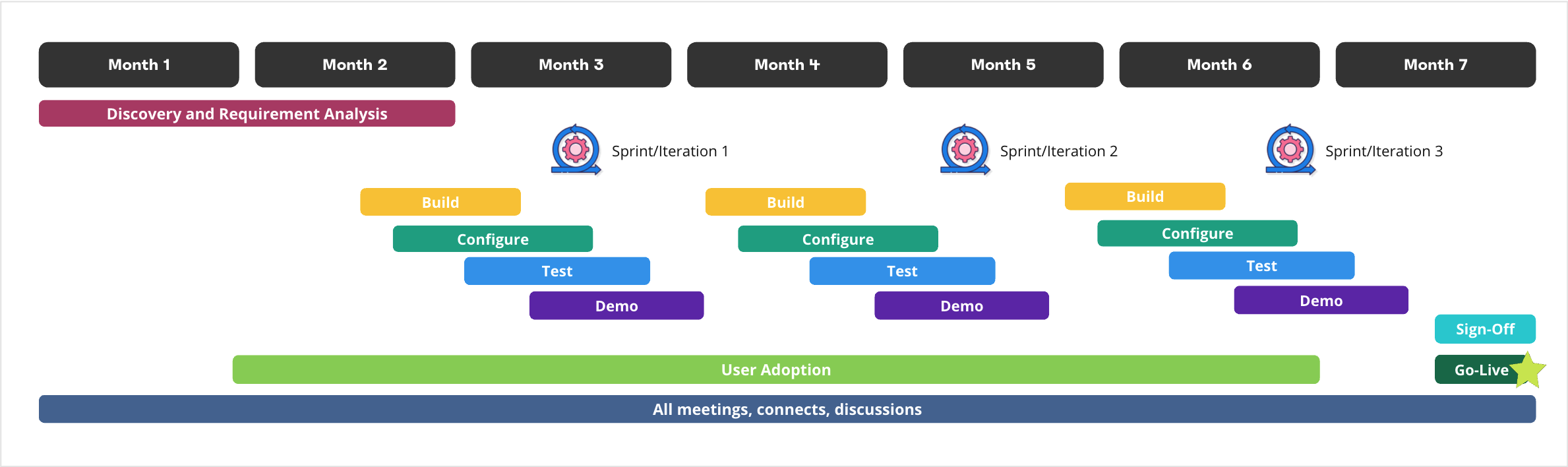
Embarking on the PIM journey involves a meticulous two-phase discovery process. And to start, we delve into high-level analysis, dissecting user needs to ensure the selection of a platform that aligns seamlessly with team workflow and objectives. The goal? to secure optimal adoption and efficiency in managing product attributes and asset by choosing a solution that adapts to the organization maturity.  

Step 1: Categorizing User Needs into 7 Key Groups

Our process begins by analyzing and categorizing user needs into seven distinct groups through intensive sessions. From KPIs and Objectives to Data Model Structure, this exhaustive approach ensures a comprehensive understanding of your requirements. Here are the groups we usually make that are also the different workshop sessions lasting between 30mn-1.5h max:
  • KPIs & Objectives: Create a  list of measurable goals in order to know where you’re starting from. Identify and list major challenges from a business and technical standpoint.
  • Product Lifecycle & User Workflow: Design a process map with gaps between current and future needs and a Business Process Management (BPM) Strategy. This allows listing user roles & permissions roles, enrichment, catalog search, and syndication needs.
  • Data Model Structure: Develop a strategy that cleanses and enriches data efficiently
  • Data Cleansing: Analyze the level of efforts necessary to cleanse your data base from a programmatic standpoint that leverages AI
  • Asset Management: Stay at the strategy level to understand if we’re loading these assets from a DAM or an SFTP, and if there’s a need to rename assets.
  • Supplier Data Onboarding & Initial Import: Depending on whether you’re a manufacturer or a distributor, this might require some great features and processes to format supplier’s data into your own format.
  • Architecture & Connections: Last but not least, connecting your PIM with all your source & destination systems (marketplaces, websites, paper catalogs, POS, etc…).
 

Step 2: Crafting a Business Case

The outcomes of the analysis should synthesized into a high-level summary—a business case. Here’s our typical agenda:
  • Introducing the major challenges
  • Current client key user & roles
  • A catalog overview
  • KPIs & Objectives
  • Product Catalog Management Gaps
  • Requirements listing for each of the 7 groups above that PIM provider will use to contextualize their demos.

Step 3: PIM Demos with Purpose

Armed with a concise business case, we orchestrate demos with a carefully selected shortlist of 3 PIM technologies. The selection process needs to respect the organization size, users maturity and process complexity. As an example, if your client key user group is between 1-2 with poor technical support, it would be overwhelming to select an ‘Informatica’ type of solution as these kinds of flexible platforms require more customization needs and development, therefore complexifying the adoption if you have a smaller team.  In these demos, a tailored approach is key; we guide providers to focus on client-specific needs, eschewing generic feature tours. We help providers to kick off these demos by listing all the challenges and we then let the PIM providers contextually demo the features in the same order as the challenges listed. So that clients can really visualize their future way of working with the technology. It’s a whole PXM inception work. Final tip, spacing out these demos allows clients to digest information without feeling overwhelmed.  

Step 4: Contextualized Platform Rating

A platform’s suitability is gauged through a client-specific lens, considering factors like budget and user base. Each PIM technology is evaluated across crucial dimensions, and a weighted rating is assigned based on client priorities. Here’s a list of what we grade with the client:
  • Supplier data onboarding
  • Manual data import & updates
  • Data cleansing
  • Data governance
  • Data model
  • Taxonomy
  • Asset management
  • Product search
  • Enrichment capabilities
  • Product lifecycle & workflows
  • Analytics
  • Translation & Localization management
  • Syndication & export
  • Paper catalog & advertising solution
  • UI & ease of use
  • Product catalog performance
  • Customization
  • System integration
  • Implementation costs
  • License costs

Step 5: Executive Summary and Decision Time

After performing this exhaustive analysis, it’s now time to distill this information into an executive summary, emphasizing major outcomes. The client is empowered to select the platform that resonates most with their needs. With the platform chosen, we seamlessly transition to drafting a Statement of Work (SOW) for implementation.

Benefits Beyond Selection

The strategic PIM selection process offers a plethora of advantages:
  • Tailored Solutions: Clients choose a platform aligned with their unique needs.
  • Efficient Adoption: Accelerated adoption through streamlined workflows.
  • Reduced Customization: Minimized reliance on costly customization.
  • Optimized Design Costs: A meticulous approach minimizes design costs.

Ready, Set, Implement

Embrace the future of effective product catalog management with our proven PIM selection process. With a budget ranging from 20-50k and a timeline spanning from one week (onsite) to 1.5 months (online), let’s empower your team for a seamless implementation journey. Looking for more PIM implementation support? Check out some of our other Valtech featured articles diving into the people-first approach to product experiences, or how to maximize the ROI of your PXM organization. This article is a guest post by Akeneo partner, Valtech.

Raphaël Iscar Gutierrez, Head of Global PXM & Product Strategy

Valtech

The Secrets to AI Implementation Success

Artificial Intelligence

The Secrets to AI Implementation Success

In this guest post from Akeneo partner Unifai, discover why AI requires expert training, ongoing supervision, and a long-term commitment for optimal performance. Explore the critical aspects of AI education and discover why dedicating time and resources to understanding this technology is paramount for enduring success in the ever-evolving business landscape.

Artificial intelligence has profoundly revolutionized the world of business, offering the possibility of automating complex tasks and significantly improving their performance.  But, let’s face it, AI can be a bit mysterious and confusing; navigating the world of AI requires dispelling myths and addressing prejudices that often surround this groundbreaking technology. With that in mind, let’s delve into the critical aspect of AI education, exploring why dedicating time and resources to it is paramount for achieving enduring success.  

AI, a powerful but not magical tool

Contrary to popular belief, most AI systems lack neural capacity or consciousness; they are sophisticated computing tools operating based on received data and learned patterns. As one AI expert at Unifai wisely points out, “AI can’t think for us, it works with pattern recognition.” One common misconception is that AI is entirely autonomous, capable of solving all problems without human intervention. This often leads to unrealistic expectations from customers, envisioning AI as a one-size-fits-all solution.  However, AI isn’t a “plug-and-play” magic wand; it needs training and ongoing supervision. According to our in-house AI expert, “In the first year, expect AI to handle about 50% of the workload, but it requires continuous commitment for optimal performance.”  

Expert AI Training

The training of AI models relies on the essential involvement of human experts, and can be broken up into two distinct stages: initialization and re-training. In the initialization phase, AI experts use customer-supplied data to train the models. This stage involves meticulous data collection, preparation, and annotation. These experts play a pivotal role in imparting the specific behavioral patterns essential for AI. Re-training is a crucial stage where experts evaluate tags created by customers, ensuring AI models remain relevant to evolving needs. This collaborative effort between experts and customers is vital for the continual improvement of AI.

Is your product data ready for AI?

AI as a tool for continuous improvement

Following the training phase, the AI calibration stage allows customers to test results over varying time periods. Multiple iterations are conducted, analyzing and adjusting tasks based on results. It’s crucial to recognize that customers’ expectations of AI vary based on their maturity with the technology.  Contrary to the notion of AI’s automatic capabilities, the emphasis should be on understanding it as a tool requiring long-term commitment for optimal results. Customers’ expectations of AI vary according to their level of maturity with this technology. However, it is essential to deconstruct the idea that AI can do everything automatically and to emphasize that it is a tool that requires a long-term commitment to achieve optimal results. Artificial intelligence isn’t magic, and it isn’t a stand-alone solution. It needs to be initially trained with high-quality and reliable data, supervised and maintained by experts, and calibrated or adjusted based on performance.. AI training relies on the involvement of human experts and continuous collaboration with customers. Unfai has recently joined forces with Akeneo! Learn more about the partnership here, or reach out to a PX expert today.

Pauline Le Calvez, Content Manager

Unifai

5 Reasons to Attend Unlock Boston 2024

Akeneo News

5 Reasons to Attend Unlock Boston 2024

Step into the future of retail at Akeneo’s Unlock 2024, and join industry leaders and experts for a two-day immersive experience featuring dynamic keynote presentations, real-life examples of AI transforming retail landscapes, and hands-on workshops showcasing Akeneo’s latest innovations. Don’t miss the chance to delve into PX strategy analyses and connect with like-minded professionals at the PX Community, culminating in the legendary Unlock Party!

2024 promises to be an exciting year. From the Summer Olympics to the European Championships to the American presidential election, there are many events that are likely on your radar to watch out for.

But there might be one you’ve missed if you haven’t attended it in the past; and that is Akeneo’s Unlock Conference.

The ultimate gathering of PX experts and enthusiasts, Unlock 2024 will be an inspiring 2 day event where you’ll be able to learn how to provide exceptional and consistent product experiences through dynamic keynote presentations, best practices, customer testimonials, hands on technical workshops and of course, product insights.

We’ve recently released the official jam-packed agendar for Unlock 2024, which you can check out here. But while we’ve got you, let’s dive into the 5 reasons why we think you’ll have a blast at this year’s premiere PX conference.


Check Out Highlights from Unlock Paris 2023!

1. Keynotes and Roundtables on AI: Unveiling the Future of AI

In a world where technology is reshaping the retail landscape, Artificial Intelligence (AI) is at the forefront of innovation. At Unlock 2024, dive into dynamic keynote presentations and engaging roundtable discussions to learn how leading brands and retailers are leveraging AI to revolutionize their approach. Real-life examples will showcase how businesses like yours are finding a better way to navigate the evolving retail landscape.

Featured Session: Demystifying Generative AI: Convincing CEOs to Unlock the Full Potential of AI in PX strategies

In today’s rapidly evolving business landscape, the use of AI in Product Experience strategies has become an imperative for staying competitive and customer-focused. But as AI technologies advance, the challenge often lies in convincing CEOs and top-level decision-makers to fully embrace AI’s transformative power. Join our expert panel of AI pioneers and industry leaders as they demystify ChatGPT and provide actionable insights on how to navigate the AI landscape with confidence.  This engaging discussion will empower you to unlock the untapped potential of AI in your PX strategies.

Key Takeaways:

    • Understand how to get started with AI
    • Collaborate with AI partners to boost innovation
    • Leverage generative AI for product content
    • Enhance visuals with Gen-AI
    • Streamline back-office operations


2. PX Strategy Analysis: Real Stories from Industry Leaders

Unlock 2024 goes beyond theory, offering firsthand insights from industry practitioners and leaders who have successfully elevated their PX Strategy. Gain valuable perspectives from those who have navigated the challenges and opportunities in the rapidly changing retail landscape with real stories and practical examples that illuminate the path to creating a robust and effective PX strategy for your brand.

Featured Session: Leading the Charge: How to Kickstart a Product-Centric Revolution in Your Organization

In the ever-evolving realm of customer interactions, the paradigm is undergoing a significant shift. Instead of trying to pursue customers everywhere, brands are now focusing on attracting customers with compelling product experiences. 

Join our session to explore the transformative journey your organization must embark upon to join the revolution. We’ll hear insights from brands already leading the way and delve into the crucial interplay between people, process, and technology required to place Product Experiences at the core of your operations.

Key Takeaways:

    • Your organization must evolve to realize the full potential of PX 
    • Learnings from other organizations that have successfully adapted people, process, and technology to support the PX revolution


3. Akeneo in Action: Hands-on Workshops and Presentations

Get ready for an immersive experience as Unlock 2024 unfolds the latest from Akeneo Product Cloud. Through hands-on technical workshops and insightful presentations, explore the full PX ecosystem and discover how Akeneo is empowering brands to deliver consistent and exceptional product experiences and real-life examples of the tangible impact of incorporating Akeneo into your workflow.

Featured Session: Spring Product Release Keynote

Get a first view of Akeneo’s 2024 Spring Release. In this session you will discover the latest innovative features and products that will revolutionize the way businesses deliver Product Experience Strategies, all told through the eyes of a B2B Manufacturer.

Key Takeaways:

    • See what the 1st AI powered supplier onboarding solution can do for you: Quickly and easily onboard and enrich supplier provided product information and assets
    • Strengthen the way you work in Akeneo PIM with enhanced workflow capabilities
    • Revolutionize the way your work by easily connecting to ‘monolith’ infrastructure and extend the value of your PIM
    • Get a glimpse of what the future of PX will look like: Product Experience Platform
    • Don’t just use AI for onboarding suppliers – find out how Akeneo is infusing AI across the PIM offering including native generative AI and product matching capabilities


4. Integrate with the PX Community

Unlock 2024 provides a unique opportunity to connect with PX experts, leading industry analysts, and like-minded professionals. Engage in meaningful conversations, seek advice, and build valuable connections that can propel your business forward. We here at Akeneo are passionate about fostering an environment where networking is not just a side activity but a core element of the entire experience.

Featured Event: PXM Champion Awards

Our Annual PXM Champion Awards Ceremony recognizes organizations who are practicing and demonstrating exceptional business growth. In particular, we look to highlight PX success stories about how a strong and healthy foundation of PIM can impact your organization’s people, process and technology while unlocking business growth opportunities.


5. Connect & Speak with Experts

PIM, PXM, DAM, OMS – all the acronyms can make everything feel so robotic. What’s more, remote and hybrid working models mean that most of us have limited face-to-face, or even camera-to-camera, interactions with others in the industry. 

Featured Event: Infamous Unlock Party

Cap off the conference with the renowned Unlock Party—an evening of celebration, networking, and entertainment. Unlock Boston offers up the perfect excuse to get to meet others in person, and gain quality time learning and speaking with each other, forging connections that extend beyond the event itself.


Unlock 2024 is not just a conference; it’s a gateway to unlocking the full potential of your product experiences. With a rich agenda featuring keynotes, strategy analyses, hands-on sessions, networking opportunities, and a legendary party, this event is designed to equip you with the knowledge and connections needed to thrive in the ever-evolving world of retail.

Check out the official agenda here, and make sure to secure your spot at Akeneo’s Unlock 2024—the premier destination for those committed to mastering the art of Product Experience.

Jo Venner, Global Communications & Events Manager

Akeneo

Bolster Customer Support with a PX Strategy

Product Experience

Bolster Customer Support with a PX Strategy

Explore the often-overlooked realm of customer support and the impact of sidelining customer support on the $816 billion returns crisis. Discover how brands can transform customer interactions into opportunities for revenue growth by leveraging product experiences, reducing returns, and integrating support teams seamlessly into the omnichannel experience.

Customer support is often a neglected and overlooked aspect of the customer journey. To many business leaders, it’s considered an expensive cost center and a necessary evil, one that’s also closely linked to the $816 billion returns crisis plaguing retailers in the post-covid world.  On a personal level, we all hate interacting with support teams. No one wants to run the gauntlet of chatbots, robot answering machines, legal disclosures, and overwhelmed customer support representatives to get the resolution we need. So, it’s no surprise that many brands sideline customer support and treat it as an afterthought in the customer journey.  Let’s take a look at why this is the wrong approach, and how brands can use Product Experiences to help resolve their service woes.   

The importance of post-sales support

First, it’s critical to understand the importance of post-sales support on the customer journey and your bottom line. Reducing or resolving support issues and having a positive interaction with a business all help drive brand loyalty.  We all have those few special brands we’ve done business with for years, not because of their pricing or marketing, but because we know they’ll quickly help us resolve our challenges. Every brand should strive to create this type of brand loyalty because the payoff is rich. Selling to an existing customer is much cheaper than acquiring a new one.  So, how do we create this brand loyalty with customer support? Let’s take a look.   

Reduce product returns with better product experiences

Many of the most frustrating and harmful Customer Support interactions can be eliminated altogether by eliminating returns. Enhancing product information on a retailer’s website can significantly reduce the return rate and alleviate the burden on customer support teams tasked with processing returns.  By providing comprehensive and accurate product descriptions, clear images, and instructional content, retailers empower customers to make well-informed purchasing decisions, minimizing the likelihood of receiving products that do not meet their expectations. This transparency not only reduces return requests but also enhances customer satisfaction, fostering loyalty and trust in the retailer’s brand.  A well-informed customer base leads to cost savings and allows customer support teams to focus on more complex or potentially profitable issues, ultimately improving overall operational efficiency.

Revolutionize CX With PX

Discover how ASSA ABLOY reduced Customer Support calls by 20% with Akeneo technology.

Incorporate customer support teams into your existing infrastructure for true omnichannel experiences 

Omnichannel doesn’t mean just your eCommerce channels, it means providing the same high quality experience across every customer touchpoint.  Brands sometimes make the mistake of treating their CRM platforms and customer support efforts as a closed loop that’s completely segregated from the rest of the buying ecosystem. After investing so much time and money in experiences during the discovery and buying phase, why start from scratch when it’s time to handle service calls? Look at integrating your CRM platform with product data and assets to equip your support functions with all the information about the products you sell. Building this single source of truth enables efficient issue resolution and responsive support, reducing disruptions in the buyer journey and enhancing satisfaction and retention.   

Use customer support interactions to sell 

Brands should start looking at Customer Support interactions as a new line of revenue instead of a cost center. Every Customer Support interaction provides an opportunity to sell new products or services to existing customers.  During support conversations, customer service representatives can identify additional needs, complementary products, and warranty options, offering a seamless avenue for cross-selling and upselling. Only by understanding the customer’s specific requirements can support teams recommend relevant upgrades or complementary items. “Retailers that ensure their agents can answer customer questions could see a $1.1 billion increase in incremental sales.” The Three Customer Service Megatrends In 2023, Forrester  To maximize your support team’s ability to cross-sell, it’s critical you provide them with a deep understanding of the products you’re selling, from technical specs, to sustainability information, and compatibility.  How can a service representative sell a new switch for a customer’s existing generator if they don’t know if it’s compatible? Or help a customer pick out a new band for their watch if they don’t know the style guide?   

Conclusion 

As the Covid boom subsides and new customers become increasingly expensive to acquire, brands can find an untapped goldmine of potential in customer support. By investing in the customer support journey, businesses can not only reduce expensive returns, but also enhance brand loyalty and drive new revenue growth.  However, this outcome hinges on a robust foundation of compelling product information. The ability to enlighten both customers and support teams about the characteristics, capabilities, and compatibility of products is critical.  To achieve this, brands must provide the same compelling product experiences across their entire customer journey, from discovery, purchase, and post sales support. 

Adam Beatty, Community Evangelist

Akeneo

Unlocking the Power of Product Data with Attribute Enrichment

Technology

Unlocking the Power of Product Data with Attribute Enrichment

In this guest article provided by Akeneo partner Constructor, delve into the challenges retailers face with data accuracy and integrity and discover how to automate product data tagging, ensuring a structured catalog, improved customer experiences, and a competitive edge in the dynamic eCommerce landscape. Explore the power of composable eCommerce solutions, where Akeneo’s PIM meets Constructor’s Attribute Enrichment for standardized, complete, and highly accurate product data, paving the way for a streamlined, efficient, and competitive online presence.

For eCommerce retailers, Product Information Management (PIM) systems like Akeneo play a pivotal role in centralizing and standardizing product data. This consolidation creates a single source of truth, streamlining operations for businesses dealing with large volumes of SKUs. However, as with any data management solution, data accuracy and integrity issues are inevitable.  In this blog post, we explore the challenges associated with product data, focusing on the common problems retailers face and how Constructor’s Attribute Enrichment addresses these issues, resulting in more accurate and usable product data and a better customer experience.  

Big Data, Big Problems

Managing product data is no small feat. Product information originates from various sources such as supplier spreadsheets, ERPs, eCommerce platforms, and Product Lifecycle Management (PLM) systems, where product teams input data during the design phase. As a result, data completeness and standardization can vary significantly between different vendors and product categories. This not only contributes to a less-than-ideal customer experience, but can also result in missed revenue. For example, a general merchandise retailer may carry both electronics and clothing. As you might imagine, the product data for these two categories will differ significantly. This is complicated by the fact that electronics often require highly specific technical attributes like screen type, memory capacity, resolution, and special features whereas clothing might have general attributes for categories like tops, bottoms, and footwear. 
Attributes
And when it comes to B2B commerce, these challenges are multiplied. It’s not uncommon for B2B eCommerce catalogs to contain millions of SKUs — in many cases with numerical data like measurements or part numbers. When that data is inaccurate or missing, the outcomes can be devastating: both for the B2B companies that rely on high-volume bulk orders and for their customers, for whom speed and accuracy is critical to deliver on time. With thousands or millions of products from hundreds of different brands in hundreds of different categories, how can retailers make sure that their product data is accurate and complete for the category of product and for the attributes that matter most to customers?  

Filling the Gaps

What if a shirt is manually tagged as purple when it’s actually blue, or what if a soup is tagged as vegan or gluten-free when it’s actually not?  Modern PIM systems like Akeneo can detect and alert eCommerce teams when product data is missing, inconsistent, or inaccurate. However, fixing the issue effectively is another story. Especially with large volumes of data, allocating resources to manually fix missing or inaccurate data is expensive. Human intervention can also introduce errors, making the process unreliable. A recent MIT study confirmed that human data tagging contains errors to the effect of, on average, 3.5%. When it comes to product discovery, the challenge also goes beyond data completion; it’s about understanding your customers’ preferences and language and making sure your product data reflects them accurately. Without a clear understanding of which attributes matter most to shoppers, manual efforts to correct data could end up being a waste of time.  

Enter Attribute Enrichment

It’s here where Constructor’s Attribute Enrichment comes into play. Revolutionizing the way product data is enriched, Attribute Enrichment combines Constructor’s existing AI capabilities with innovative Machine Vision and Text Classification algorithms.  The result? An automated system that tags products with new, relevant attributes and categories daily, enhancing data accuracy and maintaining a structured and consistent product catalog. This is a game-changer for retailers, as it significantly improves customer experiences and drives sales and competitiveness in the eCommerce landscape.
Attributes
The advantages of Attribute Enrichment extend across various aspects of your business. Here are some of the key benefits:
    • Increase Revenue per Visitor and Average Order Value: With improved product attributes, your entire product discovery offering, including search, recommendations, and quizzes, becomes more relevant. This translates to higher revenue per visitor (RPV) and increased average order value (AOV).
    • Reduce Returns and Refunds: High data quality leads to improved customer satisfaction, as the right products match customers’ preferences in terms of colors, flavors, sizes, and other attributes. 
    • Enhance Operational Efficiencies: Attribute Enrichment automates the process of enhancing product information, saving eCommerce teams time and money, and reducing human error. This newfound efficiency allows your merchandisers to focus on high-value strategic contributions, ultimately improving overall operations. 
  • Maintain Control: Don’t blindly trust the AI. Your team has the final say on what attributes are added to the catalog so they can refine and tweak as needed.
  • Stay Current with Market Trends: Attribute Enrichment leverages customer behavioral data to support the latest search trends. By creating trending attributes based on actual customer behavior, you can keep your product catalog up-to-date and competitive.
 

The Power of Composable eCommerce Solutions

Constructor’s Attribute Enrichment is a specific solution to address the challenges of managing product data in today’s complex eCommerce environment. By combining Akeneo’s PIM capabilities with Constructor’s AI-driven Attribute Enrichment, businesses can achieve standardized, complete, and highly accurate product data. This partnership offers a composable solution that is API-first, making it easier to integrate across various platforms. The result is a more streamlined, efficient, and competitive ecommerce presence — with the power of product data at its core.

Nate Roy, Director of Product Marketing

Constructor

How AI Improves Site Search & Functionality

Artificial Intelligence

How AI Improves Site Search & Functionality

Often the unsung hero of your eCommerce shop, your site search engine is a critical component for increasing revenue and customer satisfaction. Discover how integrating AI transforms this seemingly traditional tool into a powerhouse, cleansing data, enhancing localization, and personalizing the shopping experience.

The key to increasing your eCommerce revenue has been right in front of you the whole time. The big trend in eCommerce and digital retail sales has been social selling and new marketplaces to adapt to. The endless influencers and hockers on TikTok, Instagram, Facebook, and of course Amazon is the new path to making exponential increases in profit.  That’s not without good reason. Those channels are certainly important, and making sure your product information shows up in these marketplaces correctly is a cornerstone of a great product experience.  But what if I told you that there was a way to increase revenue, satisfaction, and enhance the product experience, and it’s been sitting right in front of you this whole time? Well let’s not bury the lead any further. What is it? It’s ole’ reliable.The thing we have been using since the beginning days of the internet. It’s our trusty pal, site search/product search engine.  Now, I know what you’re thinking: “You’re living back in 2005. Might as well start designing for flip phones, and SMS texting too.”  And to that I say, I miss my flip phone. Those were the good days.
Site search
Site search is not to be confused with shopping search engines such as Google Shopping, Bing Shopping, Yahoo Shopping, Wanelo, Shopzilla, or ShopMania. Those are search engines that provide their users with results pulled from crawling other sides. They are still important to optimize, but this blog is about site search.    

What is Site Search?

Site search is an untapped resource in today’s modern product experience world, especially when you integrate that with AI, and further if you personalize the experience based on behavior. Before we get into the capabilities of AI-powered site search, lets see what a good site search/product search should be able to do:
  • Strong filtering capabilities for different categories or groupings, based on the the behavior of your customers and shoppers
  • Intelligent recommendations based on past searches and even general site behavior (I.e., shoppers clicking on a product, and recommending another product that would be related in their search)
  • Clear and concise search results with the exact information that the shopper would like to see. Don’t make them click into every single result!
  • Incorporate user generated reviews, and allow filtering of products based on reviews
  • Autocorrect and error correction
  • Never allowing a shopper or user to hit a dead end; even if their exact search doesn’t come back with results, suggest something else that could be related.
Now that’s just the basics. Let’s bring up the capabilities to this year, add in some AI, and a pinch of analytics, bake it at 350 degrees for 10 mins, and voila! We have a delicious cheesecake. Sorry, it’s lunch time. I mean we have the recipe for increasing revenue in eCommerce.  

AI-Powered Site Search

So what exactly can AI do instead of just me cramming it in this blog as a buzzworthy keyword? 

Cleanse & enrich data

When a shopper comes to your site, they expect to be able to find all the information they need for any product with ease. But considering most organizations have at least thousands of SKUs across hundreds of categories, it’s very likely that some products may not receive the attention they deserve, resulting in incomplete or inaccurate information. Here, AI steps in as a data magician, cleansing and enriching product data by seamlessly filling in  these gaps by optimizing product descriptions, uses, and other tangible details. Take a global fashion retailer with an extensive inventory; AI-powered data enrichment ensures that each clothing item, regardless of its popularity, is equipped with detailed and accurate information. This means a customer searching for a specific type of fabric or design can find exactly what they need, contributing to a more satisfying shopping experience.

Translate & localize content

Second is a big one that gets missed a lot in terms of site search and product experience, and that is localization. Now to a lot of people that means purely just translation, but there’s a lot more nuance to ensuring your content is ready to be taken to different markets. AI-powered translation tools excel at understanding the nuances of language, cultural context, and regional preferences. Unlike traditional translation services, which may focus solely on linguistic conversion, AI goes a step further by taking into account the cultural tone, idiomatic expressions, and contextual usage of language, and they have the capability to learn and adapt over time by analyzing user feedback and preferences. This ensures that the translated content resonates authentically with the target audience, fostering a deeper connection between businesses and their diverse customer base.

Personalize the shopping experience

AI excels at processing vast amounts of data at remarkable speeds. This is particularly valuable in the e-commerce landscape, where customer interactions, preferences, and behaviors generate massive datasets. AI algorithms can quickly analyze this data, identifying patterns, trends, and correlations that might be impossible or time-consuming for human analysts to discern. From these data sets of individual customer preferences, purchase history, and browsing behavior, AI algorithms can predict what products a customer is likely to be interested in, not only enhancing the shopping experience but also increasing the likelihood of upselling and cross-selling and providing the potential for dynamic pricing based on demand and availability.  

Unlocking the Power of AI for Site Search Success

Site search is often the unsung hero of eCommerce success, and when integrated with the capabilities of AI, can transform the modern product experience by enabling personalization, searchability, and localization at scale. Beyond basic site functionality, good site search can build a sense of trust and loyalty with your consumer base, ensuring that shoppers have the information they need when they need it at every touchpoint through strong filtering capabilities, intelligent recommendations, clear and concise results, user-generated reviews, autocorrection, and an ever-helpful approach, even suggesting alternatives when an exact search doesn’t yield results. So dust off your site search and get it acquainted with AI. It’s the key to higher conversion and revenue that’s been sitting right there this whole time. If you want to learn more about harnessing AI technology to improve product experiences, you can check out our comprehensive AI for PX Strategy page, or reach out to a PX expert today.

AI for PX

Discover how to leverage AI technology to deliver comprehensive, compelling product experiences to consumers.

Casey Paxton, Content Marketing Manager

Akeneo

What is Composable Commerce, and Why is it Important?

Composable Commerce

What is Composable Commerce, and Why is it Important?

Discover why future-thinking brands and retailers are making the move to composable commerce architecture, and how it can revolutionize your eCommerce offerings.

Every single day, new digital touchpoints emerge that offer users an enticing new way to shop.

Whether it’s new digital marketplaces coming onto the scene, social media apps looking to break into eCommerce, or new technology like AI permeating the retail landscape, there seems to be an almost endless stream of new channels that many, if not all, brands and retailers are struggling to keep up with. Why?

Simply put, their eCommerce presence is precariously built on a traditional, monolithic commerce architecture that offers a single solution, from a single vendor, and a single digital experience.

And while this one-size-fits-all approach worked for many years to support standardized experiences and basic eCommerce offerings, the digital marketplace has expanded at such a rapid pace that we’ve quickly outgrown this legacy architecture. It wasn’t built to accommodate all the facets that are now required to produce high-quality product experiences across so many different channels.

Enter composable commerce; the modular approach to eCommerce that enables true omnichannel product experiences.


What is Composable Commerce?

Composable commerce is a development approach that leverages best-of-breed vendors composed together into a singular, custom-built application. This type of architecture model allows teams to create an ecosystem that is customized to meet their organization’s specific business needs, enabling activation of their entire product record across every channel.

Instead of the traditional, monolithic approach, composable commerce software communicates via API, meaning each individual solution can be updated or replaced at any time without disrupting the rest of the system. This creates a flexible, scalable eCommerce stack that can easily be updated or adapted to meet your needs as your organization grows.


What’s the Difference Between Composable Commerce and Traditional Architecture?

A traditional, monolithic approach offers an all-in-one solution from a single vendor, providing the basic capabilities needed to activate an eCommerce site.

For a while, this met a need in the market; everything was stored in the same place, and organizations had everything they needed to provide a singular, standard experience for all their customers.

However, thanks to the impact of both the pandemic and rapid technological innovation, the needs of modern organizations span much farther than the reach of traditional commerce architecture. There are new digital touchpoints emerging constantly that these legacy platforms simply weren’t built to accommodate, not to mention the ever-growing expectations of customers to have a dynamic, cohesive, and engaging experience with your product no matter where they discover or search for you.

At a more granular, technical level, massive monolithic code bases present steep roadblocks; plug-and-play replacements of outdated technology is impossible, extensive knowledge of the code base is required for developers to do any sort of adjustments, and scalability is severely limited. As a result, development speed and time-to-market is simply too slow to keep up with the speed of today’s economy.

As consumer behaviors continue to rapidly shift and digital touchpoints continue to expand, more and more organizations are beginning to move away from a traditional model and towards a composable commerce model that decouples the frontend user experience from the backend logistics. This offers organizations the flexibility to customize their tech stack to their specific business needs.

With composable commerce, brands are able to:

  • Create compelling, coherent, and consistent product experiences across every channel, regardless of their specific personalizations.
  • Accelerate time-to–market and expand into new territories, products, and markets more seamlessly than ever before.
  • Leverage best-of-breed technology solutions to ensure that you’re utilizing the most up-to-date and efficient processes.
  • Scale your tech stack with your company by replacing technologies as you continue to grow and take on new challenges.


Composable commerce vs monolithic commerce


Tenets of Composable Commerce

Composable commerce architecture has been growing in popularity as more and more organizations continue to search for a more scalable and flexible model. But what does that actually look like in practice? Let’s take a look at three of the defining features of this modern commerce architecture.

1. Modular

Arguably the most important aspect of composable commerce approach is its modular nature. Every component of your tech stack is replaceable, and therefore scalable. Changing, adding, or removing one aspect of your tech stack will no longer crumble your entire ecosystem like a fragile Jenga tower.

What does this mean? Accelerated time-to-market, increased eCommerce conversions, eliminated redundant technology costs, and stronger omnichannel customer experiences.

2. Open Ecosystem

An open ecosystem essentially means that your organization isn’t tied to one specific vendor; you are free to select the software that best serves each individual business need, ensuring that you’re receiving world-class SaaS products across the board. This is a particularly useful aspect as it allows your team to easily swap out technology if a piece of software isn’t performing the way you intended it to, it’s been changed, or it becomes obsolete due to changed internal processes.

This open ecosystem also encourages simple integrations and deep customization capabilities, allowing your team to essentially build the perfect system for your commerce tech stack.

3. Flexible

The scalability and flexibility of a composable commerce architecture is one of the biggest reasons so many organizations are beginning to transition. Whether it’s adapting to meet the needs of new customer markets, new global locations, new products, or new eCommerce channels, composable commerce offers the flexibility to meet your organization’s needs that a traditional approach can’t compete with.


Benefits of Composable Commerce

So we’ve covered the basics of composable commerce, and how this architecture framework often provides greater agility and control to brands and retailers. But now let’s dive into the specific benefits that an organization can reap from migrating to a composable commerce architecture.

Create truly omnichannel experiences. 

Mobile, print, web, social media, retailer sites, even newer channels like voice search and TikTok. All of these existing touchpoints, and those of tomorrow, are potential places where your customers could discover you, but showing up on these channels requires a strong technological foundation to syndicate product information and listings. Monolithic architectures are often too rigid to adapt quickly to these rapid market changes.

Reduce vendor risk

Swap in and out components of your tech stack as needed, allowing your ecosystem to scale to meet your needs. Whether you need to replace an old piece of technology, incorporate a new software tool, or upgrade existing functionality and capacity, you can do so freely with this type of plug-and-play architecture.

Reduce operational costs. 

By increasing internal operational efficiencies and leveraging modern technology stacks, your organization is able to save time and money. Plus, you’re customizing your tech stack to what works best for your team, so you aren’t paying for features or solutions you don’t use.

Remove heavy reliance on IT

The user-friendly aspect of composable commerce means that managing and operating within this commerce approach doesn’t require in-depth technical skills from developers. Unlike the traditional model, composable commerce allows non-technical employees to perform necessary tasks.

 Deliver highly differentiated, personalized experiences that win against your competition.

More channels than ever before means more competition than ever before; the product experience that you offer to your customers needs to stack up or you risk losing their loyalty. By utilizing best-of-breed technologies and allowing your organization to scale, you’re able to provide your consumers with the personalized experience they’re looking for.


Future-proof your Business with Composable Commerce

Future-proofing your business means that you need to be able to create compelling and consistent product experiences across all your owned and unowned channels, and that is significantly more simple when you’ve implemented a composable approach that allows you to plug-and-play technologies as you scale.

The inherently modular nature of the architecture, coupled with the flexibility and scalability it offers, means that a composable commerce approach is the one of the most efficient way brands and retailers can activate their product story across each and every channel, regardless of if it’s owned by them or not. By streamlining internal operations and relying on best-of-breed technology, composable commerce enables organizations to deliver unique, personalized product experiences to their consumers at every stage.

Interested in learning more about how to migrate to a composable commerce model? Request a demo of Akeneo today to see how our MACH-certified PIM can help.

Casey Paxton, Content Marketing Manager

Akeneo