Latest

Winter Release: Commerce at the Speed of AI

Learn More
Akeneo-Logo Akeneo-Logo

PIM & MACH: The Perfect Match

Composable Commerce

PIM & MACH: The Perfect Match

Why is a modern PIM so compatible with the MACH framework and composable commerce? Dive into the secret recipe that makes these lovebirds so perfect for each other.

Love is in the air, and regardless of how you feel about the ooey-gooey Hallmark holiday, this is always a good time of year to reflect on the compatibility of your relationships, both emotional and technical. 

Yes, you should dump him. No, you shouldn’t cut off your mother. Yes, you should upgrade your product experience strategy.

Because here’s the thing; just like love, modern product information management (PIM) is complicated. In the early days of eCommerce, a monolithic software system was the one-stop-shop solution for supporting a single D2C website, or maybe a small presence on a retailer’s marketplace. It was simple and straightforward, like writing a love letter or serenading your true love in the old days.

Nowadays, your customer’s experience with your product is an intricate, ever-evolving web of interactions and touchpoints, some owned by you and some not. There’s your own eCommerce site, third-party retail sites, your Amazon shop, social media outlets, influencer marketing programs, maybe even a brick-and-mortar operation or print catalog.

And that’s not even accounting for all the cutting-edge technology that’s leaking into the retail landscape, like voice searching, virtual reality shopping experiences, the metaverse, and artificial recommendation services such as chatbots and virtual shopping assistants.

And as for love? Somehow, even worse. My partner’s sending me a TikTok while I’m Googling an anniversary gift, we usually text on WhatsApp but call on Facebook Messenger and video chat on FaceTime, and we initially followed each other on Instagram for a while because we have mutual followers but we officially met on Bumble.

The point is, life is now omnichannel. So are your shoppers. Every interaction, every touchpoint along the entire expanse of the customer journey is an opportunity to connect with your customer and provide a compelling experience that will make them want to come back for more. 

With these new touchpoints emerging and old touchpoints evolving, it’s all too easy to make the wrong impression. Two-thirds of shoppers say that they would abandon a purchase due to bad product information on any channel, and three-quarters say that they look in more than one place for product information before purchasing. So not only do you have to be available on every channel, but you need to ensure that the experience you’re providing is reliable, cohesive, and optimized for each specific channel.

Global B2C Survey Results

Unfortunately, outdated product information practices and monolithic architecture simply cannot support the type of Product Experience (PX) Strategy needed to execute a cohesive omnichannel customer experience. It’s like using a pigeon to send a love letter instead of making a phone call.

This is where modern PIM solutions become crucial; the foundation of any and all product experiences is product information and requires best-of-breed technology that is highly scalable and flexible in order to support these omnichannel experiences.


Finding Your Perfect Pair

Just like how everyone has different preferences and needs in relationships, there is no one-size-fits-all modern PIM solution that will meet the needs of every organization; different businesses need different things out of their PIM.

But there is one trend in product experience management that has emerged over the past few years and shows no indication of slowing down; and that would be composable commerce.

Instead of a traditional approach, composable commerce software communicates almost exclusively via API, meaning that each individual solution in your tech stack can be updated or replaced at any time without disrupting the rest of the system.

Composable commerce is a more flexible approach to your eCommerce stack that ensures you’re only utilizing best-of-breed technologies, and as soon as a piece of software is no longer meeting your needs as you scale and grow, you can replace it with speed and ease.

Imagine if you could do that with your relationships as well – no more petty exes!

Composable commerce has been growing in popularity over the past few years, with 95% of respondents in Elastic Path’s report saying that composable commerce is the approach enterprises should take. In that same report, it was found that nearly three-quarters of respondents who had only heard of composable commerce but not implemented it believed that all companies will be working with a composable commerce framework within five years.

This modular, plug-and-play approach is one of the driving forces behind MACH technology (Microservices-based, API-first, Cloud-native SaaS, and Headless). Essentially, it’s a framework to analyze software with to ensure that they’re future-proof and scalable.

  • Microservices-based: enables modern PIM software to reduce time-to-market, accelerate new product launches, and react quickly to real-time updates
  • API-first: Seamlessly connects your modern PIM to the other technology in your ecosystem today, and ensures that you have the flexibility to add or remove any piece without disrupting the entire system
  • Cloud-native SaaS: Offers organizations a modern PIM that supplies the scalability flexibility needed to accommodate fluctuating customer expectations and demands
  • Headless: Decouples the front-end from the back-end, allowing for a better user interface and promoting wider user adoption

Modern PIM & MACH: A Compatibility Test

So, why do modern PIMs and MACH ideology go hand in hand like flowers and chocolate? The answer is quite simple, really; MACH-Certified PIMs provide the flexibility and scalability in your tech stack to grow as your business and customer journey grow. Instead of reacting sluggishly to new channels emerging or new marketplaces opening up, you’ll have a proactive strategy in place that allows you to move quickly and efficiently. 

The MACH framework is the theoretical soulmate to the modern PIM technology, setting the healthy foundation of communication and collaboration early on in the relationship to ensure that the product record is optimized, up-to-date, and activated everywhere.

Plus, like the perfect partner, it doesn’t stifle your need or desire to grow; the headless technology enables a modular approach that means that pieces of your technology stack can be added, removed, and replaced depending on your needs. As new channels and touchpoints arise, you’ll be able to provide the compelling omnichannel experience that customers are looking for by showing them the right information, in the right place, at the right time.

So this Valentine’s Day, as you take a deeper look at your personal relationships, check on the relationship with your PIM. If it feels like something is missing, maybe your MACH-certified PIM soulmate is out there.

Did you know Akeneo is a MACH-certified PIM? Feel free to reach out to one of our experts to see a demo, or just to chat on all things composable and PIM.

Casey Paxton, Content Marketing Manager

Akeneo

Pioneering the Future of Product Experiences with AI

Artificial Intelligence

Pioneering the Future of Product Experiences with AI

Discover the nuanced challenges in content generation and recommendation engines as we highlight the importance of quality product information inputs and diverse data to enhance user experiences. Plus, take a glimpse into the future of product experiences with Akeneo and Unifai, and how AI technology promises to shape and impact the way that we work!

Once confined to the speculative world of science fiction, Artificial Intelligence (AI) has officially permeated our everyday lives and entrenched itself into our reality with the rise in popularity of tools like OpenAI’s ChatGPT, Bing Copilot, and Google’s Bard. 

Yet if you’ve interacted with these tools at all over the past year, you’ll have noticed a few things: one, while these solutions are an exciting step forward, they are not quite as autonomous or advanced as many people try to claim. Few people, even self-reported AI experts, seem to actually understand the capabilities of this technology today and how it will evolve to affect the customer experience in the coming years.

Two, the quality of the outputs that you receive from these technologies is heavily dependent on the quality of prompt and information you provide from the outset, particularly when it comes to content generation.


A Foundation of Product Information

The recent strides in AI, particularly with content generation, have been remarkable, yet the crux of the matter is identifying the right attributes, data, and values essential for crafting meaningful inputs. Or, more colloquially speaking, it’s a “shit-in, shit-out” situation. 

This paradox underscores the complex nature of AI and its ongoing journey from concept to seamless integration into our everyday lives, and highlights one very important caveat: as exciting as AI technology is, it will always fail if you don’t have the right attributes, the right data and the right values available.

AI algorithms, particularly those powering recommendation engines or content generation, analyze product data to understand customer preferences. Accurate information ensures that recommendations align with individual tastes and needs, leading to more personalized and relevant suggestions.

Take, for instance, the fashion industry. AI-driven tools can revolutionize the customer experience by providing personalized recommendations based on individual style preferences, such as suggesting a certain skirt that is frequently purchased with a top. However, the effectiveness of these recommendations hinges on the quality and specificity of the product information fed into the system.

For product experience, the future of AI is really going to focus on infusing intelligence everywhere in fields of work of product experience professionals. They have very tedious jobs, a lot of manual tasks that they have to do repeatedly. So we’re going to automate those tasks for them and {bring value} across the chain.

Jesse Creange CEO & Co-Founder

Unifai

Better, More Complex Inputs

Enhanced input diversity is a crucial aspect of advancing artificial intelligence capabilities, and it encompasses various dimensions for a comprehensive understanding of user preferences. One facet is textual data enrichment, where high-quality product information includes detailed descriptions, customer reviews, and specifications. An analysis of diverse textual data, such as customer reviews praising safety features or product compatibility, enables nuanced recommendations that reflect user sentiments.

Visual and auditory input integrations are equally essential, though is often considered as the more underdeveloped area of AI. Diverse data, including images, videos, and sounds, enhances AI models’ capabilities to understand and cater to customer preferences.

Moving towards comprehensive results, the amalgamation of traditional machine learning (ML) with deep learning models is a powerful strategy. Researchers are already combining these models to create hybrid systems that leverage the strengths of both. Traditional ML models excel in handling structured data, while deep learning models are adept at processing unstructured data like images and text. A hybrid model of the two can analyze both structured data like technical specifications and unstructured data like customer reviews and product images, resulting in a more nuanced understanding of a product’s appeal.


Seamless Integration in Everyday Workflow

The seamless integration of AI technologies into everyday workflows is pivotal for optimizing operational efficiency and user experience. To achieve this, a user-centric design approach is crucial, ensuring that the integration minimizes disruptions for teams working on a daily basis. This involves creating intuitive user interfaces that allow team members to interact with AI tools effortlessly, promoting accessibility without the need for extensive training.

Invisible automation also plays a key role in enhancing productivity by automating repetitive tasks without constant manual intervention; these are applications of AI that your team doesn’t always even need to be aware of. Automated workflows, such as inventory management systems automatically restocking low inventory levels, contribute to operational efficiency in sectors like retail. Additionally, predictive maintenance powered by AI anticipates potential issues and addresses them proactively, reducing downtime and ensuring smooth manufacturing processes.

Transparency in AI decision-making is equally essential for fostering trust among team members. AI systems should be designed to be explainable, enabling users to understand the reasoning behind the decisions made. Clear communication about the role of AI in daily workflows is paramount, ensuring that team members are informed about how AI contributes to their tasks and the overall organizational goals. This transparency is particularly crucial in scenarios like customer service, where the use of AI to prioritize and route queries requires clear communication to build confidence in the decision-making processes.

Akeneo has always invested a lot into the AI and ML space very early on because we know that it’s going to have an impact, but we also know that the impact will be solely tied to our ability to embed those processes into the everyday workforce.

Fred de Gombert CEO

Akeneo

The Akeneo Angle

At Akeneo, we’re not merely following the typical AI playbook; we’re rewriting it. Collaborating with our recently acquired partner, Unifai, we’re driven by a willingness to leverage AI and apply it to diverse needs. Our commitment to innovation goes beyond the ordinary – we strive to think outside the box and explore new applications.

 As the world’s first intelligent Product Cloud, we can provide your team with access not only to a centralized source of truth for all your product information and an extensive network of expert partners, but also to product data that is cleansed, enhanced, and enriched with native AI capabilities.

Looking ahead, we envision expanding the applications of AI into areas such as retail activation and content generation. However, we are a customer-centric company! Our roadmap is shaped by the feedback and needs of our customers; our goal is to bring significant improvements to our customers through our technology, prioritizing solutions that truly matter to their businesses.

I think when you join forces with another company, you know that it’s going to be for a long time, not just a couple of years. And if you want to make it really successful you need to make sure that its not only about a good technology fit; I really believe that Akeneo and Unifai are sharing some very essential values like a spirit of collaboration, innovation, humility, openness, all those values are critical for the success of partners for a long time.

Fred de Gombert CEO

Akeneo
In case you missed it, Akeneo announced a few months ago that Unifai has joined forces with us, the Product Experience company! If you want to know more about the partnership with Unifai, what’s to come next from the world’s first intelligent Product Cloud, or how to take the next steps in the development of your PX Strategy, you can register for the premiere PX event, Unlock 2024.

Register for Unlock 2024

Casey Paxton, Content Marketing Manager

Akeneo

The 5 Question Cheat Sheet to Master Data Governance for Your Products

Product Experience

The 5 Question Cheat Sheet to Master Data Governance for Your Products

Dive into the framework of policies, processes, and standards that ensure high data quality, security, and compliance within your organization. Discover how addressing key questions on completeness, consistency, accuracy, quantity, and adaptability can revolutionize your product catalog, providing customers with a seamless, error-free, and enriching experience.

I lied; it’s actually six questions. The first one is simple though:   

What is Master Data Governance?

Master Data Governance: The framework of policies, processes, and standards that ensures high data quality, security, and compliance within an organization. Talking with brands about master data governance when it comes to their product catalog tends to elicit one of two feelings: fear, or boredom.  The fearful response comes from the database managers, or those involved day-to-day with product enrichment; people who understand the unpleasant truth of “how the sausage is made.” These individuals often aim to go all in, wanting to cleanse and standardize every piece of product data. They’re scared because they know just how much work this requires.  In contrast, the bored response arises from business users or leadership who are more detached from the realities of the data and primarily concerned with an impending Go-Live date. These folks often prefer to ignore data governance altogether, or pretend that AI can do it all for them (hint: it can’t). Neither of these differing approaches is realistic for most organizations. A middle ground must be found.  We could write a book about what a proper master data governance policy entails (people have). You need to account for things like data ownership, lifecycle management, auditing and compliance, collaboration policies, integration standards, training procedures and more.  But many brands don’t have the time or resources to build out a full-fledged data governance policy for product data. So how should you incorporate data governance into your PX Strategy?  Below is the cheat sheet version of data governance for brands trying to move quickly and efficiently. By addressing these questions in your product catalog and implementing ongoing controls, you’ll be able to realize the most important benefits of data governance without incurring the time or expense of implementing a full-fledged program for your Product Data.   So, ask yourself….  

1. How will you ensure your product data is complete?

  One of the quickest ways to harm your reputation with a consumer is to present them with an empty field instead of the product information they expect. A missing image, product name, or critical technical spec can crush your conversion rate. It’s critical that you have a mechanism in place that will prevent you from sending incomplete product data to customers.  Many brands make the unfortunate mistake of creating large “Description” text fields that are ultimately nothing more than a jumble of ungoverned data. They have no way of knowing what is or isn’t there. For proper governance, these key product data points should be separated into discrete fields, allowing easy validation of their completeness. A robust Product Taxonomy with appropriate attributes and differentiation between product types is essential to help ensure this completeness across an entire catalog.  Once individual fields are validated, they can be concatenated programmatically to build descriptions, or even serve as prompts for a generative AI solution.  

 2. How will you keep your product data consistent?

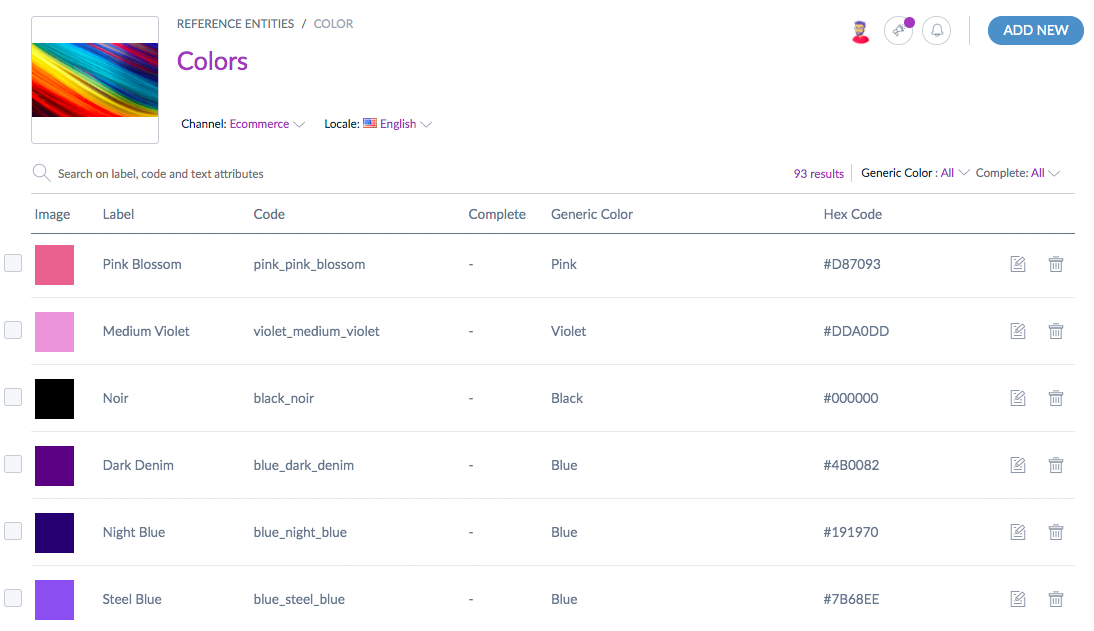
  Your product data must be consistent AND displayed consistently. Product data goes to many different endpoints within an ecosystem, and without a PIM system providing a single source of truth, it’s not uncommon for siloed teams to create different variations of product data for the same product. This not only creates inefficiencies, but also inconsistent experiences that can deter customers. Just as critically, you must ensure that data itself is consistent. In the governance process, each data field format must be identified and assigned a standard that is always enforced. For instance, a data field like ‘Seat Height’ for a furniture distributor should convey precisely the same meaning for every product in the catalog and be described in a uniform number and measurement format, such as 45.5 CM. Failure to enforce this standard may lead to various interpretations of how to record the data (e.g., 45.5 Cent., 45 ½ Cent, Forty-Five and a half centimeters, etc.).  This inconsistency is terrible for website filtering and SEO, and also looks sloppy to customers. Maintaining this level of consistency becomes even more challenging when dealing with a larger number of suppliers, each with their own naming conventions and data standards; AI can prove incredibly helpful in bringing order to this potential chaos. 
Color Data Consistency
 

3. How will you know your product data is accurate? 

  Your product data may be complete and consistent, but this doesn’t mean it’s correctly describing your product! Accuracy refers to the precision and correctness of the underlying data. Getting it wrong can lead to an irritated consumer, an expensive return, or a lawsuit in extreme cases. Ensuring accuracy can be difficult, but here are a few options that can help: 
  1. Establish rules and validations: If you sell shoes between sizes 4 and 12, any number greater than 12 or less than 4, including negative numbers or fractions, can be ruled out programmatically. 
  2. Verify with 3rd parties: If other sources maintain the same data field, cross-reference it to identify any discrepancies (suppliers or even competitors can be useful).
  3. Human checks: Ensure one or even multiple employees check product listings as part of an approval process before they go out to customers.
  4. Create a feedback loop: Mistakes will be made, but the faster you can find and fix them, the less damage they’ll do. Leverage your customer support teams, user generated content, or even sales data to quickly find product information errors. 
  5. Audit: Routinely carry out audits on small sections of your product catalog to understand its health. Many accuracy issues are systematic meaning they can be pretty easily identified and quickly fixed.
 

4. Do you have enough product data? 

  A data science purist may roll their eyes at this one, but I’m including it based on past experiences. When working with brands, one of the first inquiries I make is around the condition of their product data and the types of errors and issues they encounter.  Every brand has data quality issues, and most readily admit to it when prodded enough. However, I consistently come across brands that insist they have perfect data. In this instance I almost inevitably go on to find  that the reason their data errors are so scarce is because their product information itself is so scarce!  Think of it like performing a pencil dive during an Olympic diving competition. Sure, you may not technically have committed any errors, but you’re not getting a 10.0! These brands are leaving their customers in a product experience desert, a situation particularly common with B2B distributors and fast fashion retailers. It’s easy to govern your data when you’re only providing a Product Name, Main Image, Short Description, and a handful of product attributes. But this doesn’t contribute positively to the customer experience. That’s why one of the most critical questions to consider when revamping your product data is whether there’s enough of it. A properly built product listing should include well over a dozen product attributes, with more complex products having 100 or more.  At the minimum, you should ensure that you’re providing customers with:
  1. Technical Specs (width, height, weight, tolerance, materials, voltage, etc.)
  2. Marketing Copy (product/brand/designer story) 
  3. Assets (Images, video, audio, manuals)
  4. Usage (instructions on how to use your product)
  5. Regulatory compliance (environmental impact of product, regulatory compliance etc.)
  6. Compatibility & Cross/Upsell (what other products are similar or work well with this one) 
 

5. How will you handle future changes to your product data? 

  Your product catalog is never complete. There will be new SKUs, new product types, new ways of describing products, new suppliers, new places to sell, and an endless stream of directives from the powers that be to change the way you operate. It’s critical that each one of the controls you implement as part of your data governance policy have a mechanism to incorporate change.  Document all governance policies from the beginning and determine who’s responsible for incorporating future changes, the process for making these changes, how frequently you’ll make these changes, and what your succession plan is should employees leave.   

Master Data Governance for Your Products 

  Data governance doesn’t have to be a complex, expensive proposition when it comes to your product data, but it also cannot be ignored. It is what ensures the experience you provide your customers is error-free and up to standards.  If you’re implementing a PIM solution or revamping your product catalog, be honest with yourself and the state of your catalog by reviewing the questions we just covered. You may not be able to fix everything at once, but acknowledging and documenting the problem is the first and most difficult step. Changes can then be implemented incrementally over time as you juggle competing priorities.  If you’re ever unsure of where to go in your data governance journey, take a step back and consider your customer and what changes will have the most positive impact on their product experience.  And if you’re looking for some support on improving or implementing your data governance policies, feel free to reach out to a PX expert today.

Adam Beatty, Community Evangelist

Akeneo

Harness the Power of Community-Sourced Product Experiences

Customer Experience

Harness the Power of Community-Sourced Product Experiences

Explore the game-changing trend in eCommerce where brands and retailers leverage their most knowledgeable asset—their customers—to enhance product information. Learn from real-life success stories and discover the transformative impact that community-sourced Product Experience (PX) can have on your business and customer experience.

Nobody knows your product better than those who use it day in and day out; that’s right, your customers.

While some of us have been turning towards new technologies like AI to improve product information accuracy, others have turned to their in-house community of product experts to source product information corrections, enhancements, and additions.

In an effort to ensure that 42 million data points for over 6 million products is up-to-date and accurate, Swiss retailer Galaxus recently introduced the ability for customers to correct and supplement product information to enhance the quality of details published on product pages.

Outdoor clothing & gear retailer Backcountry has been sourcing product information from consumers for years now – On every product page they have a link where you can report incorrect product information, and updates promise to be reflected within 72 hours.

Backcountry Community-Sourced PX

Both of these examples underscore a fundamental truth: amidst the allure of cutting-edge technologies, the authentic voice of the customer remains an invaluable asset. The shift towards community-sourced product information recognizes that the lived experiences and nuanced understanding of customers bring a level of authenticity and depth that algorithms alone cannot match.

As this momentum of customer-centric information sourcing gains momentum, let’s take a look at the basics of this strategy and how more reliable and up-to-date product data can positively impact the customer experience.


What is Community-Sourced PX?

Community-Sourced Product Experience (PX) is a collaborative approach in the retail and eCommerce landscape where brands and retailers leverage the expertise and insights of their customer community to enhance and refine product information. In this model, customers actively contribute to the accuracy, completeness, and overall quality of product details, transforming them from passive consumers into engaged participants.

This process involves allowing customers to identify and rectify missing or inaccurate product information, ranging from specifications and usage details to reviews and recommendations. Brands embrace the collective intelligence of their community to ensure that product pages reflect a comprehensive and authentic portrayal of their offerings.

Community-Sourced PX goes beyond traditional methods of data curation, recognizing that customers, as end-users intimately acquainted with the products, bring a level of authenticity and nuanced understanding that automated systems or internal teams might not possess. It fosters a sense of collaboration, turning customers into valuable contributors who actively shape the narrative of product information, ultimately influencing the overall customer experience and building stronger connections between brands and their audience.


What are the Benefits of Community-Sourced PX?

Create a Community of Contributors

In the conventional retail model, customers often play a passive role, limited to the transactional aspect of purchasing. However, the advent of Community-Sourced PX elevates customers to the status of active participants. They are no longer mere observers but contributors, actively shaping the landscape of product information.

This shift is akin to inviting customers into the inner circle, where their insights and expertise are valued. As customers see their suggestions and corrections influencing product details, a sense of ownership takes root. They become stakeholders in the brand’s success, fostering a deeper connection that extends beyond individual transactions. This sense of community becomes a powerful driver of brand loyalty as customers no longer perceive themselves as detached consumers but as integral members of a community invested in the brand’s growth and improvement.

Proof of Customer-Centricity

Brands that actively listen, acknowledge, and implement customer feedback demonstrate a genuine commitment to evolving in tandem with their audience. This responsiveness is not merely a reactive measure but a proactive stance, illustrating that the brand is attuned to the ever-changing needs and expectations of its consumer base.

As customers witness their feedback translating into tangible improvements or corrections in product information, a powerful narrative of customer-centricity unfolds. The brand becomes more than just a provider of products; it transforms into a responsive partner, actively seeking to enhance the customer experience. This proactive engagement fosters a sense of trust, as customers recognize that their opinions matter and are instrumental in shaping the brand’s direction.

Promote UGC (User-Generated Content)

The concept of Community-Sourced PX is a goldmine for User-Generated Content (UGC). As customers actively contribute key information or share their genuine experiences, brands and retailers are able to enrich product pages and encourage other customers to share their own experiences or feedback, creating a better overall customer experience.

The authenticity embedded in UGC is unparalleled. It goes beyond the glossy marketing language and staged visuals, offering a real and unfiltered glimpse into the product’s impact on the lives of actual consumers. Community-Sourced PX provides a platform for customers to share their triumphs, challenges, and unique use cases, creating a mosaic of diverse perspectives that resonate with a broader audience.

Flag Missing/Incomplete Data & Patterns

Customers, intimately acquainted with products, are quick to identify gaps or inaccuracies.Their keen observations stem from a genuine connection with the products they use, making them adept at recognizing nuances that automated systems or internal teams might overlook. 

This collaborative approach helps flag missing or incomplete data and uncover patterns that might have been overlooked. The community acts as an extended set of eyes, collectively ensuring that product details are not only accurate but also reflective of the nuanced qualities that make each product unique. Plus, if your team notices that certain products or product lines are continually getting flagged for incomplete or inaccurate information, it may help your team identify gaps or inefficiencies in your publishing processes.

Improve Overall Quality and Reliability of Product Information

With the collective contribution of the community, brands can significantly enhance the overall quality and reliability of their product information, ensuring accuracy and completeness. This process is akin to a collaborative audit, where the community serves as a vigilant team, ensuring that every product detail aligns with the reality perceived by those who actually use the products. Whether it’s correcting specifications, validating usage scenarios, or adding nuanced information, the collective intelligence of the community becomes an invaluable resource for brands striving to deliver accurate and comprehensive product information.

Plus, this collaborative approach fosters a culture of continuous improvement. As community members actively engage with product details, brands gain real-time insights into evolving customer needs and expectations. This iterative feedback loop allows brands to adapt swiftly, ensuring that product information remains relevant and aligned with the dynamic nature of consumer preferences.


What are the Benefits of Providing More Reliable Product Information?

Reduced Return Rates

When product details are accurate and comprehensive, customers are empowered to make informed purchasing decisions, reducing the likelihood of dissatisfaction and subsequent returns. This, in turn, results in a significant decrease in return rates and the associated costs for both customers and brands.

Plus, the decrease in return rates contributes to improved customer satisfaction. Satisfied customers are more likely to become repeat buyers and brand advocates. They appreciate the brand’s commitment to providing reliable information, fostering loyalty and positive word-of-mouth. In the long run, this positive cycle not only minimizes the financial impact of returns but also enhances the brand’s reputation and customer relationships.

Better Searchability & Site Functionality

Accurate product data lays the foundation for precise and relevant search results. When customers search for specific products or features, the accuracy of the data ensures that the search algorithm can effectively match their queries with the most relevant products, eliminating the frustration of irrelevant results and allowing customers to quickly and effortlessly find exactly what they are looking for.

An up-to-date and accurate product catalog also enhances the overall navigation experience. Customers can intuitively explore product categories, filter options, and refine their searches based on accurate specifications. This organized structure contributes to a user-friendly environment and streamlines the decision-making process, enabling customers to browse and purchase with ease and confidence.

More Consistent Omnichannel Customer Experience

Whether a customer engages with a brand through the website, a mobile app, social media, or in-store, having consistent and accurate product information creates a unified brand presence. Accurate and uniform product data facilitates a smooth transition for customers moving between channels. Whether they research online and buy in-store or vice versa, having consistent data eliminates friction points, making the transition effortless and enhancing overall customer satisfaction. This cohesion reinforces brand identity, conveying a sense of reliability and professionalism to customers, regardless of their chosen touchpoint.

For brands aiming to deliver personalized experiences, consistency in product data is paramount. A unified understanding of product details allows for more effective cross-channel personalization strategies. Whether recommending related products online or offering tailored promotions in-store, a foundation of consistent product data enables brands to understand and anticipate customer preferences across the entire omnichannel landscape.


The Future of Community-Sourced PX

Community-Sourced PX invites customers into an exclusive inner circle, where their insights and expertise are valued. The shift from passive observers to engaged participants fosters a sense of ownership and community. Customers become integral stakeholders in the brand’s success, nurturing a deeper connection that transcends individual transactions. This newfound sense of community emerges as a powerful catalyst for brand loyalty, as customers recognize themselves as vital contributors to the brand’s growth and improvement.

While the concept of Community-Sourced PX might still be in its infancy, it holds the power to not only redefine how brands curate information but also reshape the entire customer journey. This collaborative evolution paves the way for a retail experience that is not only accurate and reliable but also deeply rooted in community, authenticity, and a customer-centric ethos. 

Interested in learning more about how you can harness the power of your community to improve your product experience offering? Reach out to a PX expert today!

Akeneo Product Cloud

Discover how our composable technology can help your team source, centralize, and produce more accurate product information today.

Casey Paxton, Content Marketing Manager

Akeneo

Navigating AI Integration: A Strategic Approach for Retail Success

Artificial Intelligence

Navigating AI Integration: A Strategic Approach for Retail Success

In this guest post from Akeneo partner Unifai, we give you the keys to success for implementing an AI solution within your company, while explaining how to train your teams in these new technologies to best manage your product data.

The adoption of Artificial Intelligence (AI) has become unavoidable for companies wishing to remain competitive and innovative. Every decision, every step of the integration process, can have a considerable impact on ultimate success.  According to a recent study by Gartner, over 40% of companies that invested in AI technologies without a clear strategy ended up spending more than expected. So how do you take full advantage of the benefits of AI while avoiding potential pitfalls? How do you ensure a smooth transition and seamless integration? Let’s dive into the keys to success for implementing an AI solution at home, while explaining how to find the perfect AI tool to manage your product data!   

Demystifying AI in Retail

Around the water cooler, you may have heard “AI is a danger, I’m about to be replaced by a robot”, or at lunchtime you’ve heard “Wait a minute, working with AI is expensive!” Whether you’re overseeing an AI project or navigating the challenges of gaining buy-in from colleagues, breaking down misconceptions is crucial. Despite some prevalent negative opinions, AI is now a strategic pillar in various industries, from customer relations to logistics and research. It’s essential to dispel myths and showcase the diverse applications and benefits of AI in today’s business landscape. AI offers unprecedented optimization opportunities for companies thanks to three main elements: 
  • Task automation: Using AI to perform repetitive, rule-based tasks without human intervention, ranging from simple data entry to complex business processes.This frees up valuable human resources to focus on more strategic, creative, and high-value activities. 
  • Predictive analysis: Using historical data, statistical algorithms, and machine learning techniques to identify the likelihood of future outcomes or trends.By analyzing past data, AI can predict future trends, customer behaviors, and market changes, allowing companies to make informed decisions, anticipate demand, optimize resource allocation, and proactively address challenges before they arise.
  • Pattern recognition: Using AI to identify patterns, trends, or anomalies within vast datasets that may not be apparent to human observers. AI excels at quickly and accurately recognizing patterns in data, enabling businesses to extract valuable insights. This is particularly beneficial in areas like fraud detection, customer behavior analysis, and quality control.
According to a recent Usine Digitale survey, 71% of the executives see the optimization of internal operations and processes as the main incentive for adopting AI. This trend is far from trivial, as it enables companies to increase efficiency, reduce costs, and improve the quality of their products or services.  To take this technological revolution one step further, it’s essential to discover how to improve product data quality problems with AI, ensuring that this innovative technology is seamlessly integrated into everyday business operations.  

Avoid Common Pitfalls When Implementing AI

Integrating AI into your business processes promises many benefits, but it also presents challenges. Let’s take a look at a few of the most common pitfalls to ensure that your organization is able to steer clear of them. 

Ignoring data security 

According to a Gartner study, 41% of organizations have already experienced an AI-related privacy breach or security incident. Selecting an AI tool with robust security protocols, data encryption, and compliance with privacy regulations is crucial for safeguarding sensitive information.

Not involving stakeholders and end users 

The engagement of stakeholders and end users from the project’s inception is vital. Understanding their needs ensures the selected AI tool aligns with expectations, delivering real added value. Effective communication and collaboration throughout the implementation process are key to successful AI adoption.

Poor communication and support

AI adoption extends beyond technology; it’s about empowering the people who use it. Gathering feedback from the team and providing necessary resources for effective tool utilization are essential. Continuous communication, feedback loops, and ongoing support contribute to a successful AI integration.  

Steps for Optimal AI Adoption in Retail

Are you a PIM manager, ERP manager, or data manager ? Is your role to manage and optimize the quality, consistency and distribution of product information data? Then implementing an AI solution within your company is a major project requiring a methodical approach. To ensure optimal adoption, follow clearly defined steps and focus on communication.

Step 1: Assess your needs

Every company is unique. Clearly identifying your needs will help you identify the AI solutions best suited to your context. Before adopting an AI solution, ask yourself what your real needs are:
  • How much data do you need to manage? 
  • Do you have any specific cleaning or categorization problems? 
  • What processes would you like to automate or optimize?
  • Do you need to enrich your descriptions, keywords, or titles?
  • To date, how much time do you set aside for this type of task and how much do you want to reduce it?
  • What kind of results/ROI do you expect?
  • How can AI fit into your current workflow?
By understanding your requirements, you can better understand how AI can meet your challenges.

See how Rexel improved data accuracy by 98%

Step 2: Select the right technology

Choosing the right AI solution involves aligning it with your objectives and infrastructure. Integration with existing systems, precision in meeting needs, and adaptability are crucial factors. Opt for a platform designed to adapt and evolve with a company’s changing needs; particularly those platforms with flexible architecture and integration capabilities are ideal for companies looking to centralize the management of their product data. To find out more : Is your product data AI ready? 

Step 3: Train and communicate with your employees 

Implementing a technology is a process, but its full adoption by teams is a transformation. Support your employees in this transition with relevant training. After all, no matter how advanced the technology, it’s only effective if it’s used properly In addition, establish transparent communication on the benefits, changes, and support available to reassure and support your employees throughout this transition. Anticipate reluctance, answer questions, and highlight successes to show your teams the concrete benefits of AI in their processes.  

Harnessing AI for Growth

Artificial Intelligence is not just a technology. It is a vector of transformation for businesses. It offers incredible opportunities. Thoughtful, structured adoption of AI is a tremendous lever for growth. It’s time to embark on this adventure, armed with best practices and a clear vision. By keeping these points in mind and choosing reliable AI solutions, you can guarantee the successful and secure integration of AI into your operations. This article is a guest post from Akeneo partner, Unifai.

Pauline Le Calvez, Content Manager

Unifai

Built In Honors Akeneo in Its 2024 Best Places To Work Awards

Akeneo News

Built In Honors Akeneo in Its 2024 Best Places To Work Awards

We’re extremely excited to announce that Built In, the largest candidate generation platform, has recently recognized Akeneo as one of the best midsize companies to work for in 2024! Based on an algorithm that determines winners based on the offerings that employers offer, this recognition is a testament to our unwavering commitment to fostering a workplace that values innovation, inclusivity, and the well-being of our incredible team.

We’re kicking off the new year with a Built In bang – Akeneo was recently honored in Built In’s 2024 Best Places To Work Awards! Best Places to Work is an awards program that gives recognition to companies who offer the best compensation packages, total rewards and culture  programs among their peers.The annual awards program includes companies of all sizes, from startups to those in the enterprise, and honors both remote-first employers as well as companies in large tech markets across the U.S.  Built In determines the winners of Best Places to Work based on an algorithm, using company data about compensation and benefits. To reflect the benefits candidates are searching for more frequently on Built In, the program also weighs criteria like remote and flexible work opportunities, programs for DEI, and other people-first cultural offerings.  

Id like to extend our heartfelt congratulations to the 2024 Best Places to Work winners. I am truly inspired by these companies that have risen to the challenge of fostering a positive work environment, maintaining a strong brand, and ensuring employee satisfaction. The future is filled with promise and we are so excited to see what lies ahead.

Maria Christopoulos Katris Founder & CEO

Built In
This recognition is a testament to our unwavering commitment to fostering a workplace that values innovation, inclusivity, and the well-being of our incredible team. At the heart of our success lies a deep dedication to our people, and this acknowledgment by Built In serves as a validation of the culture we have cultivated here at Akeneo. Our commitment to providing a workplace where employees thrive has been a central focus as we strive to create an environment that fosters both personal and career growth.

I am deeply grateful for Built Ins recognition of Akeneo as one of the Best Places to Work. This award reflects our unwavering commitment to fostering an inclusive, humble, and sustainably responsible workplace. Its a testament to the incredible team at Akeneo whose passion and dedication have shaped us into a benevolent community that values each individual. Thank you for being a part of our journey towards a brighter future together.

Sabrina Jaksa Chief People Officer

Akeneo

ABOUT BUILT IN

Built In is creating the largest candidate generation platform for technology professionals globally. Monthly, millions of the industry’s most in-demand professionals visit the site from across the world. They rely on our platform to stay ahead of tech trends and news, learn skills to accelerate their careers and find opportunities at companies whose values they share. Built In also serves thousands of innovative companies from startups to the Fortune 500. By putting their stories in front of our uniquely engaged audience, we help them reach otherwise hard-to-hire tech professionals. www.builtin.com.  

ABOUT BUILT IN’S BEST PLACES TO WORK 

Built In’s annual Best Places to Work program honors companies with the best total rewards packages across the U.S. and in the following tech hubs: Atlanta, Austin, Boston, Chicago, Colorado, Dallas, Houston, Los Angeles, Miami, New York, San Diego, San Francisco, Seattle and Washington DC. Best Places to Work is distinct because its algorithm selects tech companies that build their offerings specifically around what tech professionals value in a workplace. Winners are announced in early January 2024. https://employers.builtin.com/best-places-to-work/    

ABOUT AKENEO

Akeneo is the product experience (PX) company and global leader in Product Information Management (PIM), enabling organizations to build and deliver world-class product experiences across every customer touchpoint through a comprehensive PX Strategy. By providing best-of-breed technology and expertise, Akeneo’s intelligent Product Cloud accelerates growth, reduces time-to-market, and gives organizations the competitive edge needed to convert browsers into buyers.  Leading global brands, manufacturers, distributors, and retailers, including Chico’s, The Very Group, TaylorMade Golf, Rail Europe, Kering, and more trust Akeneo to scale and customize their omnichannel commerce initiatives. Using Akeneo’s AI-Centric Product Cloud, companies can activate product experiences in any and all channels that drive an improved customer journey from discovery to purchase, resulting in increased sales, reduced returns, faster time-to-market, and increased team productivity. For more information: https://www.akeneo.com.  
2024 Best Places to Work

Casey Paxton, Content Marketing Manager

Akeneo

PIM vs. DAM in the Product Ecosystem

Product Experience

PIM vs. DAM in the Product Ecosystem

Unlock the full potential of your product experience by understanding the critical role that Digital Asset Management (DAM) systems play in enhancing the visual elements of your online presence. Discover how DAM, as the powerhouse for multimedia content, seamlessly integrates with Product Information Management (PIM) solutions, creating a strategic synergy that ensures your organization delivers an unparalleled product experience.

Failing to add a high-quality image to a product listing is like lighting money on fire. 

People are visual, and this oversight can crush your conversion rate. When shopping online, we want to see engaging and informative images and videos of the products we’re going to buy. 

Digital Asset Management solutions (DAM) are the Rolls Royces of media management and what many brands turn to when it comes to handling their media assets. But how exactly do DAM systems fit into the Product Experience ecosystem? 

Let’s take a look and see how PIM and DAM systems are, in fact, complementary technologies that allow organizations to deliver top-tier experiences for customers by combining rich media assets with compelling product information.


What is DAM?

Digital Asset Management (DAM) software solutions are tools designed to efficiently organize, store, retrieve, and manage digital assets within an organization. These assets can include images, videos, documents, and other multimedia files. 

DAM systems provide a centralized and searchable repository, enabling teams to easily locate, share, and collaborate on digital content. By streamlining workflows and ensuring version control, DAM software can enhance productivity, brand consistency, and the overall management of an organization’s digital resources. 

With features like metadata tagging, permissions management, lifecycle management and support for API based integrations, DAM solutions contribute to a more organized and accessible digital ecosystem, supporting businesses in maximizing the value of their digital assets.


DAM Systems and Product Experience

DAM systems have an important role to play in the product experience ecosystem. Similar to Product Information Management (PIM) solutions, DAM systems serve as a centralized hub for content management. 

However, DAM goes a step further by focusing specifically on multimedia content. This specialization makes DAM a powerful complement to PIM, offering a dedicated repository for managing and distributing high-quality visual and audio assets. This ensures that marketing teams, designers, and other stakeholders can swiftly access and utilize compelling images and videos for product listings, eCommerce platforms, marketing campaigns, and other customer-facing materials. 

It’s important to note that DAM systems are intended to manage the entirety of a business’ media content, not just product related assets. This means DAM systems manage media needs for many departments within the organization and store assets for things like corporate communications, legal, human resources, training & development, brand assets and more. 

For organizations just looking to store product related assets, a dedicated DAM solution may be overkill in terms of cost and complexity. Many PIM solutions also include the ability to handle product-related media assets, which can be a great alternative if there’s no need for the full power of a dedicated DAM solution. 

While PIM and DAM share the overarching goal of centralizing content, they serve distinct purposes within the broader product experience ecosystem. PIM excels in managing complex taxonomies of product data, including technical specifications, marketing copy, and sustainability and compatibility information. It’s designed to adapt this information and ensure consistency and accuracy across the entire customer journey, from how products or sets of products are represented in an ad space, displayed in marketing channels, turned into compelling product and brand stories in owned or third-party sales destinations, or even in customer service interactions. 

On the other hand, DAM specializes in the visual aspects of product representation and their efficient storage, editing, organization, and retrieval. 


DAM features

DAM to PIM Integration Best Practices 

It’s important to note that there are many different ways to integrate PIM and DAM systems within an ecosystem. Generally, when integrating a DAM system to a PIM system, establish a single source of truth for each data field and determine who can access and manipulate what within each system. 

In most cases, the DAM system will host the media itself as well as metadata, and serve the images via a CDN. The PIM will allow teams to then combine the product record with media originating from a DAM system. 

The PIM can be considered a consumer of information from the DAM. Many modern PIMs manage media links directly from a DAM system without actually storing any physical media files.These links can still be used to generate a preview within the PIM though, allowing merchandising teams to work with a complete product record in a single place. 

It’s critical to have a strategy for linking images to products. When a product catalog can have hundreds of thousands of products with millions of images, it’s important that a consistent mapping process is in place. Establishing a naming convention is often a good approach. 

The actual mapping of images to products can happen within an integration layer, but many PIM solutions also include a rules engine that can automate this effort with no additional development work needed. 

Finally, media transformations and editing (cropping, resizing, recoloring, watermarking etc.) typically occur within the DAM system, which has more robust capabilities in this space. 


PIM & DAM in the Product Experience Ecosystem

In conclusion, the combination of Digital Asset Management (DAM) and Product Information Management (PIM) solutions represents a strategic synergy within the product experience ecosystem. While PIM excels in managing comprehensive product data, DAM specializes in the efficient storage, organization, and retrieval of visual assets. 

Together, these complementary technologies empower organizations to deliver a unified and seamless combination of rich media assets and comprehensive product information.

Akeneo Product Cloud

Discover how PIM and DAM solutions can work together to provide your customers with the best product experience possible.

Adam Beatty, Community Evangelist

Akeneo

Software Adoption is a Journey, Not a One-Time Deal

Product Experience

Software Adoption is a Journey, Not a One-Time Deal

In the ever-growing world of digital commerce, choosing the right Product Information Management (PIM) solution is important but it’s even more important that your key users will be able to use it correctly to get the most out of the software and provide excellent product experiences.

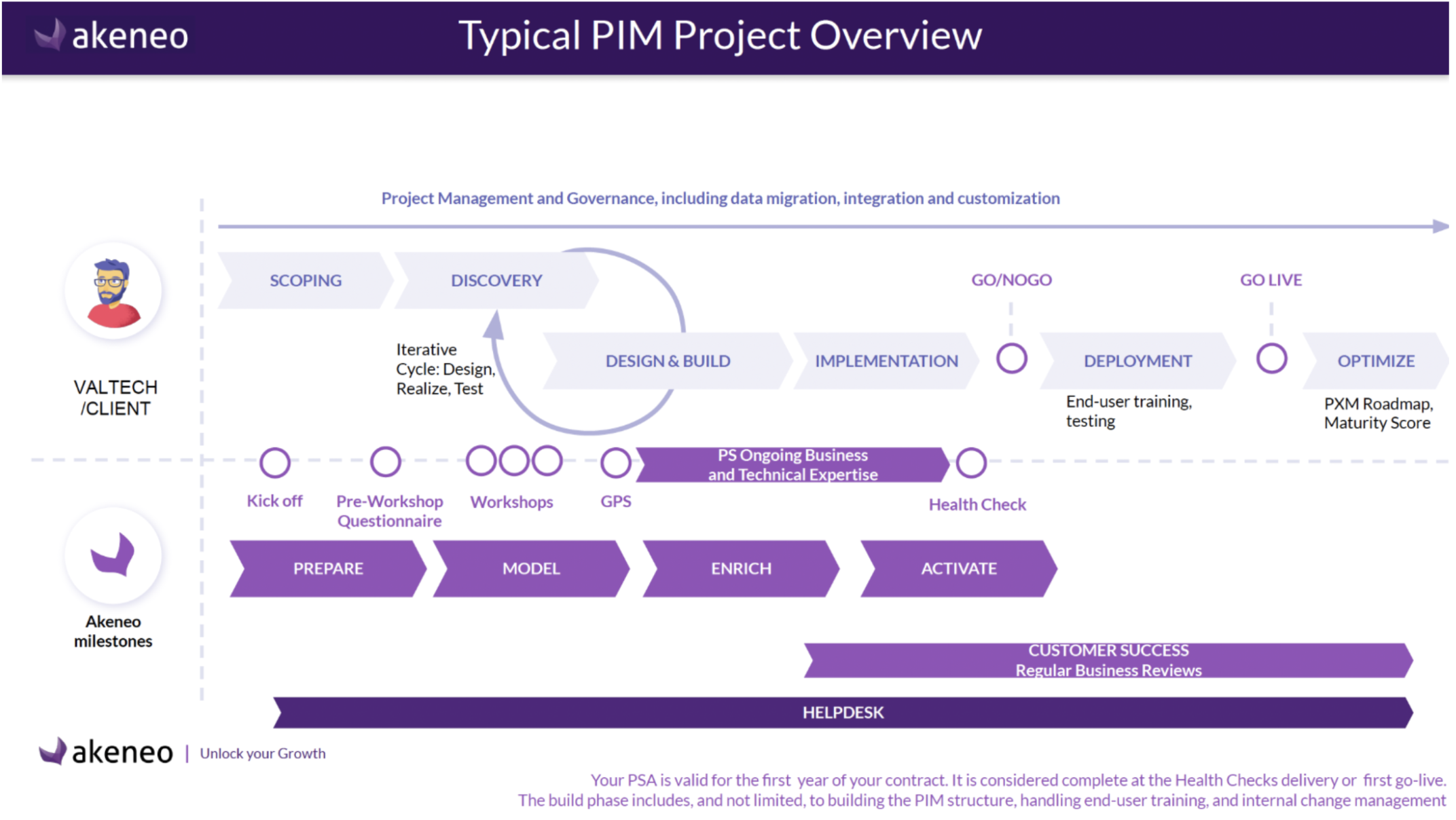
It takes time to empower your client! As a partner, when you are starting a project for a client, you have different phases to go through:

1. Discovery Phase 

The PIM functional & technical requirements design phase is typically held through working sessions to assess the needs of the client and ensure that all potential discrepancies are covered by existing processes; and if not, how these discrepancies can be addressed.

2. Implementation Phase 

The second adoption phase focuses on the “Minimum Viable PXM Foundation” (MVPF), which typically starts with just one channel and one market in order to secure adoption of the key PXM champions to facilitate development of other markets and channels.

3. Hypercare Phase 

In the final phase of adoption, partners like us here at Valtech provide executive coaching, training sessions, and check-ins from implementation to adoption – and this is just the gate to validate the final adoption.​

The goal is to integrate the adoption all along those phases – this is the secret ingredient of adoption success! And for Valtech, we like to say that adoption happens on day one so that we have ample time to ensure that:

  • PIM features are demoed to project team as they are developed and deployed.
  • Users are provided access to test and provide feedback on configurations and system settings.
  • We identify any gaps in desired functionality, workflows, user types and permissions.
  • Collaborate with the PX experts at Akeneo to find the right recommendation and expertise.
  • Build documentation for all configurations, permissions, and integrations. We here at Valtech like to create a user guide which can include cheat sheets, tutorials, and step-by-step process outlines customized for each client.


The Sooner the Better: Adoption Starts at Day One

Find your champions and “train the trainers”

Once a project is signed, you will work with a team of champions! First but not least, you will have to train the key users because the main strategy is to, “Train the trainers”. Find the right champions who will lead and implement the project with you but also ensure the adoption with the end users.

Every business is different – the first step includes us partners analyzing the clients’ needs, objectives, architecture, catalog and product structure in order to better understand how implementing a PIM solution, like Akeneo, will best address the client’s needs. To do so, your champions will need to understand first what a PIM solution like Akeneo is to understand how to make the most of it.

With Akeneo, there are many resources available to “train the trainers”, including:

  • Akeneo Akademy – Self-guided lessons and tutorials, but supported by the entire Akeneo Akademy and the Valtech expertise.
  • Project Success Assistance (PSA) – An Akeneo program with weekly workshops focused on leading PIM and PX concepts and Akeneo workflow tutorials with a Customer Success Manager dedicated to your project. As an Akeneo partner, Valtech would optimize these workshops by collaboratively working with Akeneo to do the discovery phase in parallel. For example, we will let Akeneo introduce the basic concepts and then we will surf on the knowledge waves to start digging into the client’s structure in terms of product structure and data: different possible channels, category trees, product types, product associations, etc. Then, we would contextualize these basics into a real product structure to make it more understandable and allowing the client to visualize how the product structure would actually look. 
  • Partner Training – Ongoing series of sessions with Akeneo partners to highlight successful joint use cases and partner best practices.
  • A combination of all three!


Along the Implementation and Hypercare Phases

Stay on course, let the client steer the ship

Once we finish the discovery phase, we implement the recommendations and improved processes previously identified.

As mentioned, we walk through some product type examples during the discovery phase with the clients. Then, we will move forward with what we defined and we will encourage the client to do so on their own as well. The client can model an easy product type to start(family, attributes, product structure…), and the partner will guide and support the client with expert knowledge of the product experience industry and the Akeneo solution. This process allows us to analyze the current adoption processes and identify any misunderstood concepts early on. Then it’s time to refresh these concepts by using other product types we need to implement! 

Don’t forget to document the entire process

During the implementation, documentation will be very important. Akeneo has many links that can help the client during the entire implementation:

As a partner, it’s Valtech’s responsibility to always support and guide the client toward all the support documentation already available, but sometimes this is not enough and that is fine! We will also provide user-friendly documentation and guides based on best practices recommended on catalog and product structure definitions, creating unique and thorough documentation for the entire process for every Valtech client. During implementation and hypercare phases, we also typically set some Q&A (questions/answers) sessions and then gather all the questions into a customized glossary. 

The benefit of this process is that if the client loses internal key users who were there from the beginning, it won’t be a problem as the process does not rely on the knowledge of one single individual. 

By following these steps, you can create a comprehensive plan to get your team ready for user adoption, fostering a positive and collaborative environment for the integration of your new PIM solution.

Once adoption is in place, you will be safe for a soft and clear PIM integration.

Looking for more PIM implementation support? Check out some of our other Valtech featured articles diving into the people-first approach to product experiences, how to maximize the ROI of your PXM organization, or the steps to perfecting your PIM selection process.

This article is a guest post by Akeneo partner, Valtech.

Justine Carlier, Senior Consultant & Akeneo Lead Expert

Valtech

From AI to Bundling Strategies to Metaverse Ventures: Akeneo’s Best Bylines of 2023

Akeneo News

From AI to Bundling Strategies to Metaverse Ventures: Akeneo’s Best Bylines of 2023

In this last installment of the 12 Days of PXMas series, we unwrap a treasure trove of insights that span the entire spectrum of the retail experience. From the strategic prowess of product bundling to the inseparable fusion of sustainability and profitability, Akeneo’s byline features dive into the depths of composable architectures, explore the metaverse’s impact on digital shopping, and explain the pivotal role of AI in shaping the future of retail.

We have some unfortunate news; today marks the 12th and final day of our 12 Days of PXMas series! While we’ve loved spreading the joy of product experiences with you all during this festive season, all good things must come to an end, and as the new year approaches, it’s time to wrap a bow around this series and move on to the next big thing in PX. But before we do that, it’s time for us to share the final (and perhaps favorite) day, and that would be a roundup of some of our articles featured in eCommerce and retail publications from this past year.  From pioneering the future of hybrid omnichannel shopping experiences to the benefits and drawbacks of composable architecture to incorporating AI and groundbreaking technology into your customer experience offering, we’ve covered dozens of interesting topics. Let’s dive in!  

1. The Power of Bundling to Maximize Sales This Holiday Season and Beyond

Deep into the holiday shopping season, retailers are looking for an edge that can serve multiple purposes: bolster sales, manage inventory, and impress customers to support loyalty and repeat business throughout the Q1 doldrums and beyond. The answer to those mandates may lie in a simple but elegant package: product bundling. A retail strategy for decades, bundling involves combining products or services into one sales unit. Bundling can take many forms, from same-product bundles — think multiple packs of tissue paper grouped into one larger order — to hardware and service bundling, where a subscription offer includes free or discounted hardware to entice the customer. Because there are countless forms of bundling, retailers can tailor their offerings to accomplish different goals or meet specific metrics. The holidays present a unique opportunity to kickstart bundling initiatives that can set the tone for the coming year. Read more, published on Ecommerce Times.  

2. Managing Green with Green: How Sustainability and Profitability Go Hand in Hand

Following up on a new year’s resolution to buy more sustainable clothing, I was recently on the hunt for a pair of workout pants made out of recycled material. I stumbled upon Good On You, a directory of fashion brands and retailers that provides an easy-to-understand score and in-depth analysis of the ethical and sustainability practices of these companies. As I started using this directory and basing my browsing decisions on their associated ratings (not to mention bookmarking the site for future shopping hauls), I realized something important: incorporating and communicating sustainable practices is no longer a luxury or niche topic for many consumers, including myself. It’s a requirement. Read more, published on Retail Customer Experience.  

3. Future Retail: Pioneering Phygital Shopping Experience

The retail world is no longer segregated when it comes to strategy. The physical shopping experience is becoming increasingly more digital, and the digital shopping experience is translating into real-world, in-store engagement more than ever before. This new “phygital” frontier is now table stakes for many retailers, and adopting a successful phygital strategy can pay major dividends in everything from customer satisfaction and loyalty to increased sales and decreased returns. Read more, published on Chain Store Age  

4. Why Focusing on the Manufacturer-Retailer Relationship is a Winning Strategy

Manufacturers and retailers have always had an important, symbiotic relationship. Given the supply chain issues caused by the pandemic, however, that relationship changed. With difficulty moving products from one place to another, many manufacturers began exploring direct-to-consumer sales as a way to maintain growth through uncertain times. In fact, D2C sales have been on a steady upswing for years, and are projected to surpass $200 billion by 2024. Still, as the drive towards D2C continues for manufacturers — which mirrors a similar drive towards retailers entering the manufacturing space — it can’t be understated how valuable the relationship with retailers truly is. When executed successfully, and in close collaboration, this relationship can be wildly beneficial for both parties. Read more, published on RIS News.    

5. Leveraging PIM to Boost Customer Experience

The customer journey that used to be a fairly simple, straight-lined process has now morphed into an ever-evolving web of online stores, social media campaigns, brick-and-mortar operations, and physical and digital retailers. In today’s competitive retail market, the customer experience has simultaneously become one of the toughest things to manage and one of the most critical factors for growth and success.  Customers simply expect more; they depend on businesses meeting them on all the touchpoints they’re naturally on, from Instagram to Amazon and beyond. A customer might start their shopping journey by researching products online, then visit a brick-and-mortar store to see the product in person before going online to purchase, leave a review, or engage with the brand on social media. They expect to find a consistent and compelling experience with consistent product information along every step of this journey. Read more, published on Spiceworks

6. Bridging the Gap Between Online Perception and Offline Reality for Retail Success

The digital marketplace is thriving, with consumers increasingly turning to online channels for their shopping needs. However, this shift has brought about a concerning disconnect between online perception and offline reality, leading to a surge in return rates. During the holiday shopping season, it’s crucial for retailers to address this issue to improve customer satisfaction and boost profitability, while reducing returns. Read more, published on Total Retail  

7. Maximize ERP Software to Elevate Your Sales

Enterprise resource planning (ERP) tools are often colloquially referred to as the central nervous system of your tech stack, conjuring up images of product information pumping through a wide-reaching network of best-in-class tools all expertly connected through the nerves of the ERP solution. Organizations often turn towards implementing an ERP tool with the hopes of quickly and easily connecting all their existing technology through this nervous system and unlocking immediate growth benefits from this enhanced connectivity.  Read more, published on Built In  

8. The Convergence of AI and Composable Architecture in eCommerce

With the help of ChatGPT and Bard, the hype around generative AI has soared over the past few months, with experts shouting daily from the mountaintops about its potential to revolutionize the retail industry. From generating product descriptions and dynamic pricing to improving data quality and automating redundant tasks, AI has been monikered as the magical fix-it-all technology that promises to slash time-to-market, quadruple employee productivity and deliver larger-than-life customer experiences. And while these claims may technically be possible, there’s an implicit caveat that AI bandwagoners can often gloss over: both your product information and technology stack need to be optimized and up-to-date before you can start to take full advantage of generative AI. Read more, published on Retail TouchPoints

9. Retail Metaverse: Brands’ Key to Success in Digital Shopping

Once a futuristic buzzword, the metaverse is now a real player both in popular culture and in the retail landscape. In 2022, the global metaverse market stood at over $65 billion, and is projected to hit $82 billion in 2023. And by 2030? Just shy of a trillion dollars. Major brands have been generating revenue within the metaverse for a few years now. Global fast-fashion retailer Forever 21 has virtually tested products in its metaverse storefront and released a real-life fashion collection based on popular virtual items created in the metaverse. Not only does the virtual playground of the metaverse offer brands an additional revenue stream and a way to test products without having to create them physically, but it also opens businesses up to test and sell those products with a global market of real, authentic users. But with great opportunity always comes great risk. So the question becomes: How can brands take full advantage of all that the metaverse has to offer without risking the loss of consumers or providing a subpar customer experience? Read more, published on TotalRetail.  

10. The Price Retailers Pay for Flawed Product Information

While e-commerce has represented a transformational difference for shoppers and retailers, it comes with its own set of downsides. Sure, the volume of sales and ability to provide personalization at scale has revolutionized the online shopping experience. However, the way consumers shop now has created logistical pressure and added costs for businesses. The issue is mainly related to returns. Read more, published on Ecommerce Times.

11. How Amazon sellers can seamlessly diversify their sales channels

It’s no secret that Amazon is a behemoth in the digital marketplace. With over 300 million customers globally, Amazon snuck away with almost 40% of the US market share this past year, and there’s no indication that it will be slowing down any time soon. However, it may be time for Amazon sellers to heed the advice of investment experts everywhere: Diversify, diversify, diversify. In order to have a less heavy reliance on one of the biggest retail markets on the planet, the best thing these organizations can do is to meet their customers on other channels.  Because as ubiquitous as it may seem, your customers aren’t just using Amazon to search and purchase products. Maybe they’re using a traditional Google search and landing on Amazon, but they may go to Instagram to see what their favorite influencer is using. Activating your product story on social commerce channels, direct-to-consumer sites, or through other online retailers enables you to provide a compelling experience to your customers regardless of where they search or shop, enabling not only a better experience for your customers, but also diversifying your product offering. Win-win. Read more, published on Chain Store Age.

12. Navigating the Future: How Composable Architectures Are Powering the Next Generation of Retail

In today’s rapidly evolving retail landscape, adaptability is key. Retailers must stay ahead of changing market dynamics and shifting consumer behaviors to remain competitive. To achieve this, they require robust and flexible retail systems that can seamlessly adapt and scale. This is where composable architectures come into play, offering a transformative solution that empowers the next generation of retail. Composable architectures, with their emphasis on modularity and scalability, have revolutionized the way retailers approach their technology infrastructure. Gone are the days of rigid all-in-one solutions or custom homegrown systems that hinder agility and innovation. Instead, businesses are embracing a more flexible and strategic approach. And the great news is that going composable isn’t an all-or-nothing proposition. Read more, published on Total Retail.  

12 Days of PXMas

As we bid farewell to the 12 Days of PXMas series, it becomes evident that the retail landscape is not just evolving—it’s undergoing a profound metamorphosis. From the power of product bundling to the imperative fusion of sustainability and profitability, and the groundbreaking intersection of AI and composable architecture, our journey through the year has been marked by innovation, adaptability, and a keen understanding of the pulse of the retail industry. As we look to the new year, it’s clear that success lies in the delicate balance of tradition and innovation, sustainability and profitability, online and offline realms. The metaverse and AI are no longer a distant concept but a tangible playground for brands seeking new horizons, and the call for adaptable, composable architectures resonates as retailers strive to stay ahead in an ever-changing market. If you’re interested in staying in the loop on all things eCommerce, product experience, and technology, then subscribe to the Akeneo newsletter below, or reach out to a PX expert today to learn more!

Kateri Osborne, Growth Marketing & Global Campaigns Manager

Akeneo

Akeneo Partner Perspectives on PX Prosperity

Akeneo News

Akeneo Partner Perspectives on PX Prosperity

Discover the dynamic world of PX as we dive into a compilation of interviews from our global partner network. Including insights from industry giants like Shopify, Adobe, Translations.com, and more, these interviews highlight how our diverse partners contribute to reshaping the retail landscape, reducing time-to-market, fostering growth, and ultimately defining the future of PXM.

As we hit the 11th day of PXMas, we figured it was finally time to highlight Akeneo’s pride and joy: our extensive partner network!

During our annual PX conference, Unlock, last year, we sat down with eleven of our most valued partners to discuss their takes on all things eCommerce, retail, and more. So, for day eleven, we’ve compiled all eleven interviews into one list, curated just for you!

1. Shopify

Lara Rosquet, Head of New Channel Partnerships EMEA at Shopify, explains how brands can simplify their product information so that they can focus on strategy and growth and not maintaining their tech stack. Plus, she discuss how organizations can activate global commerce channels like social media and D2C sites with the Akeneo x Shopify integration, and how the Akeneo and Shopify partner ecosystem enables local teams across EMEA to provide personalized, optimized customer experiences.

Watch the Shopify interview from Unlock 2023.

2. Valtech

Raphael Iscar, Director of PXM Product Strategy at Valtech, discusses:

  • How Akeneo’s composable framework makes integrating different tech partners easy and scaling feasible
  • Centralizing product information into Akeneo PIM to enable global selling and a faster time-to-market, helping one organization launch hundreds of products in just 3 weeks, a process that previously took up to a year
  • Enabling truly compelling and consistent omnichannel experiences, with a focus not just on digital but in-person experiences as well

Watch the Valtech interview from Unlock 2023.

3. Constructor

Eli Finkelshteyn, Founder and CEO of Constructor, discusses:

  • aligning customer and retailer expectations to provide exceptional customer experiences
  • why best-of-breed, MACH-certified technology enables organizations to streamline internal processes and reach new markets with more agility
  • how the newly released Attribute Enrichments works to reduce incorrect and missing product data across all channels and markets

Watch the Constructor interview from Unlock 2023.

4. Accenture

Helene Lefebvre, Senior Manager at Accenture sat down to speak with us about easing integration processes for both B2B and B2C customers, as well as sharing how to prepare your data and teams for a successful and sustainable PIM implementation.

Watch the Accenture interview from Unlock 2023.

5. AND Digital

James Sharpe, Chief of Strategic Alliances for AND Digital discusses delivering rich customer, employee, and product experiences, and how one organization reached new marketplaces, expanded globally, and tripled in business size with Akeneo technology. Plus, discover the three key tips to a successful PIM implementation!

Watch the AND Digital interview from Unlock 2023.

6. Adesso

Haitse Wiersma, Principal Software Engineer & Consultant at Adesso, discusses Akeneo’s cloud-based technology, supporting key retail partnerships for enterprise customers, and planning for a successful PIM implementation.

Watch the Adesso interview from Unlock 2023.

7. Wunderman Thompson

Ilse Goverts-van Kesteren, PIM/PXM Lead Consultant at Wunderman Thompson, discusses how Akeneo is working with Wunderman Thompson to pave a new future for PXM. Plus, she covers the three key drivers for a successful PIM implementation and why listening to customer needs enables the best possible product experience strategy.


Watch the Wunderman Thompson interview from Unlock 2023.

8. Sitation

George Dzuricsko, Senior Director of Solution Architecture from Sitation, discusses Akeneo’s composable framework, and how it enables organizations to create the tech stack of their dreams. Plus, he covers how to migrate data from outdated systems into Akeneo PIM to optimize, enrich, and syndicate product information, and how streamlined and efficient internal workflows can improve the implementation process.

Watch the Sitation interview from Unlock 2023.

9. Translations.com

Joe Swaffield, Partner Manager at Translations.com discusses how we enable global selling and entering new markets faster for our customers with reduced time-to-market and increased agility, and why he’s excited to work with the PXM community to further develop what’s available on the Akeneo App Store.

Watch the Translations.com interview from Unlock 2023. 

10. BigCommerce

Iris Schiefer, Large Enterprise AE at BigCommerce, discusses Akeneo’s and BigCommerce’s participation in the MACH Alliance, personalizing your composable tech architecture to fit your needs, and creating consistent and compelling customer experiences across both physical and digital channels.

Watch the BigCommerce interview from Unlock 2023.

11. Adobe

Regis Quintin, Head of Adobe Commerce for West Europe, discusses:

  • How Akeneo x Adobe Commerce is enabling brands to provide real-time, personalized digital customer experiences
  • Why a composable, best-of-breed commerce architecture unlocks scalability and growth
  • A real life example of how a brand utilized Adobe Commerce and Akeneo to reduce time-to-market and optimize product content, including 3D and virtual reality assets

Watch the Adobe Commerce interview from Unlock 2023.

12 Days of PXMas

The 11th (and second to last!) day of PXMas has allowed us to shed light on insights provided from our valued partners during the Unlock 2023 conference. From eCommerce platforms to AI to translations, each partner provides a unique perspective on streamlining processes, enhancing customer experiences, and optimizing product content.

We’d like to take a moment and express our gratitude to our partners for their invaluable contributions! 2023 was a great year as the Akeneo partner network expanded and matured, and we can’t wait to see what 2024 has in store for all of us.

If you’d like to learn more about any of the partners featured today, or if you’d like to hear about any of our many lovely partners that weren’t mentioned here, you can explore the Akeneo Partner ecosystem, or simply reach out to a PX expert today.

Casey Paxton, Content Marketing Manager

Akeneo