Register

Unlock 2026: The Great Restack

Learn More
Akeneo-Logo Akeneo-Logo

Build the Right Ecosystem to Unlock & Accelerate Digital Transformation

Product Experience

Build the Right Ecosystem to Unlock & Accelerate Digital Transformation

The pandemic has accelerated the role of digital channels in customer journeys.

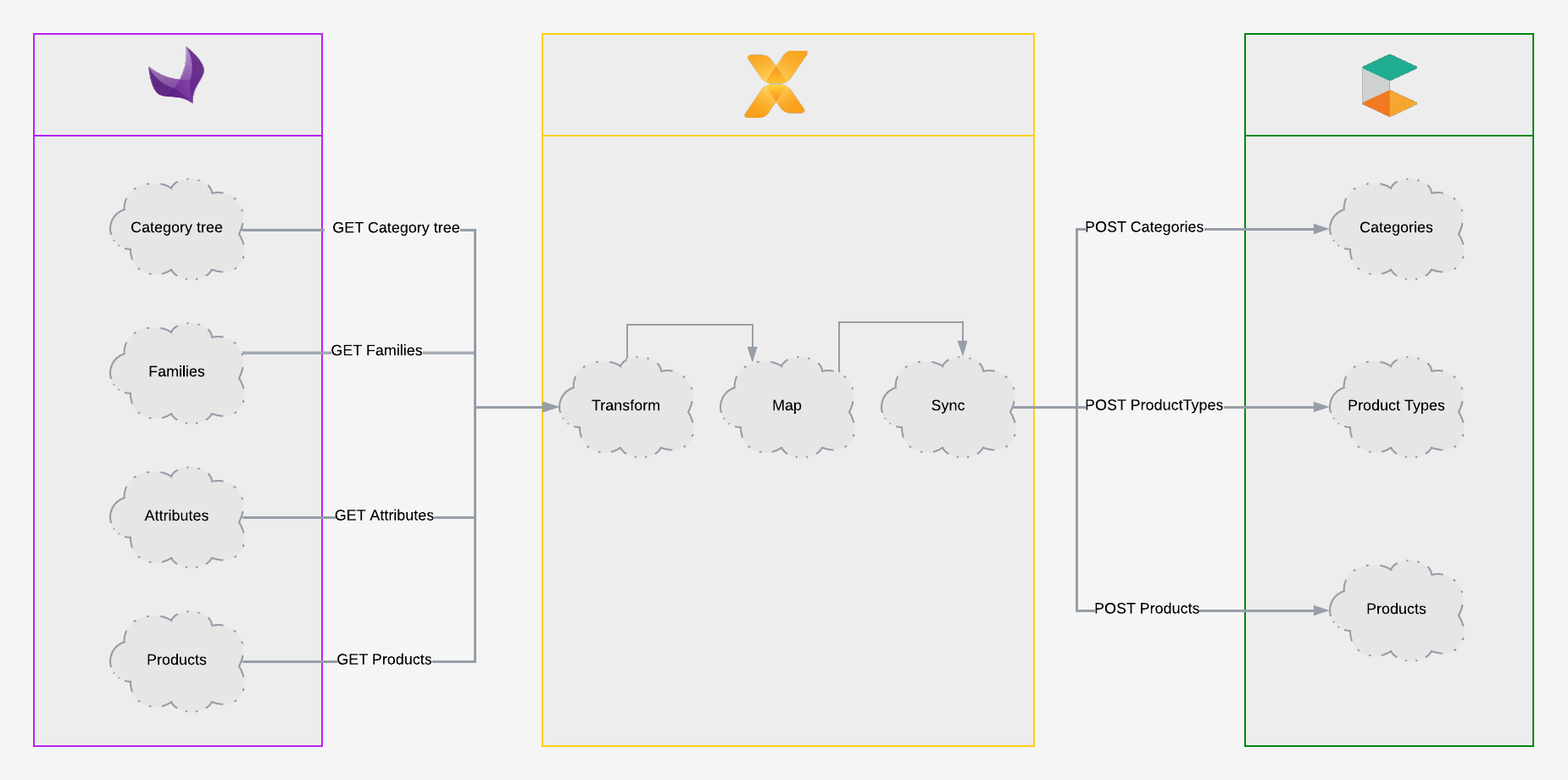
The pandemic has accelerated the role of digital channels in customer journeys. Driving this disruption is the marketing challenge where customers are operating “outside the marketing funnel”. An explosion of product choices and digital channels, combined with a super-informed consumer, has resulted in the traditional concept of the marketing funnel failing to capture all touchpoints and buying ‘moments’. Rising expectations for deeply personalized content and channel-agnostic shopping has highlighted the need for PIM software that interoperates and integrates with an enterprise’s commerce technology stack. As a result of these trends, PIM customers are looking for solutions and providers that can help them build the right ecosystem of value to create winning digital customer experiences. According to Forrester, a “PIM is only as powerful as its connections to the ecosystem, and the same is true of PIM vendors.” Therefore, a highly connected PIM solution is a must-have for companies these days to effectively leverage their eCommerce technology implementation. What are PIM Connectors? PIM Integrations or Data Connectors are pre-built components that sit within a tech architecture and help orchestrate various data flows going into a PIM system, and from the PIM to various marketing and sales channels. In other words, Connectors help automate the flow and reconciliation of data between data sources and destinations. Where do PIM Connectors fit into eCommerce? Today’s pace of eCommerce leaves no margin for error. Hence, automation is vital to boosting productivity to sustain eCommerce growth. Automation is not a luxury but a necessity to scale data management operations that save organizations a great deal of time spent on repetitive and manual tasks. One example of the benefit of this automation is City Furniture who increased productivity by 50%. 1.PIM for eCommerce – PIM creates a single source of trusted product data by aggregating it from multiple sources, cleansing, enriching, governing, and maintaining it consistently. Now that your products are enriched in the PIM, you now need to deliver it to all your channels, syndication or eCommerce platforms. Here are 4 key benefits of integrating a PIM with eCommerce platforms:
  • Improve product SEO: Increase data quality. Simplify ecommerce category, product attribute, reference data, and digital asset management. Increase product discoverability, and improve site search and selection processes.
  • Seamlessly syndicate catalogs: Sync product data from single PIM to one or more ecommerce stores
  • Spend less time on manual work: Automate repetitive tasks. Save time. Eliminate error prone manual product catalog transfer and update processes.
  • Go-to-market faster: Get to market before the competition. Sell more, capture better ROI. Get your products in front of your customers.
2. PIM and DAM Integration – Are PIM and DAM better together? The answer is YES. Companies who are dealing with a large amount of product information, and are looking to manage, organize, and distribute a vast amount of digital assets will benefit from a tightly integrated PIM and DAM solution.  Key benefits include:
  • Deliver better product experiences with up-to date product data and digital assets centralized from various sources
  • More findable, recognizable and useful product data that’s easily accessible to both upstream & downstream systems and departments
  • By combining product data with digital assets, all stakeholders can readily access a single version of the most complete product content that is ready to go to market
  • Elimination of duplicate efforts resulting from disparate folders & versioning issues, and quick syndication of ecommerce-ready product content, tailored for unique channel specific requirements
3. PIM for Distributors – A common challenge faced by Distributors leveraging the Affiliated Distributors (AD) eContent database (AD is the largest contractor and industrial products wholesale buying group in North America.  It provides independent distributors support and resources, like the AD eContent Service program that enables its members to accelerate growth and compete better. Distributor members of AD have access to over 1 million SKUs with rich product data, images, and other digital assets.) is aggregating large volumes of product content from AD and systematically maintaining high-volume product content on an ongoing basis. Industrial distributors typically have tens of thousands of SKUs in the ERP but are able to list only a subset of them on their website. Other challenges could be:
  • Working effectively with large datasets – on a daily basis
  • Matching AD, ERP, Wholesaler, and Manufacturer Price Sheet SKUs at scale to eliminate duplicate SKUs
  • Seamlessly synchronizing product content to ecommerce and other digital platforms
Here are some key benefits of using a pre-built connector to AD eContent:
  • Easily enrich product pages: Use the rich product detail from the AD database including products, variants, groupings, rich titles & descriptions, images, spec sheets, etc. to boost ecommerce environments.
  • Cloud-based: Centralize and manage all product content including AD eContent in the cloud. Eliminate issues associated with using legacy systems and spreadsheets.
  • Content automation: Automate content tasks including ongoing load, categorize, enrich, notify, and publish actions. Rules to map AD SKUs to a client’s unique categories, groups, variants, to improve titles and descriptions, to remove special characters, etc.
4. PIM for cross-border selling – Cross border commerce, international commerce, borderless business – call it what you will but going global with your eCommerce business has become a necessity if you want to succeed in other markets. Statistics suggest that global eCommerce is expected to total $4.89 trillion in 2021. If you’re serious about expanding, localization is an absolute must. But before going global, going native with your website’s language can be the difference between a sale or lost sales. Localized product content matters the most when you’re considering going international with your eCommerce store. Here are some key benefits:
  • Easily submit single or multiple products for translation
  • Track status of submitted translation requests
  • Cancel submissions and documents
  • Helpful error handling and notifications
  • Support for all the locales supported by Akeneo
5. PIM for Powersports – The pandemic generated increased demand for products by people who want to spend more time outdoors. This increased demand created a new group of consumers in the Powersports segment, resulting in a surge in sales of sporting equipment which presented great opportunities for Powersports dealers. According to a report by PJ Solomon the total market grew by 18% in 2020, and accelerated to 25% in the final quarter. According to Global Market Insights, the online Powersports market is estimated to grow at a CAGR of over 4.5% until 2026. This uptick has helped dealerships recognize the need to accelerate digitization and streamline their online presence to meet market demand head-on. One of the crucial ways to list a large catalog online, introduce differentiated product experiences, lower operational costs, and enhance eCommerce scalability is by integrating sufficient PIM practices. Powersport dealers can become self-reliant along the complete product data management lifecycle by automating the collection of OEM and parts catalog data from ARI, cleansing and curating it in PIM, and syndicating it to all sales channels. They need an eCommerce environment powered by a powerful PIM to migrate away from poorly designed and marketed, templated sites to rich and engaging eCommerce websites. There are many other use cases similar to the examples listed in this article. What’s common across them is the need to have tight integration between an Akeneo PIM solution and the relevant commerce systems it supports, including eCommerce platforms, digital asset management systems, translation systems, and industry-specific resources, in order to create and deliver the best possible product experiences. StrikeTru specializes in Akeneo PIM implementations and developing connectors to Akeneo PIM. Check out our wide range of connectors that are available on the Akeneo Marketplace.

Vik Gundoju, Partner

@StrikeTru

Carbon is the New Black: Sharing Your Impact Through Key Product Information

Product Experience

Carbon is the New Black: Sharing Your Impact Through Key Product Information

Based on conversations I have had with companies that Akeneo works with, the impact of their products on the world around us has quickly become a top …

Based on conversations I have had with companies that Akeneo works with, the impact of their products on the world around us has quickly become a top priority for 2022. These companies have started to contract with platform providers who can measure this, with the promise of monitoring the entire supply chain and improving the carbon footprint of products.

Based on conversations I have had with companies that Akeneo works with, the impact of their products on the world around us has quickly become a top priority for 2022. These companies have started to contract with platform providers who can measure this, with the promise of monitoring the entire supply chain and improving the carbon footprint of products. However, calculating carbon footprint is becoming a standard process today. Companies that aren’t doing this need to catch up as it allows consumers to make better purchase decisions. Product information plays an important role in this, enabling companies to be clear on their products’ manufacturing and services carbon footprint. That is their climate impact is measured in carbon dioxide (CO2) equivalent emissions. Reducing the carbon footprint of products not only has an effect on company costs, but also on demand. While greener products tend to be more costly to produce, consumers tend to purchase more at a given price when products have a lower carbon footprint. The levels of brand sensitivity and involvement in this topic have a direct impact on the brand personality. And brand personality does actually influence brand trust, brand attachment, and brand commitment. Thanks to a survey we ran with OpinionWay in 2021, we learned that 52% of consumers would be willing to pay more when brand values are part of the product information shared. Certificates & quality labels should come first!
So where to start your green journey? And what will matter for consumers? Their needs and concerns will be different, based on the respective business areas, consumer segments, and market. While some companies are targeting green consumers in developed markets (who tend to be more mature on the topic), others may be focused on the rapidly growing middle class in emerging markets, which means that the following recommendations will be highly relevant to many but not all businesses. Therefore, it’s vital to adapt your content and product information to what you know about your audience’s expectations.  Here are 5 key ways you should invest in product information:
  1. Share your brand values through product content
Building strong relationships with people is only possible thanks to transparency. More than your products and services, people want to know more about your purpose, your mission, and thus your values. The more “real people” (usually the company founders or leaders) embody these values and share them, the better the impact they will have. Unfortunately, some brands struggle to do this well—if they do it at all. The good old “‘About Us Page” doesn’t always give us a sense of their history, personality, or passion. This is still too basic. So what are the best practices? Leading brands are doing a great job at expressing their ideas in an inspiring, engaging, and enticing way and a specific category of brands is ahead: the Digital Native Vertical Brands. You know, these brands that not only grow with their community but build the business with them. They share everything about the suppliers they work with, the material they use, their vision of the business, the concrete actions they take, and organizations they donate to. All this provides meaning for consumers, and thus higher engagement and growth.

Two great examples from Everlane and Sezane. 2. Educate on certificates & quality labels  Consumers are more familiar with product labels, and they know the most credible ones. The Oeko-Tex Standard 100 confirms the absence of harmful chemical substances is a perfect example. So if you spend money in obtaining these labels, sharing them with consumers via the product page is a first step; being transparent about how you get the label is another interesting one. 62% of consumers consider certificates and quality labels as the #1 information that demonstrates brand commitment. And this is not limited to the material used to create products. Being B Corp certified is recognised around the world, and testifies to the business partners’ work all along the supply chain. From the choice of production methods, raw materials and working conditions, to environmental footprint and engagement in the community, B-Corp certification requires a brand to undergo an intensive analysis, responding to over 200 questions. This is another great example to include alongside the standard information shown on a product’s description page. Consumers are keen to learn more about certifications. They want to understand their sneakers’ carbon footprint like they do calories in food.

B-Corp certification requires a brand to undergo an intensive analysis, responding to over 200 questions. 3. Guide your consumers to the right products If you invest in getting certifications and quality labels that matter for your consumers, it’s crucial for product discovery and search that they can filter e-commerce product lists according to their purchasing preferences. If users are unable to adequately filter product lists, their ability to tailor their shortlist to contain only items of interest is severely restricted and they may be unable to find what they need. The ability to use key information such as a certification or a quality label as a filter needs to be anticipated and managed in the central system you use to manage product information. Some PIM (product information management) software like Akeneo PIM Enterprise Edition makes it easy to update a whole range of products and create information that will be used as filters thanks to automatic rules based on information they contain.

Akeneo customer, Bergfreunde.com / L’alpiniste.fr, makes it easy for consumers to filter on what matters for them in term of sustainability. 4. Reappropriate your second-hand products The rising awareness around environmental issues and conscious spending has led consumers to buy more in the resale market. While saving money used to be the main factor driving second-hand shopping, consumers are now also eager to find eco-friendly products, meaningful gifts, or to get a more personalized experience that doesn’t involve shopping at big box stores. Companies have quickly understood that they have a big opportunity in reappropriating their second-hand products instead of letting people sell it on dedicated (online) stores or resales platforms such as Vinted, Vestiaire Collective, ThredUP or the RealReal. Big brands such as Patagonia and Isabel Marat have shown it’s possible to sell used products alongside new items; other brands can also tap into the trend by offering buy-back programs or easy recycling or resale options for used products. Promoting second-hand products alongside new ones requires a different approach to how products are discovered and described across the places where they are sold. This is where the best practices of Product Experience Management (PXM) come into play as part of a PIM implementation. You’ll save time, and make sure of the product data quality if you inherit information from a trusted foundation you have built (even from the oldest collections) instead of re-creating them.

Example from Akeneo customer, Isabel Marant, who has launched its vintage clothing boutique, available online, on June 21. Young consumers especially understand that conscious consumption and participating in the circular economy is key to reducing climate footprint. As a direct result of their awareness, Gen Z is driving much of the growth in the second-hand luxury market. As this has become a major issue worldwide, this is not limited to the Fashion industry. And because repair is better than replace, France has launched the Repairability Index in 2020 for electrical and electronic equipment and plans to replace it with a Durability Index, whereby manufacturers will disclose not only how repairable their goods are, but also describe the full lifecycle for each product.

Akeneo customer and French startup, Back Market, resells PlayStations, household appliances, and smartphones and raised $335 million in May 2021. 5. Switch to a more climate-friendly shipping solution and reduce packaging The demand for fast deliveries in e-commerce has never been higher. Already today, worldwide freight transport accounts for 8% of global carbon emissions, with last-mile shipping making up a large proportion of this footprint. Effective ways to reduce the impact of shipping from e-commerce are already available, and will continue to grow. Major carriers including DHL, FedEx and UPS offer environmentally-friendly programs such as paperless invoicing, carbon neutral shipping via carbon offsetting, and greener shipping options including bikes and electric vehicles. You can also reduce last-mile delivery by establishing convenient pick up points near customers or partners so that orders can be dropped off in one stop instead of driving to each customer individually. In any case, clearly display the possibilities you offer alongside your products. Retailers often use standard boxes to ship all items and fill the free space with additional packaging material. Shipping items in smaller boxes will not only avoid unnecessary packaging material and waste, but also saves space on the transport, making it more climate-friendly. Given that packaging makes up a big part of the e-commerce carbon footprint, this is a very important reduction lever for your company.
Zara ​boxes with a past. All cardboard boxes that arrive in stores are reused up to 5 times before being recycled into new boxes for online orders. Are you now ready to take action and enhance the key product information you can share with your consumers to make a difference? It may seem overwhelming at first if it’s something you haven’t started implementing yet. But as mentioned before, sharing how you are minimizing your carbon impact can have significant impacts on the loyalty of your customers and the growth of your business. Everyone at Akeneo is here to share their expertise and guide you along that green journey. All you have to do is ask!

Like the leaves in autumn, a new Akeneo release drops

Product Experience

Like the leaves in autumn, a new Akeneo release drops

Today we announced major new product features and benefits as part of our Autumn Product Release Cycle. So far, we’ve released over 70 product enhan…

Enhancements in Akeneo PIM

There are a couple of notable new enhancements in the Autumn release we want to highlight.

In some cases, managing things like nutrition facts, ingredient labels, product dimensions, and product comparisons are a lot easier to do when the data is displayed in a tabular format. So, we’ve added a new Table Attribute which gives users a simple but compelling way to present complex product information in tables. Marketers can more easily visualize the information and select from pre-defined templates that use simple select, number, text, and boolean values.

Tailored Exports is a new feature that lets users easily customize product data export structure, content, and sources to better customize how the data is exported for different data sharing needs. With Tailored Exports, marketers will never need to manipulate their product data in spreadsheets again, making exporting data and sharing product information easier than ever.

The best user interface is one that doesn’t need to be explained. And as we learn more about how marketers are using the PIM and their work evolves, we want the user experience to evolve to drive further efficiency. Thanks to customer feedback, we’ve made numerous enhancements to the user interface so that working in Akeneo PIM is more consistent and user-friendly. Some of the notably improved screens include an updated proposal screen, easier category management, improved settings navigation, a more intuitive activity dashboard, and many others too numerous to list!

Attribute Settings menu before:

New Attribute Settings menu UI:

The new release also brings updates to Akeneo Shared Catalogs and Akeneo Onboarder, enhancing product data collaboration and synchronization between brands and their retailers, distributors, and suppliers. Users can access all attributes and metrics for shared products, with improved sorting, filtering, and advanced search capabilities, as well as support for additional languages to facilitate global collaboration.

A new connection to the Akeneo Ecosystem

We’re very proud of our partner ecosystem and are humbled by the fact that so many organizations want to support our mission to bring PIM for all. The Akeneo Marketplace is a testament to the vibrant ecosystem we have cultivated to date and will continue to expand. With the Autumn release, we’ve taken a giant leap forward in making the ecosystem more accessible to the PIM — the Akeneo Marketplace is now fully embedded in Akeneo PIM! This means customers can quickly discover and access additional functionality, and more easily research and implement compatible tools and third-party applications –– all without leaving the Akeneo PIM dashboard. The new Embedded Marketplace makes it easier than ever to tap into the latest and greatest innovations from Akeneo partners to unleash their PIM productivity without having to toggle between different interfaces.

New Connector for BigCommerce

Finally, we’re announcing a significant addition to our premium eCommerce integrations. A new Akeneo PIM Connector for BigCommerce allows joint customers to power their eCommerce sites with comprehensive, accurate, and up-to-date product data. The new connector uses an API-to-API-based integration that allows for product data generated in Akeneo PIM to be exported to the BigCommerce store. And, as a SaaS connector, it’s easy to implement with no complex configuration, it’s regularly updated, doesn’t require access to any code, and provides for seamless delivery of new features without having to migrate or upgrade the connector.

Get the Akeneo Connector for BigCommerce

We’re excited and pleased to bring these new features and products to market. And remember, you can now get easy access to find out what’s coming next by taking a look at our public roadmap!

What’s Next in Akeneo PIM?

Product Experience

What’s Next in Akeneo PIM?

They say that all feedback is a gift. And one piece of feedback we’ve received from our customers and partners is that they would like to see more c…

They say that all feedback is a gift. And one piece of feedback we’ve received from our customers and partners is that they would like to see more communication from us on what’s next in our product roadmap.

Each year at our annual user conference, we include a session that goes through the major development themes for the coming year, and we often discuss specific features we intend to deliver or even pre-announce products — sometimes it is hard to contain our excitement! But an annual overview isn’t enough. And new customers who join the Akeneo family right after the conference may have needed to wait nearly a year to get their update. It has even been noted by industry analysts that most vendors need to be more open with product roadmaps.

A new roadmap resource

In the spirit of openness and innovation — two of our core company values — we’re very pleased to announce the availability of our brand-new “What’s Next with Akeneo PIM” page that highlights some of the features our SaaS customers will see in the next few months, and a taste of what’s being researched and in early development for the longer term.
 

Resources you have today

The Akeneo Help Center is a publicly accessible site where you can learn about Akeneo PIM features and capabilities in one handy place. In addition to help topics, we document all of the new features released on a monthly basis on our What’s New page which is updated on the 5th of every month. You can easily see what new features were added when, and what major area of functionality each features corresponds to.
By clicking on the “rocket” sidebar icon, you can easily filter and get a more complete view of features by release number, date, and functional area.
To recap: the What’s New page explains what has already happened, and the What’s Next page tells you what’s planned for future releases. We intend to update these pages regularly as features are released and as new capabilities are placed on the roadmap. So check both pages often!

My PIM Journey

Product Experience

My PIM Journey

After spending 5 years implementing Akeneo PIM for all kinds of businesses across several territories, scaling product catalogs to address new digital…

After spending 5 years implementing Akeneo PIM for all kinds of businesses across several territories, scaling product catalogs to address new digital eCommerce challenges, and becoming a Product Marketing Manager and Evangelist 2 years ago, I realized that my personal PIM journey at Akeneo tells the same story as our PXM Maturity Model framework. I certainly grew with Akeneo customers, the same way Akeneo learned and grew with them too. The best is yet to come!

When I joined Akeneo, more than 6 years ago, I came with an ERP consulting background. I was used to spending months implementing pricing & discount models, order types, return processes, and all kinds of supply chain workflows for big companies in the fashion, food, and manufacturing industries. My head was full of codes for all the ERP menus (MMS001, CRS610, OIS010, OIS180… – I’m sure this will resonate with some of you if you’re familiar with M3 ERP), and SQL requests. The scope was broad and I used to work with internal key users whom I was closer to than my own colleagues.

PXM Maturity Assessment

How mature is your organization? How can you take it to the next level?

  So when I opened a PIM for the first time, I have to admit that I did not get it immediately. I had never worked directly in the eCommerce industry (and the eCommerce team is rarely involved in an ERP implementation). What I could see on my screen was a lot of product edit forms! Which makes total sense, as the main goal of a PIM is to enrich product information and improve its quality. But at first, the scope seemed so small to me. After discovering all the features though, I totally got it. I just loved the marketing and customer-oriented approach. I was so ready to go onsite to work with many new colleagues: the eCommerce team, merchandising team, content team, studio team, and print catalog team. For me it was now super clear – ERP does support the supply chain and internal vision of the product, the PIM, the market, and the end consumer. As an experienced consultant, I spent my time listening to these people. One day during one particular project for a mass-market fashion brand, a young well-styled man interrupted one of our workshops to ask the Product Manager if the product he was about to showcase on their Instagram account was the right style, meaning the right color, and to make sure the product had not changed since the sample validation step. We know the impact it has on sales, so you can’t get this one wrong. At the time we were implementing a PIM to support an eCommerce platform migration for this fashion brand. So the project was 100% focused on the eCommerce part. But from that exact moment when the community manager with great fashion sense interrupted the workshop, I understood that a PIM project is much more than implementing another tool to only support one channel. It is about offering a new way of working for all the business users in a company. This community manager-turned-social-seller could have easily and quickly found this information in the PIM. Everywhere you sell and market products, there must be a PIM that establishes a strong foundation of your product data, that is always clean and available to share with all the touchpoints you have with your customers. Not just your social networks like this community manager asked about, but also your physical stores, the digital screens in-store, the sales app, the marketplaces you sell on, and yes, your own website(s).

From an eCommerce-oriented PIM to a channel-agnostic one

As soon as I understood the benefits of implementing a PIM, I started to re-think the workshops we delivered, and about the attendees of these sessions. But this implied challenging the project scope for each customer and making them understand how more teams could benefit from this new tool, and how it could solve a lot of product enrichment issues. Don’t get me wrong, it was not about questioning their strategy, but more about broadening the scope, opening this new goldmine to anyone dealing with or consuming product information. Behind each of your sales touchpoints, there is a team, or at least a human. And these people need to be empowered to understand that they won’t work in silos anymore but will work to support their company strategy, all collaborating with one single source of truth for their product information. So how did I learn to get buy-in and make a PIM project a success that involved everyone? How did I engage them in such a project? Basically, by rallying the troops! For the first workshop at one client, we advised our customer to invite all the people in the company that either enrich, contribute, or even just consume product information – which could lead to having over 30 people in the room at once. Yikes! The main goal we had was to make sure that:
  • Everyone was aware of this new tool in the company.
  • Everybody got the same level of knowledge: what is the PIM scope? How does it work with other systems already used (PLM, ERP mainly)? What does it mean for everyone’s daily work? It’s not about duplicating work or working for others… but about building a strong, healthy, common foundation to support the company’s growth.
  • Everybody understood how they could benefit from this new tool: fewer informal requests, less manual (re)work, fewer e-mails, better relationships, smoother enrichment, and more digital processes.
After making sure all the teams were engaged and successfully able to create this smooth enrichment process, we needed to understand who is responsible for which piece of product information, and who depends on others for information. And we had to get answers to many specific questions: How do you create a product? Is a product a sample beforehand? Is it possible to start writing a description without at least a picture of the product? How is the assortment managed? Is a product available by default for all the markets you address, or do you have an assortment of products by market? Is there a team responsible for validating all the product information? Who makes sure it complies with market regulations? Who decides that a product is ready to be seen by and sold to end consumers?
At the end of the workshops, any stakeholders connecting to the PIM could understand what they had to do, and how to do this, without any additional training because everything would have been designed according to their way of working and their specific needs: from their workspace just showing the products they have to work on, to the language(s) they have to create content for, to the product information they are responsible for.  Ultimately, these people immediately adopted both the technology and the processes to help them, changing the way they worked for the better.

From a PIM to a PXM Studio

Feeling more than ready after this early customer, I was now mature enough to work with all kinds of companies with their different business challenges. Once the teams started to understand the power of collaboration and had product information ready for any new business challenge, they started thinking about broadening the scope of their collaboration with their external providers. For resellers, instead of receiving and dealing with a lot of different formats and spreadsheets, we started to think about making onboarding product data easier and faster. That’s precisely how Akeneo Onboarder was born, by the way! The same goes for the manufacturers I worked with. How could they share accurate information with their business partners, resellers, and marketplaces? Et voilà! Akeneo Shared Catalogs joined the family. The magic really started to happen for me when some companies heard about Akeneo and decided they, too, needed a PIM after some of their business partners mentioned they were saving time, rationalizing processes, and sharing better product data quality with this new way of working.  A lot of Akeneo customers work with other Akeneo customers: in the fashion industry, in cosmetics, in the B2B world, with specialized distributors. So many businesses in these areas are connected to or collaborate with others in one way or another. It is so great to connect people together, simplify their daily life, while all speaking the same language. One of the recurring questions I received from my customers during this time was “How long will the project last?” I have now a clear and irrevocable answer: “The project timing will only depend on how mature and ready you are with your product data dictionary and with your product enrichment lifecycle.”  If a company is clear on what a product is for them, then what their customers need to know about their products and their brand becomes much clearer too. And if every team knows which product information they are responsible for to make it the best it can be, and how doing so can address their business objectives, then they are well on their way to growth, success, and maturity. And this part of my story brings me to what Product Experience Management (or PXM) is all about. It’s how you can make sure your people, your processes, and your technology are orchestrated to efficiently deliver high-quality product information in the right context, adapted to the sales touchpoints and markets you address, all aligned with your business strategy. So that’s my journey of maturity in the world of PIM and PXM. How about you? If you’re wondering where you are on this path, go answer these 14 short questions to receive a personalized report with actionable insights all based on my 6 years of experience with discovering and building your peers’ maturity. I look forward to learning where you are on your journey!

PXM Maturity Assessment

How mature is your organization? How can you take it to the next level?

Akeneo is now Headless Commerce Certified with Salesforce Commerce Cloud

Akeneo News

Akeneo is now Headless Commerce Certified with Salesforce Commerce Cloud

Did you tune in a take a front-row seat at Dreamforce on Salesforce+ this week? There were a lot of great sessions and exciting announcements. Speakin…

Did you tune in a take a front-row seat at Dreamforce on Salesforce+ this week? There were a lot of great sessions and exciting announcements. Speaking of exciting… have you heard the news? In addition to the Akeneo Connector for Salesforce Commerce Cloud, Akeneo is pleased to announce that we have achieved Headless Commerce certification with Salesforce. This is a new certification and we are honored to be a “trailblazer” and among the very first Salesforce Partners to achieve this milestone.

Headless commerce is a booming segment of the eCommerce market. In a headless commerce architecture, the backend and the frontend of the eCommerce application are separate. This allows sellers to create the front end they want without having to re-engineer the backend, and without the constraints of pre-defined customer interfaces. As a result, sellers can create and better control the customer experience they want to deliver. In order to allow this to happen, headless commerce solutions make heavy use of APIs and other tools, and require developers and IT teams to build the frontend. Akeneo has partnered with Salesforce to enable Commerce Cloud merchants to streamline their catalog management processes and deliver a compelling product experience to their customers. Merchants can use Akeneo’s open-source PIM solution to easily consolidate, enrich, manage, and export product information to Salesforce Commerce Cloud. Akeneo’s integration with Salesforce Commerce Cloud is delivered in the form of a connector that leverages the latest API technology to provide seamless integration between Akeneo PIM and Commerce Cloud. The integration enables the merchant to set up predefined jobs in Salesforce Commerce Business Manager to retrieve product data, products with variants, categories, attributes, media, assets, associations, and price books from Akeneo PIM. The benefit of this solution is that Akeneo PIM interfaces with the backend of Commerce Cloud only, which provides merchants with the freedom to build the eCommerce frontend interface, with the security of knowing that high-quality, accurate product information will reliably be delivered from Akeneo PIM. As part of Akeneo’s certification, we’re listed on the Salesforce Commerce Cloud Partner Marketplace under both the Product Information Management capability section and now in the Headless Commerce certifications & success section. There, you’ll be able to access our Headless Integration Guide for Salesforce Commerce Cloud which explains the functional and technical integration capabilities to get Akeneo PIM to feed your Commerce Cloud instance.

Give customers the product information they want

Product Experience

Give customers the product information they want

Last week I logged online and began shopping for products that I intended to use in a very specific way. I needed a light-weight, escape-proof, portab…

Last week I logged online and began shopping for products that I intended to use in a very specific way. I needed a light-weight, escape-proof, portable prison cell for my 4 month-old Weimaraner puppy, and a monitor for my home office to replace my small laptop screen. 


I did a little research and had some specific criteria in mind for both products: The Corral
  • 36 inches high (Weimaraner’s can jump)
  • 72 inches in circumference (Weimaraner’s get big)
The Monitor
  • 32 inches (big enough for spreadsheet work)
  • IPS Panel Type (hardware guides told me this was best).
Much to my surprise, I found that validating these products against my criteria involved having to jump between multiple retailer’s websites to cross-reference SKUs and model numbers and do a lot more scrolling and squinting than I expected. In some cases, the product information I needed was embedded into long descriptions with no way to filter or search, and in other even worse cases, completely missing! These gaps in information made finding the product I wanted difficult. These retailers were failing to give prospective consumers critical information about the products they were trying to sell!

Filling in Product Information Gaps

The notion of using mandatory fields to govern the presence of critical information within your product catalog seems both obvious and easy to implement for retailers. The reality is quite different though. Product catalogs today are massive and the challenge of ensuring integrity across such a large amount of data is only part of the problem. In an increasingly competitive post-Covid landscape retailers must also ensure their data stands up to the intense scrutiny of discerning customers and search algorithms whose requirements are constantly changing; The “Set it and forget it” mindset of yesteryear no longer works, even in the B2B Industry. To properly validate the presence of important product information and ensure “Completeness” sellers need to be able to: 1. Define the unique combination of critical information consumers need for each product type. 2. Account for multiple versions of this critical information across languages, regions, and sales channels. 3. Quickly and efficiently identify and fix missing information across an entire product catalog. Let’s dig into these a little more: The starting point for all product governance is defining exactly which information consumers need. Most enterprises today measure their product catalogs in the tens or hundreds of thousands of products and offer a diverse range of products with radically different product characteristics. For example, a big box retailer may sell Washing Machines and Laptops alongside High Heels and Blue Jeans. The information consumers want for each of these four products is radically different, but they must coexist and be accounted for in the same catalog. In this case a properly built product catalog will have hundreds or even thousands of attributes organized in a taxonomy of discrete product-type structures where the unique requirements of each product type can be accounted for. You cannot have just a few global mandatory fields, you must tailor your mandatory fields to the unique requirements of each product type.
The next consideration in ensuring a Product’s completeness is accounting for the contextualization of the product’s information across languages, geographic regions, and sales channels. It’s not enough to know that the “Description” of the English version of our Product on our eCommerce Website in the U.S. is filled out; we also need to know that the Spanish version of our Product in our Syndication channel in Argentina is ready for our customer’s eyes. Every adaptation and translation of our product, no matter how subtle, must be accounted for as part of our completeness check.
We can’t talk about product completeness without also discussing how to repair these holes in our product catalog. This can be a massive effort. A catalog of 100,000 products with 50 attribute fields has 5,000,000 data points that need to be monitored and fixed. This is an almost insurmountable effort if this product information is spread across multiple sources of truth like an ERP, eCommerce website, or even Excel spreadsheets (which is more common than you may think). Just having a single place of maintenance like a PIM system greatly helps this effort. Next, you need to be able to track and analyze the completeness of your products across the entire catalog and within different product types, business groups, websites, and regions. Once we identify the missing information it’s important to have productivity tools, automation, and even solutions that can leverage suppliers to help fill in the gaps.
In my own endeavor, I ended up finding a Pet retailer site that gave me the exact specifications I needed and purchased a corral for my Weimaraner. This experience then led me to revisit the same site earlier this week when I needed to order a new collar because I was confident that I could validate what I was buying without having to cross-reference, scroll, or squint. In contrast, I struggled to validate the information for my monitor, which I decided was more of a “nice to have,” and gave up completely. The high-quality data of the Pet retailer earned my repeated business while the poor data from the Electronic retailers cost them a sale.

Customer experience depends on product experience

Many retailers today invest significant time and money to drive incremental improvements to their online customer experience by focusing on things like rich-content, SEO optimization, and merchandising. While these are all important considerations, what’s often forgotten is that these areas all have an underlying dependency on complete and accurate product data.  Companies who invest in the basics of building a strong foundation of complete product information find a positive ripple effect through all components of their digital commerce infrastructure that has a tangible impact on their bottom line. Stated simply, strive to exceed your customers’ expectations and provide them with more than enough compelling information to help them find what they need and desire from you, and not someone else.

Retail Technologies That Pair Well Together

Product Experience

Retail Technologies That Pair Well Together

As dedicated readers of this blog know, we spend a lot of time observing and commenting on commerce trends in both the B2B and B2C markets, with an em…

As dedicated readers of this blog know, we spend a lot of time observing and commenting on commerce trends in both the B2B and B2C markets, with an emphasis on the implications of how product information affects the customer experience. For example, in 2020 we conducted a Global B2B survey and in 2021 a Global B2C Survey which sought to uncover how B2B buyers and B2C shoppers feel about the state of product information, and whether a good product experience is something customers value (TL;DR: it is!). At Akeneo we firmly believe that a good product experience is necessary to deliver a good customer experience, and our research confirms this to be the case.

And so we were very happy to be invited by Adobe to contribute to their latest eBook entitled “Retail Technologies That Pair Well Together.” The concept behind this new eBook is that “to attract and retain new customers, retailers must create a unified experience that’s also hyper-personalized for each individual.” Adobe sees that “many sellers’ digital strategies aren’t fully baked…and while retailers have made big strides over the past year—such as expanding merchandise assortments online and adding curbside pickup—they still fail to deliver a customer experience (CX) that’s both seamless and responsive.” There are two parts to this equation that retailers must solve for. The first part of what is driving the need for a unified experience is the growth in eCommerce by necessity, and the emergence of new channels. This has caused consumers and buyers to behave differently, taking new paths to purchase. From a product information point of view, it’s therefore critical to provide unified information, tailored for the needs of each channel. Buyers and shoppers should not see inconsistent product information across channels, but should see that information adapted to the product listing requirements for each channel. The second part is personalization. Consumers want to feel as if the brand knows them, and remembers interaction context across touchpoints, and provides them relevant and timely offers. Part of knowing a customer is understanding what they care about, such as your brand values. Do your customers care about sustainability, responsible sourcing, and other eco-friendly attributes? If so, include that information on your site, and with your products. With more consistency and relevancy – in both product information and customer preferences across channels – customers are more likely to convert and become repeat customers. What other attributes are common to a unified shopping experience?
  • Speed. A unified eCommerce experience must be fast and easy for consumers to use.
  • Predictive content and commerce, tailored to their specific needs at every stage of the buyer’s journey.
  • Cross-channel consistency, so consumers feel you know them regardless of which channel they visit.
  • Privacy consciousness and highly secure.
Do you have the right digital foundation? Creating a unified retail experience requires the right technology to prepare to support the customer experience, from product data to customer data to payments, shipping, and more. And, it needs to work consistently across platforms. However, being able to access and use all of this data is a major challenge for retailers that have not built a digital foundation. And that’s the challenge this eBook seeks to help overcome. So, check it out! You’ll get advice from several of Adobe’s top partners on how to design, deploy, and continuously improve a unified retail experience that serves up a large helping of success.  

School is out and PIM vendor grades are in!

Akeneo News

School is out and PIM vendor grades are in!

Here in the northern hemisphere, school is now out and two things are certain: students are heading out for summer vacation, and they have recei…

Here in the northern hemisphere, school is now out and two things are certain: students are heading out for summer vacation, and they have received their final grades from the school year. In the world of PIM, the same is true — except for the vacation part; the need for PIM never takes a day off! But PIM vendors do get evaluated, and that is exactly what happened recently. PIM vendors have two “teachers” who evaluate us — industry analysts and customers.


The Analysts weigh in

Industry analyst firms provide different kinds of services to technology buyers and vendors. At a high level, industry analysts typically identify technology trends and business needs, size and track markets, research and evaluate technology vendors, and advise end-user clients. For their end-user clients, industry analysts can be a valuable resource to help match end-users with technologies that will best serve the technology initiatives the end-user has. In the PIM market, there are three analyst firms that recently published reports on the leading PIM vendors. Each analyst documents their methodology and explains how they scored the vendors who qualified for inclusion. How did your favorite PIM vendor fare?

Forrester

Forrester publishes The Forrester Wave: Product Information Management approximately every two years. The newest version was published in May 2021. The Forrester Wave analyzed the top 10 vendors in PIM along a set of 15 criteria grouped into three categories: current product offering, vendor strategy, and market presence. All criteria are weighted and scored by the Forrester analysts based on interviews with vendors and reference customers, and research by the analysts. In “The Forrester Wave™: Product Information Management, Q2 2021” report, Akeneo appeared for the very first time. We are named a Strong Performer. You can read more about their analysis and our take on it in our post about the Wave, and also download a copy of the report.

IDC

IDC is well-known for its quantitative analysis of markets worldwide. But they also have a robust industry analysis practice. In December 2019, IDC published the “IDC MarketScape: Worldwide PIM Applications for Commerce 2019-2020 Vendor Assessment” report. IDC also researches vendors, speaks to customers, and analyzes vendors along similar axes of current capabilities, strategy, and size of the company. In the 2019-20 report, IDC analyzed 14 vendors and designated five leaders. This was our very first industry analyst report appearance, and Akeneo was named a leader. Hot off the press is an update to this report entitled “IDC MarketScape: Worldwide Product Information Management Applications for Commerce 2021 Vendor Assessment” – and we’re proud to say that, among the 16 vendors covered in this analysis, Akeneo was again named a leader in PIM by IDC. You can download a free copy of the newly released IDC MarketScape here.

Ventana Research

Ventana publishes a vendor analysis called a Value Index. In their Value Index approach, Ventana takes the point of view of an end-user customer and creates a lengthy and rigorous RFP (request for proposal) about the PIM product. It is very detailed and requires a significant commitment from the vendor to complete, and also includes customer reference checks just like the other analyst research. The 2021 PIM Value Index covered 16 vendors and was released at the end of May 2021. In this analysis, Akeneo was named one of three Overall Value Index leaders. Ventana further categorizes vendors into four classifications, with Akeneo earning the highest “Exemplary” rating. Check out the press release from Ventana Research that recaps the scoring and ratings from the PIM Value Index and then read details about Akeneo’s score in Ventana’s analyst perspective blog post.

The Customer Point of View

While the analysts all do customer reference checks, there are many, many other software evaluation websites where PIM shoppers can get even more opinions and grading about the myriad PIM solutions available on the market. In general, these software evaluation websites are great places for end-users to get an unbiased view directly from users of the tools they are researching. However, not all of these sites perform any in-depth research like the analyst firms, and vendors may or may not be in contact with these sites. Here are some links to a few examples: G2 tracks PIM vendors and offers a handy grid to identify how they rank vendors based on input from customers. Akeneo is listed as a Leader on this popular site. Capterra is now owned by Gartner, a well-known industry analyst firm that also owns the Software Advice and GetApp review sites. Gartner also offers Gartner Peer Insights on their website. Akeneo currently has a 5.0 rating on Capterra. Featured Customers showcases vendors’ customer stories, testimonials, and videos, and has a methodology to rate vendors based on this information.

How should I use all this information?

As you can see, there is no shortage of opinions and grades about PIM software! But as nearly all these resources say, you should use these sites as only one input into your software selection process. Use these resources to create shortlists of vendors to evaluate, and then seek to understand which tool fits best for your business case. Even the analysts themselves do not recommend making a technology selection solely based on their opinion. If you’re a client of Forrester, IDC, or Ventana, reach out to them, explain your business scenario, and get their advice on who would be a good fit given your specific PIM business requirements. And do your homework!

Breakout eCommerce Brand Thrilling Meets PXM Pioneer Akeneo

Product Experience

Breakout eCommerce Brand Thrilling Meets PXM Pioneer Akeneo

Akeneo’s VP of Global Marketing & Strategy, Kristin Naragon, speaks to long-time friend and Harvard Business School alum Shilla Kim-Parker, CEO …

Akeneo’s VP of Global Marketing & Strategy, Kristin Naragon, speaks to long-time friend and Harvard Business School alum Shilla Kim-Parker, CEO of ShopThrilling.com, about everything eCommerce and a little bit about the career of working moms…


Kristin: As you had shared elsewhere, there are more secondhand stores across the US than Starbucks and McDonalds combined – yet 99% of these stores are completely offline. It’s remarkable how Thrilling is helping them go online for the first time, while helping small business owners. What are some of the key challenges you’ve seen in their eCommerce transformation? Such as digitizing catalogs? Shilla: The biggest challenge is time – these small business owners are usually the sole breadwinners for their households and are also usually the sole employees. The amount of work it takes to manage a vintage business can feel overwhelming. These owners have on average 10,000 individual SKUs of inventory, and they have to be the accountant, the inventory sourcer, the warehouse manager, the janitor, the cleaner, the tailor, the photographer, the fulfillment processor, and the marketer. Our goal is to make the running of their businesses easier and more delightful. Our primary focus is on investing in innovations in our core technology, which makes the uploading of inventory quick and seamless. We do this by incorporating machine vision and machine learning as much as possible into the process, minimizing the amount of data entry required. But we are also offering wraparound services, such as the first on-demand eCommerce assistant service — think Uber for eCommerce uploading — to allow store owners to hire trained vintage assistants to prep and upload inventory onto Thrilling. Kristin: I’m quite inspired by Thrilling’s mission in disrupting how people shop for apparel to combat environmental waste and harm. In one of the surveys we’ve done here at Akeneo, we also found that customers are increasingly prioritizing brands that feature social responsibility such as sustainable sourcing in their product information. What key product details are/should customers look for most when shopping secondhand clothes? Shilla: The first and most important thing to ask is whether an item makes your heart skip a beat – that’s when you know it’s “the one.” A critical part of our mission is sustainability, and we want people to fall in love with their clothes and keep them for decades. Second is fit, especially when shopping online. Our sellers almost always include the measurements and some notes about fit, but if you aren’t sure, just ask. And with Thrilling, you have the ability to try on and return if it’s not quite right. Last, look for high quality brands or quality construction, so you know the item will stand the test of time. That’s the beautiful thing with vintage – these items were not only designed well, they have already survived 2+ decades. This is the reason why we do not accept any fast fashion or mass produced labels on our site – these items will not last more than a few washes, and they were often created in inhumane and unsustainable conditions. Kristin: Mckinsey has concluded that the eCommerce industry experienced over 10 years of growth in the first three months of 2020. How has this contributed to Thrilling’s growth and where do you see the future from here? Shilla: Our revenue grew 1700% over the last year, so we have absolutely experienced the continued mainstream adoption of both shopping secondhand, and shopping online. I see this as the beginning of the beginning – the resale industry is expected to grow from $30bn to $50bn within the next couple of years, exceeding growth rates for traditional retail. As consumers become more passionate about supporting sustainable shopping habits and small businesses around the world, and as platforms continue to innovate the shopping experience to make it more relevant and delightful for shoppers, the growth of the industry will continue to compound. Kristin: Marketplaces are huge in eCommerce right now and there is clearly an appetite for specialty, curated marketplaces like Thrilling. What trends are you taking note of in the world of eCommerce marketplaces? Shilla: Curation and aided discovery are key. Marketplaces can quickly become overwhelming, and if you don’t serve up relevant items quickly, shoppers will leave. We do offer a free personal shopping assistant for those who would like a more human touch, but we have also hired a data advisor — the head of data and personalization at Spotify —  to help us create a smart recommendation engine and better tailor our products to each individual’s tastes. Kristin: The pandemic has shown how hard it is when work and family collide. You’ve got 2 young sons, while running a fast-growing startup –– how do you do it all? And how has your view on parenthood changed since 2020? Shilla: There is no doubt it is challenging, and I think we are not honest enough — in public and out loud — about the difficulties of balancing parenthood and a demanding job. There is a lot of chaos behind the scenes, and just doing whatever we can to make it through the day. Part of it is accepting that you can’t be perfect in every arena at all times – having a sense of humor and some generosity with yourself is key. And I am fortunate to have a wonderful support system in my partner, my family, and my friends. Kristin: You’ve had a long tenure in the corporate world, from JPMorgan to the Lincoln Center for the Performing Arts and Disney/ABC Television Group. What triggered you to take the plunge to be a founder and entrepreneur? What advice would you give to other working moms templating the move? Shilla: First of all, it’s a risk, and everyone should be clear-eyed about it, especially if — like me — you don’t come from generational wealth. Sometimes entrepreneurship gets romanticized, and examples of success are held up without discussing the hidden safety nets from which the founders benefited. So it’s crucial to have an honest conversation with yourself and your family about what you want for your own life and the amount of risk you feel you can tolerate. For me, I knew I had to take the jump. I’ve had that quote from Teddy Roosevelt stuck in my head for years: “It is not the critic who counts … the credit belongs to the [wo]man who is actually in the arena, whose face is marred by dust and sweat and blood.” I wanted to be in the arena, building something with my own hands that helps push the world forward and strengthens our communities. I had been working on the idea of Thrilling for years, conducting pilots and drafting the business plan on nights and weekends. Part of it was to test the idea as much as possible, but part of it was because I was waiting — waiting for it to feel less terrifying before I made the jump. And finally I just had this sudden realization – it’s now or never. Nothing is going to come along to make the path 100% secure. Do I want to take a leap of faith, or do I want to regret never giving myself a shot? I took the leap.