Latest

Winter Release: Commerce at the Speed of AI

Learn More
Akeneo-Logo Akeneo-Logo

Akeneo Named Value Index Leader in All Categories of Ventana Research PXM Value Index 2023

Akeneo News

Akeneo Named Value Index Leader in All Categories of Ventana Research PXM Value Index 2023

In an independent report conducted by Ventana Research, Akeneo PIM was named a Value Index Leader in all seven key categories, paving the way for PXM.

The 2023 Product Experience Management (PXM) Value Index was released today by Ventana Research, an independent market research and technology advisory services firm, and Akeneo was named a Value Index Leader!

This quantified, research-based index evaluated sixteen technology providers and products on seven key categories: five were related to product experience, including Adaptability, Capability, Manageability, Reliability, and Usability. The final two categories were customer experience related: Validation and TCO/ROI.

Essentially, the PXM Value Index is an assessment of how well a vendor can address a buyer’s PXM requirements through their software offering. Ventana Research factors customer expectations and needs into their analysis, providing a holistic report that enables organizations to achieve the levels of organizational efficiency and effectiveness needed for engaging digital experiences through PXM best practices.

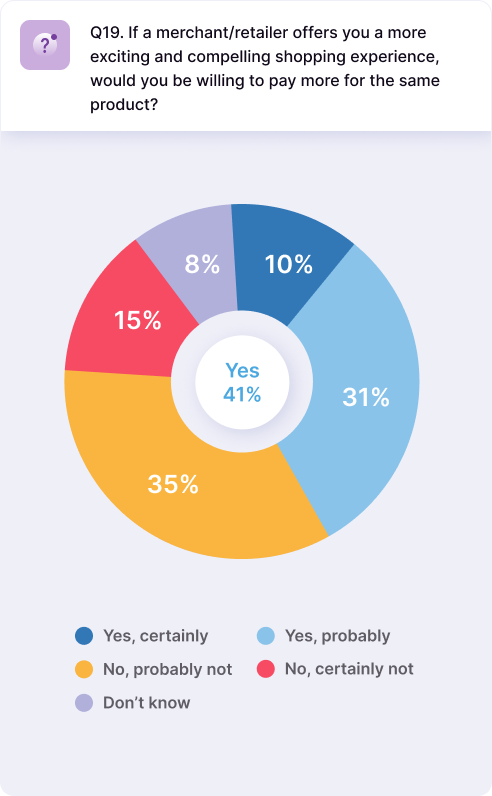
Why is this important? Well, for starters, two-thirds of consumers say they would stop buying from a brand due to a bad product experience, and over half of all consumers say they are willing to pay a higher price for a more informative and compelling product experience. But delivering these sort of compelling and consistent product experiences across a continually expanding array of channels and touchpoints is nearly impossible without first establishing a solid foundation of product information, and that is where the art and science of PXM comes into play.

In the PXM Value Index, Akeneo was categorized as an Exemplary Vendor, ranking second overall. Coming first in Customer Experience and second in Product Experience, Akeneo was ranked as a Value Index Leader in all seven categories. 

Our innovative software offering placed the highest in the “Validation” category, which analyzed the vendor’s ability to support a customer through their PXM journey across sales, onboarding, support, services, and partners, and how the vendor utilizes customer interactions and feedback to improve their product. The close-knit PXM community we’ve managed to curate allows us to use customer behavior and needs to inform our roadmap and improve our product offerings.

Akeneo was ranked second place in several categories as well, including the “Usability” category, which analyzed the technological intelligence of the vendor’s software across the user’s experience, including the use of Artificial Intelligence (AI) and Machine Learning (ML). Ventana Research also factored in the usability of the software by employees of varying skill levels and expertise. With the constantly shifting job market and economic conditions, this is a factor that organizations need to heavily consider when evaluating vendors as quick tool adoption can reduce cost and save time.

Often, when an organization looks to improve its customer experience, they take a “customer-first” approach, which is fair; however, focusing on the customer experience before the product experience is like building the house without pouring the foundation first.

The product experience is the key to exceeding customers’ expectations. It’s what unifies an organization’s efforts to scale and grow, and a well-implemented PX strategy brings more value to the business by enabling efficient expansion to new channels and an experience that your buyers can trust. 

You can learn more about the 2023 PXM Value Index here, or check out a summary of Akeneo’s results in the Ventana Market Perspective. If you’re curious as to how far along your organization is to providing world-class product experiences, you can take our self-assessment for an analysis of your current PXM maturity level and personalized tips and tricks for improving your PXM practice.

PXM Self Assessment

How far along are you on your journey to creating compelling product experiences?

Casey Paxton, Content Marketing Manager

Akeneo

How to Choose a PIM Vendor

Technology

How to Choose a PIM Vendor

There are so many factors to consider when choosing a PIM vendor that it can be overwhelming. Lucky for you, we’ve put together a guide for the first three steps you need to take when selecting the right PIM software for your team.

You did it! You’ve convinced your higher-ups that this nightmare, hodge-podge system of spreadsheets and outdated technology platforms that your team has been getting by with for years to manage product information is inefficient and ineffective. Great! Then what? You turn to face the market and realize there are dozens of options for product information management, all claiming to be the best, with a thick haze of buzzwords and acronyms clouding your vision. How are you supposed to differentiate between them all, and more importantly, how are you supposed to know which PIM software vendor is the right one for your organization? There are countless factors to consider, but when you’re starting your journey towards product experience excellence, here are the three steps you should take first to evaluate PIM vendors.  

1. Identify the team

Who uses a PIM?

PIM is used by a wide range of internal teams, including marketing, IT, inventory management, sales, product/product support, eCommerce managers, and more. All of these stakeholders need access to the product record in varying degrees; your IT team needs to feel comfortable that your PIM solution can integrate seamlessly into your existing technology ecosystem, while your marketing and sales teams may be more concerned with how many languages your product information can be translated into or how quickly you can enter a new market or channel. External stakeholders such as suppliers, manufacturers, and distributors will need access to your product catalog as well in order to ensure high-quality, accurate product listings across the board. While you may not need to, or want to, share every piece of product information with every stakeholder, a PIM software solution can ensure that the right information is seen by the right people at the right time. Ultimately, any team or organization that needs access to product information and is involved with curating a strong PX strategy can benefit from a PIM system.  

2. Identify the goals

What are your PIM pain points?

Before choosing a PIM vendor, it’s important to identify the pain points and goals you want to address. Some common PIM pain points include:
  • Scattered, manually managed, redundant product information 
  • Siloed teams, technology, and communication
  • Slow time-to-market 
  • Inability to scale
  • Poor product experiences that result in lost sales, unhappy customers, and high return rates
 

What are your strategic growth goals?

The PIM vendor that you eventually choose to implement into your organization should have the functionality you need to support your overarching strategic growth goals. Depending on what’s a priority for your organization, certain PIM solutions may work better for you than others, so it’s important to decide which product experience goals you’re looking to achieve. Create a cohesive omnichannel customer experience A PIM solution doesn’t live in isolation; it’s an investment in a piece of technology that will act as a central source of record for all of your product information, and act as the keystone to your commerce strategy. Simply put, you can’t create coherent, compelling, and up-to-date customer experiences without the right people, processes, and technologies in place to support these experiences.  React faster to new markets and channels How quickly is your team able to react to new channels? New social media outlets, new marketplaces, new technologies like Artificial Intelligence(AI) and VR? Chances are, this is an area you’re looking to improve on (but don’t worry; so are most organizations). Whatever the case may be, you don’t want to be building from the ground up every single time a new marketplace or channel emerges. Implementing a PIM solution enables your team to keep your entire product record in one place, ensuring that you’re time-to-market is reduced and activating your existing product data to a new channel is as easy as clicking a few buttons. Optimize internal operations Poor product information management practices often result in a whole lot of redundant work as siloed teams upload and reupload the same product information and spend thousands of hours hunting down the specs that they need. If you’re looking to streamline your internal operations, maximize efficiency, and ensure that every internal and external stakeholder has the product information they need when they need it, a PIM solution should act as the foundation for this enhanced process.  

3. Identify the features

What makes a good PIM system?

Like we said, there is no one-size-fits-all PIM offering. But there are some basic core functionalities that your PIM vendor should be able to offer, regardless of what your strategic goals are. Let’s take a look at a few of the most important ones. 1. Centralize, organize, and optimize product information At its core, your PIM should make it easier for your team to manage and enrich product information — a process that starts with collecting and centralizing your data in one place. A good PIM system should provide a centralized repository for all product information, making it easy for teams to access and manage this information in one place. This includes optimizing product data, such as ensuring consistent formatting and removing duplicates, to make it easier for teams to use and maintain this information. It should also provide a deep roster of capabilities designed to make it easy for you to collect and centralize product information, such as accurately mapping and consolidating raw data from different sources.  Lastly,  strong PIM solution should make it much easier to categorize products, including supporting product variants and organize your product data for the requirements for different channels and languages. Ideally, it will also help you identify errors in product information, fix them, and define a minimum level of quality and completeness required for a product to be published to ensure that the product experience you’re offering is consistent and up-to-date everywhere.  2. Localize and contextualize product information Beyond the basics of creating a single source of record for your optimized product information it’s more important than ever before that your PIM system can adapt product information to different regions, languages, and markets in today’s global marketplace. A good PIM should provide the ability to localize and contextualize product information, making it relevant and usable in a variety of contexts. The right PIM vendor will help you improve your data quality and product experience by crafting localized and contextualized product descriptions, images, and other data for each channel you sell on and every locale you sell in. It also should measure and improve your data quality by identifying low-quality product information and offering suggestions to enhance it. 3. Activate your product record everywhere The PIM system you choose should be able to activate product records across all channels, including your website, mobile app, social channels, third-party marketplaces, physical stores, and more. This means that product information should be consistent and up-to-date across all channels, improving the customer experience and reducing the risk of errors. Your preferred PIM should be able to quickly and efficiently deploy your catalog to your owned and unowned sales channels. A good solution will also track when your products are ready to sell, offer export capabilities designed to ensure your team only exports the right data to the right channel, and enable your marketing team to save these profiles for future usage. 4. Be intuitive and user-friendly A PIM system that is intuitive and user-friendly can help improve adoption and usage by your team. Look for a system that is easy to navigate, has a clear user interface, and provides the tools and features that your team needs to do their job effectively. 5. Be cloud-based and composable Nowadays, your PIM software vendor should be a cloud-first offering that’s built with modern SaaS architecture, and should support a composable architecture framework. What does this mean? Your PIM will easily fit into your tech ecosystem and communicates mainly via API so new technologies can be integrated or removed seamlessly as you grow. A PIM vendor that supports a composable commerce architecture gives you more flexibility and control over your product information even as your organization scales and changes are made to the tech stack.  6. Improve internal operations A good PIM system should help improve internal operations, making it easier for teams to access and use product information, reduce errors, and streamline workflows. This can help improve the speed and efficiency of your teams, reducing time-to-market and helping you reach your growth goals. The right PIM vendor should shorten your time-to-market and make the enrichment process easier and faster for your employees. It should have collaboration tools that streamline your team’s day-to-day tasks, reducing manual enrichment effort and providing a mechanism to measure product data quality to ensure a high-quality product experience.

Other factors to consider:

What is your budget and timeline, and is it realistic? While there are a few PIM tools that offer free versions of their product (like Akeneo!), most robust PIM systems are going to not only cost you a decent chunk of change, but also may take longer than you realize to implement; on average, anything from a couple of months to over a year. You’ll want to make sure that you and your team are setting realistic expectations from the start so that your PIM adoption and implementation process are as smooth as possible! What other technology do you have in your ecosystem that you’ll want to integrate with your PIM, and what technology are you looking to adopt in the future? Every PIM is different and works with different technologies, so before you begin evaluating PIM systems, you’ll want to make a list of existing technologies in your stack and platforms you plan to implement in the future to ensure that the PIM you select is compatible with your ecosystem. This could include Digital Asset Management software (DAM), Master Data Management (MDM) software, Product Lifecycle Management software (PLM), Order Management Systems (OMS), Enterprise Resource Planning software (ERP), and pretty much any other acronym you’ve stumbled across in your research. Can everyone who needs access to the PIM get access to the PIM? This includes all the teams mentioned earlier, such as marketing, IT, product, sales, eCommerce, and more, but also external stakeholders who will need access to your product information. Ensure that your PIM enables you to collect and communicate product information with suppliers and distributors, and is easily accessible; if only your technical teams are able to navigate your PIM, it’s probably not the most scalable option. Can the platform activate your product record across all owned and unowned sales and marketing channels at an efficient pace? Your product information is rendered almost useless if it’s centralized in one place but stuck in your PIM system with no ability to syndicate that information out to all the channels you need to be on. Whether the functionality is built directly into the product, or the platform has an extensive network of best-of-breed technologies to support this type of omnichannel product activation, you’ll want to ensure that the PIM system that you opt for is able to activate your product record across all channels and marketplaces.  

The Right PIM Vendor for You

Though it may be half the battle, deciding that you need to implement a PIM solution is only just the start. Then, you need to focus on aligning your teams around what you’re looking to get out of a PIM tool and analyze the software vendors in the market. While every organization is different and will need a different PIM vendor to support their needs, there are a few key functionalities that all PIM software tools need to have in order to activate compelling and up-to-date product experiences across all channels. Are you evaluating PIM software vendors? Check out Akeneo – we have a range of offerings to fit all your needs, whether you’re a global enterprise organization looking to take your product experience strategy to the next level, or are a small company just starting out on your product experience journey.

Casey Paxton, Content Marketing Manager

Akeneo

3 Ways to Emphasize the Importance of PXM to Your Organization

Product Experience

3 Ways to Emphasize the Importance of PXM to Your Organization

PXM can act as the foundation for your omnichannel customer experiences, but how do you convince others in your organization to make the investment? Let’s take a look at three important use cases for PXM, with concrete examples and KPIs you can take back to your team today.

They say it takes a village to raise a child. Well, you could say the same when it comes to implementing a Product Experience (PX strategy) and building a best-in-class Product Experience Management (PXM) practice.

Bringing together the right PIM team is the crucial first step for any successful PXM project, because implementing a Product Information Management (PIM) solution is a wide-ranging process that involves a wide swath of your organization. That means it’s critical to identify the key stakeholders and decision-makers in your organization early in the implementation process and help them understand the potential benefits of implementing PIM.

To help you garner support for PXM across your organization and become an evangelist for the power and potential of great product experiences, we’ve collected three tips to help you ensure your organization understands the value it can bring.

1. Emphasize Return on Investment

Improved process efficiency, a more manageable workload, and fewer manual tasks through automation are all good things that are made possible by a robust PIM. Decision-makers and executives, however, are typically more convinced by its impact on the bottom line.

They want to know how much the solution will cost, as well as what benefits the company could see if they do make this strategic investment. Namely, they need to understand the ROI, or return on investment, this solution holds. So, spread the word about the ROI of PIM by tracking key performance indicators, from improved conversion rates, reduced returns, improved time-to-market, lower enrichment costs, and even increases in average order volume.

Point to examples like Midland Scientific, a scientific instruments and lab equipment manufacturer, and an Akeneo customer. They were able to reduce the cost of product enrichment by 5 times — from $5/SKU to $1/SKU — and accelerate product catalog production speed by 50% after using Akeneo PIM to take control of their product information processes.

PX Strategy – Self Assessment

How far along is your organization on your journey towards compelling, omnichannel customer experiences?


2. Reflect on the cost of bad product experiences

Product Experience Management is the foundation of all great customer experiences — and product data is the stone that makes up that foundation. High-quality product information will ensure that your customers have great product experiences. Meanwhile, poor product experiences are often the result of inaccurate, inconsistent, or incomplete product data, bad digital assets, or poorly contextualized data.

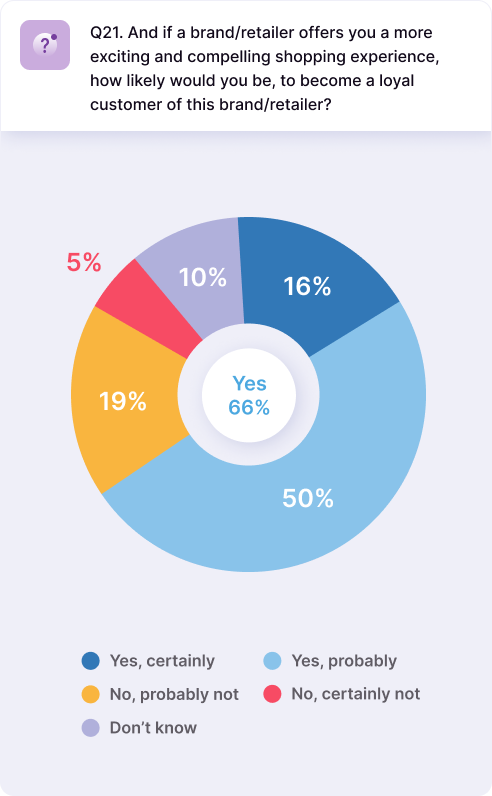
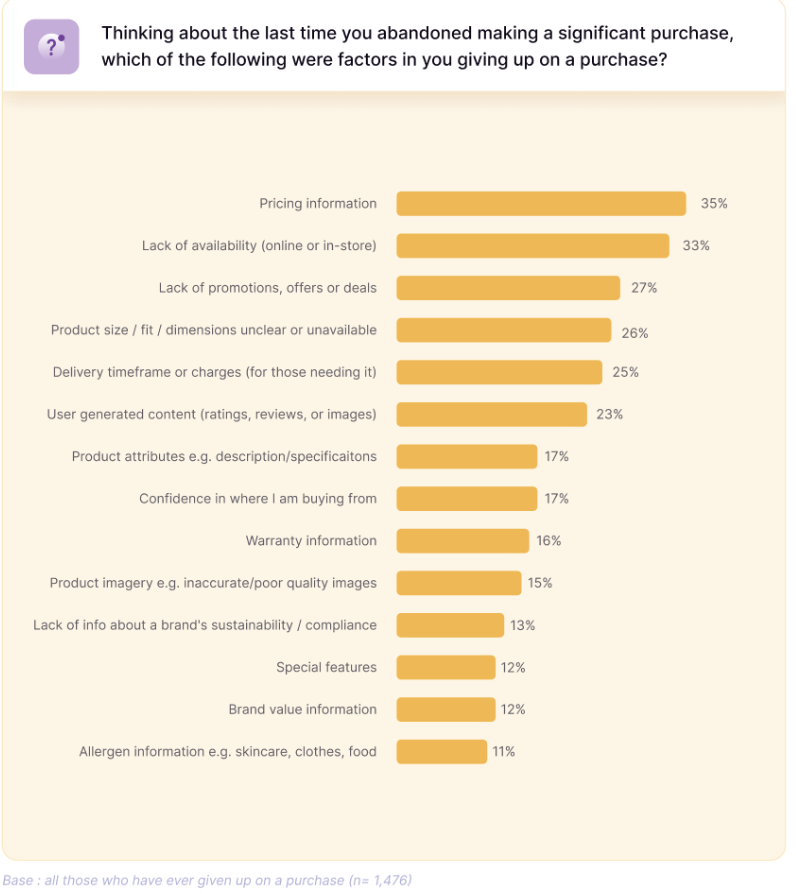
These product information issues can reduce conversion rates, increase product return rates, negatively impact satisfaction with your brand, and reduce the likelihood of them shopping with you again. On the flip-side, they will become loyal shoppers of merchants who go out of their way to provide positive, compelling product experiences, especially unique experiences that utilize innovative technology. In fact, two-thirds of shoppers have abandoned a purchase to due a bad product experience, and just over half of all consumers said that they would be willing to pay at least 27% more for a product for a quality product experience.

Let’s take a look at Akeneo customer Turner Price. The foodservice wholesaler originally looked to Akeneo PIM to ensure that ingredients and allergen information is 100% accurate, correcting old and outdated information and was able to use our software to create a single source of truth for their product information. Since then, Turner Price has been able to triple their product range and cut enrichment times by 80%, leading to increased revenue and average order value.

3. Focus on what matters

The way an organization manages its product information is critical to business outcomes and its overall success. That means your team must focus on the effective management of your product information, even after you’ve initially spread the word about the importance of PXM.

Continue to emphasize the need to move from merely displaying product data across your channels to crafting product experiences that evoke emotion. Achieving real product experience management maturity is a crucial asset to driving growth.

Documenting and tracking your key KPIs is crucial to understanding the benefits from PXM and an investment in a PIM solution. But getting buy-in from your teams is equally important — that way, the technology is properly implemented, employed, and adopted to drive efficiency in your internal processes. Using the ideas listed here to evangelize the profession of PXM and the kind of results your enterprise can see will go a long way to help ensure adoption and success in your PXM journey!

Ready to learn more about how a PX strategy and PXM best practices can revolutionize your business? Reach out to an Akeneo expert today to get started, or check out our latest report conducted by Forrester Reporting, The Total Economic Impact of Akeneo’s PIM. 

Casey Paxton, Content Marketing Manager

Akeneo

Digital Publishing: A Smart Proof of Concept for Your PIM

eCommerce

Digital Publishing: A Smart Proof of Concept for Your PIM

Product information can be scattered and siloed. By utilizing a PIM, organizations can centralize and optimize their data, and test its quality against digital publishing.

Setting up a PIM solution is not necessarily difficult from a technical standpoint. With a SaaS solution like Akeneo, all the key features are available and there’s not a lot that cannot be done. However, the challenge often resides in knowing what data needs to be gathered, where it is stored, and how it should be organized in the future.  

How do you define a product?

One of the starting points when starting a PIM project is to successfully define a product: what are its features? What makes it different, unique, and recognizable? Quite often, there are some obvious ideas which come first, like a name, a picture, a description. Sure, that’s the basics of pretty much any product.  But what happens when you start looking at more technical products, how they should be used, in different conditions. Products with variations. Products which inherit features depending on where they are produced or what certifications they might have. A complete and well-defined product can be a lot more complex than what one would originally imagine.  Products which are sold to different end targets (B2B vs B2C for example), via different channels (web vs. print vs. social), on different markets (like entering new countries) will require different levels of information and sometimes, variations of one same original information. This is where the strength of a PIM comes in. The ability to manage such subtle differences, layers of information, channels, makes all the difference when compared to a basic database solution such as Microsoft Excel.  

It’s all about the data!

Often when a company implements a PIM solution, it actually has a lot of product information. The reasons that lead a company to choosing a PIM is often related to a data issue. The information is somewhere, maybe spread across various tools. We quite frequently see companies that have many channels of product data: maybe their website, perhaps data sheets… Anomalies on these channels, such as product information errors or manual, tedious updating are telling signs that a company might be better off with a PIM solution.  In fact, any company which produces product data sheets has a great starting point for PIM implementation. Looking into how these product sheets are produced, where the information is stored, and who has the knowledge is a valuable exercise when considering setting up a PIM solution.   

Test-drive your PIM with print connectivity

If you look at it the other way, a great way of testing your PIM setup is to leverage digital publishing and generate a product sheet based on your product information. “Am I able to create a print-style document out of the information I have, and the product features I’ve identified?”  If the answer is yes, you’ve probably done good work. If it proves difficult, then perhaps there is data missing or data that isn’t structured in the best way for use on multiple channels.  Setting up a PIM solution should always be done with applications in mind. It can be a little mind-boggling when a product has many features, or complex uses. But it is good to have some key questions in mind all the time:
  • How do my customers access product data?
  • How do they consume this data now?
  • Is this the way they want to be fed product data or is this just the way we’re feeding them data now? 
These questions cannot be answered just by using a PIM of course (even though the Akeneo team provides a lot of best practices) but using PIM-to-publishing tools is a great way of testing your product information, to make sure it is set-up in a way that can translate into an actual deliverable for the end consumers of the product data.
Channel information
 

5 steps from digital to print to test your PIM

A typically efficient exercise involving a few steps could be: 1. Work with your customers on what data they need and how they want to reach it. Acquire feedback, understand pain points. 2. Design the “perfect” product data sheet, based on the feedback collected. 3. Generate a data sheet based on you current PIM structure using a digital publishing solution 4. Compare with the “perfect” version and establish where there might be limitations coming from the PIM 5. Adjust the PIM content and/or structure and reiterate steps 3-4-5 This simple cycle is a simple, cost effective, and agile way of testing your PIM and making sure it is efficiently set up for your use cases.  Generally, if you can generate print type documents, which can be very comprehensive, then your PIM is going in the right direction for other applications too, such as connecting to other data systems, websites via API, etc. This type of proof of concept is highly recommended before starting to fill the PIM with product information on a large scale. A little time spent at the start can save huge amounts of time further down the line.  If you decide not to spend this time working on a simple POC, you could fall victim to one of the most common traps of data management, often referred to simply as “Shit in, shit out”. Meaning if you fill a PIM with poor information or try to fit product information into a PIM solution which isn’t correctly structured or set up, then any output coming from the PIM will be ultimately poor, and in some cases, completely useless.  

PIM to print solutions: how far can you go?

If you have the data, the sky is the limit! Producing very complex print documents can be done using digital publishing solutions. A product data sheet is a great first step, but one can go a lot further, like generating complete catalogues from PIM data. For multi-page documents, such as brochures and catalogues, production and approval times can be very long. No customers want to receive the “latest catalogue” with all the new products missing. To make sure the document is up-to-date and produced in a reasonable timeframe, PIM to print solutions are the only way forward.  

A few key points to bear in mind

What you should remember when considering your PIM project:
  • What data do you need and where is it stored?
  • What are your applications?
  • Remember to test your PIM – and when it comes to proof-of-concepts, digital publishing is a thorough and effective way of testing
  • When it comes to complex print requirements, PIM to print tools are the only effective solution
Curious about how a perfected PIM can be seamlessly integrated into YOUR workflow? Take a few moments and click here to watch a video talk about collaboration and agility with Akeneo PIM, showcased by our customer SWISS KRONO GROUP, Unic as the system integrator and InBetween Deutschland as their print partner.

Alexander Dressler, CEO

InBetween Deutschland GmbH

What is Open Source DAM Software?

Technology

What is Open Source DAM Software?

Discover if open source DAM solutions are the right choice for your organization, and how open source DAM software’s scalability, customization abilities, and cost-effectiveness can potentially impact your organization.

For most software companies, proprietary licensing is big business. Organizations buy the rights for one, ten, or a hundred copies of the software. It’s delivered and deployed, and there’s no need for developers—the source code is protected by all sorts of legalese and restrictions. 

But there’s another way: open source software.  

Today, open source is everywhere. Some of the most well-loved programs are open source, including the Mozilla Firefox web browser, Linux operating system, VLC Media Player, and, of course, Akeneo. It’s even made its way to some of the most commonly used business solutions: digital asset management software.


What is DAM software?

Digital asset management software helps you organize, track, and share your digital assets across the entire content lifecycle. Digital assets include anything that is needed to identify, market, and sell your products, including written descriptions, photos and images, videos, logos, graphics, and typefaces. DAM can also include sales presentations, RFPs, spreadsheets and other documents, as well as product data like design files and models. 

DAM software provides a single point of access to all of your organization’s digital assets, across departments and around the globe. It often integrates with your product information management (PIM) software, supplying the assets needed to market and sell your products. Integration between PIM and DAM is ideal: it allows organizations to increase efficiency, improve the customer experience, and boost revenue. 

No matter how you choose to use it, DAM is quickly becoming an essential tool for large enterprises with many products and a lot of digital content.

Common features of DAM software

There are many different types of DAM software: open source or proprietary, cloud-based or on-premise, integrated with PIM or stand-alone. However there are several core features that exist in top-of-the-line DAM software tools. 

  • Ability to upload, download, and share digital media assets and documents both individually and in groups
  • Storage of multiple file types including images (jpg, png, gif); video (mp4, mov, wmv); audio (mp3, wav); designs (psd, ai, indd); and documents (pdf, docx, xlsx pptx, zip)
  • Ability to resize assets and save them as new file types
  • Customizable metadata including keywords and descriptions
  • Ability to search by category, keyword, and more and preview files
  • Access and permissions controls
  • Version tracking and control
  • Collaboration tools

Benefits of DAM software

When your digital asset management software has all of these features, it becomes a true “hub” where your teams—particularly marketing and sales—can find what they need, when they need it. That leads to numerous benefits, such as:

  • Better collaboration between teams
  • Improved accuracy in product information
  • Easier product data syndication via automation
  • More consistent brand presentation
  • Faster content creation and time to market
  • Better ROI on marketing campaigns
  • Increased operational efficiency 
  • More value for your customers 

What is open source DAM software?

Open source digital asset management software simply means that the source code is publicly available. All users can access and make changes to the source code, like adding or removing certain features or integrating it with their existing ecosystem

The opposite of open source software is called proprietary software. Users can’t see or modify the source code in proprietary software, so the only customizations available to them are those set by the vendor. Because SaaS operates in the cloud, it has traditionally been proprietary, and doesn’t provide users with any executable files. Open source SaaS aims to change that by allowing the user to choose between customization or a more traditional model. 

Benefits of an open source DAM solution

The fact that you can see and modify the code of open source digital asset management solutions gives certain businesses many advantages, including greater agility and creativity, which can be especially valuable for larger organizations. While not perfect for every organization, an open source DAM tool can offer certain functionality that a traditional commercial offering often can’t.

Customization

The biggest benefit of open source DAM solutions is their customizability. With access to the source code and files, programmers can build or remove nearly any feature they desire; you can create your own workflows, integrate with your existing technology, exercise more control over how files are stored and shared, and more. It’s the best option for organizations with specific needs.

Scalability

Content is still king: There are more channels, content types, and personalization options than ever before. Many organizations are managing hundreds of millions of digital assets with increasingly large file sizes, making the scalability of open source DAM software a big plus. Because you can create your own workflows and decide how you will store and manage your files, you won’t be boxed in as your organization—and your digital asset library—grows.

Innovation

Open source software attracts a community of like-minded programmers with a common interest: To make the program as useful as possible. Yet this community will also come from a wide variety of backgrounds, industries, and experiences, bringing different perspectives that can help accelerate innovation and create DAM software that is a leader in its space.

Support

The same community that provides constant innovation and new ways of thinking also doubles as a support team. Many open source DAM systems have active, highly collaborative communities that provide guidance and help each user get the most from the software. Thanks to hundreds or thousands of programmers working together, open source software also releases bug fixes faster than proprietary software, which only has a small team of support specialists.

Lower cost

Because SaaS is cloud-based, it’s lower-cost than hosted data centers, which require on-premises hardware and large IT teams. Open source SaaS is even more affordable, as there typically aren’t any licensing fees. While you’ll likely still pay for storage, proprietary software comes with both storage and licensing costs. And because open source DAM solutions are so customizable, you’ll also save resources through efficiency. 

More choices

Most open source DAM software today has an “out-of-the-box” version that can be set up quickly and easily. From there, you can choose to use the default features without making any changes, or you can leverage the open source licensing to customize your solution. That makes it a good choice for both smaller organizations, who may want the ability to customize in the future, as well as larger organizations who need to hit the ground running, but also want the ability to make changes. 

Drawbacks of an open source DAM software

Though helpful for many organizations, open source DAM solutions are not the right for every team. Let’s take a look at a few reasons why a commercial DAM tool may be a bitter fit for your business.

No personalized support

Though open source software often comes with an extensive network of developers to rely on, there is no direct support or service team there to support you if you have questions or concerns. That means no user manuals, no tutorials, no support reps, and that can be quite daunting to a team that may not be the most technically adept.

Usability

Often, commercial DAM tools are easier to use and have better UX design because they will have teams dedicated to this purpose. On the flip side, open source solutions are often built by developers who focus on functionality rather than usability, so even though it may technically be able to resolve the issue you’re looking to fix, it may be overly-complicated or require more time to set up and learn.

Potential security risks

One of the best benefits of open source technology is that it’s collaborative and open in nature; but that’s also one of its biggest potential pitfalls. With literally anyone able to update the code at any time, there’s always the risk that someone comes in with malicious intent. Though it’s rare, it’s something that does happen, and is something you should take into serious consideration when evaluating DAM tools.

So what’s the best digital asset management software: open source or proprietary? While the answer depends on what your organization is looking for; while open source DAM technology may fit your needs best, it’s not for everyone, and you should explore all options before making a decision.

At Akeneo, our PIM software has been a native OpenSaaS cloud application since 2017, deployed on the secure, reliable Google Cloud platform. Our API-first approach means you can easily connect your DAM software to our PIM and integrate other technology, too, for an omnichannel product activation strategy that provides a seamless customer experience from start to finish. If you’re ready to learn more, check out our article on how open source PIM and DAM systems work together and why this integration could be the foundation of your success.

Casey Paxton, Content Marketing Manager

Akeneo

What Is Price Management for Retail eCommerce?

Technology

What Is Price Management for Retail eCommerce?

Price management software can be an invaluable resource for retailers everywhere. But what does it actually do, and how do you know which platform is the best fit for you?

Have you ever tried to walk a tightrope, balance on a balance beam, or juggle three balls in the air at a time? You may have an idea what retail price management feels like.  But unlike a circus act or street performance, price list management isn’t a sideshow—it’s one of the most important elements of retail eCommerce. And while it can be a balancing act, once you master it, your organization can reach new levels of profitability.  You don’t have to go it alone. Performers have instructors. Gymnasts have coaches. And retailers have price management software to help them. Here’s everything you need to know.   

What is price management for retail eCommerce?

Retail price management is the process of determining the value of your product. Finding the optimal price involves more than just simple math. You need to know:
  • Business revenue and profits
  • Competitors’ pricing
  • Costs of production
  • Market trends and analytics
  • Value to the consumer
Effective price list management keeps a finger on the pulse of supply and demand, as well as trends not only in your industry, but in other industries and in current events. Who could have predicted that exercise bike and laptop sales would go through the roof during the lockdown—or that jeans and skirt sales would rise as we emerged? Businesses with good price management strategies, that’s who.  Retail price management is a key part of building a winning sales machine. It’s also more than knowledge—you need processes in place to turn that data into pricing. As we’ll see later, that’s where price management software comes in.  

The main components of a price

Price list management goes beyond the end price that you charge the consumer. You also need to manage these components:
  • Supply and demand. Material shortages, plant closings, increased competition, demographic shifts, new technologies, and economic fluctuations can all affect your supply and demand. This creates “pricing pressure” that drives prices up or down, and it’s essential to be able to predict and leverage this pressure.
  • Marketing and value. Your product’s value goes up and down based on how your customers perceive it, rather than how much it actually costs you to make. If they are willing to pay more, you can charge a higher price than your competition. After all, a Samsonite suitcase and a Louis Vuitton serve the same purpose. 
  • End-user transactions. Knowing when to apply discounts, rebates, and other incentives is a transaction-level decision, as supply and demand vary by location. Mismanagement at the transaction level can cost enterprise businesses hundreds of thousands, yet it’s often a neglected part of retail price management.
 

Retail pricing strategies

There’s more to product and price management than simply choosing the lowest price that allows you to still make a profit. Here are the most common retail pricing strategies:
  • Cost-based pricing. While you’ll still take into account the demand side of the equation, in this model your pricing is determined by adding a profit level to your base cost. This will give you the price floor and price ceiling for your product, or the lowest and highest prices you can charge. Most organizations will then set the optimal price somewhere in between the floor and ceiling. 
  • Competition-based pricing. It’s always smart to keep an eye on your competition, but if your product has similar features as others in a highly competitive market, you might choose this price list management strategy. This strategy can work well for newcomers to a market, but businesses will need to closely monitor competitor pricing while ensuring they still make a profit. 
  • Value-based pricing. This strategy puts the emphasis on how much customers value your product. It’s a bit more involved, as finding out what your customers are willing to pay takes research, data, and trial-and-error. It also doesn’t necessarily mean you’ll become the next Gucci—simply that you may be able to charge at least a little bit more than your competitors because your customers correlate your brand with an intangible benefit.
There’s a lot that goes into retail price management. With price management software, you can use elements of all of these strategies to optimize your product pricing.   

What is price management software?

Price management software is a tool that allows businesses to set the optimal price for their products. It will help you create, analyze, manage, and refine your pricing strategies, as well as track your current prices so you can see how they impact your margins and profitability. It will also allow you to share accurate, consistent pricing across all of your channels, an important part of product syndication So why use price management software? The simple answer is that it can improve your revenue and profits, especially as you scale and add more products. More specifically, it can help your organization:
  • Give customers the information they want
  • Increase efficiency with automation
  • Quickly apply updated pricing changes across the board
  • Stay agile in uncertain market conditions
  • Reduce margin erosion
  • Reduce errors and delays that cut into profits
  • Scale complex, global pricing strategies
 

Finding the best price management software

Most eCommerce companies find that a retail price management system is a vital part of their digital ecosystem. You’ll want to look for one that:
  • Integrates with your customer relationship management (CRM), enterprise resource planning (ERP), product information management (PIM), and configure, price, quote (CPQ) solutions, among other technologies
  • Has defined workflows and a clear procedure for determining price changes
  • Can scrape data for the products, regions, currencies, and languages you need
  • Builds logical, flexible strategies based on demand patterns, elasticity, and more
  • Includes a self-service option to choose your own variables and create custom pricing
  • Alerts you to important price management developments
  • Brings everything together in a cohesive, easy-to-use dashboard
 

Integrating price management and product information software

A comprehensive price management system lets you ditch the spreadsheets and create a more holistic strategy across all of your locations, channels, and audiences. But it doesn’t exist in a silo. Price management software is designed to integrate with your tech stack, and can be a crucial part of your overall product information management (PIM).  PIM software allows you to improve your data quality and consistency across all of your channels, making it a keystone of digital commerce. With the right information at your fingertips, including pricing, you provide a better product experience, and that provides a better customer experience.  It’s all a part of what the Akeneo team calls product experience management (PXM), and it’s the foundation of what we do. Want to know more? Read more about PXM and learn how PIM can benefit your business.

Casey Paxton, Content Marketing Manager

Akeneo

Why Site Search Matters — and How PIM Helps

eCommerce

Why Site Search Matters — and How PIM Helps

Building a site search function can be a complex and challenging process. That’s why Akeneo teamed up with our partners Algolia and Capgemini to create this list of tips, tricks, and best practices to help you master all that site search has to offer.

If there’s one thing most people associate with the internet, it’s a search. “Google” has become a verb, and is synonymous with finding information from just about any source. It’s the first company that comes to mind when many consumers think of the internet.

But search isn’t just about internet-wide search engines like Google. It’s also crucial that B2B business and B2C companies alike offer search tools that can help consumers navigate their own eCommerce or mobile shopping experiences and find the specific products they’re looking for at a moment’s notice.

Building a site search function can be a complex and challenging process, one filled with product data-related pitfalls and site performance issues. That’s why Akeneo teamed up with our partners Algolia and Capgemini to create this exhaustive list of tips, tricks, and best practices to help you master all that site search has to offer. Plus, we’ll dive into exactly how a PIM solution can set you up for success.
 

How site search impacts your customer experience

Search and discovery is at the heart of great customer experiences. Consumers want and expect to be able to search for products easily on any eCommerce site or other shopping platform. Up to 30%of all visitors utilize a search box when offered. Plus, giving this large, ever-growing percentage of consumers a good site search experience can go a long way toward boosting conversion rates: according to the same study, site search is 1.8x more effective at producing conversions.

Site search can also have a big impact on the product experience that you offer to your consumers: two-thirds of shoppers say that they have abandoned their purchase due to a bad product experience, and almost 70% of shoppers say that poor search experience is a poor product experience.

But it’s not just about offering a search tool — the searches you provide have to be accurate and provide a compelling list of products to customers. Solène Le Saout, Manager Partnerships EMEA  at Algolia, noted that bad site search offerings, “threaten growth and disrupt the customer journey,” and researchers have found that a 12% of shoppers will bounce to a competitor’s site after an unsatisfactory search.

Finally, search goes beyond the search bar. A capable search solution will also power your Category pages – or Product Listing Pages – where the key criteria of a great search are also critical for a highly converting shopping experience.
 

What good site search means

Site search is clearly popular with consumers, and a valuable resource for retailers — but most companies are falling short of consumer expectations. The frustration involved in the overall product search experience results in an unacceptable level of churn and burn: to the tune of 68%, according to Forrester.

So, how can you build a satisfying site search tool? According to Akeneo partners Algolia and Capgemini, it’s all about finding a platform that fits your needs — both now and in the future. “Your customers are looking for an intuitive and immersive experience when they access your website,” according to Solène Le Saout. “Your job is to anticipate their needs, help them easily find that product, complete the purchase, and come back.”

Your solution should provide a wide range of features that can help you provide an advanced search experience both now and as your site continues to grow. That includes strong analytics tools to help you understand your customers and refine your sales channels, as well as customization tools to ensure customers see exactly the results they’re looking for. Your site search platform should also perform reliably, quickly, and easily with features like typo tolerance, suggestions, filters, synonyms, and multilingual options.

A good site search solution will also be built on a strong foundation of reliability and security, meaning that it should offer security features like SOC 2 and SOC 3 compliance, API keys, cluster isolation, and multi-tenant architecture. It should also provide a reliable infrastructure that requires very low if not no oversight from your developers, along with a support team dedicated to handling a wide range of site search issues. That way, you can be sure that not only your search tools are never down or offline, but your engineering team spends time on iterating and innovating on your product experience rather than maintaining a complex infrastructure.
 

Why good product data is crucial for site search

Having a good site search platform alone is not enough, of course. Jérémie Devie, Business Analyst at Capgemini notes that, “A foundation of solid product data is needed to answer your customers’ needs and increase conversions.”

This includes having the right attributes to ensure your customers’ searches don’t bring up the wrong product, instituting good data governance policies, and enriching product titles and descriptions with relevant keywords. It also includes ensuring your data is consistent and accurate, as well as correctly categorizing your product information.

In order to do all of these things and provide the best product experience possible, you need a strong solution to help you collect, standardize, enrich, contextualize, and distribute your product data — like Akeneo PIM! Akeneo PIM is designed to help you take control of your product data and provide superior product experiences for your customers through the power of features like site search. Reach out to an Akeneo expert today to see how our PIM technology, together with our extensive network of partners like Algolia and Capgemini, can help you provide exceptional product experiences through site search.

PX Strategy: The First Step to Omnichannel Customer Experiences

Product Experience

PX Strategy: The First Step to Omnichannel Customer Experiences

PIM can help businesses radically simplify the process of producing a consistent, compelling customer experience across all channels, acting as a proactive step toward an omnichannel commerce strategy. 

“The future of commerce is customer journey based and channel agnostic.”

 
It may be common knowledge that customers prefer frictionless digital commerce experiences and businesses typically desire streamlined processes that minimize redundant work. But in reality, providing consistent and compelling experiences to customers on every single channel can feel like a pipe dream to many organizations, especially as new channels and marketplaces emerge at an almost constant pace. In order to meet the demands of today’s consumers, businesses must shift their focus to a customer journey-based approach that is inclusive of all channels. This means that businesses will be able to provide a consistent and relevant experience to customers regardless of the channel they are using, whether it be an online marketplace, social media, or a physical store.  By understanding and anticipating the needs of customers at every stage of their journey, businesses can create a coherent, personalized experience that will keep them coming back for more. While this is great in theory, it falls apart when we realize that most organizations aren’t anticipating the needs of their customers; they’re reacting.  

Proactive Customer Experiences

Many digital commerce brands struggle to deliver on their Customer Experience (CX) goals because most internal metrics focus on how well teams react to customer friction points rather than on proactively preventing friction from the start.  These same organizations also tend to struggle to create positive customer experiences that persistently influence beyond individual encounters in various, disparate channels. Venturing into new, unfamiliar channels of commerce can be a potentially high-risk, expensive, and time-consuming endeavor if not well controlled. This is true whether the channel is a physical store, marketplace, social media platform, eCommerce site, or new geographical territory. So, the question becomes, how do these brands and retailers maximize results and reduce expenses, all while proactively providing a consistent and compelling customer experience? The ideal approach to CX incorporates proactive strategic use of digital solutions to set the stage for brand engagements. Enterprises can reduce the workloads of customer service and marketing teams via the consistent delivery of accurate product and brand information across all relevant digital channels and customer touchpoints. This is where Product Information Management, or PIM, comes into play.  

PIM: The Foundation for CX

The problem that PIM solves is relatively straightforward: many companies with low or intermediate levels of digital maturity need help getting and staying on top of the developments within the retail landscape, especially after a global pandemic.  PIM can simplify all aspects of product catalog management, creation, and syndication, creating a reduction in user friction points. If the PIM system in question has an excellent, human-centered user experience (UX) design, the amplification of team productivity will be noticeable immediately. Teams can spend less time on “busywork,” like manually resizing images per the specifications of various social media platforms, and spend more time strategizing their creative assets to engage in the customer experience and enhancement of customer’s journey with the brand. A PIM solution allows businesses to maintain a single source of truth for their product data, reducing the need for manual labor and expediting time to market. Without it, they may have difficulty maintaining a central product catalog, resulting in incorrect, incomplete, or outdated product data that cannot be easily distributed across conflicting channels.  PIM can help businesses simplify the process of producing a consistent, branded CX across all digital channels, and is a crucial first step toward a coherent omnichannel commerce strategy.  To learn more about how PIM can act as the foundation for providing omnichannel customer experiences, download the IDC Spotlight today, or reach out to an Akeneo expert to see how we can help.

Casey Paxton, Content Marketing Manager

Akeneo

ChatGPT & Beyond: How Innovative Technology Shapes Product Experiences

Artificial Intelligence

ChatGPT & Beyond: How Innovative Technology Shapes Product Experiences

ChatGPT is an exciting leap forward in artificial intelligence, but what does this innovative technology mean for the retail industry? And how can brands best utilize it to create compelling product experiences?

The retail industry is constantly evolving and adapting to new technologies and trends. One of the latest developments in this field is the use of ChatGPT and other artificial intelligence (AI) technologies to create omnichannel shopping experiences. ChatGPT is a powerful AI system that can understand and respond to human language that uses natural language processing (NLP) to understand and respond to customer queries and requests. This technology has the potential to revolutionize the way we shop online, making it easier and more convenient for customers to find and purchase the products they want. In the retail industry, ChatGPT and other AI technologies can be used to analyze customer data and create personalized and seamless shopping experiences for customers. And it’s not just AI; retailers are also looking to other innovative technologies such as augmented reality, virtual reality, and voice assistants to provide a more convenient and efficient shopping experience. These technologies can be used to answer customer queries, make recommendations based on previous shopping behaviors, and even complete transactions. Think this type of technological innovation is too far off in the future for practical, everyday use? Think again.  The introduction to this article was written entirely by ChatGPT, with only slight modifications.
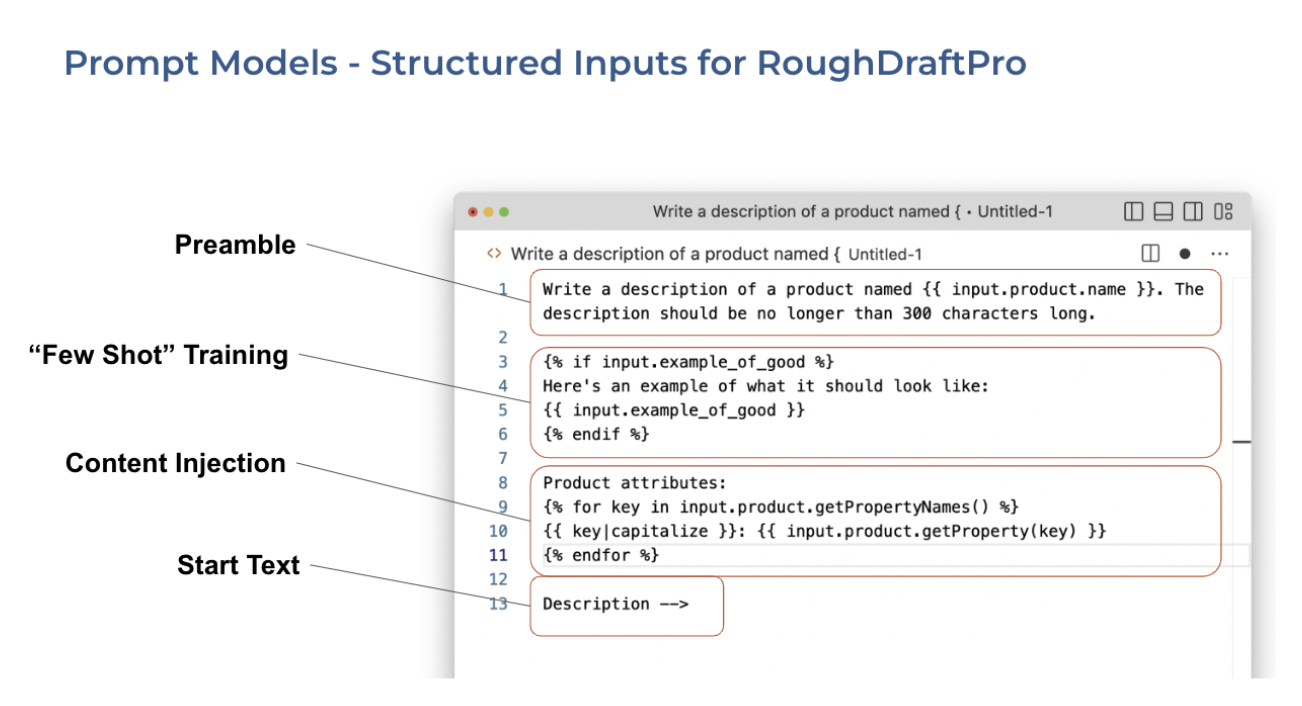
ChatGPT prompt
The quality of ChatGPT’s language processing is lightyears beyond what had been available to the public previously, and should propel one thought to the forefront of everyone’s mind: innovative AI technology is not just coming down the road, but is here. And here to stay. So with this immutable fact more apparent than ever, it’s time we take a look at how this affects the retail landscape and shopping behaviors, and what brands need to do to take effectively utilize groundbreaking technology to create omnichannel customer experiences (hint: it starts with your product information).   

4 Use Cases for Artificial Intelligence in Retail

1. Chatbots

One of the best examples of AI technology already thriving today is the use of chatbots on retailer websites and social media platforms. Chatbots are growing faster than any other brand communication channel, seeing a usage increase of 92% between 2019 and 2020. Powered by AI technology like chatGPT, chatbots can provide personalized recommendations and assistance to customers based on their interests and preferences as they browse and shop online.    
Akeneo chatbot
  International meal delivery company, HelloFresh, does this well, utilizing AI technology to connect with and engage their customers. Meet Freddy, their chatbot that discusses eating preferences and new recipes with their users whenever it’s time to order a new box. They even provide quizzes and food-related questions, as well as recommend playlists that match the mood of the dish you’re creating.
HelloFresh chatbot
  As AI evolves and becomes smarter, more personalized recommendations can be made based on stronger analysis of customer behaviors and decisions. And chatbots can add a certain human element to this process by giving the feel of communicating with a real person.  

2. Personalization & Targeted Marketing

 Many brands and retailers are using AI to analyze customer data and create targeted advertising campaigns that are more likely to be successful. An eCommerce site can now use AI to analyze a customer’s previous purchases and browsing history, and then serve up ads for products that are similar or related to those items, providing a more bespoke shopping experience. A great example of this is the behemoth itself, Amazon. Every time you log on to your homepage, one of the first things you see is a row of boxes, advertising items you’ve most recently clicked on, purchased, or shown interest in.  
Amazon personalized marketing
 

3. Immersive Shopping Experiences

AI is not the only field of technology that’s made leaps and bounds over the past few years; Artificial Reality (AR) and Virtual Reality (VR) is similarly changing the retail landscape in a drastic way by allowing brands to provide a more immersive and interactive shopping experience than ever before.  With VR, customers can “try on” clothes and accessories without ever leaving their homes, and AR can be used to help customers visualize how products will look in their own homes before making a purchase. This can be especially useful for big-ticket items like furniture, where customers want to be sure they are making the right decision before committing to a purchase. Swedish home goods manufacturer and retailer, IKEA does this extremely well; the IKEA Place App allows users to virtually place furniture items in their own homes and to see how the product will fit in the space.  
IKEA app
   This immersive experience provides a number of benefits to consumers; with a much better idea of the size, shape, and color of the item, customers are able to purchase with more confidence than ever before, resulting in reduced returns and satisfied, loyal customers.   

4. Streamline internal operations

In addition to these direct benefits for customers, Artificial Intelligence has the potential to streamline and improve the behind-the-scenes operations of brands and retailers. For example, AI can be used to analyze data on customer preferences and behavior to help retailers make better-informed decisions about inventory management and marketing. Not to mention how this technology can be used to improve the efficiency and accuracy of warehouse and fulfillment operations. For example, some retailers are using AI-powered robots to sort and move products within their warehouses, which can help to reduce the time and effort required to fulfill orders. Similarly, shipping routes and delivery schedules can be optimized, which reduces costs and improves the overall efficiency of the supply chain.  

Product Information at the Foundation

So what do all of these retail experiences have in common, other than their use of advanced technology? They all require product information, reliable product information, in order to operate at the highest caliber. Let’s go back to the HelloFresh example quickly; if the proper recipes aren’t tagged as “vegan”, then when a customer asks Freddy the chatbot for vegan recipes, then it’s going to be a disappointing experience when they get served up a beef stew recipe. Or Amazon and their personalized, targeted ads. If they tracked that I’ve previously searched for “brush”, their product information management must be strong enough to differentiate between “hairbrush”, “toothbrush” and “pet hair brush” to ensure that they’re advertising the correct product.  The use of ChatGPT and other AI technologies is revolutionizing the retail industry by providing customers with omnichannel shopping experiences that are personalized, convenient, and efficient, and that’s exciting. But the big caveat is that your product information needs to be optimized and up-to-date before you can take full advantage of these advancements.  Colloquially, it’s a “shit-in, shit-out” situation; if you provide bad product data, it doesn’t matter how advanced the machine learning algorithm is or how advanced the technology has become. The product experience will fall short. ChatGPT marks a bountiful leap forward when it comes to Artificial Intelligence, and demonstrates just how quickly and frequently the space is evolving. The organizations that are able to embrace this new wave of technology and build the foundation of product information to support it are the ones pushing the boundaries of innovation, with the highest profits and the most loyal customers. And in case you were wondering, no. ChatGPT did not write this conclusion. Looking to incorporate AI into your omnichannel product experience strategy, or just looking to take your first steps into centralizing product information? Reach out to an Akeneo expert today to see how we can help.

Casey Paxton, Content Marketing Manager

Akeneo

PIM vs PLM Software: What’s the Difference?

Technology

PIM vs PLM Software: What’s the Difference?

Learn everything you need to know about the differences between Product Information Management and Product Lifecycle Management to make the right choice for your business.

Has anyone ever told you to raise your standards? Chances are, it was in the context of relationships or your career. But it’s also advice that your customers have been following—especially when it comes to their eCommerce buying experiences.

 If you’ve been feeling like customer expectations are on the rise, you’re right. According to a Salesforce survey, 73% percent of customers expect companies to understand their unique needs and expectations. Yet only 64% trust that companies will do so.

Among other challenges, the digital transformation has ushered in an age of instant gratification as our attention spans decline. Customers expect fast, frictionless experiences, especially when it comes to eCommerce. The good news is that the shift to digital has also brought advances in technology that can help you deliver what your customers may want. Two important pieces of the puzzle are product information management (PIM) and product lifecycle management (PLM) systems.

 Decision makers often wonder about the differences between PIM vs PLM—and whether they need both. We’ll cover everything you need to know to make the right choice for your business.

Product Information Management Definition

Product information management, abbreviated PIM, is the process of collecting, sharing, and distributing your product information across your internal teams as well as your external sales channels and catalogs. PIM capabilities include importing data from various sources such as your other platforms, as well as your suppliers, and providing various ways for you to classify, track, enrich, and syndicate that data. The goal of PIM is to ensure accurate, complete, and consistent product information across all owned and unowned platforms and channels.

Product Lifecycle Management Definition

Product lifecycle management, abbreviated PLM, is the process of collecting and organizing internal data so that you can track and predict the lifecycle of a product. PLM capabilities mostly involve providing a database for data such as CAD files, parts and inventory information, bills of materials, and other technical assets. The ultimate goal of PLM is to organize internal information, which increases efficiency and allows you to get your products to market faster.

Similarities Between PIM and PLM Software

While there are a lot of differences between PIM and PLM systems, there are also some similarities. Both provide a single repository for product information and data. Both can be integrated with other software and systems in your tech stack, which can enhance them. And both can lead to better collaboration and efficiency, adding value to your organization and helping you innovate at a faster pace. But that’s where the similarities between PIM and PLM tools end. 

Differences Between PIM vs PLM Software

PIM and PLM systems are used at different stages in the product journey. When implemented well, they can complement each other perfectly. But they are not one and the same. Here are the top six differences between PIM vs PLM software.

Role

PIM: PIM is a system designed to handle your customer-facing data. It enables and simplifies the flow of product information from internal databases to your customers, syndicating your data across all channels and ensuring a consistent product experience. It contains information such as product descriptions, specs and sizing, inventory levels and availability, pricing, and more. Any information your customers want to know can be found in your PIM.

PLM: PLM is an internal-facing system. It collects and centralizes information from various internal sources and departments so that all of your internal teams are working from the same database. Your PLM contains information related to the concepting, design, development, and engineering of your products. Any information that your internal teams want to know can be found in your PLM.

Product Lifecycle Stage

PIM: PIM helps you manage the marketing and selling of your products once they’re ready to be brought to market. Many eCommerce companies use PIM for product syndication and distribution. PIM can either automatically upload, enhance, and format product data, or your internal teams can do it manually.

PLM: In the discussion of PIM vs PLM, PLM actually comes first—it helps you manage the product development phase, from ideation to manufacture and launch and even after-sales support. Collaboration is essential during this stage, and clarity on what has already been done, what needs to be done, and any previous iterations of the product can help optimize your product lifecycle. Once the product is launched, PIM takes over.

User Base

PIM: Since PIM and PLM systems were created for different stages of the product journey, it follows that they’re used by different departments within your organization. PIM will mainly be used by your marketing and sales departments, including your field reps. These are the people who need access to things like descriptions, SKUs, visual assets like images or 3D renderings, and product metadata.

PLM: PLM is used by your engineering and technical departments, including developers and designers. It can also be useful for product and sales teams, to help them get a historical context of their particular product. When you’re discussing PIM vs PLM with your internal teams, be sure to include all of these departments. You can even integrate your suppliers into your PLM, which can help you foresee supply chain issues that may affect your product lifecycle.

Data

PIM: One of the most important PIM capabilities is to store many different types of data. It can, and should, incorporate data from your PLM, such as technical data. It’s also highly customizable, so the types of data it uses can vary by organization and even by product. Data can include technical specifications, digital assets like video, audio, and image files, design files and PowerPoints, product metadata including keywords and descriptions, as well as customer data, marketing data, and financial data.

PLM: PLM tools store data related to design and engineering needs only. This might include CAD renderings, Photoshop and InDesign files, lists of parts, materials, and components, bills of materials, requests for quotes, and more. PLM software can stand alone and can also be integrated into your PIM when your product is ready to be put on the market.

Integrations

PIM: PIM tools and PLM tools integrate into your existing tech stack very differently. PIM aggregates more types of data and can typically integrate with more systems. PIM integrations might include your enterprise resource planning (ERP), digital asset management (DAM), product data management (PDM) systems, and even your PLM itself. It usually also allows you to import CSV and XLS files as well as use APIs to connect to your online and print channels. APIs have proven benefits: Researchers at Boston University found using the right APIs can increase annual net income for a large firm by more than $250,000.

PLM: PLM capabilities focus on design and manufacturing, and therefore so do its integrations. You will be able to integrate with CAD programs and Adobe Illustrator, as well as other design software. Like PIM, PLM also typically integrates with ERP and PDM systems. It orchestrates all of these different programs, providing you with comprehensive historical data.

Outcomes

PIM: PIM helps your team deliver compelling product experiences, which ultimately provide a customer experience that can improve your sales, extend your reach, and result in fewer returns. It can help you keep pace with changing customer preferences, encourage loyalty to your brand, expand your market share by helping you create larger and more varied digital product catalogs and sell on more channels, and improve your efficiency and save resources. It does all this by automating tasks, including localization and syndication, and reducing the risk of inconsistent or inaccurate information making it into your customer-facing assets.

PLM: PLM helps your team get products to market faster and at a higher quality. Through various tools and workflows, it can improve collaboration and internal efficiencies throughout the development of a product. It does this by providing visibility into the entire lifecycle so that everyone involved can see at a glance what is going on with the product. It can also help you standardize and automate your bills of materials so that you can better price your product, as well as manage your quotes so that you get the best bids.

Do I Need Both PIM and PLM Systems?

The bottom line is that there is no real debate between PIM vs PLM. They serve different purposes, and most organizations that both produce and sell products will likely need both, especially larger organizations or those with many products. The two systems complement each other: PLM applies to product development, while PIM applies to product experience, sales, and marketing. Together, they streamline your entire product lifecycle from ideation through distribution and retirement and create a better experience for both your internal team and your customers.

The good news is that you can share information between your PIM and PLM systems. The Akeneo PIM is designed for seamless integration with many of your existing systems, including the technical information from your PLM. 

Book a demo with Akeneo and we’ll show you what PIM can do for you.

Casey Paxton, Content Marketing Manager

Akeneo