Register

Unlock 2026: The Great Restack

Learn More
Akeneo-Logo Akeneo-Logo

3 Ways to Improve Customer Experience Through a Compelling Digital Offer

Customer Experience

3 Ways to Improve Customer Experience Through a Compelling Digital Offer

The customer experience has become a critical factor in shaping the success of businesses across industries. By providing a solid and compelling digital offer, organizations can improve the customer experience, forge deeper connections with their customers, foster loyalty, and drive sustainable growth. 

In today’s digitally driven world, it’s crucial for businesses to prioritize customer experiences in order to stay ahead. But the long-term competitive advantage comes from not just meeting customer expectations, but surpassing them. By creating an engaging digital offer on all buyer journey stages, you can  exceed customer expectations and delight them through their entire experience with your brand. 

1. Flawless Product Descriptions

Failure to provide a consistent digital experience across all channels can lead to poorer conversion rates. Consider the following scenarios that cause user misunderstanding and dissatisfaction:
  • A discrepancy of information at different touchpoints,
  • Outdated images or lack of information in product descriptions,
  • Different product pricing in various sales channels.
According to research, 87% of customers won’t make a purchase again at a store where they encounter false information. It means they will never use your service again, pay a premium for your product or recommend your brand to friends.  Providing flawless and error-free product descriptions is an obvious solution at this point. But it takes work to achieve in real life. It can be challenging, particularly when managing multiple sales channels and various markets. Thus, you’ll have to put in additional work to ensure your digital offering meets the specific requirements of every touchpoint your customer may approach.

Integrating your eCommerce platform with a PIM class system will help you get your product data under control. A centralized repository for all product information gives access to a wide range of accurate and rich data, including specifications, features, attributes, images, videos, and more. You can create detailed and precise product descriptions that leave no room for ambiguity or confusion.

Dawid Kubiak Solutions Architect

e-point

2. Personalized Digital Experience

Personalization increases engagement at every stage of the customer journey. Adding customized product bundles and recommendations to your digital offer can quickly improve conversion and drive sales.  Analyze data from your eCommerce platform to gain insights into customer behavior, preferences, and buying patterns. These insights will help you understand their needs and tailor your offer to their preferences and expectations.  The possibilities for customization in eCommerce are almost unlimited. Consider adding to your offer:
  • Personalized pricing and promotions offers. Include in your marketing campaigns special offers for various client segments. Then send it to them when they’re more likely to make a purchase. 
  • Tailored recommendations. Adding this simple feature to your digital offer can increase conversion, time spent on the store, engagement, and profits. 35% of Amazon’s revenue is generated by its recommendation engine.
  • Targeted messaging. By nurturing customer relationships after purchase, you can create loyal advocates who will contribute to your brand’s success. Remember that regular customers are four times more likely to recommend your products or services to their friends and family. 
  • Customized notifications. Inform customers about seasonal sales or new products they may like to maintain high engagement even after the initial purchase.
  • Adjust product descriptions. If you’re selling abroad, create product descriptions based on local and cultural expectations for different markets. 

Companies involved in cross border eCommerce need to go further with customization of their digital offer. Cultural factors are one of the most important aspects when making purchasing decisions. You will not attract customers if you don’t adjust your digital offer to the specific market. PIM enables businesses to manage product information and content in multiple languages, currencies, and regions, allowing them to personalize the customer experience based on local preferences and cultural differences. Therefore implementing the PIM system can be a first step towards international expansion.

Dawid Kubiak Solutions Architect

e-point

3. Inclusive UX Design (WCAG)

WCAG (Web Content Accessibility Guidelines) defines how a website or mobile app should look and behave to be accessible to people with disabilities. Making your digital offer suitable for people with disabilities is a crucial issue for nearly one billion people worldwide. Add to this group the silver generation and those using outdated equipment, whom you will also reach by making your site more digitally accessible. While the primary goal of meeting WCAG guidelines is to increase accessibility for people with disabilities, by implementing those standards, your digital offer will become intuitive and easy to use, positively impacting the digital experience of all your customers. Criteria such as appropriate contrast of elements on the site, font sizes that allow for comfortable reading of content, or straightforward navigation ensure that all users can use your online store in a comfortable and understandable way. Therefore you not only reduce digital exclusion but also gain access to a whole new target audience.

Accessibility requirements and guidelines evolve over time. Adapting your digital offer for people with disabilities will always be a process rather than a one-time project. PIM systems can play a significant role in helping companies meet WCAG standards. For example, the Akeneo PIM can include specific fields for accessibility attributes, such as ARIA (Accessible Rich Internet Applications) roles and properties, which enhance the accessibility of web content for individuals with disabilities. Furthermore, it allows companies to manage product information efficiently, making updating content and tracking version history easier. This flexibility ensures organizations can adapt their offer to meet the latest WCAG standards and guidelines.

Aleks Makowski Pre-Sales Specialist

e-point

Transform the Customer Experience with Solid Digital Offerings

The customer experience has become a critical factor in shaping the success of businesses across industries. By providing a solid and compelling digital offer, organizations can improve the customer experience, forge deeper connections with their customers, foster loyalty, and drive sustainable growth.  Technology tools like Akeneo PIM play a vital role in ensuring a consistent digital experience throughout the entire customer journey. Equally important is collaborating with an experienced technology provider with expertise in implementing and optimizing your new system. It will help you leverage the new system’s full capabilities, maximize efficiency, and deliver exceptional customer experiences.   This article was written and submitted by Akeneo partner, e-point.

Łukasz Trzaska, DXP Development Director

e-point

Accelerate your PX Strategy with a Quick PIM Launch

Product Experience

Accelerate your PX Strategy with a Quick PIM Launch

Discover the best practices and actionable insights provided by the Akeneo Professional Services team for a quick PIM implementation that reduces the time to value and accelerates your path towards exceptional product experiences, with a free downloadable template.

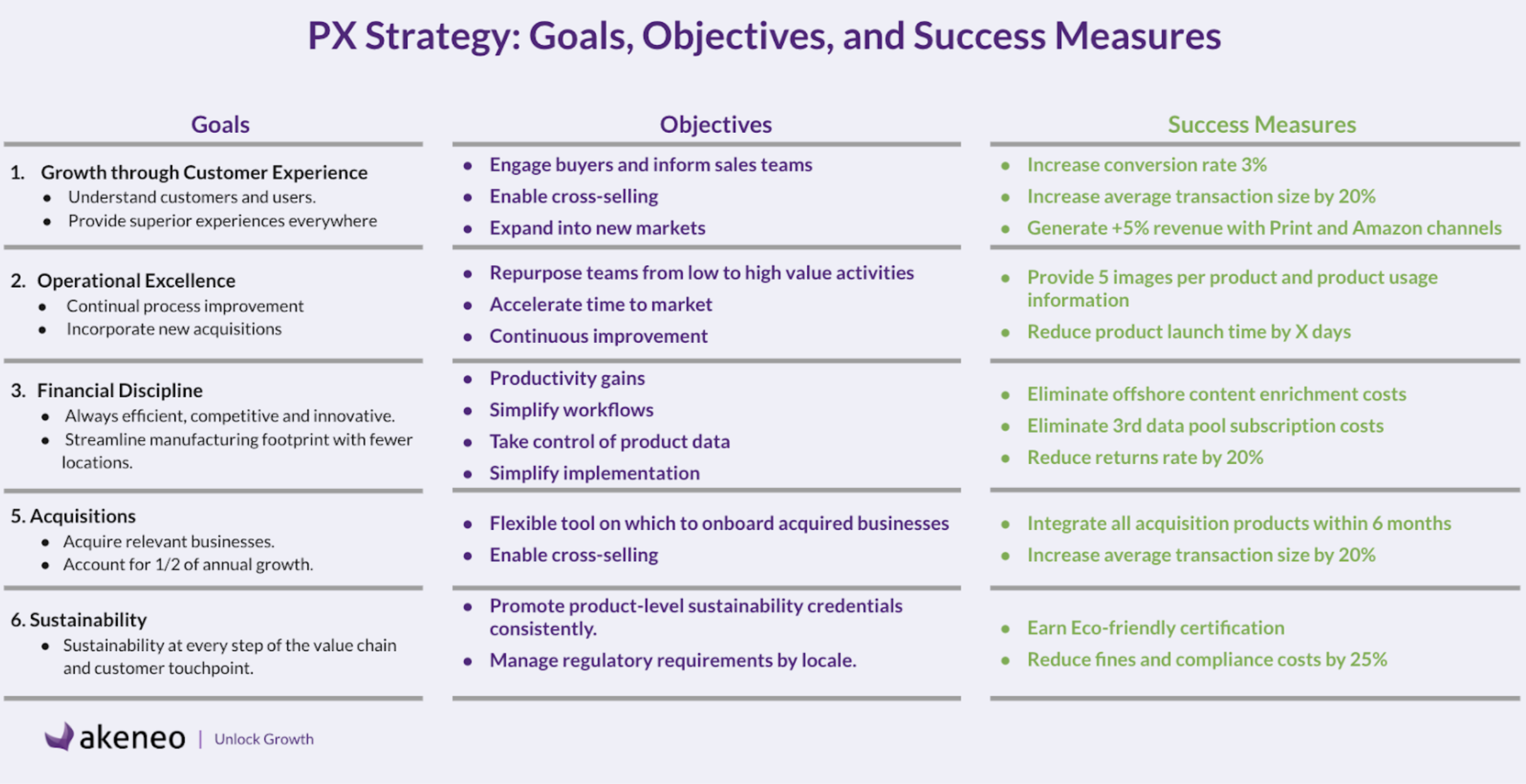
Having a well structured effective PIM is a necessity to having an effective PX Strategy. With thousands of companies using Akeneo PIM, we have been able to consolidate the most impactful ways a company can accelerate their launch of a PIM, and we wanted to walk you through three actions you can take now in anticipation of your PIM implementation to reduce your time to value.  We at Akeneo have been assisting our clients in implementing a new PIM for over 10 years; we would like to share some of those best practices with you.  We’ve compiled the top three focus areas with you to accelerate your time to value, and to mitigate the risk of a project failing altogether: 
  • Identify Clear Business Objectives – showcase why you’re investing in a PIM: what are you looking to achieve? Which pain points are you looking to solve? How will you measure the success of these objectives?
  • Align Resources to Project Roles – identify the personnel to be assigned to the PIM implementation roles so you and your team are ready to hit the ground running. 
  • Begin Cleansing your Product Data – your PIM is only as good as your product data, so you can get a jumpstart on cleaning up any stale data now to expedite your implementation. 
Let’s dive in a bit deeper on these three topics.  

1. Identify Clear Business Objectives 

This is a critical first step in your PIM journey, as it provides the answer to “Why a PIM?” “Why Akeneo?” “Why NOW?” Providing answers to these questions enables you to set the foundation for proper change management internally, and to educate your team on why this investment in a PIM is so important to your organization, and to all of them individually. When identifying your business objectives, we have a recommended template to use and Action Item #1 asks the following questions:
  • What is the problem you’re trying to solve?
  • How does this problem impact you or others at your company?
  • How does this problem impact your customers?
  • How would you quantify this impact?
  • How would you like to see it improved?
  PZ Cussons clearly articulates their “why” behind purchasing Akeneo:

In selecting Akeneo, we were confident we could achieve this consistent, high quality product experience across all channels to drive improved sales and drive long-term loyalty, all whilst making the operational process for our teams to deliver to these high standards much more seamless.

Michael Cornwall Head of Corporate Services

PZ Cussons
Aligning on your business objectives allows you and your team to know the “why” behind an investment in a PIM and how this impacts each and every person at your company. Aligning on business objectives provides a north star internally, to come together on why you are asking your team to dedicate time out of their already busy schedules to this project, and what is in it for them.  What we also include in the template is how you may track or manage the business objectives; providing metrics associated with the business objectives allows us to measure how successful the project is, and see the tangible progress you have made.   
Action Item 1
 

2. Align Resources to Project Roles 

It is important to start planning which resources you will need internally to dedicate to your PIM project. This includes both the people that are contributors (creating and enriching product data and assets) and people that are consumers (benefiting immediately from high-quality and always up-to-date product data).  We’ve written other blogs about Building the PIM Dream Team, as it is a vital step in preparing for your PIM journey. We have outlined roles to prepare you for your Akeneo PIM implementation in our downloadable deliverable as Action Item #2; this way, you can start writing down names to each and every role outlined so that both they and you know who is responsible for what.  Assigning team members to roles before implementation puts you ahead of the curve and allows you time to set expectations both internally and externally as to your workload capacity to better prepare for your implementation phase and beyond in your Akeneo journey.  An excellent example of how critical project roles are can be seen from one of our valued customers, Bongenie Grieder:

We needed to find a strategy with our purchasing department to find new goals with brands and work closely with them to create curated content and data for our products and brands. We designed a new team, dedicated to collecting data, so we have three people now. The split by line owner because we have so many types of products, so many prints, so in order for them to know their product more specifically, we split them in their specialization. It has enhanced our time to market.

Manon Lemaire Digital Project Manager

Bongenie Grieder
Action Item #2

3. Begin Cleansing your Product Data 

We all know the saying “garbage in, garbage out,” and this applies to your PIM data as well. Your PIM is only as good as the data included inside of it, so having clean data will accelerate your business’ time to value in your Akeneo PIM journey. We’ve written other blogs about the importance of clean data, and this blog here includes an actionable deliverable diving into HOW one may go about doing so. As an excellent first step, start outlining where different data sets exist, and the owner of this data. Then, start reviewing your data for the quality of it. What do we mean by data quality?
  • Product Duplicates: The same product duplicated
  • Attribute Duplicates: Attribute definitions are varied but mean the same thing resulting in inconsistency in attribution
  • Irrelevant data: Fields are used to maintain information that may not map to the PIM system schema or used to maintain information which shouldn’t be migrated
  • Incomprehensible: Meaningless data that follows no guidelines
  • Incomplete: Mandatory fields may have been circumvented
  • Inconsistent: Standards for information may have been misinterpreted or arbitrary information populated
  • Inaccurate: Information may be wrongly entered
  • Not structured: No categorisation in legacy systems for effective mapping into the PIM. Wrong categorisation leading to wrongly attributed product
  • Non conformance: Standards, structure and missing data and attributes for the product type
Even if you aren’t certain how you may want to restructure your data to fit into all of Akeneo’s features and functionalities and the best practices into how to leverage them, you can at least cleanse any data that you know needs cleaning up. And if you aren’t certain as to where to start, we recommend leveraging our downloadable deliverable and populating Action Item #3.  One of our valued customers, Thras.io had this to say about data cleanliness:

Data Management is the initial process and that is going to feed in the PIM and that will be what everything is fed into. That will become our foundation. This will help speed the pace and the variety of things that are coming in and try to normalize it and put it into one central source.

Daniel Hawkins Group Product Manager

Thras.io
Action Item #3
Now that you’ve completed all of your action items, what is left is quite simple: beginning your Akeneo PIM journey and becoming one of the many trusted customers within the Akeneo community Feel free to download our template outlining the three action steps for a quick PIM implementation, or reach out to an Akeneo expert today to see how we can help you accelerate your PX strategy.

PX Strategy Template

Julia Frenette, Professional Services Manager

Akeneo

5 Ways to Reduce Return Rates with Product Information

Reducing Returns

5 Ways to Reduce Return Rates with Product Information

Struggling with returns? You’re not alone. Though sometimes inevitable, the returns process can quickly turn sour for both the business and customer as it becomes expensive and cumbersome. Discover these five key strategies for minimizing the need for returns through compelling pre-purchase product experiences.

Let’s talk about it; the dreaded return. Businesses fear it because of the associated expenses, both in terms of direct costs like shipping, restocking fees, and processing, and indirect costs such as lost sales and negative customer experiences.  And consumers hate the time-consuming and often frustrating process of trying to obtain the item they initially ordered, with 63% of consumers saying that having to return an item gives them a negative view of the retailer.
Negative consumer feelings about returns
  It’s safe to say that it benefits both the consumer and the retailer to try to minimize the amount of returns. But in a world of “serial returners”, what’s a business to do? The secret lies in your product information; over half of all consumers (54%) blame the need for a return on  incorrect pre-purchase product information. Let’s dive into five effective strategies that your organization can implement today to improve the product experience offered to your consumers and reduce the rate of returns.     

1. Provide high-quality visual assets

A picture is worth a thousand words, and in the realm of eCommerce, it holds even more significance. High-quality visual assets such as product images, GIFs, or videos play a vital role in helping customers better visualize the product before making a purchase. By showcasing multiple angles, close-ups, and colors or sizes demonstrating the product in action, you can provide potential buyers with a clearer understanding of its features, functionality, and overall appeal, reducing the likelihood of a needed return.  Or you could take it one step further – incorporate innovative AR technology by utilizing a 3D product configurator. Imagine you’re in the market for a sofa, and you stumble upon online furniture brand “FurniCo”.  Not only do they have high-quality photos of the couch you’re interested in, but there’s also a virtual representation of the sofa, ready to be personalized. You can choose the fabric, the color, and even the configuration of the sofa—whether you prefer a classic L-shape or a spacious sectional. As you make your selections, the 3D model updates in real-time, giving you an accurate visual representation of how your customizations will look in reality and eliminating the guesswork. You can rotate the 3D model, zoom in and out, and examine the finer details of your customized sofa from every angle. You even have the option to virtually place the sofa in your living room and adjust the size and placement, ensuring that it fits perfectly within your space and assess whether the chosen design and color scheme will blend seamlessly with your existing décor before ever making a purchase.    

2. Embrace transparency around availability & shipping times

Few things are more frustrating for customers than discovering that a product they’ve eagerly purchased is out of stock or has lengthy shipping times. To avoid this frustration and potential returns, it’s essential to keep your stock and availability information up to date across all channels. Utilize inventory management systems that sync in real-time to provide accurate information to customers, regardless of where they’re shopping—whether it’s your website, third-party platforms, or physical stores. When customers can trust that the products they want are genuinely available, they are less likely to resort to alternative options or cancel their orders. By proactively sharing expected shipping times and potential delays, you can manage customer expectations, enhance their overall experience, and significantly reduce return rates. Let’s return to our furniture company, FurniCo. Let’s say you’ve selected a specific fabric and color combination for your sofa, but FurniCo’s system detects that this particular customization may require a longer production time due to high demand. Instead of leaving you guessing, FurniCo’s website displays a clear notice upfront, stating the estimated time frame for production and shipping.  Furthermore, FurniCo provides the option for customers to sign up for email or SMS notifications regarding stock updates, so that they can be notified when that specific fabric and color combination becomes available. This transparent communication sets realistic expectations and allows the consumer to make an informed decision based on your timeline and needs. By providing accurate shipping and stock information, FurniCo minimizes the likelihood of returns due to unexpected delays or out-of-stock situations. Customers can confidently plan their purchases, knowing when to expect delivery and having reassurance that their customized furniture will be available as specified.    

3. Provide up-to-date, reliable product descriptions

Accurate and reliable product descriptions are the backbone of a successful digital commerce strategy. They instill confidence in customers and foster trust in your brand. Make sure your product descriptions are comprehensive, covering essential details such as size, dimensions, material composition, care instructions, and any other relevant information that might influence a customer’s purchasing decision. Understanding the crucial role that accurate and comprehensive product descriptions play in reducing returns, our friends at FurniCo include a comprehensive description that covers essential details such as dimensions, materials, construction, and care instructions on every product detail page. To enhance the clarity of the information, FurniCo utilizes a combination of concise written descriptions, bullet points, and detailed measurements specifying the height, width, depth, and seating dimensions for every sofa. If any changes occur, such as improvements in materials or slight design modifications, they promptly update the information on their website.  To further support customers in their decision-making process, FurniCo incorporates customer reviews and ratings on their product pages. This valuable user-generated content allows potential buyers to gain insights from previous customers who have purchased the same item. By providing detailed and up-to-date product descriptions, FurniCo minimizes returns caused by misaligned customer expectations. Customers can confidently evaluate the furniture based on accurate information, ensuring that the dimensions, materials, and design align with their requirements. This transparency and attention to detail result in a higher level of customer satisfaction and a reduced likelihood of returns.  

4. Personalize information to each channel

Every channel has its own unique characteristics, and tailoring product information to suit each platform is crucial. Whether it’s your website, social media platforms, online marketplaces, or physical retailers, adapt your product information to the context and format of each channel. Consider optimizing content for search engine visibility on your website, providing concise and engaging descriptions on social media platforms, and ensuring that your product information aligns with the expectations of specific retailers. By delivering tailored information, you enhance the customer experience across various touchpoints, leading to more informed purchases and fewer returns. Let’s take a look at how FurniCo can personalize their product information for different channels:
  • Amazon: Recognizing the importance of optimizing product information for Amazon, FurniCo tailors their Amazon product listings to ensure that all essential details, such as dimensions, materials, and features are clearly outlined in the product title, bullet points, and product description. They leverage high-quality images that meet Amazon’s image guidelines and showcase the furniture from different angles and includes up-to-date pricing and shipping information.
  • D2C eCommerce site: On their own website, FurniCo has full control over the presentation of their product information. They take advantage of this opportunity to provide more in-depth descriptions, including the inspiration behind each furniture piece, the craftsmanship involved, and the quality of materials used. They also create engaging content that showcases the brand’s story, values, and commitment to creating sustainable furniture. FurniCo also optimizes their website’s user interface, ensuring a smooth and intuitive browsing experience and utilizes interactive tools, such as the 3D product configurator mentioned earlier, to allow customers to personalize their furniture choices directly on the site.
  • Social commerce platforms: To reach customers on social commerce platforms such as Instagram or Facebook, FurniCo adapts their product information to suit the format and context of these channels. They create visually captivating posts or ads that highlight their furniture’s key features, versatility, and unique design elements on Instagram. FurniCo includes concise but compelling descriptions that provide a snapshot of each product’s benefits and how it can enhance a customer’s space. On Tik Tok, they utilize user-generated content and partner with DIY influencers to feature their products, fostering trust and social proof. 
   

5. Embrace new technologies

Advancements in technology continue to reshape the digital commerce landscape, offering innovative solutions to common challenges. Embrace these technologies to provide customers with unique experiences and new ways to visualize or understand products to reduce the likelihood of a returned item. We already mentioned FurniCo’s use of a 3D product configurator, which is a great use of innovative technologies. But FurniCo could also take advantage of the advancements made in AI to FurniCo to enhance the product discovery process and provide personalized recommendations. By analyzing customer preferences, browsing behavior, and past purchases, AI algorithms can suggest furniture pieces that align with individual tastes and styles. This personalized approach helps customers find the furniture that best suits their needs, increasing the likelihood of a satisfying purchase and reducing the chances of returns due to style or design mismatch. AI can also be utilized in chatbots or virtual assistants, which could be available on FurniCo’s website or mobile app. These AI-driven assistants can answer customer queries, provide real-time product information or shipping updates, and assist with the customization process.  
  Leveraging your product information to provide a stronger pre-purchase customer experience is the best defense against the dreaded returns. Both businesses and customers benefit from better utilization and syndication of accurate and detailed product information;  businesses can enjoy increased customer satisfaction, reduced operational costs, and strengthened brand loyalty. Customers, in turn, experience a seamless and personalized shopping journey, making confident purchases that align with their expectations. Interested in learning more about how to reduce the rate of return, and what else is top of mind for the 2023 consumer? Download the results from our 2023 B2C Global Survey today!

2023 B2C Survey Results Report

Casey Paxton, Content Marketing Manager

Akeneo

Top 10 DAM Best Practices

Technology

Top 10 DAM Best Practices

Are your digital assets scattered, causing chaos and wasting valuable time? Say goodbye to inefficiencies and hello to seamless organization and productivity. From centralized data management to automated workflows, we dive into everything you need to unlock the true potential of your digital assets.

In today’s fast-paced digital world, where captivating visuals and engaging content rule the online realm, one thing is clear: digital assets are the lifeblood of effective communication and brand success. Whether it’s striking images, compelling videos, or informative product data, the proper management of these digital assets is crucial to staying ahead of the competition.

But managing all that digital data is no easy feat, especially if you don’t have the tools or technology in place to support a streamlined workflow that not only organizes, secures, and delivers your digital assets to various channels, but also communicates seamlessly with your other technology.

Implementing a Digital Asset Management (DAM) tool is a great way to kickstart this process, but diving head-first into any random software solution you find is a recipe for headaches, miscommunication, messy data, and ultimately a poor customer experience.

Let’s dive into the top 10 best practices you can do both before DAM implementation and after.


Before Implementation

1. Audit existing digital assets for accuracy & gaps

Before diving into DAM implementation, it is crucial to assess your current digital asset inventory. Conduct a comprehensive audit to identify inaccuracies, outdated files, and any gaps in your asset library. This process will enable you to clean up your digital assets, remove redundant files, and ensure that only relevant and up-to-date materials are included in your DAM system.


2. Centralize product data into a single system of record

One common challenge faced by organizations is scattered product information across various platforms, tools, and spreadsheets. To establish a solid foundation for DAM implementation, centralize your product data into a single system of record, like a Product Information Management (PIM) system, that can communicate seamlessly with your new DAM tool. By doing so, you can eliminate silos, reduce duplication, and have a holistic view of your digital assets.


3. Define a clear, strategic goal aligned with business objectives

Implementing a DAM system without a clear objective in mind can lead to confusion and inefficiencies. Take the time to define a strategic goal that aligns with your business objectives. Whether it is improving collaboration, accelerating time-to-market, or enhancing brand consistency, clearly identifying your objectives will guide your decision-making process and ensure that your DAM system meets your organization’s unique needs.


4. Identify stakeholders, assign roles & responsibilities

Successful DAM implementation requires a team effort. Identify key stakeholders within your organization who will be involved in the process. Assign clear roles and responsibilities to each team member to ensure accountability and smooth collaboration. Additionally, you should be able to implement granular user access management to control who can access, edit, and distribute specific assets. This not only ensures data security but also protects intellectual property and maintains compliance with privacy regulations, all while still providing key stakeholders with the digital assets they need, when they need it.


5. Identify tools that need to integrate with the DAM

To maximize the benefits of your DAM system, identify the tools and applications that need to integrate seamlessly with it. Whether it’s your content management system, eCommerce platform, PIM, or Enterprise Resource Planning (ERP) tool, ensure that your DAM system can integrate with these essential tools. This integration will enable you to leverage your digital assets efficiently across multiple channels and touchpoints, ensuring a consistent and compelling product experience no matter where your customers research and discover you.


After Implementation

6. Develop a clear system for standardized naming

Consistency is key when it comes to organizing and searching for digital assets. Create standardized naming conventions for your files to ensure clarity and ease of identification. By adopting a consistent naming structure, you can avoid confusion, prevent duplicate files, and improve the overall efficiency of your DAM system.


7. Implement metadata standards 

Metadata provides vital context and information about your digital assets, and can include information such as file descriptions, keywords, categories, and usage rights. Develop a robust metadata schema and apply it consistently across your asset library. By implementing metadata standards, you can enhance searchability, improve asset categorization, and facilitate the efficient retrieval of assets when needed.


8. Create automatic workflows within the DAM

Automation is a game-changer when it comes to optimizing your DAM workflows. Leverage the capabilities of your DAM system to create automatic workflows that streamline operations. For example, you can set up workflows for file approvals, metadata tagging, or asset distribution. These automated processes save time, reduce human error, and ensure that assets follow the correct approval and distribution channels. And with new technologies like Artificial Intelligence (AI) becoming more and more advanced and accessible, automating mundane or repetitive tasks within your DAM system can improve operational efficiency and ensure that your employees are focusing on high-value work.


9. Train and educate your DAM users for optimal efficiency

To fully harness the power of your DAM system, invest in comprehensive training and ongoing support for your users. Educate them on how to effectively use the DAM system and familiarize them with best practices for uploading, tagging, and searching for assets. By empowering your users with the necessary skills and knowledge, you can improve their efficiency, increase adoption rates, and maximize the value derived from your DAM system.


10. Regularly audit and maintain your DAM system

Implementing a DAM system is not a one-time task; it requires continuous maintenance and optimization. Regularly audit and assess the performance and usage of your DAM system. Seek feedback from users on the product experience, identify areas for improvement, and implement necessary updates or modifications to enhance efficiency and user satisfaction. Additionally, regularly review and maintain file organization to accommodate changing requirements and ensure that your DAM system remains scalable and adaptable to your evolving needs.


Implementing DAM best practices is crucial for any organization that wants to effectively manage its digital assets and optimize workflows. By conducting an initial audit, centralizing data, defining clear goals, assigning roles, and implementing user access management, you can lay a solid foundation for your DAM system. Once implemented, focus on standardized naming, metadata standards, automation, user training, and ongoing maintenance to ensure optimal efficiency and success. By following these best practices, you can unlock the full potential of your digital assets, streamline your operations, and gain a competitive edge in the digital landscape.

Want to learn more about how Akeneo technology can help support your DAM implementation by creating a central source of record and enable your team to provide stronger product experiences? Reach out to an Akeneo expert today.

Akeneo Product Cloud

Discover how Akeneo technology can support your DAM implementation, and more. Start your journey towards better product experiences today.

Casey Paxton, Content Marketing Manager

Akeneo

5 Ways to Delight Customers During a Cost-of-Living Crisis

Customer Experience

5 Ways to Delight Customers During a Cost-of-Living Crisis

Our 2023 B2C Survey uncovered that many consumers are feeling the strain of the economy. In the midst of a cost-of-living crisis, discover how to forge strong consumer relationships and stay competitive with these 5 tips to delight customers.

Shaped by the cost-of-living crisis, customer demands have taken a new direction; two-thirds of consumers now spend more time validating purchases to ensure they’re getting the best bang for their buck. Not only is today’s consumer more discerning and better informed than years past, their buying decisions are increasingly driven by price. To earn the loyalty of shoppers today, brands must be able to provide high-quality products and personalized shopping experiences, all while keeping prices as competitive as possible. In our 2023 B2C survey, we aimed to find out what product information consumers care about the most, and discovered that pricing information and information about promotions, offers, or deals ranked as most important. In fact, they often ranked as more important than product size, fit, or dimensions information. Clearly consumers are actively seeking out ways to save money and are highly receptive to the brands that help them do so. It’s now even more important for brands to show additional value beyond the quality of their product. Earning loyalty during economic uncertainty means finding new ways to delight consumers.  

1. Be transparent about stock availability, shipping estimates, and pricing

The economic shift has led to customers seeking more than just basic product details. For the first time, we decided to explore this trend in our survey, asking about availability information as a significant factor in their purchasing decisions. We found that 25% of respondents do look for availability information before making a purchase decision. However, the true impact of product availability is even larger. In fact, 82% of consumers have given up on completing a significant purchase. The most common culprits for the abandoned cart? Lack of availability and price. For brands, this means incorporating more transparency into product data. Consider listing when out-of-stock products will return or allow customers to purchase now with shipping available on a future specified date. Providing clear shipping time estimates before purchase will also have a positive impact on consumers. Simply put, the more information you’re able to provide, the more confident consumers will feel in their purchase decision.  
Akeneo B2C Survey Results: Abandoned Purchase
    
Akeneo B2C Survey Results: Abandoned Purchase
 

2. Communicate who you are as a brand

Consumers are putting their dollars where their values are, paying close attention to a brand’s values and company practices before making a purchase. Our survey dove further into value-driven purchasing, and found that 43% of consumers would be willing to pay more brands that showcase their brand values. In fact, those that answered “yes” would be wiling to pay an average of 18% more. Specifically, sustainability ranked as one of the values most prioritized by shoppers, with 35% seeing sustainability as a key piece of product information. As consumers increasingly look for brands that align with their values and are making sustainable choices, this provides another opportunity for brands to delight their customers and foster loyalty.  Be intentional about sharing your brand’s sustainable and ethical practices. Behind-the-scenes videos, educational blogs, events, community discussions, and more can all highlight company values, working to build strong relationships with consumers who share the same priorities.
Akeneo B2C Survey Results: brand values
 

3. Offer simple, personalized, and cheap return processes

In the world of retail, returns can often mean additional costly shipping logistics, plus processing and restocking fees, causing headaches for both consumers and brands alike. Though returns, unfortunately, will likely never drop to zero, brands can reduce their return rate with a focus on product information. A notable 54% of consumers have returned products due to incorrect pre-purchase product information. In a time where consumers are counting every dollar, this poor experience and the stress of a return can cause irreparable damage to brand trust. Businesses must ensure that product information is detailed and accurate to avoid unnecessary returns and dissatisfaction.  
AKeneo B2C Survey: Returns
  When a return is necessary, consumers expect it to be easy and stress-free. A whopping 40% of consumers rank an easy return process as one of the top two services a retailer should offer, making it a significant component of the customer experience. In fact, two-thirds of consumers say they would become a loyal customer if a brand offered a more compelling shopping experience, including stress-free returns. Moreover, 63% of consumers express a negative feeling about a retailer charging them for returning a product, indicating the need to make returns as seamless as possible. Research shows free returns may be financially unsustainable for brands, but offering free in-store returns and paid returns via shipping is a great compromise. This balances the customer’s need for a simple and cheap return process with the brand’s economic health, as in-person returns remove high operational costs and make managing stock and inventory that much easier. However, the best return is no return at all, so be sure to prioritize the completeness and quality of product information pre-purchase to reduce unnecessary returns. 
Akeneo B2C Survey Results: Returns

4. Provide detailed product information, including visual assets, user reviews, and more

One of the biggest changes in consumer behavior due to the cost of living crisis revolves around the decision-making process. Two-thirds (66%) of consumers now spend more time validating purchases and require more information before making a purchase. Consumers are looking for more detailed product information, including pricing and availability, to ensure that they are making an informed decision and getting the best value for their money. The importance of providing accurate and detailed product information at every touchpoint cannot be overstated. In fact, over 62% of consumers would purchase a different product than the one they originally intended to buy due to a lack of product information. Plus, product data mishaps can have lasting impacts. It only takes one bad product information experience to cause a consumer to give up on a brand forever, according to 63% of consumers surveyed.
Akeneo B2C Survey: Bad product experience
     
B2C Survey Result: bad product experience
 

5. Provide multiple touchpoints for users to discover & research

In today’s day and age, consumers are seeking a truly omnichannel experience that seamlessly blends their online and in-store shopping experiences. But be careful to include the right amount of information on each channel. According to our 2023 survey, 71% of consumers say they find additional product information when they look in multiple places. This can be cause for some concern. Consumers should be able to find the right amount of product information to fuel a purchase no matter which channel they’re on. Forcing your consumers to search in different places to get the information they need could spark them to turn to a competitor site or simply give up on the purchase altogether, seriously impacting revenue.  This highlights the importance of having a consistent and cohesive omnichannel strategy that provides consumers with accurate and comprehensive product information across all channels. And don’t forget, a bad product information experience from any source can result in 60% of consumers abandoning their purchase. So not only do brands need to show up on the right channels tailored to the right devices, but they need to ensure that they’re providing the best product experience – meaning accurate and consistent product information, branding, and messaging – everywhere. New technologies can be incredibly helpful when it comes to creating a stand-out omnichannel experience. Almost two-thirds of consumers are interested in utilizing innovative technologies such as chatbots, voice assistants, and VR tools when shopping. Sales support tools such as mobile apps and virtual reality tools like augmented reality applications are the most sought-after tools by consumers to help them make informed shopping decisions. Our survey found that an investment in technology can seriously pay off for brands. Around 41% of consumers are willing to pay more for a more exciting and compelling shopping experience, and two-thirds of consumers say they would become loyal customers if a brand or retailer offered a more engaging shopping experience. But be careful – consumers don’t want to be confined to just the online world. When considering a purchase, consumers rely heavily on both store salespeople and search engines as their top sources for professional advice. While online marketplaces and search engines are the most likely places consumers use for product discovery, 20% still regularly visit general and specialty retail stores in person to discover new products. What’s more, 84% of consumers have researched products online before buying in a store, and 77% have browsed products in-store but purchased online. What does it all mean? Providing consumers with a seamless omnichannel experience across both online and in-store shopping experiences, with accurate product information, innovative technology, and a unique and personalized shopping experience can lead to increased customer loyalty and sales.
B2C Survey Results: discovery & research
While customer expectations are on the rise, the cost of living crisis and uncertain economic conditions have made providing additional value even more critical for brands in order to off-set a renewed focus on price. Retailers must find a balance between meeting consumer demands for high-quality products and personalized shopping experiences while also providing competitive pricing and promotional offers. Providing transparent pricing and availability information, detailed product information, and promotional offers can help retailers build trust with consumers and remain competitive in the market. Want to delve into even more emerging customer trends and actionable insights into today’s shopper? Download the full 2023 Global B2C Survey Results Report today, or reach out to an Akeneo expert today to get started on your journey towards better product experiences.

2023 B2C Survey Results Report

Casey Paxton, Content Marketing Manager

Akeneo

From Data Product Owner to Digital Project Manager: A Journey of Empowerment and Success

Akeneo News

From Data Product Owner to Digital Project Manager: A Journey of Empowerment and Success

Implementing a PIM system is no easy feat – but ensuring a successful integration can mean great things for not only your business, but for your career as well. In the first of our Rising Star series, hear first-hand how Manon Lemaire embraced PIM implementation as an opportunity to grow and develop her skills, resulting in a promotion to Digital Project Manager.

In today’s competitive business landscape, individuals who are proactive, driven, and adaptable stand out among their peers. We recently had the chance to sit down with one such individual – Manon Lemaire, a rising star who took matters into her own hands, transitioning from a Data Product Owner to a Digital Project Manager at Bongenie Brunschwig. Her journey showcases the power of determination, continuous learning, and embracing new challenges. Let’s dive into her experiences and the valuable lessons she learned along the way.  

Starting on the Path to Success

Manon’s career transformation began when she joined the company as a Data Product Owner and was tasked with implementing a Product Information Management (PIM) system. Previously, she had supported a PIM project at another organization, where she realized the immense possibilities this solution could bring to a business. Intrigued by the structured nature and potential challenges it presented, she recognized the gap within her current company and saw an opportunity to make a difference.  

Overcoming Early Challenges

Upon joining her current company, Manon faced significant obstacles. Surprisingly, most of her colleagues had little to no knowledge of what a PIM was or its potential impact. The initial hurdle was gathering data from multiple Excel sheets, a daunting task that required substantial effort. Imagine creating an entire new data structure for a catalog of approximately 10,000 new products every 6 months (amount of data, different types of product, data recovery), that’s what she accomplished. Additionally, change management became a challenge as many employees were unfamiliar with the concept of a PIM. Despite being new to the field, she tackled the challenge head-on, learning and acquiring new skills along the way. This experience taught her the importance of perseverance, adaptability, and relying on experts when needed.  She initiated a comprehensive onboarding process, creating detailed documents (referred to as the “PIM Bible”) with step-by-step instructions and screenshots. These resources enabled each team member to understand their roles and navigate the PIM system effectively. Furthermore, she conducted workshops with internal teams, clarifying any doubts and ensuring everyone was on the same page. Through effective communication and utilizing the expertise of others, she successfully implemented the PIM system within a tight timeframe of four months. An exemplary project that pushed her professional capabilities was onboarding the PIM system alone within a demanding four-month period.  

Pivotal Moments and Turning Points

 A turning point in Manon’s journey occurred in May 2022 when the PIM system went live. Seeing everyone embrace the new system and adapt quickly was a profoundly rewarding experience. Inspired by this success, she sought out new challenges, specifically within the project of replatforming the company’s eCommerce website and third-party tools. This initiative involves implementing a Digital Asset Management (DAM) system, overseeing merchandising, and developing product recommendation tools. This project allowed her to have a better understanding of product experience as a whole: from ERP, to CX, through PIM, DAM, CRM and e-merchandising.  

Adapting to Industry Changes

 Manon encountered significant changes and shifts within her role and industry. These included bringing in new team members, replacing legacy technologies, and an increased workload that involved managing the PIM system while transitioning into a managerial position. To adapt, she developed a global vision, strategically placing the PIM system in the company’s overall architecture. By fully embracing the responsibilities of overseeing digital transformation, she honed her capacity to envision the broader landscape and spearhead digital commerce, leveraging Akeneo PIM as a central tool.  

Conclusion 

The inspiring story of our rising star showcases the transformative power of seizing opportunities, overcoming challenges, and continuously honing one’s skills. From her humble beginnings as a Data Product Owner to her current role as a Digital Project Manager, she has demonstrated remarkable growth and resilience. Through her dedication, empathy, and unwavering passion, she serves as a beacon of inspiration for those seeking success in similar positions. As the industry continues to evolve, her story reminds us of the importance of embracing change and the boundless possibilities that await those who are willing to take control of their own destinies.

Samira McDonald, Sr. Community Program Manager

Akeneo

Pride in Every Detail: Promoting Inclusivity Through Product Information

Product Experience

Pride in Every Detail: Promoting Inclusivity Through Product Information

Explore how major global brands like Adidas, North Face, and Levi’s have authentically incorporated inclusivity in their product experience strategies during this Pride Month, and discover the omnichannel, coordinated approaches that enabled them to communicate their support through their product information.

With major companies like BudLight and Target facing backlash for their Pride campaigns this year, many brands are scaling back their Pride Month activities, resulting in a quieter year for the LGBTQ+ community in the retail industry. But communicating who you are as a brand is important to consumers – the Akeneo 2023 Global B2C Survey Results indicated that two-fifths of customers would be willing to pay more for a company that communicated its brand values. In an increasingly competitive environment, customers have more opportunities than ever before to make informed purchase decisions, and the social issues that you stand for are becoming an important decision factor. And consumers are putting their dollars where their mouths are – as we’ll cover later, despite The North Face receiving calls for boycotts after partnering with trans spokesperson, their Summer of Pride event in July is completely sold out and sales remain steadily growing. But showing your support for the LGBTQ+ community is more than just changing your social media picture rainbow. It needs to be integrated into your products and processes and part of your company DNA – whether you work with queer businesses or designers, or you donate a percentage of your profits to an LGBTQ+ organization, communicating your support for the community requires a coordinated, omnichannel approach that allows you to populate crucial product information at speed. If that sounds difficult, that’s because it is. But Just because it’s hard doesn’t mean it’s impossible – let’s take a look at three brands who have successfully incorporated inclusivity into their product experience strategy for 2023 Pride.  

1. Adidas

Adidas’s Pride 2023 collection represents a significant step towards promoting inclusivity and allyship in the world of sports. By launching this collection, the brand emphasizes its commitment to creating a space where athletes can be true to themselves, regardless of their sexual orientation or gender identity. In collaboration with queer designer Rich Mnisi, Adidas incorporates a powerful element of personal expression into the Pride collection. Mnisi’s contribution, in the form of a love letter he wrote to his younger self, adds an intimate touch to the campaign. The letter serves as a source of inspiration and encouragement for individuals to embrace their true identities without fear or hesitation.
Adidas 2023 Pride Collection
This year, Adidas also partnered with Olympic gold medalist Tom Daley. As an openly gay athlete who has faced and overcome challenges throughout his career, Daley’s involvement brings firsthand experience and credibility to the message of inclusivity, and empower individuals who may have felt marginalized or excluded within the sports world. The Adidas Pride 2023 collection really demonstrates how love knows no boundaries – not only does it spans across various sporting good categories like  apparel and footwear, but Adidas also partnered with EA SPORTS to offer several pieces from the range to wear in-game and use in two separate game modes in FIFA 23. Players can unlock the ‘Let Love Be Your Legacy’ pack by completing certain objectives during the entire month of Pride. Adidas also continues to facilitate the Title IX Athlete Leadership Summit and workshops at eight Adidas-partnered NCAA college campuses, driving education and policy reform to spur equity on campus and in sports.  

We as a brand believe in the power of collaboration to create a more equal world of sport. We will continue to work with partners such as Athlete Ally, listen to our LGBTQIA+ athletes and support our communities to create more possibilities – by creating safe and inclusive spaces to express their authentic selves while playing sport.

Ashley Czarnowski Senior Director

Adidas Global Purpose

2. North Face

North Face’s Pride campaign, featuring the drag queen Pattie Gonia, embodies the brand’s commitment to a more inclusive outdoor industry. The company believes that the outdoors should be a “welcoming, equitable, and safe space for all individuals”. By organizing the “Summer of Pride” events across the United States, North Face actively fosters community and belonging in the outdoors, aligning with their core values. North Face’s integration of these values into its product information communicates a deeper level of support for the LGBTQ+ community. By aligning its brand messaging with actions and initiatives that promote inclusivity, North Face establishes itself as an advocate for change and progress. This approach goes beyond a simple rainbow logo or token gesture, showing a genuine dedication to creating a more diverse and welcoming outdoor industry.
North Face 'Summer of Pride' Campaign
And when you support the LGBTQ+ community, it supports you back. GLAAD President and CEO Sarah Kate Ellis issued a statement praising North Face: “Including LGBTQ people and holding true to your corporate values is good for business. The North Face is following hundreds of other businesses that include and stand with LGBTQ people and our allies. At a time when over 20% of Gen Z is LGBTQ and a supermajority of Americans support LGBTQ people, The North Face’s decision should be a signal to other companies that including LGBTQ people and allies is better for business than siding with a small number of violent extremists who want to keep LGBTQ consumers and employees invisible.”  

3. Levi’s

Levi’s, a renowned brand with a rich history, pays homage to LGBTQIA+ activist groups through its lavender-hued 2023 Pride collection. This collection serves as a symbolic tribute, embracing the spirit and energy of both past and present queer and trans youth. By doing so, Levi’s aligns itself with a culture of resistance and empowerment, reinforcing its commitment to inclusivity and social progress. At the center of the Pride collection is the iconic 501 ’93 straight, a garment known for its historical significance in challenging traditional gender norms. This particular style has a longstanding reputation for blurring the lines of gender and embracing a more inclusive and fluid understanding of self-expression.
Levi's Pride Collection 2023
Levi’s accompanying campaign, titled “How do you show up?” further reinforces the brand’s celebration of self-expression as a diverse spectrum. By highlighting the multiplicity of identities and encouraging individuals to embrace their true selves, regardless of societal expectations, Levi’s empowers people to express their authentic selves freely. This campaign serves as a reminder that there is no singular way to show up and that individuality should be cherished. In addition to the Pride collection and campaign, Levi’s demonstrates its ongoing commitment to the LGBTQIA+ community through philanthropy. The brand makes a generous annual donation to Outright International, a global organization dedicated to advancing human rights for LGBTQIA+ individuals.

The Levis Pride 2023 campaign is a global celebration of the LGBTQIA+ community and its powerful history of genuine self-expression. From clubs to protests to Pride parades, wherever people gather in the name of love and inclusivity, so many of them will proudly show up in their Levis and 501 jeans.

Lance Relicke VP of Global Brand Experience

Levi Strauss & Co.
As consumers become increasingly discerning and seek brands that align with their values, it is crucial for companies to move beyond surface-level gestures during Pride Month. By engaging with queer designers, featuring diverse voices and experiences, and actively contributing to LGBTQ+ organizations, these brands showcase the importance of incorporating inclusivity into their entire product experience strategy, enabling them to communicate what matters most to them as an organization to their customers. As we continue to navigate an evolving retail landscape, let us celebrate brands that embrace diversity, respect, and authenticity, not just during Pride Month but throughout the year. Are you looking for a way to include inclusivity into your product experience strategy? It starts with your product information. Reach out to an Akeneo expert today to see how the Akeneo Product Cloud technology can help you communicate what matters most to customers.

Casey Paxton, Content Marketing Manager

Akeneo

From Clicks to Bricks: Why Omnichannel Customer Journeys Matter More Than Ever

Customer Experience

From Clicks to Bricks: Why Omnichannel Customer Journeys Matter More Than Ever

The Akeneo 2023 Global B2C Survey revealed that customers prioritize both in-person and digital shopping experiences, highlighting the need for omnichannel, hybrid customer journeys. But it also showed that the cost-of-living crisis is squeezing wallets everywhere; businesses must learn how to provide a compelling and consistent customer experience while remaining price-conscious.

As the world continues to digitize, it can become easier and easier to forget about the importance of in-person, brick-and-mortar operations. I can have groceries delivered to my doorstep within the hour. I can take a walk-through of a new home without ever leaving my old one. I can discover, research, compare, purchase, and set up a brand new desktop computer without ever interacting with a person or stepping foot outside. So why should you, as a brand, invest in physical channels when digital channels seem to be the cheapest and the easiest way to interact with customers? While digital shopping has taken the world by storm, brick-and-mortar shopping experiences still play a crucial role in providing the omnichannel journey that customers crave. Simply put, consumers want the best of both worlds: the ease and convenience of online shopping, coupled with the ability to see and touch products before making a purchase. Released just a few weeks ago, our 2023 Global B2C Survey Results Report found that consumers want an integrated, omnichannel approach to shopping, not just a digital one. From personalized digital experiences to the benefits of hybrid shopping journeys to loyalty-building in-person visits, our study uncovered the rising importance of omnichannel retail, and why businesses must embrace this trend to remain competitive in today’s market.  

Hybrid Journeys: The Best of Both Worlds

Consumers don’t want to be confined to just the online world. Our 2023 survey found that when considering a purchase, consumers rely heavily on both store salespeople and search engines as their top sources for professional advice. While online marketplaces and search engines are the most likely places consumers use for product discovery, 20% still regularly visit retail stores in person to discover new products. What’s more, 84% of consumers have researched products online before buying in-store, and 77% have browsed products in-store but purchased online.  Have you heard of Snapchat’s new AR Mirrors? In an update to its AR Enterprise Servies (ARES), Snap has allowed brands to offer a seamless integration between offline and online channels by allowing customers to try on virtual versions of clothes and accessories in-store. This technology not only provides a fun and engaging experience for shoppers but also enables retailers to create a truly omnichannel shopping experience that meets the needs of modern consumers.
Snapchat AR Mirrors
But Snapchat’s AR Mirrors are just one example of how retailers can incorporate technology to create a more integrated shopping experience. Brands can (and should) leverage other tools such as mobile apps, social media, and digital signage to provide personalized and targeted marketing to customers in-store, while also offering the convenience of online shopping. Almost two-thirds of consumers surveyed were interested in utilizing innovative technologies such as chatbots, voice assistants, and VR tools when shopping. Plus, 41% of consumers said they are willing to pay more for a more exciting and compelling shopping experience, and two-thirds of consumers say they would become loyal customers if a brand or retailer offered a more engaging shopping experience.
2023 B2C Survey Results
   
2023 Global B2C Survey Results
Our 2023 survey also found a somewhat unnerving statistic: while 71% of consumers find additional product information when they look in multiple places, a bad product information experience on any channel resulted in an abandoned purchase 60% of the time. Your customers are looking everywhere for product information, from social media pages to chatbots to retailer websites to brick-and-mortar stores and beyond, and just one bad interaction on any one of these channels can spell a lost sale. Providing consumers with a seamless omnichannel experience across both online and in-store shopping experiences, with accurate product information, innovative technology, and a unique and personalized shopping experience is key to supporting the customer journey, and can lead to increased customer loyalty and sales.  

Cost-of-Living Crisis: More, for Less

The 2023 B2C Global Survey also revealed that while customers today have high expectations when it comes to product information and omnichannel experiences, they’re also more price-conscious than ever given the current cost-of-living crisis. As a result, organizations must balance meeting customer expectations with affordability to maintain a positive relationship with their audience and keep costs under control.  We found that promotion, offers, or deals made it to the list of top 3 pieces of product information across all product categories, often ranking as more important than product size, fit, or dimensions information. What does this mean? Consumers are actively seeking out ways to save money and are highly receptive to promotional offers, likely due to the uncertain economic conditions and ongoing post-pandemic recession.
2023 B2C Survey Results
The cost of living crisis has also led to a change in consumer behavior, with two-thirds (66%) of consumers now spending more time validating purchases, requiring more information before making a purchase. Consumers are looking for more detailed product information, including pricing and availability, to ensure that they are making an informed decision and getting the best value for their money.
2023 Survey Results
In recent years, consumers have placed a significant value on the quality of product information they receive, and a substantial portion of them have indicated their willingness to pay a premium for it. However, the proportion of consumers willing to pay extra has declined since the previous year’s survey (from 26.8% in 2022 to 18%), once again likely attributed to the current cost-of-living crisis. Furthermore, eight-in-ten consumers have given up on making a significant purchase, after having spent time researching it. The most common culprits for abandoned purchases? Pricing information and lack of availability.
2023 Survey Results
  
2023 Survey Results
While customer expectations are on the rise, the cost of living crisis and uncertain economic conditions have made price an even more critical factor for consumers. Retailers must find a balance between meeting consumer demands for high-quality products and personalized shopping experiences while also providing competitive pricing and promotional offers. Providing transparent pricing and availability information, detailed product information, and promotional offers can help retailers build trust with consumers and remain competitive in the market.  

Embracing Clicks and Bricks

While the growth of online shopping has certainly disrupted the retail industry, in-person experiences remain a vital part of the shopping journey for many consumers. Customers expect the flexibility and convenience of online shopping, as well as the in-person experience of brick-and-mortar stores. Retailers who can successfully provide a hybrid and cohesive shopping experience that seamlessly integrates both digital and physical channels, all while remaining price-conscious, will be well-positioned to succeed in the years ahead. In other words, the key to delivering an effective omnichannel shopping experience is to understand the needs and preferences of your customers. By leveraging technology and data, retailers can gain valuable insights into customer behavior and tailor their approach to meet their needs. By doing so, they can create a shopping experience that is seamless, convenient, and enjoyable, and build long-lasting relationships with their customers. Want to learn more about the customer trends we identified in our 2023 study? You can download the Global B2C Survey Results Report for free today, or reach out to an Akeneo expert today to learn more.

2023 Global B2C Survey Results Report

Casey Paxton, Content Marketing Manager

Akeneo

Kristin Naragon, A Champion for Diversity and Innovation in the Tech Sector

Akeneo News

Kristin Naragon, A Champion for Diversity and Innovation in the Tech Sector

With an expertise in global expansion and a commitment to diversity, discover how Akeneo’s Chief Marketing & Strategy Officer Kristin Naragon plans to lead the MACH Alliance towards becoming a true champion of agility, innovation, and diversity across the world.

In today’s rapidly evolving tech landscape, it’s crucial to have leaders who not only excel in their respective fields, but also champion diversity and equal opportunities. And while we may be a bit biased, we believe that our Chief Marketing & Strategy Officer, Kristin Naragon, is one such individual who has been making significant strides in promoting diversity and technological innovation.  We sat down with Kristin this past week to learn more about her commitment to diversity within both the tech sector and the MACH Alliance, as well as her background in championing best-of-breed technologies and expanding to new geographies.   Q: You’ve been nominated for both the Women in MACH award and the title of Innovator of the Year at the Women in Tech Excellence Awards. Can you tell us more about your commitment to diversity and equal opportunities in the tech sector? Kristin: I have two kids — Percy and Britta. Percy, my 10-year-old son, has become quite the feminist in the most adorable way. From time to time, I’ll catch myself saying in front of him some self-defeatist comment like, “Well, they just don’t give those sorts of opportunities to people like me.” And he will be the first to stomp all over that and tell me to go for it anyway. Britta, my 8-year-old daughter, reads a story nightly from the book, “Goodnight Stories for Rebel Girls” and she excitedly talks about how she would like to be like them.  It’s a long way of saying that my commitment to diversity and equal opportunities is rooted in the fact that there is still so much change that needs to happen in order for not just me and my peers to have an equal playing field, but also for my children. I want to be intentional about changing the professional world so that they don’t have to fight or dream for things to be better. They just are.    Q: You have been actively involved in promoting diversity and equal opportunities by speaking at the Women in MACH event last year. How do you envision leveraging your experience and expertise to further enhance diversity within the MACH Alliance and the tech sector as a whole? Kristin: I can’t count the number of times that I’ve been told by another woman that they didn’t think it was actually possible to rise to the C-suite in a tech firm until they saw me do it. Representation matters. I will ensure that women and men alike can have open, candid, and transparent conversations with me on the topic of diversity. In this type of leadership role, I would have more access to more people who have more influence to change the world, one action at a time.

I cant count the number of times that Ive been told by another woman that they didnt think it was actually possible to rise to the C-suite in a tech firm until they saw me do it. Representation matters.

Kristin Naragon Chief Marketing & Strategy Officer

Akeneo
Q: Your specialty lies in helping European tech firms break into the U.S. market, as demonstrated by your successful contributions at Akeneo, Adobe, and Neolane. How do you plan to leverage this expertise to drive growth and success within the MACH Community and establish it as a champion of agility and innovation in the U.S. tech sector? Kristin: Just as there are differences in the way women and men interact in business, so too are there differences in how people from different cultures receive messages. Messaging and positioning that works in France or Germany or the UK might not work one-for-one in the US. It’s all about finding that product-market fit. The same is true for the MACH message. I would work hard to iterate and innovate on finding that perfect messaging fit for MACH in the US, to help accelerate the growth of the movement so that companies around the world can more quickly benefit.   Q: In your opinion, what are the key benefits of open, innovative, and best-of-breed solutions for businesses undergoing digital transformation? Kristin: Some problems are best solved with “good enough” solutions that do a little bit of everything. But when a business is staring down a path of chaos in delivering exceptional customer and product experiences, while providing the tools to make their employees successful (and happy) in delivering those experiences, that’s when considering best-in-breed comes into play. And it doesn’t have to be an all-or-nothing approach. What’s beautiful about composable is that you can start small, integrate into your ecosystem, and bite off different areas. Or, you can do a complete full-sweep transformation. It’s up to you and your organizational capacity.    Q: The MACH Alliance community consists of a diverse range of companies and individuals. How do you plan to ensure that their voices are heard, and their needs and concerns are addressed effectively within the alliance? How will you facilitate open dialogue and collaboration among the members to create a cohesive and supportive community? Kristin: Diversity is the spice of life! And without spice, life is boring. What’s useless to me is an echo chamber or order-takers or “yes” people. I like to challenge and listen. To provoke and be provoked. To encourage people to build on each other’s ideas and craft a unique idea as a group. Isn’t that the ultimate goal? To have a group of people bring their unique ideas to the table and find a way to grab the best of each to generate something that no single person could have produced on their own! That’s the type of work that I love bringing to the table. 

When a business is staring down a path of chaos in delivering exceptional customer and product experiences, while providing the tools to make their employees successful (and happy) in delivering those experiences, thats when considering best-in-breed comes into play. Whats beautiful about composable is that you can start small, integrate into your ecosystem, and bite off different areas.

Kristin Naragon Chief Marketing & Strategy Officer

Akeneo
Q: And now, a few fun questions – what’s been your favorite purchase in the past year/what’s the best gift you’ve ever received? Kristin: I’m in the business of helping people and companies to create and deliver product experiences that unlock growth. Crafting those product stories that engage people at all points in the customer journey. I am also both a consumer and a business buyer. I live and breathe product experiences every single day. I see a lot of good and bad product experiences.  The best gifts that I’ve ever received are always and will always be something handcrafted by my kids. Outside of that, my favorite purchases are not ‘things’ but are experiences. Which are very often a collection of things … airline tickets, hotel rooms, skis, bikes, snorkeling gear. I sometimes think that businesses forget the true value of what they are offering. Because when I buy that new bike for my child, it’s not just a bike, but it’s a way for us to ride together as a family; enjoy the outdoors; stay fit together. I naturally gravitate to those brands who can articulate their story in a meaningful way.    Q: What trend in marketing/eCommerce is most exciting to you? Kristin: You want me to say AI, don’t you? Well, it’s not. For me, the trend in marketing that feels most exciting is watching those brands that exhibit authenticity surviving and thriving in this constantly changing world. Patagonia will always (hopefully!) be my go-to example for that. When I buy that second or third or fourth puffer jacket from them, I feel good about it. When I send it back to get a zipper replaced, I feel even more connected to the brand. I’m excited that there are more and more successful brands basing their entire strategy around core values that are important to progressing society or protecting the environment. 
By leveraging her experience and fostering open dialogue within the community, Kristin has the potential to lead the MACH Alliance towards becoming a true champion of agility, innovation, and diversity within the U.S. tech sector. If you’d like to show your support for Kristin’s nomination to the MACH Alliance board, please share this article on LinkedIn with the hashtag #Krsitin4MACH.

Casey Paxton, Content Marketing Manager

Akeneo

3 Essential Tips for Maximizing ROI in Your PXM Program

Product Experience

3 Essential Tips for Maximizing ROI in Your PXM Program

In today’s competitive landscape, a robust Product Experience Management (PXM) program is vital for staying ahead of the curve. As an expert in the field, Raphael Iscar has learned valuable lessons throughout his 8-year journey in the PIM space. Join him in the latest of a 10-part series as he unveils three crucial tips for ensuring your investment in a standout product catalog yields exceptional results in the face of fierce competition.

It’s always tough to hear clients tell me their goal when implementing a PIM is to automate the product catalog management as if human processes were not essential in the project. Simply put, PIM integration CANNOT be the end goal when entering into such a project – what you’re trying to achieve is efficiency in maintaining and distributing your product catalog no matter the sales channel you’re leveraging.   By correctly organizing your teams and processes with the right technology, you can reach higher conversions on your different sales channels, offer a better customer experience, and ensure your customer can browse, compare, and select your products at the right place in the right time.  

1. Analyze Your Processes and Challenges Along the Product Lifecycle

When embarking on a PXM project, it’s crucial to define your product catalog management challenges comprehensively. This includes analyzing assets, specifications, and all aspects of the product lifecycle, from inception to data distribution across various customer touchpoints.  Avoid solely focusing on what PIM technology can do for you. Instead, start your analysis by examining the genesis of information, whether it’s product data from providers or created within your PLM system. Extend the analysis beyond PIM enrichment and stop at the point where your customers engage with your product catalog, be it on websites, marketplaces, physical catalogs, in-store displays, or social media channels.  

2. Embrace the Product Lifecycle Moonwalk Theory

To ensure a successful analysis and PXM projects that drive higher conversions, flip the traditional approach and start from your sales channels instead of the origin of data. This way of thinking enables you to shift your focus to the minimal data required by customers to make purchasing decisions.  This is what we call the Product Lifecycle Moonwalk Theory – you start from the destination in order to finish at the origin of the data, so you focus only on the data that makes a difference for your end customers. Remember that PIM is a marketing tool designed to manage customer-facing data and provide the necessary information for informed buying decisions. Starting from the sales channel perspective allows for a more streamlined implementation, reducing costs and generating a higher return on investment. You can learn more about the moonwalk strategy on this podcast.  

3. Set Clear SMART Goals and KPIs to Measure PXM Success

In the past, I’ve seen numerous PIM integrations lacking clear success metrics for customers. To ensure your PXM program’s success, it is essential to establish Specific, Measurable, Achievable, Relevant, and Time-bound (SMART) goals and Key Performance Indicators (KPIs).  While not all goals can be quantitatively measured, some may require team interviews for evaluation. Below are a few of my recommended goals and KPIs:
  • Make your teams more efficient. PXM programs are meant to optimize your product catalog management flow by correctly reallocating the right resources at the right place so your teams can work more efficiently together when enriching your product pages. And of course, with a PIM, your teams will save time and resources in the process by:
    • Eliminating duplicate efforts 
      • KPI: average number of days to publish a product
      • KPI: number of tasks needed to complete the publishing
    • Optimizing the enrichment process by reallocating team members at the right stage of your product lifecycle
      • KPI: hours spent enriching your products divided by the number of resources to complete
    • Reducing the cost of operating your customer service due to wrong product information.
      • KPI: number of calls to customer service due to wrong product information
    • Reducing the number of product returns. 
      • KPI: number of product returns due to wrong product information
  • Enhance your customer experience
    • Improve your onsite search & navigation
      • KPI: Average time spent on category page; Average time spent on the product page; Product page bounce rate; Average number of searches on Algolia or similar onsite search
    • Improve your product catalog data quality across all channels
      • KPI: At Valtech, we calculate a data quality score based on a programmatic analysis of your product information database by analyzing misspellings, duplicates, and wrong data
  • Generate more money 
    • Enhance your product and category marketing information and accelerate the publication of new and updated products across your channels to grow the number of sellable days.
      • KPI: Average number of days from product creation to syndication; Conversion rate on all channels based on the product’s completeness; Average order value
In the fast-paced business world, staying ahead of the competition is essential. By implementing a strategic and ROI-focused PXM program, you can take your product catalog to new heights and captivate your target audience. Analyze your processes, embrace the moonwalk theory, and set clear SMART goals and KPIs to measure success. With a laser-focused approach, you’ll maximize efficiency, reduce costs, and deliver an unparalleled customer experience. Don’t settle for average – invest in a PXM program that propels your brand to new levels. Ready to start your journey? Discover how the Akeneo x Valtech partnership  can drive your business forward and unlock the full potential of your product catalog. Or you can check out how enterprises can incorporate AI into their PX Strategy in this recorded webinar.   This article was written and submitted by Akeneo partner, Valtech.

Raphaël Iscar, Head of Global PXM & Product Strategy

Valtech