Latest

Winter Release: Commerce at the Speed of AI

Learn More
Akeneo-Logo Akeneo-Logo

Help Akeneo give thanks!

Akeneo News

Help Akeneo give thanks!

Here in the United States, Thanksgiving is just around the corner, Ziggy is on a mission to show just how grateful she is by giving back to those in n…

Here in the United States, Thanksgiving is just around the corner, Ziggy is on a mission to show just how grateful she is by giving back to those in need — and she needs your help! 

We’d like to invite you to leave a review on G2, and let us know how you feel about Akeneo PIM. In return, you’ll have our (and Ziggy’s) undying gratitude, of course. But that’s not all! For every review made between November 16th and December 31st, Akeneo will make a donation to the Red Cross’s Gift of Giving program. So, if you’re ready to help us spread the gospel off PIM, and make the world a little better at the same time, then follow the link below to leave Akeneo PIM a review on G2.

Leave a review now

How to sell PIM to your boss

Product Experience

How to sell PIM to your boss

So, you’ve decided you want to unlock growth through better product experiences. How do you start? We’ve got just the thing. Welcome to our series abo…

So, you’ve decided you want to unlock growth through better product experiences. How do you start? We’ve got just the thing. Welcome to our series about developing the profession of PXM at your company. In this edition, we’ll explain how to sell PIM to your boss.

You know there’s a problem in your company, one that’s slowing your team down, causing them to make mistakes, and, most importantly, costing your organization revenue. It’s your product information management tools and processes. Fortunately, you also know of the perfect solution — a PIM, or product information management solution. So how do you convince the people in charge to adopt a new tool and new approach? Getting buy-in from company executives is key to making your PXM strategy a success. So, if you’re wondering how to approach each position, read on to discover our tips for on how to sell PIM to your boss.

CMOs and Heads of eCommerce

Marketing and eCommerce executives are typically bastions of brand identity and guardians of growth, asked to push their teams forward to new channels and locales in search of new customers. They know that their success hinges on the quality of the product experience customers are presented with when they shop on any channel and are constantly looking to connect with customers in new and innovative ways. That’s why it’s crucial to ensure they understand just how powerful PIM can be when it comes to crafting a compelling product experience. Explain that your company will be able to enhance its brand identity and growth objectives with an exceptional product experience. This will lead to reduced returns and higher conversion rates.

Product marketers and catalog managers

Speed and accuracy — those are the two biggest priorities for product marketing and catalog managers. These professionals are obsessed with productivity gains and reducing errors. Their goal? To make every process faster, more efficient, and more accurate. So, to convince these managers to invest in a PIM solution, you’ll need to work fast to convince them that your new tool will help you pick up the pace without falling victim to errors or inconsistencies. The good news? PIM may be the perfect combination of speed and precision when it comes to product enrichment. A good PIM solution will simplify the lives of product marketers and catalog managers by automating and accelerating their current processes. Eliminating manual tasks helps cut enrichment time, and accelerates time-to-market — and reduces the incidence of typos, missing data, incomplete data, and other errors commonly found when manually managing product information. What’s more, with all of this manual work taken care of, they’ll be able to focus on more value-added tasks, like creating compelling product experiences. Talk about an easy sell!

IT decision-makers

When it comes to IT managers, they don’t just care whether a job is done — they want it done right. They’re interested in getting the right tools to help marketers do their jobs the right way and ensuring those tools work well in their existing technology infrastructure. What’s more, IT teams typically are dealing with a litany of issues and requests from around your organization, so they want to empower data experts, facilitate data governance, and eliminate gaps from legacy systems in order to ensure your product information processes run as smoothly as possible. So, explain that a PXM solution is specifically designed to play nicely with your existing tech stack. You can also tell them that PIM is a purpose-built tool designed to help control who does what with the product information and sync with other enterprise applications, so they won’t have to worry about who has access to the data. Finally, remind them that a good PIM solution will offer flexible SaaS deployment options and a robust ecosystem of technology and solution partners to help implement, support, and extend the solution.

C-level decision-makers

When it comes to the C-suite, it’s all about the money. Sure, they want to find a solution that can help their teams work more efficiently and reduce manual tasks. But what they really care about is the bottom line — the cost of a solution, whether it will help cut costs, and the impact on revenue the investment in a new solution will deliver. This emphasis on revenue and return on investment may seem daunting, but the bottom line is that PIM truly does help your bottom line. It’s a solution that helps you cut enrichment costs by accelerating time-to-market and reducing your team’s workload while helping you grow revenue by making it easier to expand to new channels and new markets. In fact, Akeneo clients have seen their enrichment costs fall by as much as 80%, conversion rates climb by 400%, and even shopping cart sizes grow by as much as 500%. So, show your executive team how to calculate your PIM ROI and use our helpful list of KPIs to track the performance of your new PIM once you’ve sold your team on its effectiveness.

Sell PIM to your boss

Whether it’s your head of IT, product marketing manager, head of eCommerce, or even your CEO, PIM has something for everybody. The key is to know your audience and make sure you’re telling a story that speaks to what matters most to them. Do they still need further convincing? Tell them they can learn more about the benefits of PXM  achieved by other organizations by checking out some Akeneo customer stories or help them discover more about the sweet science of product experience management with our eBook, PXM for Dummies. 

9 Issues to consider when (s)electing a PIM candidate

Product Experience

9 Issues to consider when (s)electing a PIM candidate

You’ve followed the coverage. You’ve studied all of the different candidates, scoured the web for insights from experts, and tried to find the rig…

pim candidate blog

You’ve followed the coverage. You’ve studied all of the different candidates, scoured the web for insights from experts, and tried to find the right one for you and your needs. So what’s it going to be?

Don’t worry — we’re not talking about the election. Instead, we’re talking about the process of selecting the right PIM (product information management) solution. But picking a political candidate and picking a PIM solution have more in common than may first meet the eye. In both situations, to choose the candidate that’s right for you, you need to know where they stand on the issues you care about — your use cases. So, how do you find out which PIM candidate is right for you? We’ve polled the team of product experience experts here at Akeneo to find the nine issues you should consider as you evaluate PIM candidates. Take a look at their suggestions, and use this guide to help you make a smart PIM choice!

Issue No. 1: Architecture

Let’s start with the core of any PIM solution — its architecture. A good PIM candidate will be a cloud-first offering that’s built with a modern SaaS architecture. This architecture should be designed to give your team access to the power of PIM without forcing your organization to implement and manage costly on-premises IT infrastructure. That way, you can focus on running your business while your solution provider takes care of running your PIM instance smoothly and securely on a cloud infrastructure. It should also offer a robust, well-documented API. This allows for the quick and easy development of integrations, connectors, and extensions that can simplify connecting to your sales channels and advance the PIM capabilities.

Issue No. 2: Data Collection

A good PIM candidate should make it much easier for your team to manage and enrich product information — a process that starts with collecting and centralizing your data in one place. But this data exists in a wide variety of systems, including internal sources like your Enterprise Resource Planning (ERP) system, marketing database, other systems, and external sources such as suppliers, which can make data collection a challenge. That’s why a good PIM candidate will offer a deep roster of capabilities designed to make it easy for you to collect and centralize product information. This includes tools such as connectors, APIs, and import features to collect data from various applications. The best candidates will even provide product content directly from trusted sources, so look for a solution that offers an integrated capability to onboard product data directly from your suppliers.

Issue No. 3: Standardization

Once you’ve centralized your product information in one place, you’ll need to clean and standardize that data to make it easier to consolidate and configure for use in your product catalog. Standardizing product data is necessary because the raw source product data comes from systems with varying file formats, naming schemes, attribute values, and more. The PIM should help your team to accurately map and consolidate your raw data from these different sources. A good PIM candidate should also make it much easier to categorize products, including supporting product variants (i.e., products that vary by color, size, etc.), and organize your product data for the requirements for different channels and languages.  Look for a solution that saves labor and increases efficiency in this area via automation and business rules.

Issue No. 4: Enrichment

Once data is collected and standardized, you need to use that product data to create accurate, compelling product information to deliver exciting, emotionally resonant product experiences. This includes enriching the products’ technical data with usage information and emotional information – content that makes customers feel connected to your brand and confident in making a purchase. What does it take to forge this personal connection with your buyers? Compelling, in-depth product descriptions, digital assets like photos, videos, and documents, related information to help communicate your brand values, and more. A good PIM candidate will shorten your time-to-market, making the enrichment process easier and faster by providing features such as an easy-to-use interface, bulk actions, and mass editing capabilities, validation workflows, and collaboration tools to help streamline your team’s day-to-day work. It will also help you reduce manual enrichment effort via features like automation and business rules, and provide a mechanism to measure product data quality and ensure a high-quality product experience.

Issue No. 5: Localization and Contextualization

If you are selling in multiple regions and on multiple channels, you need to localize and contextualize your product experiences for the requirements of each region and the rules of each channel. Localization is all about adapting product data for specific markets, translating it for different locales, and providing images that are relevant and appropriate — even altering your product assortment to meet the needs of your new customers. Contextualization, meanwhile, means ensuring that the appropriate product data is used for each channel. This includes managing and meeting different product listing requirements for each marketplace, customizing product descriptions or digital assets for various channels, and providing a product experience that’s tailored to the touchpoint your customers are using. A good PIM candidate won’t merely be a container for your product data and assets. Instead, it will help you improve your data quality and product experience by crafting localized and contextualized product descriptions, images, and other data for each channel you sell on and every locale you sell in. It will also measure and improve the data quality that identifies low-quality product information and offers suggestions to enhance your product experience in the process.

Issue No. 6: Distribution

After you have a complete catalog tailored for different markets and channels, this catalog will need to be distributed across your owned channels such as your webshop, print materials, and mobile app, and syndicated to your unowned channels such as marketplaces. So, make sure your preferred PIM candidate can quickly and efficiently deploy your catalog to the desired channels. A good solution will track when your products are complete and ready to sell and offer connectors and export capabilities designed to publish catalogs that work for each channel. It will also offer features designed to ensure your team only exports the right data to each channel by allowing them to filter export data based on selected product attributes, families, categories, and other identifiers. Finally, a good PIM candidate will enable your marketing team to save these export profiles for future usage.

Issue 7: Manageability

When managing information for hundreds, or even thousands, of products, human error will inevitably introduce product data inconsistencies. That’s why it’s crucial that a good PIM candidate helps you catch these errors before you publish with features designed to verify the accuracy of individual contributions to product data, as well as its overall completeness. Your PIM should also help define the minimum level of quality and completeness required for a product to be published to a given channel and locale. A good PIM will also help you manage not only your product data, but also your team’s workload, with capabilities that allow you to more easily identify your team and define your product information management processes. This includes tools that ensure your employees only have access to the product and field values they need, along with features that use validation workflows to improve productivity.

Issue No. 8: Maturity

Implementing a PIM solution and building a top-notch PXM practice is not a one-and-done effort. The needs and goals of your organization, market conditions, customer behaviors, and other factors are continually changing and shifting, meaning that the work of building a top-notch product experience is never truly over. Teams should work collaboratively to track progress over time, so you can adapt and evolve to support your business needs. Your PIM candidate should offer a path to help you with this progress along your product experience journey. This path should light the way to becoming a more mature organization when it comes to managing product information and continuing to create better product experiences. Make sure you find a solution that has a maturity path and plan in place. That way, you and your team can ensure that they’re following that plan closely as they continue to progress along their journey.

Issue 9: Community & Ecosystem

Our final issue focuses not on the PIM solution itself, but on the support system surrounding it. A good PIM candidate will have a strong ecosystem of solution partners to help you implement your PIM easily and efficiently, along with a thriving community of technology partners that are there to ensure you get the most out of your PIM instance, and that it suits the needs of your company. The sign of a healthy ecosystem isn’t just a high quantity of integrators or extensions. Perhaps more importantly, your PIM candidate should also offer a range of high-quality partners and vendors. These partners shouldn’t just be there to sell an additional solution. Instead, they should support you, work transparently to help you achieve your goals, and offer resources such as thought leadership and best practices, a roadmap to success, and a vision for the future.

Choose the right PIM candidate for your needs

Choosing the right PIM candidate isn’t easy, and there are lots of issues to consider when it comes time to make your decision. Each PIM use case and project is unique, so make sure you find a well-suited solution to your organization’s individual needs and objectives. If you have any questions as you travel along your PIM journey, feel free to reach out to our team of product information and product experience experts. They’re here to answer and product information query and conquer any challenge that stands in your way.

4 Tips for building a best-in-class PXM practice from the experts

Product Experience

4 Tips for building a best-in-class PXM practice from the experts

So, you’ve decided you want to unlock growth through better product experiences. How do you start? We’ve got just the thing. Welcome to our series abo…

So, you’ve decided you want to unlock growth through better product experiences. How do you start? We’ve got just the thing. Welcome to our series about developing the profession of PXM at your company. Last week, we took a closer look at KPIs to measure PXM success. This week? We’re offering 4 Tips for building a best-in-class PXM practice from the experts.

Here at Akeneo, we’re obsessed with helping distributors, manufacturers, merchants, and brands create compelling product experiences using top-notch product information management (PIM) solutions. That’s why we employ an elite entourage of product experience experts in the form of our team of functional and technical consultants. These dedicated professionals spend their days helping Akeneo customers on nearly every continent implement their PIM solution and build best-in-class PXM practices. Now, in our effort to help spread the gospel of Product Experience Management (or PXM), we’re bringing insights from this team of experts to the public. We’ve tapped into their years of experience building great experiences and have come out with four of their most crucial keys to PXM success. So what do the experts have to say?

Understand where you’re starting from

According to our team of experts, the biggest thing to get right when it comes to getting your PXM practice off the ground is understanding the current state of your product data. That includes the existing problems with your product data and your product information management processes, along with the goals for the project. As you begin to think about your PIM solution and your new PXM practice, make sure you have a clear understanding of the leading business objectives you need to accomplish and the KPIs you’ll use to measure the impact of your new solution.  You should also consider your project’s scope, including what processes will be affected by PIM. This is an essential step to set expectations and define how you’ll measure success. With your objectives and scope clearly understood, you can structure your PXM practice to support your commerce strategy.

Get everyone on board

A critical component to understanding the scope of your new PXM practice is understanding the human resources you will need to make the project a success. Constructing a top-notch team is a vital part of building a good PXM practice. So, be sure you spend time considering the key players on your PIM team early in the process of setting up your PXM practice. These individuals should have a comprehensive knowledge of your products, data governance processes, desired catalog structure, current channels, and locales, along with the goals and objectives we discussed above. Your PIM team should also include those responsible for impacted systems, such as your ERP, eCommerce store, or DAM. Remember that PIM is a business application designed to serve your teams, not the other way around, so be sure to spend time identifying the parts of your organization that could benefit the most from it.

Stay agnostic

That last point is an important one. Your PXM practice should fit snugly into your organization and serve to make your team’s lives easier and help them unlock new levels of growth — and that is also true of the technology that PIM works with and supports. That’s why it’s crucial to analyze your functional needs and structure your product catalog and make sure the PIM solution you choose is well suited to those needs. That’s not to say that a good PXM practice isn’t always looking for ways to make your existing product enrichment ecosystem and processes better, of course. Ultimately, however, your PIM should be agnostic and able to work with a wide range of different data management solutions, including your ERP, PLM, and more. It’s important to remember that the PIM is designed to fill a gap that your other systems cannot fulfill; it must stand on its own two feet without being constricted by other applications.

Your PIM is only as good as your data 

Last but not least, remember that it’s all about the data. A new tool may dazzle your customers with how it presents your products. But without putting an effective data governance policy in place, your customers will still see the same inaccurate or missing information that could impact their purchase decision. What does that mean for you and your team? It means that they must set your project up for success before you implement a new solution by ensuring that data is cleaned, standardized, and ready for public consumption. This can be time-consuming, but it’s ultimately the entire purpose of a PIM and is what drives ROI for the system. Then, once your PIM is live, they’ll need to work toward instituting straightforward and easy to follow data governance policies, a vital part of data standardization. They’ll also need to progressively work toward improving product data by assigning your product team small side projects around certain attributes or parts of your product catalog. Ready to learn more about the sweet science of PXM? Download our eBook, PXM for Dummies, or discover the six ways Akeneo PIM delivers unbeatable ROI.

PXM Maturity Assessment

How mature is your organization? How can you take it to the next level?

3 Terrifying true tales of scary product experiences

Product Experience

3 Terrifying true tales of scary product experiences

Leaves are falling from the trees, jack-o-lanterns dot nearly every doorstep on the block, and a spooky fog has rolled into town. Yes, Halloween is he…

Scary PXM

Leaves are falling from the trees, jack-o-lanterns dot nearly every doorstep on the block, and a spooky fog has rolled into town. Yes, Halloween is here again, and Ziggy, everyone’s favorite Hydra, is getting in the spirit of the season with some scary product experiences!

But these are no ordinary tales of ghosts, ghouls, or things that go bump in the night. No, Ziggy’s haunted Halloween tales are much more frightening than that. Her scary stories feature perhaps the most horrifying villains of them all — bad product information and the terrifying (and terrible) product experiences they create! So if you’re brave enough, get ready to be terrified by these three true tales of scary product experiences from Ziggy the Hydra.

The Curse of Incomplete Product Information

Once upon a time, at a company quite like yours, there was a marketer named Julia with a bright idea. “I know what we can do to find new customers and sell more products,” she said during a meeting one dark and stormy Friday afternoon. “Let’s try out some new sales channels — how about Amazon?” The idea was a hit, so the small but eager team of product marketers got to work preparing to syndicate product data to their new sales channel. But this was no ordinary Friday afternoon — it was Friday the 13th! And so, unbeknownst to the poor product team, a curse took hold, one that foredoomed the employees, forcing them to toil for hours upon hours without a solution to help them manage and enrich product information. The result? These poor souls were eventually forced to use spreadsheets and other outdated or ill-suited solutions to manage product information, solutions that did not help contextualize product information, and left details out of product descriptions and data. At first, it seemed to be a minor setback — after all, what’s a little incomplete product information? Surely some information is better than none. But soon, the impact of the curse was clear. Conversions on their new channel failed to appear as confusion about the company’s products caused customers to abandon carts and flee to the safe haven of another merchant. The expansion project was doomed — and all because of the curse of incomplete product information.

The Werewolf of Wrong Product Data

Sometimes, things aren’t quite what they appear to be. That’s the case for the subject of our next scary story, Wally. On the surface, Wally appeared to be a pretty normal guy — by day, he managed product information for an appliance manufacturer. By night, he enjoyed a good book, classical music, and a glass of wine. But on certain nights, when the moon was full, and the conditions were just right, Wally would transform from a lovable, quiet man into a hairy, bloodthirsty werewolf. But Wally wasn’t the only thing that changed. When he mutated into a werewolf, the product information he managed would transform as well, breaking out of its spreadsheet prison, crawling all over his employer’s website, and filling it with incorrect product information. Now, when customers would search to find specific products — like top-loading washing machines — their search results would be filled with errors, including incorrect images and faulty product descriptions as the scourge of incorrect information wreaked havoc on the company’s product experience. Then, one full-moon-lit evening, something changed forever. When the moon finally fell, and the sun rose, Wally typically transformed from a werewolf back to his minor-mannered self. However, on this evening, Wally stayed frozen in his feral form —  and so did his product information. This forced customers to wander around looking for the products they need and sealed the fate of his company, as those customers walked away to another manufacturer that had a more organized (and less wolf-like) product information management process. The Missing Data Monster
While werewolves and curses are certainly chilling thoughts, there’s one product experience beast so truly terrifying that most merchants, manufacturers, and other businesses shudder at the mere thought. Who is this horrible beast? It’s the Missing Data Monster. The Missing Data Monster can pop up anywhere — anywhere that a product team lacks a dedicated solution for managing and enriching product information. He feeds on these overworked employees yet manages to leave their customers wanting more — more product information, that is. That’s because wherever the Missing Data Monster goes, he leaves a path of destruction in his wake, wiping out product information from sales channels and locales near and far. By the time he’s done, customers have lost faith in the businesses that have been attacked by the Missing Data Monster and find another option, lest they become the Monster’s latest victim.

Akeneo PIM — the bad product information slayer

By now, you’re probably shaking in your product information boots and wondering why Ziggy felt the need to scare you so much. But there is some good news. There’s an easy way to avoid falling victim to the Curse of Incomplete Product Information, The Werewolf of Wrong Product Data, or the Missing Data Monster — by implementing Akeneo PIM.  It’s got all the capabilities you need to stop these villains in their tracks, from features to help put your information in the proper format and context for marketplaces like Amazon and other channels to tools that can help you ensure only correct and consistent data reaches your customers, even governance and validation mechanisms to make sure you’ve got no missing product data haunting your product experience. So, if you’re ready to face these product information challenges and villains head-on, get in touch with our team of product experience experts. They’ll make sure you have all the weapons you need to avoid becoming the star in our next edition of scary product experiences.

4 KPIs to measure PXM success

Product Experience

4 KPIs to measure PXM success

So, you’ve decided you want to unlock growth through better product experiences. How do you start? We’ve got just the thing. Welcome to 4 KPIs to meas…

So, you’ve decided you want to unlock growth through better product experiences. How do you start? We’ve got just the thing. Welcome to 4 KPIs to measure PXM success, our first post in a series about developing the profession of PXM at your company.

We’ve been promoting the concept of PXM for more than two years now, and we see rapidly increasing interest in the subject. C-level marketing and commerce executives tell us that PXM sounds incredibly promising as an approach to unlocking growth through better product experiences. But they also come to us with a common question — where should we start? And how do we measure our success? As with any strategic decision or investment, it’s essential to know whether you are making progress. “What gets measured, gets managed,” as the old saying goes. In this article, we’ll discuss the PXM KPIs you should be tracking so you can evaluate your success and identify where to make adjustments along the journey.

Conversion rate

Because the objective is to unlock growth, the most obvious KPI is revenue. But this can be driven by many factors: raising prices, opening stores, adding sales channels, expanding catalogs and assortments, entering new markets, and more. With better quality product data, complete product listings, and other enhancements, the product experience should be significantly better. This improved experience should drive more conversions, so conversion rate is the right KPI to track — that way, you don’t muddy the waters by including revenue from new items, new markets, broader market reach, and other tactics. Of course, PIM and PXM ensure a great experience from the start and certainly make it easier to expand and adapt catalog catalogs, sell cross-border, and more. But to see the results of a PXM investment, you need to start from something you know, such as sales conversion rate on your eCommerce site, and measure the increase as time goes on. If you’re operating in a multichannel environment, it’s also important to consider each channel’s conversion rates and track how they improve. These might vary from channel to channel for a variety of reasons, so if you’re struggling with varying levels of quality product information on each channel, measure your progress on each one. That way, you can make decisions about where to invest for the best return.

Rate of product returns

By initiating a PXM practice, you get better product data, which means you convert more shoppers to customers. Increasing the number of customers buying from your site, however, can also cause your product return rate to rise. Some of this return volume can be chalked up to buyer behavior, but according to many analysts, nearly two-thirds of returns result from retailers’ mistakes. These mistakes include low-quality, incomplete, or inaccurate product information or assets, which leave shoppers with the wrong impression or idea of what they purchased. So, look at your current return rate overall, and if you track return reason, be sure to pay close attention to what percentage of purchases are returned because of bad product data. If your PXM practice is a success, you should see both the total number of returns and the number of returns made due to incorrect or incomplete product information plummet.

Time-to-market

Constantly changing new trends and shifting customer demand means your product catalog and assortment are never finished. Instead, your catalog is always changing to accommodate unique and emerging needs and desires from your customers. That means you need to be able to pivot and update your catalog quickly, without allowing errors in product information to reach your customers. Time is money, and your PIM should be helping you make more money by accelerating your time-to-market and giving your products more selling days. Two crucial KPIs to track the efficiency and effectiveness of your PXM initiative are the time it takes your teams to add new products to your catalog and how often you can update or adapt product information.

Enrichment costs

A good PXM practice should also reduce the cost of getting products ready for sale. This is a time-consuming and expensive process, especially if you’re using an outdated or poorly-suited tool to collect, manage, enrich, govern, and distribute this data. With the right PIM solution in your PXM practice, it should become much easier and far less expensive to enrich and manage product information. Track your enrichment costs as a PIM KPI as you look to measure the impact PIM is having on your organization. Your enrichment costs should fall sharply as PIM helps you eliminate inefficiencies and decreases your team’s manual workload.

Using PXM KPIs to measure success

These are just a few of the critical KPIs you should use to measure the benefit of your PXM practice. You can choose to get even more granular in some of these areas depending on your business. But start with these, begin your PIM implementation, and use the results to calculate your ROI.

Top 3 Takeaways From Akeneo and Vaimo’s Product Data Crash Course

Product Experience

Top 3 Takeaways From Akeneo and Vaimo’s Product Data Crash Course

  Managing product data and using it to build compelling product experiences is a must-have skill if you want to succeed in the modern era. But …


Managing product data and using it to build compelling product experiences is a must-have skill if you want to succeed in the modern era. But managing product information and creating these top-notch experiences is often easier said than done. That’s why Akeneo came together with our partner Vaimo to create a Product Data Crash Course designed to help your team to overcome product data challenges and unlock growth. The course is based on a survey of 100 companies conducted by Vaimo, which identified three main obstacles that inhibit growth, which can be addressed with Akeneo PIM. The secrets of this Product Data Crash Course were revealed in a three-part webinar series conducted by Akeneo and Vaimo. Miss the live webinars? No problem! We’ve compiled a few of the best tips and tricks in this blog, so read on to learn how to make your PIM project a success, and get the rest of our insights by watching the replays for yourself!

Boosting sales with perfect product data

The first in our three-part series focused on a goal that most merchants likely have on their own to-do list — boosting omnichannel conversion rates and sales revenue. So how can you use product data to help send your conversion rates sky-high? Simple, it’s all about the 4 C’s of product data and sales conversions:
  • Consolidation: Back to basics on how consolidated data can increase sales when using several vendors
  • Communication: Teaching your teams to focus on building a better product experience for the purpose of increasing sales
  • Comparison: The good, the bad, and the ugly sites
  • Competition: Can you compete with the products on your site?
Want more information on the 4C’s? No problem. Just watch Episode 1 on the Product Data Crash Course webinar series!

Solving supplier struggles

In the last year, enterprises have seen first-hand just how important supplier relations can be to their business. Despite its importance, however, Akeneo research reveals that many merchants struggle to collect and manage product data from their suppliers. Gathering supplier data and onboarding new suppliers can be a long and complicated process filled with risks of human error which in turn will lower your conversion rate. But with a little help from your friends Akeneo and Vaimo, you can easily navigate around any obstacle you face. All you need to do is use your PIM instance to efficiently onboard new suppliers or data, ensure quality control, and eliminate human error, allowing you to become more agile in response to recent trends or current events. If you need more help solving your supplier struggles, we have just the thing — check out Episode 2 on the Product Data Crash Course to spruce up your supplier smarts!

Inspiring customers with an enhanced product experience

Customers can be a tough nut to crack — mostly because their expectations are constantly increasing. Whether it’s a demand for personalisation, customised product recommendations or content in their native language, it is key to get the product experience just right. It’s no longer enough to deliver what’s expected but instead, you have to inspire and impress your consumers with features they didn’t even know they wanted. That’s where Akeneo PIM comes in — it’s designed to help you improve product data quality and give your customers an experience they can get excited about. Need an additional boost to help create an emotional connection with your customers? We’ve got you covered. Watch Episode 3 on the Product Data Crash Course webinar series on-demand, anytime, anywhere to discover the secret formula for calculating catalog volume! Learn from Akeneo success stories by checking out some customer stories, or learn more about the sweet science of Product Experience with our eBook, PXM for Dummies!

Adopter, Innovator, Champion: Assess your PXM maturity

Product Experience

Adopter, Innovator, Champion: Assess your PXM maturity

It’s tough to be a business these days.  Customers have more options in their buying experience than ever before. In addition to physical stores…

Customers have more options in their buying experience than ever before. In addition to physical stores, shoppers can now access global marketplaces with the touch of a finger, no matter where they are, look for and buy products on social media networks like Facebook or Twitter, or even interact with potential purchases via augmented or virtual reality. But it isn’t just the number of new sales channels that continue to grow — customer expectations have also constantly and continually risen in recent years. What’s more, customers of all stripes are making purchasing decisions based on which company offers a better shopping experience. Roughly 80 percent of buyers said that the quality of a company’s customer experience makes a significant difference in whether they choose to shop with them. Add it all up, and it’s clear that great customer experiences are no longer a nice-to-have – they’re an urgent need. But no great customer experience can exist without a solid foundation of compelling product experience — consistent product information delivered in context wherever and whomever, your buyers are. So what’s a modern business to do?

Why PXM matters

Offering all of this, and meeting those changing expectations, of course, is often easier said than done. That’s why to make sure you’re offering the best product experience possible, you need Product Experience Management — better known as PXM. Product Experience Management is more than just a data management solution — it’s a new methodology. It’s the art and science of delivering rich, high-quality product information in context, adapted and scoped by channel and locale to match every touchpoint’s buying experience. Having the right information and insight into the product experience buyers expect is the foundation for any great customer experience, of course, but PXM is about more than just data and technology. It’s also about the people and processes involved in the management of that data. Product Experience Management touches almost every part of your relationship with your customers. It’s how you make sure potential customers can find your products and how you ensure product data is accurate, complete, and consistent across all channels and markets. It helps create an emotional connection with your buyers, accelerate time-to-market, and give your team more selling days. Most of all, it’s how you make sure you’re meeting those ever-increasing expectations of both B2B buyers and B2C shoppers.

Introducing The Akeneo PXM Maturity Assessment

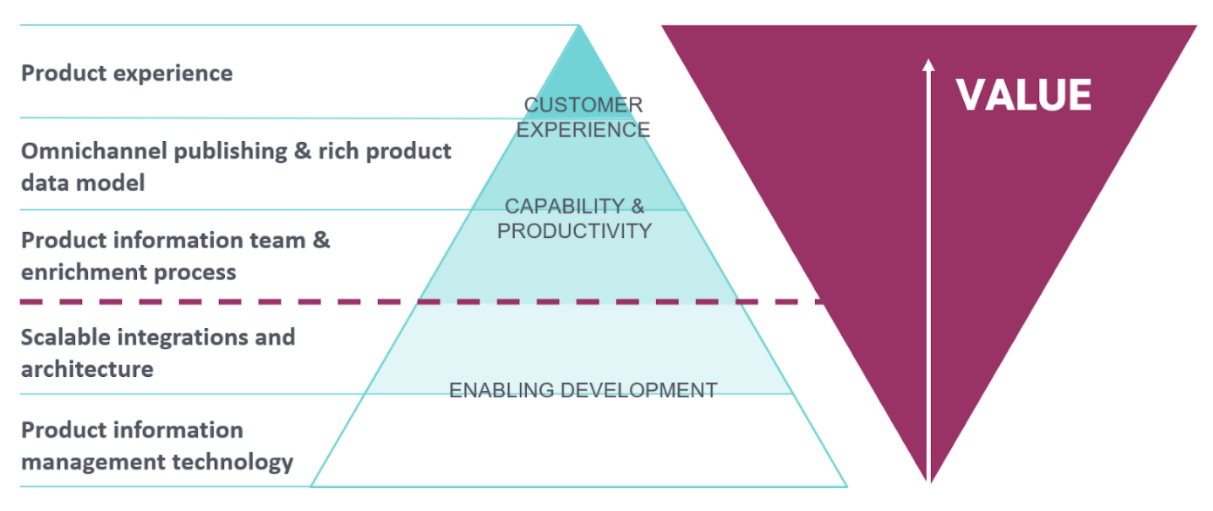
It’s no secret that product experience, and effective management of that product experience, is crucial to success. But to get to where you want to go, you need to know where you are. So, to help you figure out exactly where you are in your PXM journey, Akeneo has created the PXM Maturity Assessment! It’s designed to provide you with recommendations and guidance on how to think about the different ways that product information is leveraged, who should be contributing, and help you find ways to improve business processes that involve PIM. It also includes a clear path of recommendations to continue your progress toward becoming a PXM Champion. The assessment consists of 14 questions designed to evaluate how you’re managing information. The questions ask you to identify and describe how your organization is currently using your people, data, and technology to manage product information, including enrichment processes, workflows, time-to-market, employee satisfaction, and more.

Become a PXM Champion

So, once you’ve taken the assessment, what’s next? How can you use this to elevate your PXM practices and become a PXM champion? Once you’ve completed the assessment, you’ll receive a personalized report that explains the next steps you can take at your current level of PXM maturity that will help you and your business progress along the maturity journey. You’ll get a clear picture of where you are in your journey, plus a better idea of just how far your company can go with increased or modified applications of PXM best practices Ready to get started? Take the PXM Maturity Assessment for yourself, or contact us to get help from our team of product experience experts.

4 Reasons PIM is better than MDM when it comes to product data

Product Experience

4 Reasons PIM is better than MDM when it comes to product data

From PIM to MDM to DAM to ERP and everything in between, there are enough data management solutions (and enough acronyms) to make your head spin. So, …

From PIM to MDM to DAM to ERP and everything in between, there are enough data management solutions (and enough acronyms) to make your head spin. So, we’ve come with a series of blogs designed to help you make sense of it all, and find the right data solution to fit your needs. First up, Master Data Management, or MDM. 

Data, we’ve been told, is the new oil, the new gold, even the new bacon. No matter what it may be, we can all agree that it’s crucial to the success of your business, and you’ll need to manage it properly to realize that potential. If you lack the right solution to help you handle, interpret, enrich, and distribute that data, it won’t matter how much information you have, your business will still struggle to succeed in the modern world. So, where to begin? It can be tempting to find a one-size-fits-all solution to manage all of your information, and Master Data Management solutions can seem appealing for just this reason. But, is an MDM solution the right fit for your business and its data needs? Not if you’re planning to use it to manage product information. In that case, you need a PIM, or Product Information Management solution. Why is PIM better than MDM when it comes to managing product data? Allow us to explain.

Built-in connectivity

Gone are the days of simply having a brick-and-mortar store or a printed catalog as a merchant’s only sales channel. Instead, sellers need to meet their customers where they are — namely, everywhere. The number of channels used by both B2C and B2B buyers is on the rise, with some researchers estimating that the average consumer uses an average of six different channels when researching and buying products, while 67% of B2B purchases were influenced by digital channels.  That’s why a good PIM solution will offer no shortage of connections to a wide range of channels, including eCommerce stores, multi-vendor marketplaces like Amazon and Alibaba, print catalogs and other materials, even social media. This makes it easier to ensure that all of your product information is accurate, complete, and consistent, while also helping to control enrichment costs and get your products to market more quickly. MDM solutions, on the other hand, are typically used to provide a common data record for internal operational and analytical systems. They do not generally contain the level of product information required for an ecommerce shop, a print catalog, or a marketplace listing. And as a result, few if any MDM systems offer pre-built connectors to those selling platforms.

Attribute-supporting strength

Modern consumers aren’t just using more channels than ever before, they also want to know more about your products than ever before. They want to know what size it is, what color it is, what materials went into making it — and much, much more. According to Retail Dive, 87% of customers went online to research products before making purchasing decisions last year. That’s why it’s crucial that any solution you plan to use to manage product data be able to handle hundreds, if not thousands, of attributes. When it comes to managing large amounts of product attributes, PIM has the competition beat. PIM solutions are typically able to handle a huge volume of product data attributes covering technical data, usage data, and emotional data often delivered in rich product descriptions, images, and much more. This information varies often depending on the channel and the local market. PIM solutions help improve your product experience by making it easier than ever for your customers to find what they’re looking for. MDM solutions, meanwhile, are built to handle no more than a few dozen product attributes needed to identify a SKU. They often manage technical data but are not built to handle narrative text like usage data and rich, emotional product descriptions, leaving your customers looking for more information and likely moving on to the competition.

Digital asset aptitude

Attributes are just the beginning, however. If you want to succeed in the omnichannel age, you need to allow customers to see your product in action or get an inside look at how your product functions via digital assets like photos or videos. This is especially true as competition becomes all the more fierce on digital channels — in fact, recently published research indicates that the majority of consumers use these digital assets when they make purchasing decisions. When it comes to digital asset management, there’s no question which solution is superior. Unlike most MDM systems, a strong PIM solution will include asset management capabilities that are designed to help your team more efficiently and effectively manage digital assets alongside product information. These asset management capabilities are designed to offer flexibility while also making it easier to organize, manage, and transform your assets. They can also help enable linking capabilities to support different needs in different channels, and a dedicated asset library to help you easily visualize all your digital assets.

Superior supplier onboarding and management

Managing product information isn’t just about organizing and enriching data generated by internal sources, of course. It’s also crucial that any solution that you use to manage product information be able to handle data from external manufacturers and distributors — but that’s often easier said than done. Managing product information from suppliers can be a time-and-resource-consuming process even when it involves existing suppliers, and introducing new suppliers to the equation only results in more friction, which can lead to errors and a slow time-to-market. Simply put, most MDM systems lack the ability to help manage product data submitted from suppliers. Good PIM solutions, on the other hand, will be able to easily and efficiently onboard and manage supplier data. Top-of-the-line solutions will even make it easy for suppliers to provide product information directly to you, in the format you need, without having to go through the painful, time-consuming manual process of editing Excel sheets, copying and pasting data, and manually reviewing and approving their submissions. The results? Better and easier collaboration with suppliers, faster time-to-market, and better product experiences for your customers.

Choosing the right solution for your business

So what’s the right product data solution for your business? This is just a short list of some of the key differences between a PIM and a multi-domain MDM system. PIM is a dedicated, business-centric marketing solution that offers a much faster deployment and quicker ROI than its more intrusive, complex, and expensive enterprise-wide MDM system cousin. If you’re looking to enable marketing and merchandising teams to increase sales via omnichannel expansion, create great product experiences, expand your product catalog to carry new products, or manage digital assets, then you want a PIM. Want to learn more about the world of product information management? Discover the sweet science of product experience management with our eBook, PXM for Dummies, or discover the secrets of PIM success with our customer stories!

Unlocking the Possibilities of eCommerce Through Digital Transformation

Product Experience

Unlocking the Possibilities of eCommerce Through Digital Transformation

This is a guest post from Akeneo PIM partner BigCommerce.   In 1995, two soon-to-be internet giants made a modest foray into eCommerce. A…

This is a guest post from Akeneo PIM partner BigCommerce.


In 1995, two soon-to-be internet giants made a modest foray into eCommerce. Amazon sold its first book, Fluid Concepts and Creative Analogies, and eBay auctioned a broken laser pointer. The digital landscape has evolved dramatically in the years since. Now, nearly 60% of the global population, or 4.57 billion people, have internet access, and more than 3 billion use smartphones. Digital shoppers are finding products through websites, mobile apps, marketplaces, and social media, and businesses of all sizes, including manufacturers, warehouses, and distributors, have eCommerce platforms. B2B is expected to be the largest area of eCommerce growth over the next five years, making it essential for businesses to embrace digital transformation to boost competitiveness. Digital transformation is about more than incorporating innovations into the workflow to improve efficiency and productivity — it also positions companies to quickly respond to changing consumer expectations and opens new revenue streams. Let’s take a closer look at trends driving digital transformation and how companies can prepare for future growth in an increasingly customer-centric environment.

Social Trends Driving Digital Transformation

The most significant push toward digital transformation is the shift of consumers online, with an estimated population of 230.5 million digital shoppers in the United States by 2021. Consumers are buying through a variety of channels, and purchasing decision-makers are carrying this buying trend to the workplace. Here’s why consumer behavior is making digital transformation critical for all businesses.

1. Customers are making more online purchases

Online sales are growing at a rapid pace. The global eCommerce market is projected to hit $24.2 trillion sales by 2025, a CAGR of 11.1% from 2018. Even before the COVID-19 pandemic altered consumer behavior and sent more shoppers online, B2B eCommerce in the United States was forecast to reach $1.8 trillion and account for 17% of all B2B sales by 2023. B2B sales are, in part, driven by globalization and technology, but also a changing demographic, as 73% of millennials are involved in purchasing roles, according to one Merit study. This generation is accustomed to navigating an online environment in all aspects of life and is increasingly turning to digital channels to improve productivity and efficiency at work.

2. Omnichannel is becoming prevalent

While businesses may have multiple channels for reaching customers, there’s now an expectation that customers can navigate between them seamlessly. Known as omnichannel commerce, this customer-centric approach brings together traditional and digital channels to create a singular experience, no matter what touchpoint a client is using. Whether a customer is interacting with a company through a website, smartphone, social media, physical storefront, chatbot, sales department, or customer care, the same information must be available and delivered consistently. Digital transformation sets the framework for this interaction.

3. Having an online presence is valuable

More than 8 out of 10 Americans are online every day. Pew Research reports that 28% are online almost constantly, and 45% are browsing several times a day. Not only is a digital presence essential, but savvy consumers expect sleek designs and functionality expect this experience whether they’re on a B2C website, like Camelbak and Natori, or a B2B eCommerce platform. According to senior B2B executives, clients want a digital sales channel for the convenience of buying online (72%) and not waiting for a sales rep (52%). They also like to see inventory, delivery times, product information, and order history. A robust digital presence extends beyond an eCommerce website. Bliss, for example, opens additional channels of communication with customers on Instagram, Facebook, Twitter, YouTube, and TikTok. Businesses also need to build trust with consumers by providing social proof, which LARQ accomplishes by prominently displaying the 5-star rating for its LARQ bottles at the top of its product page and linking to reviews.

Digital Trends Shaping eCommerce

New digital technologies that can optimize efficiency and deliver rich user experiences are coming online every day. Before adding to your tech stack, consider what problems the technology solves and how it supports desired outcomes. Here are recent innovations that can improve eCommerce workflow and customer engagement.

1. Automation is essential for growth.

As more people turn to online and omnichannel shopping, automation is key to managing sales across platforms and boosting productivity. Basic tasks, like generating invoices, shipping labels, and tracking information, can be automated. Centrally storing product information lets you distribute consistent, up-to-date information through multiple channels. Businesses can also integrate their PIM tools with inventory management software to track online and in-store purchases and automatically replenish low stock.

2. Customer engagement marketing.

Customer engagement marketing focuses on engaging customers across all channels in a way that’s relevant and satisfies their needs.
  • Video is in demand In the United States, 85% of internet users consume online video content on YouTube, social media, websites, and other platforms. Millennials who are involved in purchasing decisions rate video as a preferred channel for learning about B2B products and vendors.Businesses use video testimonials, tutorials, and product demos in a variety of ways. Skullcandy, for instance, places a video highlighting features of Sesh Evo earbuds directly on its product page, while Bliss has demonstrations of its skincare line on YouTube and TikTok.
  • Chatbots Chatbots offer immediate support 24/7 to customers who have questions or problems on a website, helping to remove friction and offering an alternative to emailing or calling customer service. More than one-third of consumers prefer an instant response from a bot to waiting for a delayed reply from a person.
Bots can also seamlessly prioritize and direct inquiries to humans.

3. Measurements across all devices

Consumers expect personalization during their shopping journey, but 34% of marketers don’t have access to relevant data, while 40% struggle to link data to marketing efforts. Digital transformation can offer the tools to pull this information instantly and put it to work to conduct targeted advertising, improve decision-making, and convert sales.
  • Data-driven targeting Businesses can leverage data from an eCommerce platform to customize marketing. Consider offering discounts to customers with low average order values or providing product announcements to frequent customers based on transaction history. Sales teams can also identify inactive customers and begin re-establishing relationships.
  • Smarter retargeting Retargeting involves serving up an ad campaign that appears on social media, search page results, and websites to re-engage consumers that interacted with your business. Smarter retargeting focuses on specific segments. For example, instead of randomly serving a generic ad to all users who visited a website, improve conversion by tracking which pages a consumer visited and delivering relevant content.

Headless commerce

As the digital world changes at a blistering pace, eCommerce platforms must keep up with customer expectations. Traditional eCommerce sites connect the front and back ends, meaning that updates to the look and feel of a site also require changes to the technical engine, which runs the platform. Headless commerce separates the two components, allowing updates to be made independently.
  • Customization and personalization As marketers develop new ways of engaging customers, headless commerce enables front-end customized features to be introduced much faster than in a traditional eCommerce system. The ability to quickly change what a customer sees or how they interact is critical considering 67% of consumers say content must be personalized according to context.
  • Increased flexibility Headless commerce also facilitates the move to omnichannel, opening up consumer interaction from endless entry points. The front end can be set up for easy access from social media platforms, mobile apps, and kiosks. Data in the back end related to inventory, pricing, customer information, and checkout, can be called using an API and made available without overhauling the entire site.
Headless commerce offers significant potential for future growth as channels evolve. Businesses can also integrate their systems using cloud computing, which provides further flexibility and scalability. Rise of the use of PWAs Some businesses maintain a website and separate native mobile apps for Android and iOS. Progressive web apps (PWAs) are a relatively new application type that offers the navigation, appearance, and features of a native app — including push notifications — while also boasting the accessibility of a website.
  • Speed and accessibility A one-second delay in loading a web page can result in a 7% reduction in conversions. Smartphone users encounter additional friction with websites that aren’t mobile-friendly. PWAs eliminate these challenges with fast, reliable performance even without an internet connection. They take little disk space on mobile and are extremely responsive, allowing for a smooth customer experience.
  • Reach a wider audience PWAs make the rich experience of a native app available to a wider audience on mobile devices. Consumers add the PWA to the home screen of their phones with a click, eliminating the need to download a separate app. The application works on all devices and browsers, freeing developer resources. PWAs also appear in search engines and can be ranked high based on fast load times and reduced bounce rates.

The promise of digital transformation

Customer standards and expectations in B2C and B2B transactions are rapidly evolving as consumers shift online, onto smartphones, and toward omnichannel. With all signs pointing to continued digital growth, it’s critical for businesses to embrace digital transformation. Tools like automation, video, chatbots, customer data, headless commerce, and progressive web apps can be effectively leveraged to improve productivity and efficiency. More importantly, digital transformation positions businesses to meet changing customer needs and scalability for future growth. For more information on BigCommerce, visit their website.