Register

Unlock 2026: The Great Restack

Learn More
Akeneo-Logo Akeneo-Logo

Shaping the Future: Women in MACH Illuminate Tech Trends

Composable Commerce

Shaping the Future: Women in MACH Illuminate Tech Trends

Dive into the future of retail and celebrate International Women’s Day with us as we spotlight the pivotal insights shared by leading women in tech. Explore the trends shaping the industry today, from the integration of generative AI and the crafting of seamless omnichannel experiences to the strategic implementation of digital product passports and effective mitigation of product returns. Plus, discover the vital role of mentorship and networking in fostering diverse representation and leadership within the tech landscape.

As we commemorate International Women’s Day, we’d like to take a moment to reflect on the ongoing journey towards gender equality within the tech sector. As of late 2023, women made up about 35% of the tech workforce, but that number starts to dip as you climb up the corporate ladder. In C-suite leadership roles, women make up only 25%, and that dwindles to a measly 5% for women of color.  The tech industry continues to be a hotbed of innovation and transformation, influencing virtually every aspect of our lives – women have to have a seat at that table of discussion, not just as participants but as leaders shaping the future of technology.  In light of this, we’d like to highlight the voices of a few great women leaders in our industry. At NRF this year, the Women of MACH recorded an episode on emerging trends to come in this year and beyond.  Hosted by Amanda Cole, Chief Marketing Officer at Bloomreach, the episode featured insightful discussions with Kristin Naragon, Chief Strategy Officer at Akeneo; Casey Gannon, VP of Marketing & Technology Partnerships at Bold Commerce; and Isabell Aakervik, Chief Expansion Officer at Sitoo Together, they shared their expertise on a variety of interesting topics, including generative AI, omnichannel experiences, strategies for reducing returns, and the future of sustainability initiatives. Plus, these women share their advice on how to not only navigate a male-dominated industry, but how to bring your fellow women along. You can watch the full video here or check out the 5 key takeaways we’ve distilled for you below.

1. The rising prevalence of genAI

“I think a lot of our technology companies are learning how to respond to AI and make sure that we focus on the customer experience.” – Amanda Cole, Chief Marketing Officer, Bloomreach Throughout 2023 and into 2024, the conversation around AI and large language models gained significant momentum. The women in the panel shared how their individual companies are navigating this new wave of technology, and how they incorporated AI-powered solutions to enhance operations across various instances. While the potential of AI can often be hyperbolized and oversold, the panel focused on the practical use cases that companies could employ AI technology today, such as:
  • Generating and enriching product content
  • Cleansing data for reduced inaccuracies
  • Enhancing work automation
  • Supporting customer service roles
  • Automating content translation

We have a customer, Havaianas the Brazilian flip flop company . . . they leveraged Akeneo and some of the AI-powered tools that we have and they saw, on the Amazon Channel alone, an 800% increase in traffic to those sites and a 50% lift in conversions and orders due to those AI-powered descriptions alone.

Kristin Naragon Chief Strategy Officer

Akeneo

2. The importance of omnichannel experiences

The “shop anywhere” concept has been gaining traction for a while now, underlining the need for brands and retailers to offer seamless experiences across every customer touchpoint. The women of the panel touched on innovative strategies for merging the digital and physical realms of customer engagement, and highlighted the consequences of incomplete, poor product experiences; the dreaded return. To meet these growing customer expectations, brands and retailers are increasingly adopting new technologies that blur the lines between online and offline experiences, be it unified customer profiles, integrated inventory management systems, or advanced analytics platforms to personalize customer interactions regardless of the touchpoint. The goal is to create a shopping experience that is not only convenient but also consistent, allowing consumers to switch between channels and touchpoints effortlessly. The panel also delved into the specific challenges and opportunities presented by returns that occur from poor product experiences. They highlighted that returns are an integral part of the shopping experience but often come with significant logistical challenges and environmental impacts, and even shared their tips on how to minimize the impact of these returns, particularly through new technologies.

We know that shopping behavior is changing, and it will continue to change . . . The customer is searching for information online, so they are more informed than ever before when they enter the store – that is where you can create an immersive customer experience.

Isabell Aakervik Chief Expansion Officer

Sitoo

3. Flexible, adaptable tech stacks to prepare for Digital Product Passport legislation

As environmental and social consciousness continues to influence consumer choices, the ability to offer insight into product supply chains and manufacturing processes is a key differentiating factor. As the panelists highlight, although consumers are increasingly seeking out brands that can demonstrate responsibility and transparency, these factors will soon not just be suggested improvements to the customer experience but a global regulation. The European Digital Product Passport (DPP) initiative, part of the broader European Green Deal approved in 2020, is setting a new precedent for transparency in supply chains. The DPP aims to consolidate data regarding a product’s lifecycle, including its environmental impact and supply chain details, into a single, accessible format. This initiative mandates a level of openness that requires retailers to rethink their approach to data management and sharing across the value chain, including manufacturers, repairers, and consumers. Enter MACH architecture (Microservices-based, API-first, Cloud-native SaaS, and Headless) – a technological framework that offers the agility and flexibility retailers need to navigate these evolving demands and regulations. MACH architecture enables retailers to decouple their digital platforms into manageable, interchangeable components, which can be updated or replaced without disrupting the entire system. This modularity is particularly advantageous for adapting to requirements like those introduced by the DPP, as it allows for rapid integration of new functionalities or adjustments to existing processes.

Whether it’s legislation, or needing to adapt what’s happening in the market, like needing to move to BOPIS and curbside when COVID hit, there are always going to be things that we need to be able to adapt to quickly, and I believe the MACH architecture gives you the ability to have digital agility.

Casey Gannon VP of Marketing & Technology Partnerships

Bold Commerce

4. Mitigating product returns through product information

In a retail landscape where efficiency and sustainability are increasingly paramount, the discussion of the NRF panelists shed light on a trend with substantial impact: mitigating product returns through enhanced product information.

The number of returns in 2023 was over $700 billion dollars in the US alone, and that’s not just a company impact; that’s an economic impact and it’s an environmental impact. The tactic {of tightening return policies} that was deployed in 2023 is antithesis to what consumers want – over 90% of consumers check the return policy, and if they have a negative feeling toward strict return policies, 64% will find an alternative purchase where there’s a better return policy.

Kristin Naragon Chief Strategy Officer

Akeneo
A strategic approach to product returns can lead to more efficient customer acquisition, higher conversion rates, and strengthened customer loyalty, among others. The first step? Identify the critical details that customers may need at any point in their journey. By anticipating the questions and concerns that customers may have, you can ensure that your product information addresses their needs proactively. Once you’ve identified the essential product information, gather and enrich the data to create compelling product content (this is where genAI, once again, plays a big role, as highlighted by our panelists!). It’s also crucial to localize the product content for different regions and channels to ensure relevance and resonance with diverse audiences and channels. By ensuring consistency and accessibility across all channels, you can empower customers to make informed purchasing decisions without the need for returns.  

5. The importance of mentorship and networking for women in tech

As the discussion on emerging retail trends drew to a close, the panelists shifted focus towards fostering inclusivity and empowerment for women and diverse groups within the tech industry. Their conversation underscored the crucial roles of mentorship, self-belief, and the embrace of vulnerability as a strength in navigating the path to representation in technology and leadership roles. Below are just a few of our favorite quotes: Casey Gannon: “I have two really simple pieces of advice. The first is to find a mentor who is where you want to be  in 5 to 10 years – particularly, if you’re a woman, try to find a woman mentor {in that position}. The second is just to prioritize your network and particularly with other women in your industry.” Kristin Naragon: “If you’re a woman in a position of some influence or power, I think it’s really important not only to find and seek out females who you can lift up with you but also to really mentor the men who are coming up the ranks. I take the time on a very regular basis to work with men because it’s important for them to see our styles and how we lead, and to make sure that they feel, when they rise into those positions of power, that they understand how women lead in similar and different ways.” Isabell Aakervik: Believe in yourself – we women are very good at not believing in ourselves, so I would say stay strong!  Amanda Cole: This panel is four powerhouse professionals who just all happen to be women in MACH. There’s access to experienced professionals who also represent diverse groups and hopefully we continue to see growth in that. My advice would be, do not be a loud negative voice very similar to what Isabelle was saying! Don’t be your worst critic, and definitely take moments to celebrate yourself.  
  International Women’s Day acts as a reminder for us all that the journey towards gender equity and diversity in tech is a collective effort. It requires the engagement of individuals and organizations alike to create environments where everyone has the opportunity to succeed and contribute to the technological advancements shaping our world. Championing inclusivity, mentorship, and support enables more voices to be heard and more talents to shine within the tech industry, and if we can continue to foster an environment where innovation thrives and diverse perspectives are valued, we can look forward to a future where the tech industry is as rich and varied as the world it aims to serve.

Vulnerability in leadership is a growing trend, and women just happen to be pretty natural at it a lot of times! So let’s take those two things and use them to continue to move forward and get diverse voices represented in our groups.

Amanda Cole Chief Marketing Officer

Bloomreach

Casey Paxton, Content Marketing Manager

Akeneo

Meet the Winners of the Akeneo Partner Awards

Akeneo News

Meet the Winners of the Akeneo Partner Awards

This year at Unlock Boston, we announced the winners of the annual Akeneo Partner Awards, recognizing top-performing solution and technology partners for their innovative and extraordinary work for our customers.

We are thrilled to share the winners of the annual Akeneo Partner Awards recognizing top-performing solution and technology partners for their innovative and extraordinary work for our customers.  Award recipients are selected based on demonstrating exceptional performance in either implementing Akeneo’s Product Information Management (PIM) solution for their clients or developing a joint technology solution that meets unique customer needs.  In both cases, partners have contributed significantly to the growth and development of the Akeneo ecosystem by acting as advocates for our joint solutions in the broader community and by collaborating to ensure the best customer outcomes and product experience (PX) excellence. 

Tremendous applause to our esteemed partners for an outstanding year in 2023, and congratulations to our award winners. Your unwavering dedication, tireless efforts, and pursuit of excellence are truly commendable.

Tobias Schlotter VP of Global Channel Partners

Akeneo

Global Awards

Global Growth Award Solution Partner 2023

Accenture

Accenture is a leading global professional services company that helps the world’s leading businesses, governments, and other organizations build their digital core, optimize their operations, accelerate revenue growth, and enhance citizen services—creating tangible value at speed and scale. They are a talent- and innovation-led company with approximately 743,000 people serving clients in more than 120 countries. Technology is at the core of change today, and they are one of the world’s leaders in helping drive that change, with strong ecosystem relationships. Accenture combines its strength in technology and leadership in cloud, data, and AI with unmatched industry experience, functional expertise, and global delivery capability. They are uniquely able to deliver tangible outcomes because of our broad range of services, solutions, and assets across Strategy & Consulting, Technology, Operations, Industry X, and Song. These capabilities, together with their culture of shared success and commitment to creating 360° value, enable them to help their clients reinvent and build trusted, lasting relationships. They measure success by the 360° value they create for their clients, one another, shareholders, partners, and communities.  

Rising Star Award Solution Partner 2023 

Start with Data

Start with Data are the Product Information Management (PIM) experts, trusted by retailers, manufacturers, and distributors like RS Group, Pets at Home, Pernod Ricard, and Big W to get their product data into the shape customers expect. Throughout the UK and Australia, Start with Data delivers PIM Selection & Implementation, Product Content Sourcing, AI Product Content Creation, as well as Taxonomy & Attribution services. If you need independent PIM advice, help with data preparation and migration or you’re looking to fuel your eCommerce growth with complete, consistent & accurate product data – they’ve got you covered.  

Impact Award Solution Partner 2023 

Bounteous

Founded in 2003 in Chicago, Bounteous is a leading digital experience consultancy that co-innovates with the world’s most ambitious brands to create transformative digital experiences. With services in Strategy, Experience Design, Technology, Analytics and Insight, and Marketing, Bounteous elevates brand experiences and drives superior client outcomes.  

Impact Award Technology Partner 2023 

commercetools

commercetools is the leading composable commerce platform, allowing companies to dynamically tailor and scale shopping experiences across markets. We equip some of the world’s largest businesses with tools to future-proof digital offerings, reduce risks and costs, and build outstanding experiences that drive revenue growth.  

Hero Award Solution Partner 2023 

Avvale

Avvale is a Global Digital Business Transformation Company on a mission to evolve innovative business through the circular economy, enabled by technology. They truly believe that digital innovation and circular economy represent the most effective means to achieve a profitable and sustainable future. Availing of the right technologies, they can bend the traditional linear economic model, based on consumption, into a circular ecosystem, where products and materials circulate at their highest value, as long as possible, and at scale.   

Hero Award Technology Partner 2023 

Bynder

Bynder is a global leader in digital asset management (DAM). Bynder’s powerful, intuitive, and deeply integrated DAM platform unifies and transforms the creation, management, and distribution of marketing assets – this includes video content, images, brand guidelines and much more.   

Accelerator Award Technology Partner 2023

SAP

At SAP, their purpose is to help the world run better and improve people’s lives. Their promise is to innovate to help our customers run at their best. SAP is committed to helping every customer become a best-run business. They engineer solutions to fuel innovation, foster equality, and spread opportunity across borders and cultures. Together, with their customers and partners, they can transform industries, grow economies, lift societies, and sustain the environment.   

MACH Partner Award 2023 

Contentstack

Contentstack – the leading Composable Digital Experience Platform (DXP) provider – empowers marketers and developers to deliver digital experiences at the speed of their imagination. Companies such as ASICS, Chase, Express, Holiday Inn, Icelandair, Mattel, Mitsubishi, Riot Games and Shell trust Contentstack to power their most critical content experiences with uncompromising scale and dependability. Famous for its Care without Compromise™, Contentstack has achieved the industry’s highest customer satisfaction rating. Contentstack is also a founding member of the MACH Alliance, setting the industry agenda for open and composable technology that is Microservices-based, API-first, Cloud-native SaaS, and Headless.   

Integration Award 2023 

Priint

Founded in 2003, priint Group | Werk II is the global leader in solutions that bring Product Data to life. Driven by the strong belief that timely and relevant Marketing materials, digital and printed, are key to delivering an engaging customer experience, priint Group enables organizations to create their marketing publications up to 80% more efficiently through its priint:suite platform, cloud services and integration into virtually any data system.  Whether pre-planned or on-demand, generic or personalized, in one language or fifty, priint brings digital transformation and automation to the creative lifecycle.

Congratulations to all of our award winners! We firmly believe that the product record is about to have its center stage moment and that is because you all realize and are investing in this valuable ecosystem centered around the product record together we are building a category that is becoming the default must have solution for every company with products to sell.

Kristin Naragon Chief Strategy Officer

Akeneo

Regional Awards

Growth Award North America 2023 

Sitation

Sitation is a key implementation and innovation partner to industry leaders in PIM technology. Focused on working with brands, manufacturers, retailers, and distributors, to provide services aimed at growth acceleration and winning customers on the digital shelf, Sitation specializes in the three pillars of PIM: strategy, data quality, and technology. Sitation also offers a custom suite of software solutions, including middleware, SEO, and AI platforms.    

Growth Award Central Europe 2023 

Vanilla Reply

Reply [EXM, STAR: REY] specializes in the design and implementation of solutions based on new communication channels and digital media. Reply is a network of highly specialized companies supporting key European industrial groups operating in the telecom and media, industry and services, banking, insurance, and public administration sectors in the definition and development of business models enabled for the new paradigms of big data, cloud computing, digital media and the Internet of Things. Reply services include: Consulting, System Integration, and Digital Services.  

Growth Award Western Europe 2023 

Vaimo

Vaimo is one of the world’s most respected experts in digital commerce and customer experiences. For them, experience is everything. It is at the heart of all they do, and they are leading the way in delivering on it in the fields of digital commerce, content management, data management, and insights and activation. As a full-service digital experience agency, they deliver consulting, design, development, support, and analytics services within all four fields. They are a global partner with a local presence, focused on cultivating close, long-term relationships with their clients.   

Growth Award UK/I 2023 

Tryzens

Tryzens is a leading international digital commerce consultancy that takes a holistic approach to understanding and growing their your business, no matter how or where customers choose to buy. Their team of trading specialists, strategists, analysts, UX and technology experts are passionate about helping you achieve your goals by implementing solutions that optimise performance across all channels.   
  Congratulations to our winners! Our phenomenal network of partners has been instrumental in our journey. We’ve fostered a tight-knit community over the years, and it’s been a pleasure to evolve and expand alongside these remarkable organizations. With 2023 marking a milestone, we eagerly anticipate the boundless opportunities that 2024 and beyond hold for us all. Learn more about the Akeneo Partner Ecosystem and discover how to get involved in the partner community today. We’ll see you next year for the 2024 Awards!

Akeneo Partner Ecosystem

Discover a world-class ecosystem of partners who deliver expertise, services, and innovative technology.

Kateri Osborne, Director, Global Integrated Demand

Akeneo

Introducing the 2024 PX Champions

Akeneo News

Introducing the 2024 PX Champions

The Unlock 2024 PXM Champions Awards is our way of recognizing the trailblazers who have harnessed the power of product experience strategies with Akeneo to thrive in the dynamic omnichannel environment. Discover who’s been recognized as leaders in product experience this year!

Today, we’re raising our glass to the innovators, the leaders, and the product experience champions who are setting new standards and driving remarkable growth in their respective industries. Join us in celebrating the winners of the Unlock 2024 PXM Champions Awards!  The Unlock 2024 PXM Champions Awards is our way of recognizing the trailblazers who have harnessed the power of product experience strategies with Akeneo to thrive in the dynamic omnichannel environment.  This year, we honor winners across six distinguished categories, each representing a unique facet of product experience mastery. Though the selection process was anything but easy, each of our award winners proved they’re changing the game by tapping into the magic of product experiences powered by Akeneo.  Let’s dive in and explore what makes these winners, winners!  

The Expansion Award: Fossil

The Expansion Award recognizes those who are creating better experiences in their current channels, introducing impactful new channels, and connecting with new audiences, all to drive meaningful business results.  A powerhouse in the lifestyle accessories industry, Fossil is known for its diverse portfolio of fashion watches, jewelry, handbags, and small leather goods. With a presence in 140 countries and 30,000 points of distribution, including 400 company-owned retail locations, Fossil brings each brand’s story to life on a global scale. Fossil’s journey from relying on Excel spreadsheets to adopting Akeneo’s cloud-based PIM solution showcases their commitment to creating seamless product experiences across the globe. This strategic move has not only centralized their product data management but also scaled operations efficiently across 140 countries without the need to expand their team. Fossil’s success story is a testament to the power of embracing flexible, business-driven solutions to drive meaningful growth.  

The Accelerator Award: Drawer 

The Acceleration Award recognizes those who have significantly reduced the time-to-market of their products, decreased the number of steps, and cut back on manual work to accelerate growth.  Drawer, an online furniture seller operating in the French market, faced numerous challenges before implementing Akeneo PIM. They source products from various providers and sell through their website and 10 marketplaces. With a catalog of 4500 SKUs, Drawer sought a solution to efficiently manage their product data and drive business growth. The implementation of Akeneo PIM and Supplier Data Manager catalyzed their transition to an automated system, drastically cutting down product creation time and boosting efficiency. In their journey with Akeneo, Drawer transitioned from a manual, multi-actor process to a nearly automated system, empowering their team and boosting efficiency. They’ve surpassed their own records by creating 200 new references in just one month, demonstrating an unprecedented pace in product launches.  

The Global Award: Insight 

The Global Award recognizes those who are expanding their business outside of their HQ country, flourishing in new territories, and working with local teams to connect with new audiences.  Insight Enterprises, a publicly traded global technology company leverages its technical expertise, broad solutions portfolio, and supply chain capabilities to help businesses achieve ambitious goals as a systems integrator. With a focus on cloud and data center transformation, connected workforce, and digital innovation, Insight empowers organizations worldwide to navigate the complexities of the digital age and drive meaningful business outcomes. Before adopting Akeneo, Insight faced challenges related to a lack of control over data/content, limited business ability for enhancements and new functionality, and a heavy reliance on IT involvement. However, with Akeneo’s user-friendly interface and robust features, Insight has autonomously maintained and expanded a vast catalog of 1.4 million products, significantly reducing reliance on IT resources. The implementation has not only improved catalog content completeness but also propelled eCommerce revenue, marking a significant leap towards achieving their global ambitions. With Akeneo’s implementation in North America proving successful, Insight is now poised to extend its capabilities to Europe, the Middle East, and Africa (EMEA), targeting expansion across 11 new countries in the region.  

The Leadership Award: Peavey Industries

The Leadership Award recognizes those who are improving the lives of their teams through more efficient workflows, creating opportunities to be less operational and more strategic, and empowering their teams to grow.  The parent company of Peavey Mart and MainStreet Hardware, Peavey Industries has been proudly serving loyal customers across Canada since 1967. With a focus on essential products and services for the rural lifestyle, Peavey Mart has established itself as a trusted destination for quality goods and personalized customer service.  Facing the complexities of a vast product catalog and the need for a sustainable technology infrastructure, Peavey Mart found its solution in Akeneo’s PIM. Akeneo’s intuitive user interface, robust API, and seamless integration capabilities aligned perfectly with Peavey Mart’s vision to build a solid and sustainable technology infrastructure that can support optimal product experiences. The results? A 73% increase in productivity and enhanced strategic focus on product experiences, enhanced personalization options for consumers, and improved forecasting abilities. Peavey Industries’ journey underscores the importance of empowering teams with efficient workflows to drive growth and innovation. With a focus on driving innovation and delivering concrete business results, Peavey Mart remains committed to leveraging technology to enhance the retail experience for their customers.  

The Experience Award: Mobili Fiver

The Experience Award recognizes those who provide exceptional product experiences, creates content for the right audience at the right place, and is cutting edge in how they represent it to their consumers. Mobili Fiver, a dynamic eCommerce enterprise committed to delivering high-quality, self-manufactured furniture that resonates with modern lifestyles and refined tastes, exemplifies excellence in providing exceptional product experiences. With it’s product range spanning a diverse array of meticulously designed furniture, Mobili Fiver has established itself as a leader in the furniture industry. Mobili Fiver’s previous product information platform lacked the flexibility required for a comprehensive presentation of furniture products, hindering their ability to communicate the richness of their offerings to customers.  Manual and time-consuming processes hindered their agility in introducing new products to the market, responding to trends, and meeting customer demands in a timely manner. Since adopting Akeneo, Mobili Fiver has been able to address their previous challenges, allowing them to create, configure, and present furniture products with unprecedented ease and speed. The result has been a more informed and satisfied customer base, coupled with an agile and efficient internal workflow that positions Mobili Fiver for continued success in the furniture ecommerce landscape. Leveraging Akeneo’s PIM solution to overcome flexibility and agility challenges, Mobili Fiver is now able to showcase their craftsmanship and innovation through detailed product presentations.  

Ambassador: Assa Abloy

In addition to the five PXM Champion Awards above, Akeneo granted an Ambassador Honor for exceptional use of the Akeneo product and to recognize those who represent, advocate, and contribute to the product experience community. Renowned worldwide for their comprehensive range of access solutions, spanning door and entrance solutions, secure identification solutions, and hotel security, Assa Abloy boasts an extensive product portfolio, including locks, access control systems, and door closers that serve diverse industries, including residential, commercial, and industrial sectors. Like many others, Assa Abloy’s struggled with scattered product data and knowledge bases, leading to inconsistent data across sales channels. With a goal to create a single source of truth for all their products, enhance product manager resources, foster collaboration among brands, and streamline product distribution across channels, Assa Abloy turned to Akeneo. With over 30 users across the business, Assa Abloy maximizes every aspect of Akeneo PIM to ensure operational success and empowers their product managers, marketing teams, and customer service teams to provide accurate and up-to-date product information to customers. They can now create datasheets within minutes, push new products live within 24 hours, and amend SKU information online within hours, significantly reducing turnaround times and enhancing customer satisfaction.  
  Join us in applauding the achievements of these outstanding brands. Their stories not only celebrate success but also inspire innovation and excellence in the product experience domain. Congratulations to all the winners of the 2024 PXM Champions Awards, and we look forward to seeing everybody at the next PXM Champion Awards! Not sure where exactly you are on your path towards product experience excellence? Take our PXM Self Assessment to find out!

PX Strategy Assessment

Take the self assessment to find out where you are on your journey towards product experience excellence.

Samira McDonald, Senior Manager, Community Program

Akeneo

Showcase Your Products Better, Faster, & Anywhere: Akeneo Spring Release

Akeneo News

Showcase Your Products Better, Faster, & Anywhere: Akeneo Spring Release

From automating supplier data onboarding with AI in the Akeneo Supplier Data Manager to enhancing content generation and translation across 50 languages to the highly anticipated Akeneo PIM App for Salesforce and expansion of Activation for Retail, the latest features unveiled as part of Akeneo’s Spring Release promise to elevate your product experience.

If you have been in or around Boston these past few days, you may have noticed a brilliant purple flame spreading through the city. And did it seem to be burning a bit brighter earlier this morning? That might be because the Akeneo team released the details included in our Spring Release just a few hours ago live at Unlock, the premiere Product Experience (PX) conference happening right in the heart of – you guessed it – Boston. Our Spring Release is packed with exciting, innovative features designed to enable your company to showcase your products better, faster and across all platforms.  While we can’t cover every new addition in detail here, we’re excited to share some of the highlights and how these advancements can elevate your product experience (PX).  

Showcase your Products Better

Automate supplier data onboarding in Akeneo Supplier Data Manager

Now equipped with native AI capabilities, Supplier Data Manager automates the mapping, normalization, categorization, and enrichment of supplier data, enabling your team to maintain smoother supplier relations and transform the data onboarding process. In particular, this updated version of Supplier Data Manager can support:
  • Automated efficiency: Eliminate manual tasks, reduce errors and discrepancies, and ensure consistency across all your experience offerings.
  • Faster time-to-market: Speed the process of getting products in front of customers, and in new markets or channels.
  • Increased data quality: Improve the accuracy and completeness of your product data for better product experiences and build trust with your customers.
 

Showcase Your Products Faster

Generate and translate product content across 50 languages in minutes

Supplier Data Manager wasn’t the only Akeneo solution that received the AI treatment – Akeneo PIM is now equipped with native AI capabilities! Customers will now be able to leverage customizable generative AI to create bulk product descriptions and romance copy across the entire product catalog in minutes, and translate those descriptions into more than 50 languages.  Not only does this feature enhance productivity, accuracy, and scalability in content creation and translation, but it also enables businesses to quickly adapt content to meet regional market expectations without the need for additional tools or expertise.

Business Analytics in Akeneo PIM

Business Analytics within Akeneo PIM offer operational market metrics and KPIs that track how products or product ranges perform on different markets and sales channels.  Included in the Spring Release is a whole slew of updates to our business analytics functionality that will ultimately provide your organization with the foundation to build a PX Strategy based on content impact. These enhanced business analytics enable:
  • Increased visibility into the product content impact on business
  • Teams to work smarter by providing the right data to make informed decisions
  • Faster, more nibble reactions to market trends
  • Data-driven support for prioritizing a PX Strategy within your organization

As we unveil our Spring 2024 release, we’re celebrating the fruits of Akeneo’s strategic evolution. Our journey since the 2022 fundraising has been one of bold steps and breakthroughs, leveling Akeneo up the competitive rungs of product experience management solutions. This year were thrilled to celebrate recent success and propel ourselves to new levels of growth.

Fred de Gombert CEO

Akeneo

Showcase Your Products Anywhere

New Channels Added to Akeneo Activation

Last year, during Unlock 2023, we announced a new solution as part of the Akeneo Product Cloud: Activation for Retail, which brought our best-in-class product experience technology to product listing pages on retailers like Amazon, Macy’s, Zappos, Nordstrom, and more. This year, we’re back at it again, welcoming Wayfair and Grainger (among others) to our 250+ activation channels. Brands and manufacturers will now have the ability to deliver consistent product experiences on these new channels while easily customizing product information to align with shopper expectations and channel requirements

Customizable Akeneo PIM App for Salesforce

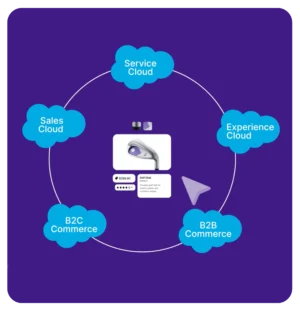
One of the most highly-anticipated parts of this release – a shiny new Akeneo PIM App for Salesforce Appexchange!  This customizable app brings high-quality product information and assets into Salesforce Commerce Cloud, Sales Cloud, Service Cloud, and Experience Cloud, driving greater efficiency, higher sales volumes, and better customer service by giving customer-facing teams instant access to product information that drives more meaningful engagement with the people who are buying and using their products and powering digital commerce.  Deployed together, the Akeneo PIM connects people to products in the Salesforce system where they work, every day. Resulting in:
  • Higher sales on B2B and D2C Commerce sites with accurate, up-to-date, and localized product information.
  • Sales reps that sell more products, more efficiently, by accessing product descriptions and assets while building quotes and working in Salesforce CRM.
  • Customer service reps that deliver better support by leveraging accurate, complete, and up-to-date product information when resolving cases in Salesforce Service Cloud.

The Akeneo PIM App for Salesforce is a welcome addition to AppExchange, as it accelerates business transformation for customers by enabling greater functionality of Salesforce.com thanks to complete and compelling product information. AppExchange is constantly evolving to connect customers with the right apps and experts for their business needs.

Alice Steinglass Executive Vice President and General Manager, Platform

Salesforce

Showcase Your Products Better, Faster, & Anywhere with Spring Release

All of the exciting features included in Akeneo’s Spring Release are a testament to our commitment to bringing innovation and excellence to product experiences. By automating data onboarding, enhancing content generation with AI, and integrating seamlessly with sales and service platforms like Salesforce, we’re setting a new standard for product information management and product experiences.  These features not only streamline internal processes but also ensure that businesses can showcase their products better, faster, and anywhere, ultimately leading to a better customer experience. We’ve had a wonderful time celebrating and spreading that purple fire with our PX community of customers, partners, and PX experts at Unlock Boston, and we look forward to seeing what we can create and build together in the future! Couldn’t make it to Unlock Boston? The premiere PX event may be coming to a city near you! Register for Unlock on Tour now, making stops at Cologne, London, and Paris.

Casey Paxton, Content Marketing Manager

Akeneo

How to Design Your PXM Program For Success

Product Experience

How to Design Your PXM Program For Success

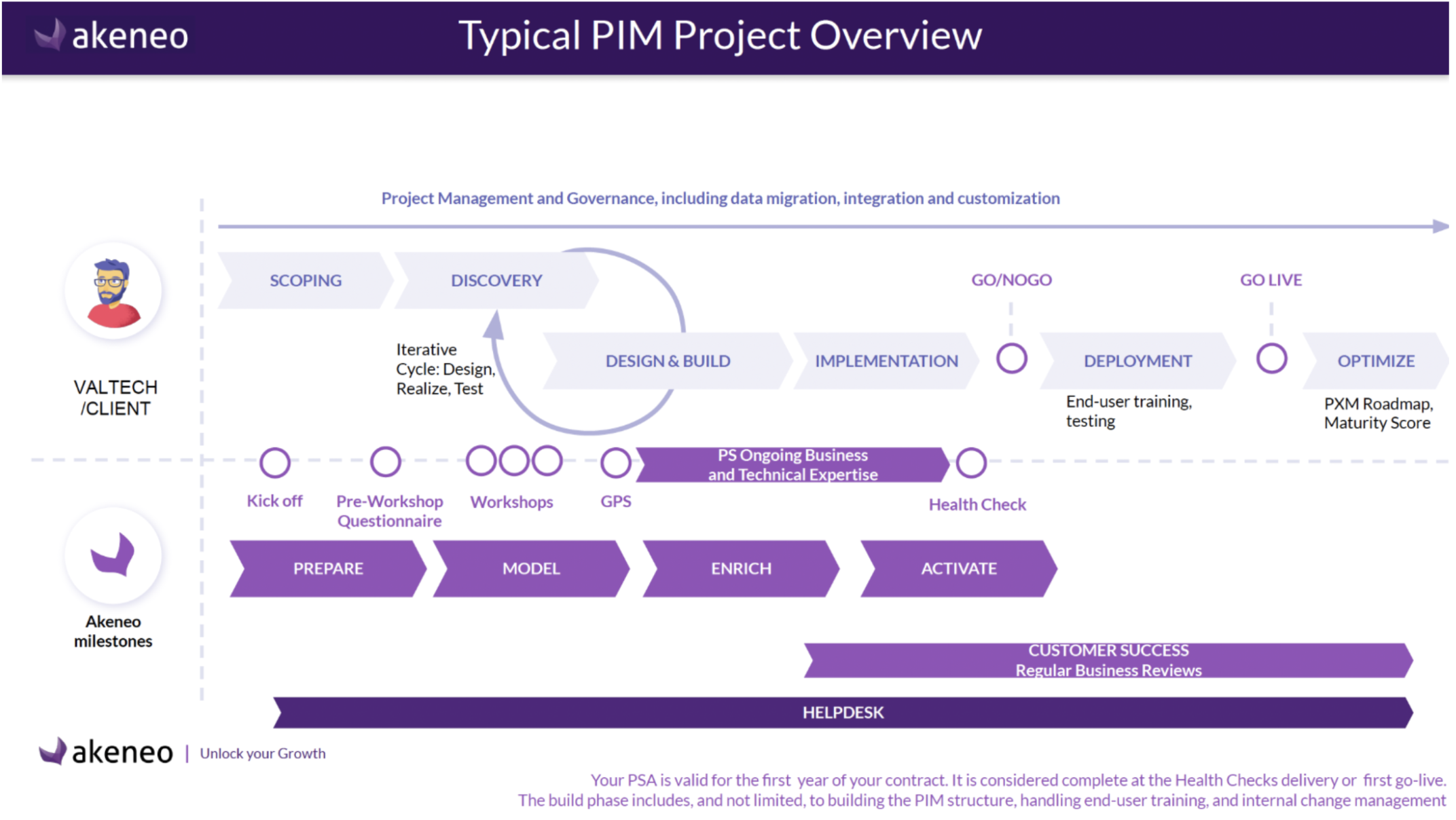
In this latest guest post from Akeneo partner Valtech, learn how to build a successful PXM program by assembling the right team, adopting interactive delivery methodologies, developing clear roadmaps, establishing risk management processes, and prioritizing change management. With real-life examples and actionable insights, this article provides a roadmap for navigating the evolving landscape of product catalog management system implementation. Dive in now to unlock the keys to PIM integration success!

For too many years, the success of a PIM integration project relied on key IT personnel, and a heavily-invested product owner. Architects would show up at an early stage, and provide their view on where PIM would fit in the complex puzzle of their legacy system. But times have changed, and it seems that a post-COVID era has given companies the time to rebalance this arm wrestling battle between IT & Business and reshuffle the cards. Before signing on a new platform, we here at Valtech have seen a wave of longer RFPs with more detailed functional requirements, and business & IT teams slowly coming together to revisit their approach to system implementation, listening to the needs of their business users.  The complexity of the implementation project might vary depending on a range of reasons, including
  • A greenfield Implementation  
  • Replacing a legacy PIM 
  • A migration from an on-premises PIM to a SaaS Platform 
  • Integrating existing PIM with new systems 
  • Expanding the existing PIM in new Business Units and Markets 
But to ensure your PIM, DAM, PLM, or other key product catalog management system implementation success, you’ll need adoption (as seen in previous blog). And to make sure adoption happens, you’ll need to make sure that the team implementing your magical new system will understand the audience, their habits, their fears, their needs, and more!  This is where having a programmatic approach to such a digital transformation is key. It’s not a punctual project, it’s an ongoing one that actually starts at the end of your initial implementation. And driven by the key pillars of change management!   

How to Build a Successful PXM Program

#1 Assemble the right PXM program team players

Success starts with aligning key players, and building the right dynamic around the right objectives with not only your integration team, but also your client team. But with situation like this where IT & business skills are heavily intertwined, who do you really need on your team? Here’s our recommendation if you’re working with a PXM integrator

Core PXM implementation team

  • Lead consultant or Practice lead. He/She is often the most senior PXM/PIM consultant in the crew. They’ve seen it all and typically have a minimum of 5 years of experience. With a 20-30% of allocation to your program, they can guide the business consultant who has to do most of the configuration heavy lifting.
  • Business consultant. Depending on the size of the project we recommend a senior or at least an intermediate consultant who Iwill help you get the most out of your data model, product lifecycle, and workflows strategy. They’ll also be your go-to person for adoption. We talk in general between 50% to 100% allocation to a project.
  • Tech consultant. This is a profile we created as most PIM solutions are now leaning towards SaaS only. Their role is between a developer and an architect, and although they don’t need to know customization, they’ll need a deep business understanding and a mastery of API connections to be able to adapt and succeed. The tech consultant’s primary role is to keep the technology easy to maintain. We talk in general between 30% to 80% allocation to a project.
  • Architect. Depending on the size of the program and the number of other systems connected to your PIM, a solutions architect could be helpful. Their role is mainly to align integration strategies during the discovery/design phase. His role is between 10-20%.
  • Project Manager. You always need to have that person in your team that understands how to keep the group on track, on budget, and on time! In general, we ask this person to understand the biggest milestones associated with the project, along with the roles and responsibilities of each and every one of your team members. We typically allocate between 10-15% to the project.
  • Practice Director. A PXM program will get you into politics really fast. If you want to make sure the quality control is there and you have an opinion of someone who has significant expertise in this space, then you might want to establish a Practice Director with at least 7+ years of experience.. The allocation of the budget is not more than 5-10% in case necessary.

Client PXM team 

Once your PIM is successfully implemented, you’ll need a team of PXM enthusiasts to ensure that your project is successfully adopted, and continues to live and get the necessary upgrades to make your product catalog shine!
  • PIM Champion. You need one leader who is willing to make the harsh decisions, who has a bird’s eye view on all of your processes, who will act as a moderator for your teams and understands their pain points, and who will be responsible to control the use of your solution. When doing the adoption, he either leads it or designates the person he believes will help get you the stickiness such a platform needs.
  • Product Content Specialists. These are either your product managers, product marketing specialists, or in certain cases a vendor who deeply knows your product catalog and the detailed specifications. They will help you select the proper attributes, the proper format, and the values to make a difference.
  • Channel specialists. Typically from the marketing or the merchandising team, the channel specialist will master all the requirements necessary for your attributes to be received by different channels (i.e. Amazon, Home Depot, any distributor, etc…). They are also responsible for reviewing the data before sending it to their respective channels and can work along with the PIM champion & product specialists in order to refine the data.
  • Architect. This will be the exact same role as you had in the Core PXM Implementation team, except  this one will be on the client side.
Additional optional roles depending on the size of the project include:
  • Solution or enterprise architect. Really senior architect for whom additional systems have no secret. This role would be necessary when many systems are connected to your PIM so they can apply the perfect strategy to secure technical scaling over time.
  • Additional Middleware engineers. Middleware is the future as more and more platforms become SaaS. There needs to be a middle-man to be able to improve performance when transferring a huge amount of data.
  • Other solution developers or technical consultants for API integration. No comments here 🙂
  • Change management specialist. When the organization is too large, or if the legacy systems and employees have been here for a long time, there needs to be someone specialized in the analysis and communication of potential resistance to change to help ensure that you have a successful, efficient adoption process. 
Have additional questions? Don’t hesitate to refer to the 5 must have roles in a PX team!  

#2 Adopt an interactive delivery methodology

 In today’s world with dynamic requirements and flexible needs, customers look for three key things:  
  • Easy configuration   
  • Early improvements  
  • Continuous delivery  
PIM projects can also be adopted for agile delivery. Most SaaS platforms have a standard set of out-of-the-box features and connectors to help set up the base PIM with almost zero advanced development required. Some PIM tools allow business users the ability to configure features without the need for additional developers  Quick setup of easy components in the early iteration cycles provides the opportunity to prioritize  more complex custom requirements for development in the upcoming iterations. An agile approach like this allows teams to work in an iterative model where self-organization and cross-collaboration are key. Iterative development allows the opportunity to break down a complex implementation to smaller iterative cycles of Build, Configuration and Test activities. 
PIM Implementation Timeline
The above diagram shows a visual representation of a development initiative broken into smaller iterations where each iteration is a condensed version of the SDLC methodology in itself.  Organizations may choose to cover different initiatives during each iteration based on the larger goals, priorities, and complexities.  

Benefits of an Agile-Based Iterative Development  

  1. Close Collaboration – Allows for a better understanding of not just requirements and expectations but also mitigation of measures and fixes. 
  2. Early Visibility – Early view of initial high priority features in the form of an MVP: e.g. Product Attribute pages available to be shown with sample data at the end of Sprint 1. 
  3. Continuous Improvements – Opportunity to fix and improve something that does not meet customer expectations – e.g. Update the Naming Convention of Images coming from DAM to include additional fields.
  4. Risk Reduction – Continuous iteration and feedback lowers risks and allows opportunities to correct mistakes at an early stage.
 

#3 Develop a clear roadmap & vision

A systematic approach towards implementing PIM starts with building a scalable PIM roadmap that is  adaptable and scalable for foreseen and unforeseen risks to come in the future.  A PXM-focused roadmap will:  
  • Define the strategic vision of the PIM and end-goals of the organization 
  • Act as a guiding document for implementation and adoption
  • Provide visual clarity of the Scope of Work 
  • Enable both internal (i.e. key users) and external (agencies, consultants, etc…) stakeholder alignment 
While ensuring the above, the PIM roadmap should clearly represent the order of various executable phases of the project with clear milestones with the mindset of making it evolutive. An example of a 3-year PIM roadmap is shown below:  
3 Year PIM Roadmap
Explicitly stating what is in-scope and out-of-scope of the PIM project ensures that both timelines for each phase are met and that the project stays within budget. When the roadmap is built and the respective phases are identified, teams need to define the realistic achievable goals within a specific timeline, and also identify what may not be achievable. A 6-month implementation timeline may involve deploying standard out-of-the-box components with some basic customization while any complex customization can be considered out of scope and can be taken up in a future phase if resources allow. We recommend not starting with an MVP that is beyond 3-4 months – why? Because delaying key business users’ adoption is a threat to the project’s success!  

#4 Establish proper risk management processes

Any major transformation program comes with its own set of risks and hurdles, and PIM implementation is no different. Hurdles can appear in many areas and are not just limited to scope management.  If we divide the hurdles of a PIM project into 3 buckets of Business, Technical and Management, the classification would look something like this:  

Business Hurdles 

  • Little to no understanding of the product catalog structure 
  • Failure to understand the creation, enrichment, and syndication process workflows 
  • No data governance policies established 
  • Underestimating product complexity

Technical Hurdles 

  • Complex integration landscape 
  • Data and information security 
  • Lack of understanding of the capabilities existing legacy platforms 

Management Hurdles 

  • Lack of subject matter knowledge to execute a PIM project 
  • Failure to get commitment from leadership 
  • No strategic vision for enterprise adoption 
For example, if we consider the issue of a Complex Integration Landscape – where the PIM is required to integrate with several complex systems – anything without a proper assessment can lead to risks of delays and rising costs. A  strong Risk Management plan can help tackle risks arising out of the above hurdles.  Tools like Risk Matrices can help assess likelihood and impact of risks, thus enabling: 
  • Strategies to mitigate the risks 
  • Prioritizing and tracking on a severity level basis 
  • Deploying resources to neutralize risks 
A risk management matrix can also help customers identify opportunities that were previously unknown. From a PIM standpoint a very simple example can be considered as follows:   While building the integration with ERP, it was found that the ERP data had quality issues with a lot of junk values. While this presents a risk of having bad data flowing into PIM, it also presents an opportunity to review and clean up the data in the ERP.   Overall, risks and rewards go hand in hand; an effective risk management strategy can help firms identify enough opportunities to expand a PIM program into various new and exciting initiatives, markets and regions.   

#5 Establish change management

Whether the transition is from an MS-Excel & email-based process to a PIM, or from an on-premises PIM to a cloud-based SaaS PIM, or any upheaval in habits or processes that impacts people, – change matters, and its management is important for adoption. Change management is especially crucial for organizations that are implementing a new solution among “old habits” and a sticky legacy system. You need to provide a clear and structured approach to transitioning individuals, teams, and the entire organization from the current product data management to the future one.  Here are some reasons why it’s essential to consider the change management during any solution integration: 
  • Stakeholder Resistance: If you have any sort of old system already in place, it’s common for a lot of users to be used to these older systems, processes, and execution methods. By identifying the different sources of resistance, it will be easier to set the right strategy to make the change happen. 
  • Uncertainty: Not understanding why a new solution is implemented can lead to real misalignment among all stakeholders. It’s crucial to correctly communicate the change, purpose, objectives, and advantages of this new integration and align all the stakeholders involved before, during, and after the integration. Everybody needs to understand the real impact of integration on the global business strategy. 
  • Lake of Engagement: It becomes important to have the right team of experts who can help determine the current pain points affecting the current product experience. Whether it’s harmonizing data or launching a new eCommerce portal, setting correct business goals is critical. Involving the right team to address the real business challenges is key. If you involve the right key users, it will bring harmony to the entire organization. 
  • Skills Gaps: By integrating the new PIM solution, some users may feel as if they don’t have the skills to adapt to the new processes and technology, but this is not the case as this knowledge will be useful to build the new integration! Train, support, and guide the users to make them feel safe and ensure a better adoption process. Change requires constant monitoring and evaluation to ensure that it is permanently integrated into process, people, and technology!
A changing mindset is not only key to driving adoption through training but it is also critical in driving system enhancements. A PIM which has just been deployed may be able to solve immediate use-case identified; however, as businesses continue to grow, feature-enhancements and additional integrations will be required. As time passes, new users and business units are onboarded who may require additional functionalities to be onboarded.  For example:
  • A leading Food & Beverages manufacturer from India decides to enter the Canadian markets and launch its own website along with other channels like Walmart and Loblaws; that would require onboarding new BUs and users from Canada 
  • To meet regulatory requirements in Canada, the Marketing Description needs to be displayed in both English and French 
  • The existing PIM solution would then require enhancements applicable to Canada which would include addition of new fields, addition of new export templates, minor changes in the User Interface etc. 
In the above scenario, an open communication between entities of both the countries is crucial to drive user adoption. The users should be open to grasping how the changes implemented can lead to higher process efficiency, lower enrichment times, and faster go to market in both countries.   Change management is essential for the successful implementation of organizational changes. It helps align people, processes, and technology with the business goals and objectives of the organization, facilitating a smoother transition and maximizing the chances of ensuring a successful PIM integration. Involving the right people at the right time, and ensuring transparency through clear communication of objectives, advantages, expectations, and guidance ensures a smooth change management process! Looking for more PIM implementation support? Check out some of our other Valtech featured articles diving into the people-first approach to product experiences, how to maximize the ROI of your PXM organization, or the steps to perfecting your PIM selection process. This article is a guest post by Akeneo partner, Valtech.

Justine Carlier, Senior Consultant & Akeneo Lead Expert

Valtech

The Secret to Reducing Returns

Reducing Returns

The Secret to Reducing Returns

Discover the unexpected ways that high return rates can impact businesses, customers, and the environment, and explore actionable strategies for reducing returns through proactive product information management. Learn how retailers like yours can create seamless experiences that keep customers coming back for more.

Benjamin Franklin once famously said, “The only guarantees in life are death and taxes.”

Well, I’d like to petition to add one more guarantee to that list: returns.

In the era of “serial returners”, retailers across the globe have seen a spike in return rates and shoppers are showing no signs of slowing down.

While returns are an inherent part of the retail landscape, high return rates can have far-reaching consequences that extend beyond the bottom line, including:


Financial Impacts

High return rates can significantly impact a business’s operating costs in several ways. Firstly, there are logistical costs associated with processing returns, restocking inventory, and managing reverse logistics. This involves labor, transportation, and storage expenses, which can quickly add up, particularly for large retailers handling thousands of returns daily.  As a reference, in 2023, the average retailer incurred $145M in merchandise returns for every $1 billion in sales.

Returns often also result in inventory depreciation. Items that are returned may not be in pristine condition, requiring markdowns or even liquidation to clear out excess stock. They can also put a strain on customer service resources – dealing with return inquiries, processing refunds, and managing customer complaints all require time and manpower, diverting resources away from other areas of the business.


Environmental Impacts 

Returns often lead to increased carbon emissions due to additional transportation and handling as each return necessitates transportation back to the warehouse or retailer, contributing to fuel consumption and greenhouse gas emissions. In 2022 alone, emissions from shipping returns equaled 24 million CO2 metric tons.

Moreover, returned items may not always be resold immediately, leading to excess inventory or even disposal. This not only wastes valuable resources but also adds to the growing problem of textile waste in landfills; the volume of returns ending up in landfills in the U.S. nearly doubled from 2019 to 2022, amounting to 4.3 billion tons.


Customer Impacts 

One of the most significant yet often overlooked impacts of high return rates is on customer loyalty. 96% of consumers review retailers’ return policies before making an online purchase, and 63% of consumers express a negative feeling about a retailer charging them for returning a product.

While offering a generous return policy can initially attract customers, an excessively high return rate may signal underlying issues with product quality, sizing accuracy, or fulfillment processes. This can erode trust and confidence in the brand, ultimately leading to decreased customer loyalty and repeat purchases.

Moreover, the hassle associated with returns can negatively impact the overall customer experience. Lengthy return processes, restocking fees, or difficulty in obtaining refunds can frustrate customers, driving them away to competitors with more seamless return processes.

The Impact of High Returns

Conversely, a reduced return rate results in:

More efficient acquisition

Acquiring new customers is a costly endeavor for retailers, often requiring substantial investments in marketing and advertising. However, a high return rate can undermine these efforts by inflating the cost per acquisition. If a customer is attracted by a compelling ad or promotion and makes a purchase only to return the item due to dissatisfaction or sizing issues, then the retailer not only loses the sale but also incurs additional expenses associated with processing the return.

By reducing return rates, retailers can optimize their customer acquisition efforts. When customers are satisfied with their purchases and less likely to return items, the lifetime value of each customer increases, meaning that the cost of acquiring new customers becomes more sustainable, leading to improved return on investment (ROI) for marketing initiatives.


Higher conversion rates

Conversion rates are a critical metric in eCommerce, and high return rates can negatively impact conversion rates by creating uncertainty and hesitation among potential customers. When shoppers perceive a higher risk of dissatisfaction or inconvenience associated with returns, they may be less inclined to complete a purchase.

On the other hand, reducing return rates enhances consumer confidence and trust in the brand. When customers have faith in the quality and accuracy of the products they purchase, they are more likely to convert. By providing detailed product descriptions, size guides, and user-generated reviews, retailers can help mitigate the factors that contribute to returns and improve conversion rates, but more on this later.


Increased customer loyalty

Customer loyalty is the holy grail of retail, representing a consistent stream of revenue and advocacy from satisfied customers. High return rates can undermine customer loyalty by eroding trust and diminishing the overall shopping experience. When customers encounter issues with product quality, fit, or fulfillment, their loyalty to the brand may wane, leading them to seek alternatives elsewhere.

By prioritizing customer satisfaction and reducing return rates, retailers can foster long-term loyalty and retention. Seamless purchasing experiences, hassle-free returns processes, and personalized customer service all contribute to building a loyal customer base. Additionally, implementing proactive measures such as predictive analytics to anticipate and prevent returns can further enhance customer satisfaction and loyalty.


Reducing Returns Through Product Information

Of course, no brand wants to see an increase in returns – that’s why brands have begun implementing stricter return policies. Yet as we mentioned, those can actually have a countereffect on your sales. 

But what if you could take a more proactive approach? Stop returns before they start? What if you could create such exceptional product experiences that blend personalization and automation, for your customers across every channel and touchpoint they have with your brand – that they would have no need to begin a return in the first place?

Let’s dive into the first three steps you can take to proactively mitigate return rates.


1. Identify the product information that the customer may need at any point in the customer journey.

The first step in reducing returns through product information is to identify the critical details that customers may need at any point in their journey. This includes not only basic product specifications but also comprehensive information about sizing, materials, warranties, care instructions, and compatibility. By anticipating the questions and concerns that customers may have, you can ensure that your product information addresses their needs proactively.


2. Gather and enrich the product data, and ensure that the content is localized for region and channel.

Once you’ve identified the essential product information, the next step is to gather and enrich the data to create compelling product content. This involves not only ensuring the accuracy and completeness of the information but also enriching it with additional details, imagery, and multimedia content. It’s also crucial to localize the product content for different regions and channels to ensure relevance and resonance with diverse audiences and channels.


3. Syndicate the enriched product data to all appropriate channels and marketplaces.

The final step is to actually deliver this enriched data to all the channels and marketplaces you have a presence on. This includes your e-commerce website, mobile app, social media platforms, third-party marketplaces, and any other touchpoints where customers interact with your brand. By ensuring consistency and accessibility across all channels, you can empower customers to make informed purchasing decisions without the need for returns.


A PX Strategy for Reducing Returns

The unfortunate reality is that returns are an inevitable aspect of the consumer experience. However, the impact from high returns on the environment, finances, and customer experience is profound and multifaceted. 

While the task of reducing return rates may seem daunting, it is also essential for the long-term success and sustainability of retail businesses. Leveraging your product information to provide a stronger pre-purchase customer experience is the best defense against the dreaded returns. Both businesses and customers benefit from better utilization and syndication of accurate and detailed product information; businesses can enjoy increased customer satisfaction, reduced operational costs, and strengthened brand loyalty. Customers, in turn, experience a seamless and personalized shopping journey, making confident purchases that align with their expectations.

By embracing a proactive approach to managing product experiences, brands can not only mitigate the negative impacts of returns but also foster stronger customer relationships and drive sustainable growth.

Interested in learning how to utilize product information to reduce return rates? Reach out to a product experience expert today to get started.

Reduce Returns with PIM

Discover how to mitigate return rates through world-class product experiences, powered by Akeneo Product Cloud.

Casey Paxton, Content Marketing Manager

Akeneo

The Foundation for Elevating Omnichannel Experiences

Customer Experience

The Foundation for Elevating Omnichannel Experiences

Discover the keys to true omnichannel success, and learn why seamless integration across all consumer touchpoints is crucial for attracting and retaining loyal customers. Explore innovative strategies for social commerce, customer support, print media, brick-and-mortar integration, and more, and discover the secret to creating a foundation of omnichannel bliss.

In recent years, “omnichannel” has become more of a buzzword than a true strategy. “Omni” is a Latin prefix that means “all” or “every.” Yet nowadays, organizations tend to use the word “omnichannel” to refer to their D2C site and an in-person presence. Maybe a listing on Amazon if they’re more technologically advanced. However, true omnichannel experiences extend far beyond mere presence across online and offline channels. It’s about creating seamless, integrated journeys for customers across every touchpoint, ensuring that they have the information they need to browse and buy at any point along their shopping experiences.  Omnichannel experiences are a critical ingredient for attracting and retaining customers. With 71% of consumers claiming that they find additional product information when they look in multiple places, this is becoming less of a recommendation and more of a requirement for success. Outside of traditional eCommerce, a true omnichannel strategy needs to account for:
  1. Social Commerce: With the rise of social media platforms, consumers increasingly turn to these channels not just for socializing but also for discovering and purchasing products. Brands that effectively leverage social commerce can tap into vast audiences and drive sales through targeted advertising, influencer collaborations, and shoppable posts.
  2. Customer Support: Exceptional customer support is integral to fostering loyalty and trust. Beyond resolving issues, it presents an opportunity to enhance the overall brand experience and promote cross-selling or upselling related products. Whether through live chat, email, or phone support, customer support is an often undervalued avenue to connecting with consumers and increasing revenue.
  3. Print: While digital channels dominate discussions, traditional print media still holds relevance in the omnichannel landscape. From catalogs and brochures to magazine ads, print materials offer a tangible connection with consumers and can complement online efforts by driving traffic to digital platforms.
  4. Brick-and-Mortar: Physical retail stores remain a cornerstone of the shopping experience, providing opportunities for hands-on interaction with products and personalized assistance from knowledgeable staff. Integrating brick-and-mortar locations into the omnichannel strategy enables seamless transitions between online browsing and in-store purchases, creating a cohesive customer journey.
  5. Innovative Channels: As technology continues to evolve, new channels emerge, offering unique opportunities for engagement. Voice search, augmented reality, and the metaverse represent cutting-edge avenues through which brands can connect with consumers in innovative ways. Staying abreast of these developments and adapting strategies accordingly is key to staying ahead in the omnichannel game.

Register for Unlock 2024

The Secret to Omnichannel Success

So the question becomes, if we know what a true omnichannel presence looks like, why aren’t more organizations executing true omnichannel strategies? The hard truth is that most of these organizations don’t have the foundation of reliable product information to support all of these diverse channels and touchpoints. Replicating data for each channel manually is a cumbersome and error-prone process that leads to inconsistencies and inefficiencies, and makes activating products on an array of existing channels, plus those to come, nearly impossible. By centralizing product data management, businesses can ensure that information is accurate, reliable, and up-to-date across all channels. This foundational approach streamlines operations, minimizes errors, and facilitates seamless integration with existing and future channels.  Whether it’s updating inventory levels, pricing, or product descriptions, changes made in the centralized repository are reflected instantaneously across all touchpoints. To truly harness the power of omnichannel, businesses must expand their perspective beyond eCommerce and embrace a holistic approach to customer engagement.  Investing in a robust Product Information Management (PIM) solution lays the groundwork for success, empowering businesses to deliver consistent, personalized, and seamless experiences across all touchpoints. In doing so, they not only attract and retain customers but also drive sustainable growth in an increasingly competitive marketplace in true omnichannel spirit. Are you interested in learning more about creating omnichannel bliss for your organization? Register for the premiere PX conference Unlock 2024 to hear real-life PX and eCommerce experts dive into their success strategies and omnichannel tips and tricks.

Register for Unlock 2024

Discover how to provide exceptional product experiences through keynote presentations, customer testimonials, and hands-on workshops at the premiere PX conference.

Casey Paxton, Content Marketing Manager

Akeneo

PIM & MACH: The Perfect Match

Composable Commerce

PIM & MACH: The Perfect Match

Why is a modern PIM so compatible with the MACH framework and composable commerce? Dive into the secret recipe that makes these lovebirds so perfect for each other.

Love is in the air, and regardless of how you feel about the ooey-gooey Hallmark holiday, this is always a good time of year to reflect on the compatibility of your relationships, both emotional and technical. 

Yes, you should dump him. No, you shouldn’t cut off your mother. Yes, you should upgrade your product experience strategy.

Because here’s the thing; just like love, modern product information management (PIM) is complicated. In the early days of eCommerce, a monolithic software system was the one-stop-shop solution for supporting a single D2C website, or maybe a small presence on a retailer’s marketplace. It was simple and straightforward, like writing a love letter or serenading your true love in the old days.

Nowadays, your customer’s experience with your product is an intricate, ever-evolving web of interactions and touchpoints, some owned by you and some not. There’s your own eCommerce site, third-party retail sites, your Amazon shop, social media outlets, influencer marketing programs, maybe even a brick-and-mortar operation or print catalog.

And that’s not even accounting for all the cutting-edge technology that’s leaking into the retail landscape, like voice searching, virtual reality shopping experiences, the metaverse, and artificial recommendation services such as chatbots and virtual shopping assistants.

And as for love? Somehow, even worse. My partner’s sending me a TikTok while I’m Googling an anniversary gift, we usually text on WhatsApp but call on Facebook Messenger and video chat on FaceTime, and we initially followed each other on Instagram for a while because we have mutual followers but we officially met on Bumble.

The point is, life is now omnichannel. So are your shoppers. Every interaction, every touchpoint along the entire expanse of the customer journey is an opportunity to connect with your customer and provide a compelling experience that will make them want to come back for more. 

With these new touchpoints emerging and old touchpoints evolving, it’s all too easy to make the wrong impression. Two-thirds of shoppers say that they would abandon a purchase due to bad product information on any channel, and three-quarters say that they look in more than one place for product information before purchasing. So not only do you have to be available on every channel, but you need to ensure that the experience you’re providing is reliable, cohesive, and optimized for each specific channel.

Global B2C Survey Results

Unfortunately, outdated product information practices and monolithic architecture simply cannot support the type of Product Experience (PX) Strategy needed to execute a cohesive omnichannel customer experience. It’s like using a pigeon to send a love letter instead of making a phone call.

This is where modern PIM solutions become crucial; the foundation of any and all product experiences is product information and requires best-of-breed technology that is highly scalable and flexible in order to support these omnichannel experiences.


Finding Your Perfect Pair

Just like how everyone has different preferences and needs in relationships, there is no one-size-fits-all modern PIM solution that will meet the needs of every organization; different businesses need different things out of their PIM.

But there is one trend in product experience management that has emerged over the past few years and shows no indication of slowing down; and that would be composable commerce.

Instead of a traditional approach, composable commerce software communicates almost exclusively via API, meaning that each individual solution in your tech stack can be updated or replaced at any time without disrupting the rest of the system.

Composable commerce is a more flexible approach to your eCommerce stack that ensures you’re only utilizing best-of-breed technologies, and as soon as a piece of software is no longer meeting your needs as you scale and grow, you can replace it with speed and ease.

Imagine if you could do that with your relationships as well – no more petty exes!

Composable commerce has been growing in popularity over the past few years, with 95% of respondents in Elastic Path’s report saying that composable commerce is the approach enterprises should take. In that same report, it was found that nearly three-quarters of respondents who had only heard of composable commerce but not implemented it believed that all companies will be working with a composable commerce framework within five years.

This modular, plug-and-play approach is one of the driving forces behind MACH technology (Microservices-based, API-first, Cloud-native SaaS, and Headless). Essentially, it’s a framework to analyze software with to ensure that they’re future-proof and scalable.

  • Microservices-based: enables modern PIM software to reduce time-to-market, accelerate new product launches, and react quickly to real-time updates
  • API-first: Seamlessly connects your modern PIM to the other technology in your ecosystem today, and ensures that you have the flexibility to add or remove any piece without disrupting the entire system
  • Cloud-native SaaS: Offers organizations a modern PIM that supplies the scalability flexibility needed to accommodate fluctuating customer expectations and demands
  • Headless: Decouples the front-end from the back-end, allowing for a better user interface and promoting wider user adoption

Modern PIM & MACH: A Compatibility Test

So, why do modern PIMs and MACH ideology go hand in hand like flowers and chocolate? The answer is quite simple, really; MACH-Certified PIMs provide the flexibility and scalability in your tech stack to grow as your business and customer journey grow. Instead of reacting sluggishly to new channels emerging or new marketplaces opening up, you’ll have a proactive strategy in place that allows you to move quickly and efficiently. 

The MACH framework is the theoretical soulmate to the modern PIM technology, setting the healthy foundation of communication and collaboration early on in the relationship to ensure that the product record is optimized, up-to-date, and activated everywhere.

Plus, like the perfect partner, it doesn’t stifle your need or desire to grow; the headless technology enables a modular approach that means that pieces of your technology stack can be added, removed, and replaced depending on your needs. As new channels and touchpoints arise, you’ll be able to provide the compelling omnichannel experience that customers are looking for by showing them the right information, in the right place, at the right time.

So this Valentine’s Day, as you take a deeper look at your personal relationships, check on the relationship with your PIM. If it feels like something is missing, maybe your MACH-certified PIM soulmate is out there.

Did you know Akeneo is a MACH-certified PIM? Feel free to reach out to one of our experts to see a demo, or just to chat on all things composable and PIM.

Casey Paxton, Content Marketing Manager

Akeneo

Pioneering the Future of Product Experiences with AI

Artificial Intelligence

Pioneering the Future of Product Experiences with AI

Discover the nuanced challenges in content generation and recommendation engines as we highlight the importance of quality product information inputs and diverse data to enhance user experiences. Plus, take a glimpse into the future of product experiences with Akeneo and Unifai, and how AI technology promises to shape and impact the way that we work!

Once confined to the speculative world of science fiction, Artificial Intelligence (AI) has officially permeated our everyday lives and entrenched itself into our reality with the rise in popularity of tools like OpenAI’s ChatGPT, Bing Copilot, and Google’s Bard. 

Yet if you’ve interacted with these tools at all over the past year, you’ll have noticed a few things: one, while these solutions are an exciting step forward, they are not quite as autonomous or advanced as many people try to claim. Few people, even self-reported AI experts, seem to actually understand the capabilities of this technology today and how it will evolve to affect the customer experience in the coming years.

Two, the quality of the outputs that you receive from these technologies is heavily dependent on the quality of prompt and information you provide from the outset, particularly when it comes to content generation.


A Foundation of Product Information

The recent strides in AI, particularly with content generation, have been remarkable, yet the crux of the matter is identifying the right attributes, data, and values essential for crafting meaningful inputs. Or, more colloquially speaking, it’s a “shit-in, shit-out” situation. 

This paradox underscores the complex nature of AI and its ongoing journey from concept to seamless integration into our everyday lives, and highlights one very important caveat: as exciting as AI technology is, it will always fail if you don’t have the right attributes, the right data and the right values available.

AI algorithms, particularly those powering recommendation engines or content generation, analyze product data to understand customer preferences. Accurate information ensures that recommendations align with individual tastes and needs, leading to more personalized and relevant suggestions.

Take, for instance, the fashion industry. AI-driven tools can revolutionize the customer experience by providing personalized recommendations based on individual style preferences, such as suggesting a certain skirt that is frequently purchased with a top. However, the effectiveness of these recommendations hinges on the quality and specificity of the product information fed into the system.

For product experience, the future of AI is really going to focus on infusing intelligence everywhere in fields of work of product experience professionals. They have very tedious jobs, a lot of manual tasks that they have to do repeatedly. So we’re going to automate those tasks for them and {bring value} across the chain.

Jesse Creange CEO & Co-Founder

Unifai

Better, More Complex Inputs

Enhanced input diversity is a crucial aspect of advancing artificial intelligence capabilities, and it encompasses various dimensions for a comprehensive understanding of user preferences. One facet is textual data enrichment, where high-quality product information includes detailed descriptions, customer reviews, and specifications. An analysis of diverse textual data, such as customer reviews praising safety features or product compatibility, enables nuanced recommendations that reflect user sentiments.

Visual and auditory input integrations are equally essential, though is often considered as the more underdeveloped area of AI. Diverse data, including images, videos, and sounds, enhances AI models’ capabilities to understand and cater to customer preferences.

Moving towards comprehensive results, the amalgamation of traditional machine learning (ML) with deep learning models is a powerful strategy. Researchers are already combining these models to create hybrid systems that leverage the strengths of both. Traditional ML models excel in handling structured data, while deep learning models are adept at processing unstructured data like images and text. A hybrid model of the two can analyze both structured data like technical specifications and unstructured data like customer reviews and product images, resulting in a more nuanced understanding of a product’s appeal.


Seamless Integration in Everyday Workflow

The seamless integration of AI technologies into everyday workflows is pivotal for optimizing operational efficiency and user experience. To achieve this, a user-centric design approach is crucial, ensuring that the integration minimizes disruptions for teams working on a daily basis. This involves creating intuitive user interfaces that allow team members to interact with AI tools effortlessly, promoting accessibility without the need for extensive training.

Invisible automation also plays a key role in enhancing productivity by automating repetitive tasks without constant manual intervention; these are applications of AI that your team doesn’t always even need to be aware of. Automated workflows, such as inventory management systems automatically restocking low inventory levels, contribute to operational efficiency in sectors like retail. Additionally, predictive maintenance powered by AI anticipates potential issues and addresses them proactively, reducing downtime and ensuring smooth manufacturing processes.

Transparency in AI decision-making is equally essential for fostering trust among team members. AI systems should be designed to be explainable, enabling users to understand the reasoning behind the decisions made. Clear communication about the role of AI in daily workflows is paramount, ensuring that team members are informed about how AI contributes to their tasks and the overall organizational goals. This transparency is particularly crucial in scenarios like customer service, where the use of AI to prioritize and route queries requires clear communication to build confidence in the decision-making processes.

Akeneo has always invested a lot into the AI and ML space very early on because we know that it’s going to have an impact, but we also know that the impact will be solely tied to our ability to embed those processes into the everyday workforce.

Fred de Gombert CEO

Akeneo

The Akeneo Angle

At Akeneo, we’re not merely following the typical AI playbook; we’re rewriting it. Collaborating with our recently acquired partner, Unifai, we’re driven by a willingness to leverage AI and apply it to diverse needs. Our commitment to innovation goes beyond the ordinary – we strive to think outside the box and explore new applications.

 As the world’s first intelligent Product Cloud, we can provide your team with access not only to a centralized source of truth for all your product information and an extensive network of expert partners, but also to product data that is cleansed, enhanced, and enriched with native AI capabilities.

Looking ahead, we envision expanding the applications of AI into areas such as retail activation and content generation. However, we are a customer-centric company! Our roadmap is shaped by the feedback and needs of our customers; our goal is to bring significant improvements to our customers through our technology, prioritizing solutions that truly matter to their businesses.

I think when you join forces with another company, you know that it’s going to be for a long time, not just a couple of years. And if you want to make it really successful you need to make sure that its not only about a good technology fit; I really believe that Akeneo and Unifai are sharing some very essential values like a spirit of collaboration, innovation, humility, openness, all those values are critical for the success of partners for a long time.

Fred de Gombert CEO

Akeneo
In case you missed it, Akeneo announced a few months ago that Unifai has joined forces with us, the Product Experience company! If you want to know more about the partnership with Unifai, what’s to come next from the world’s first intelligent Product Cloud, or how to take the next steps in the development of your PX Strategy, you can register for the premiere PX event, Unlock 2024.

Register for Unlock 2024

Casey Paxton, Content Marketing Manager

Akeneo

The 5 Question Cheat Sheet to Master Data Governance for Your Products

Product Experience

The 5 Question Cheat Sheet to Master Data Governance for Your Products

Dive into the framework of policies, processes, and standards that ensure high data quality, security, and compliance within your organization. Discover how addressing key questions on completeness, consistency, accuracy, quantity, and adaptability can revolutionize your product catalog, providing customers with a seamless, error-free, and enriching experience.

I lied; it’s actually six questions. The first one is simple though:   

What is Master Data Governance?

Master Data Governance: The framework of policies, processes, and standards that ensures high data quality, security, and compliance within an organization. Talking with brands about master data governance when it comes to their product catalog tends to elicit one of two feelings: fear, or boredom.  The fearful response comes from the database managers, or those involved day-to-day with product enrichment; people who understand the unpleasant truth of “how the sausage is made.” These individuals often aim to go all in, wanting to cleanse and standardize every piece of product data. They’re scared because they know just how much work this requires.  In contrast, the bored response arises from business users or leadership who are more detached from the realities of the data and primarily concerned with an impending Go-Live date. These folks often prefer to ignore data governance altogether, or pretend that AI can do it all for them (hint: it can’t). Neither of these differing approaches is realistic for most organizations. A middle ground must be found.  We could write a book about what a proper master data governance policy entails (people have). You need to account for things like data ownership, lifecycle management, auditing and compliance, collaboration policies, integration standards, training procedures and more.  But many brands don’t have the time or resources to build out a full-fledged data governance policy for product data. So how should you incorporate data governance into your PX Strategy?  Below is the cheat sheet version of data governance for brands trying to move quickly and efficiently. By addressing these questions in your product catalog and implementing ongoing controls, you’ll be able to realize the most important benefits of data governance without incurring the time or expense of implementing a full-fledged program for your Product Data.   So, ask yourself….  

1. How will you ensure your product data is complete?

  One of the quickest ways to harm your reputation with a consumer is to present them with an empty field instead of the product information they expect. A missing image, product name, or critical technical spec can crush your conversion rate. It’s critical that you have a mechanism in place that will prevent you from sending incomplete product data to customers.  Many brands make the unfortunate mistake of creating large “Description” text fields that are ultimately nothing more than a jumble of ungoverned data. They have no way of knowing what is or isn’t there. For proper governance, these key product data points should be separated into discrete fields, allowing easy validation of their completeness. A robust Product Taxonomy with appropriate attributes and differentiation between product types is essential to help ensure this completeness across an entire catalog.  Once individual fields are validated, they can be concatenated programmatically to build descriptions, or even serve as prompts for a generative AI solution.  

 2. How will you keep your product data consistent?

  Your product data must be consistent AND displayed consistently. Product data goes to many different endpoints within an ecosystem, and without a PIM system providing a single source of truth, it’s not uncommon for siloed teams to create different variations of product data for the same product. This not only creates inefficiencies, but also inconsistent experiences that can deter customers. Just as critically, you must ensure that data itself is consistent. In the governance process, each data field format must be identified and assigned a standard that is always enforced. For instance, a data field like ‘Seat Height’ for a furniture distributor should convey precisely the same meaning for every product in the catalog and be described in a uniform number and measurement format, such as 45.5 CM. Failure to enforce this standard may lead to various interpretations of how to record the data (e.g., 45.5 Cent., 45 ½ Cent, Forty-Five and a half centimeters, etc.).  This inconsistency is terrible for website filtering and SEO, and also looks sloppy to customers. Maintaining this level of consistency becomes even more challenging when dealing with a larger number of suppliers, each with their own naming conventions and data standards; AI can prove incredibly helpful in bringing order to this potential chaos. 
Color Data Consistency
 

3. How will you know your product data is accurate? 

  Your product data may be complete and consistent, but this doesn’t mean it’s correctly describing your product! Accuracy refers to the precision and correctness of the underlying data. Getting it wrong can lead to an irritated consumer, an expensive return, or a lawsuit in extreme cases. Ensuring accuracy can be difficult, but here are a few options that can help: 
  1. Establish rules and validations: If you sell shoes between sizes 4 and 12, any number greater than 12 or less than 4, including negative numbers or fractions, can be ruled out programmatically. 
  2. Verify with 3rd parties: If other sources maintain the same data field, cross-reference it to identify any discrepancies (suppliers or even competitors can be useful).
  3. Human checks: Ensure one or even multiple employees check product listings as part of an approval process before they go out to customers.
  4. Create a feedback loop: Mistakes will be made, but the faster you can find and fix them, the less damage they’ll do. Leverage your customer support teams, user generated content, or even sales data to quickly find product information errors. 
  5. Audit: Routinely carry out audits on small sections of your product catalog to understand its health. Many accuracy issues are systematic meaning they can be pretty easily identified and quickly fixed.
 

4. Do you have enough product data? 

  A data science purist may roll their eyes at this one, but I’m including it based on past experiences. When working with brands, one of the first inquiries I make is around the condition of their product data and the types of errors and issues they encounter.  Every brand has data quality issues, and most readily admit to it when prodded enough. However, I consistently come across brands that insist they have perfect data. In this instance I almost inevitably go on to find  that the reason their data errors are so scarce is because their product information itself is so scarce!  Think of it like performing a pencil dive during an Olympic diving competition. Sure, you may not technically have committed any errors, but you’re not getting a 10.0! These brands are leaving their customers in a product experience desert, a situation particularly common with B2B distributors and fast fashion retailers. It’s easy to govern your data when you’re only providing a Product Name, Main Image, Short Description, and a handful of product attributes. But this doesn’t contribute positively to the customer experience. That’s why one of the most critical questions to consider when revamping your product data is whether there’s enough of it. A properly built product listing should include well over a dozen product attributes, with more complex products having 100 or more.  At the minimum, you should ensure that you’re providing customers with:
  1. Technical Specs (width, height, weight, tolerance, materials, voltage, etc.)
  2. Marketing Copy (product/brand/designer story) 
  3. Assets (Images, video, audio, manuals)
  4. Usage (instructions on how to use your product)
  5. Regulatory compliance (environmental impact of product, regulatory compliance etc.)
  6. Compatibility & Cross/Upsell (what other products are similar or work well with this one) 
 

5. How will you handle future changes to your product data? 

  Your product catalog is never complete. There will be new SKUs, new product types, new ways of describing products, new suppliers, new places to sell, and an endless stream of directives from the powers that be to change the way you operate. It’s critical that each one of the controls you implement as part of your data governance policy have a mechanism to incorporate change.  Document all governance policies from the beginning and determine who’s responsible for incorporating future changes, the process for making these changes, how frequently you’ll make these changes, and what your succession plan is should employees leave.   

Master Data Governance for Your Products 

  Data governance doesn’t have to be a complex, expensive proposition when it comes to your product data, but it also cannot be ignored. It is what ensures the experience you provide your customers is error-free and up to standards.  If you’re implementing a PIM solution or revamping your product catalog, be honest with yourself and the state of your catalog by reviewing the questions we just covered. You may not be able to fix everything at once, but acknowledging and documenting the problem is the first and most difficult step. Changes can then be implemented incrementally over time as you juggle competing priorities.  If you’re ever unsure of where to go in your data governance journey, take a step back and consider your customer and what changes will have the most positive impact on their product experience.  And if you’re looking for some support on improving or implementing your data governance policies, feel free to reach out to a PX expert today.

Adam Beatty, Community Evangelist

Akeneo