Release

2024 Retail Trend Predictions
Looking to the coming year, we break down how the retail landscape is evolving to provide consumers with more personalized experiences and unparalleled convenience. Plus, we take a glimpse at how the circular economy can support a brighter, more sustainable retail tomorrow.

As we gear up to welcome 2024 with open arms, many brands and retailers are heads-down in annual budgeting and planning mode.
Despite what some gurus or financial analysts may have you believe, nobody can predict the future with pinpoint accuracy. But what we can do is put away the crystal ball and instead take a look at what’s happened this past year to take an educated, speculative journey through some forecasts for the retail industry in the coming year.
So, grab your virtual shopping cart, and let’s dive into what the future of retail might hold.
1. Data-Driven, Hyper-Personalized Shopping Journeys
In 2023, we saw the rise in popularity of highly personalized product recommendations and experiences based on deeper insights into customer shopping behavior. In 2024, we expect this area of Product Experience (PX) Strategy to only continue to grow as more advanced technologies and AI-driven systems that gather and process vast amounts of customer data are released. Personalized interactions will become less of a luxury and more of a standard as this level of personalization not only enhances the customer experience but also drives higher conversion rates and customer loyalty. It’s a win-win for both retailers and consumers. As an example, let’s take a look at how fictional sustainable fashion brand, ZigGreen Apparel, would provide data-driven shopping journeys. If a consumer likes a post on ZigGreen’s Instagram with a jacket made out of recycled material, they can recommend that jacket the next time the consumer heads to ZigGreen’s website. Or perhaps several customers who purchased their thermal beanie also bought the thermal scarf in the same color, so when a consumer adds the beanie to their cart, the scarf automatically pops up as suggested.2. Transparent Supply Chains & Business Practices
In the wake of global awareness regarding environmental and social issues, transparency in supply chains and business practices will be a critical focus for retailers in 2024. Consumers are becoming increasingly conscious of where and how the products they buy are sourced and manufactured, and providing a certain level of transparency builds trust with consumers and can be a powerful differentiator for brands. Plus, transparent supply chains are currently poised to be less of a recommendation and more of a requirement in the coming years, at least for retailers operating in the EU. The European Digital Product Passport (DPP) initiative comes under the European Green Deal, first approved in 2020, and aims to gather data on a product and its supply chain to share it across the entire value chain so all actors, manufacturers, repairers, and consumers better understand the environmental impact of the materials and products they use. Let’s go back to our eco-conscious brand, ZigGreen Apparel. Providing insight into their supply chains such as what sustainable materials are used, where they were sourced, and the steps taken to reduce their carbon footprint empowers shoppers to make informed choices and feel confident that they’re supporting a brand that shares the same values.Digital Product Passport 101
3. Incorporation of AI to Enhance Customer & Employee Experience
Unless you’ve been living under a rock in 2023, you’ve likely heard of Artificial Intelligence (AI). While it’s easy to over-hype the impact that AI can have on the retail industry, there are some concrete ways this technology can have a real impact on the efficiency and optimization of your organization, including:- Generate & enrich product content: Quickly and easily generate ready-to-edit content, including product descriptions and product page copy that aligns with your business’s tone of voice, product keywords, and character limits.
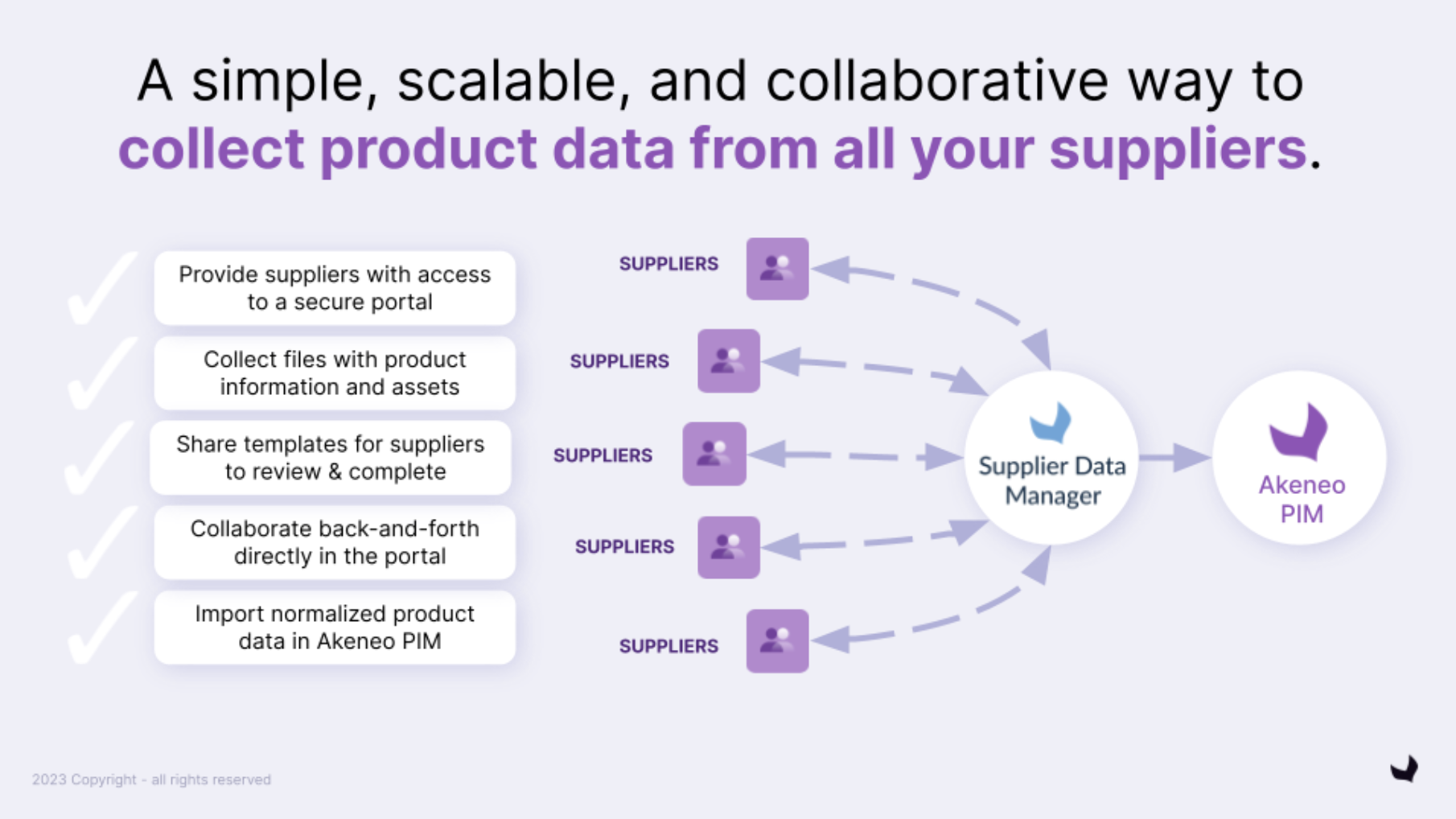
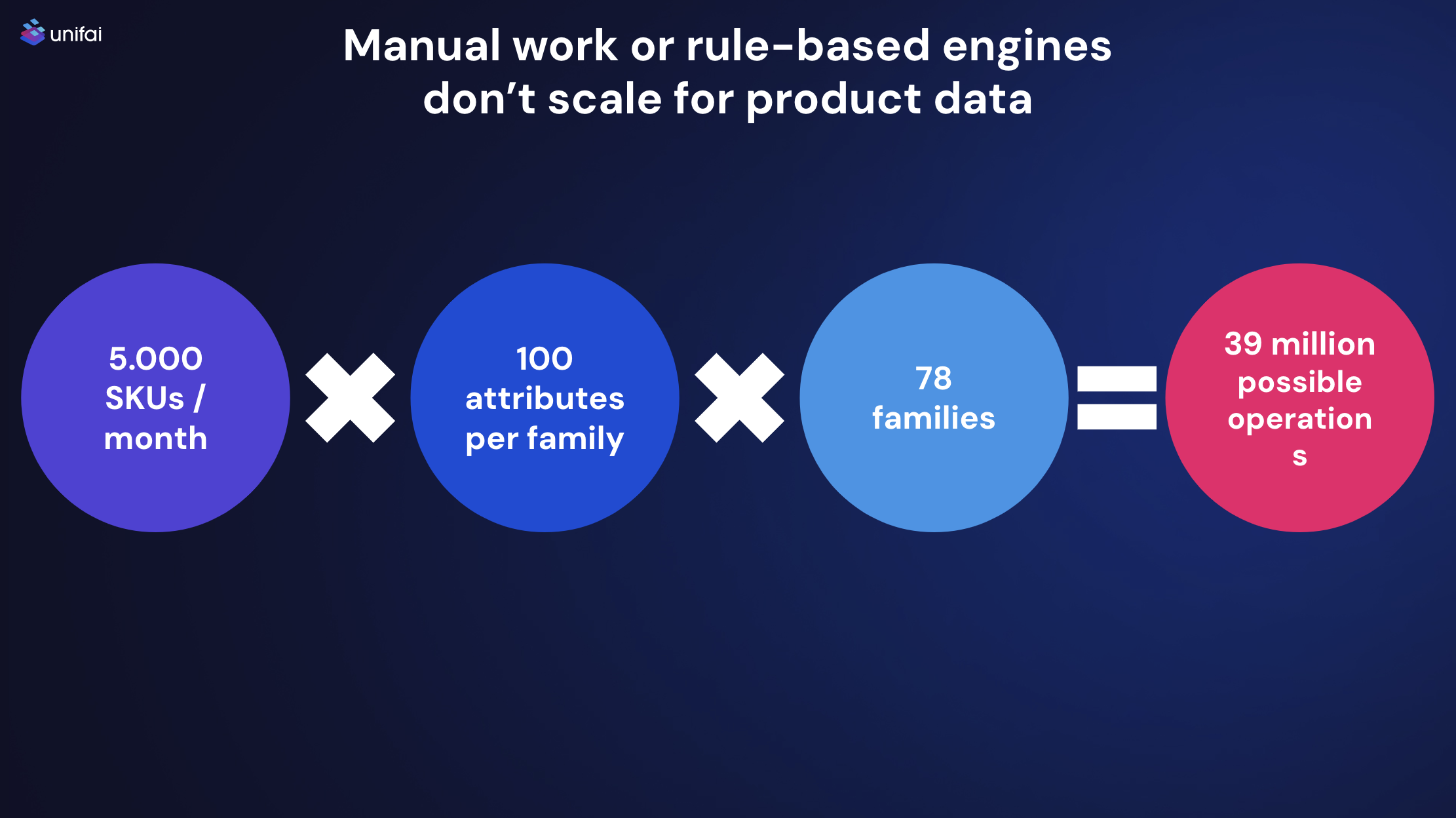
- Collect & cleanse product data: Leverage AI to accurately clean and enrich any product data including de-duplication, data extraction, and product categorization & classification, at scale and in a centralized way. Relieve your teams from lengthy manual data work by leveraging the power of AI.
- Enhance work automation: Remove lengthy manual tasks and increase operational efficiency, elevating employee job satisfaction and productivity
- Unburden & support customer service: AI can help unburden support teams and make them highly efficient by intelligently routing specific requests or questions to specific people or departments, encouraging higher customer and employee satisfaction
- Personalize content to new markets and geographies: Automatically translate product content to quickly and efficiently deliver product experiences at scale and in any language with AI
4. Seamless Experiences Across Digital, Social, and Physical Channels
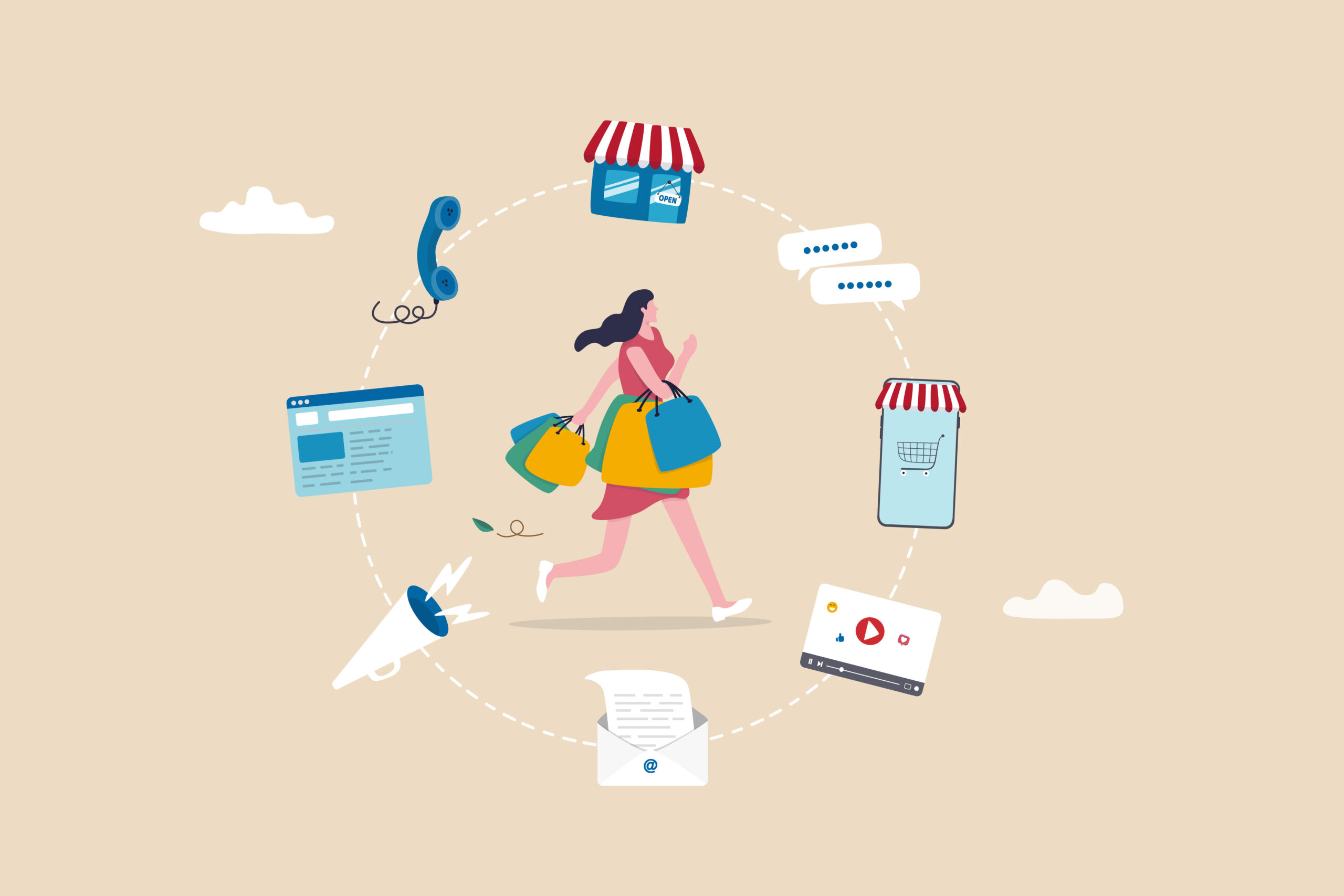
The omnichannel experience has been a buzzword in retail for some time, but in 2024, we expect the demand from consumers for seamless experiences across digital, social, and physical channels to be higher than ever before. For instance, a customer might discover a fashion brand on social media, explore their online store, and then decide to visit a physical store to try on the clothes. It’s the retailer’s responsibility to ensure that the customer’s preferences and shopping history are seamlessly transferred across these channels, and that they are able to find all the information they may need to make a decision regardless of where they’re interacting with your company. Let’s say I’m scrolling in TikTok and see a video of my favorite influencer showing off their newest sweater from ZigGreen. I eagerly click the link to check it out on ZigGreen’s website and learn more about the color, size, price, and shipping estimates. As I’m scrolling through the user reviews of the sweater, I see that many people are claiming the sweater runs small, and I decide I want to try on the sweater before purchasing. Luckily, I notice a “Find in-store” button for the sweater, and when I click it, I can see all the brick-and-mortar locations within a 50 mile radius that are carrying the sweater so I can go try it on and select the right size. This seamless cohesion between channels provides a trustworthy experience for the consumer and reduces the likelihood of a return or an unsatisfactory purchase.5. Growth in Demand for a Circular Economy
An economic model that aims to minimize waste, make the most of resources, and reduce the environmental impact of products and services, the concept of a “circular economy” has already grown in popularity over the past few ways and is poised to become even bigger in 2024. Investing in upcycling or recycling programs can not only reduce the carbon footprint left behind by your organization, but can open up new streams of revenue and provide consumers with an affordable marketplace to buy and sell products with like-minded shoppers. In particular, a resale market can enable your organization to:- Increase Store Traffic: Customers are increasingly drawn to stores that offer drop-off points for their pre-loved items.
- Reduce Return Rates: By extending the lifespan of products through resale or refurbishment, retailers can significantly reduce the number of returns, cutting down on waste and saving money.
- Communicate a Shared Passion and Commitment: Participating in the circular economy sends a strong message that your brand cares about the environment, which can foster customer loyalty and attract like-minded consumers.
- Improve Upsell and Cross-Sell Opportunities: When customers bring in products for resale or recycling, retailers have an opportunity to upsell new items or cross-sell related products, increasing revenue.
To 2024 and Beyond
Despite what many economists and analysts would want you to believe, nobody can predict the future. What we can do is take a look at consumer behavior and analyze the strategies that companies are using to successfully navigate such uncertain times. Technological advancements and evolving customer expectations mean that the retail landscape is changing at a break-neck speed, and organizations who are able to adapt and optimize their presence on new channels and markets are the ones who will be around for the long haul. Interested in future-proofing your organization through 2024 and beyond? Reach out to an Akeneo expert today to see how we can set you up for success.Akeneo Product Cloud
Discover how Akeneo technology can create the foundation needed for omnichannel product experiences.