Brewing A Beautiful Experience: Highlights from #APS2020
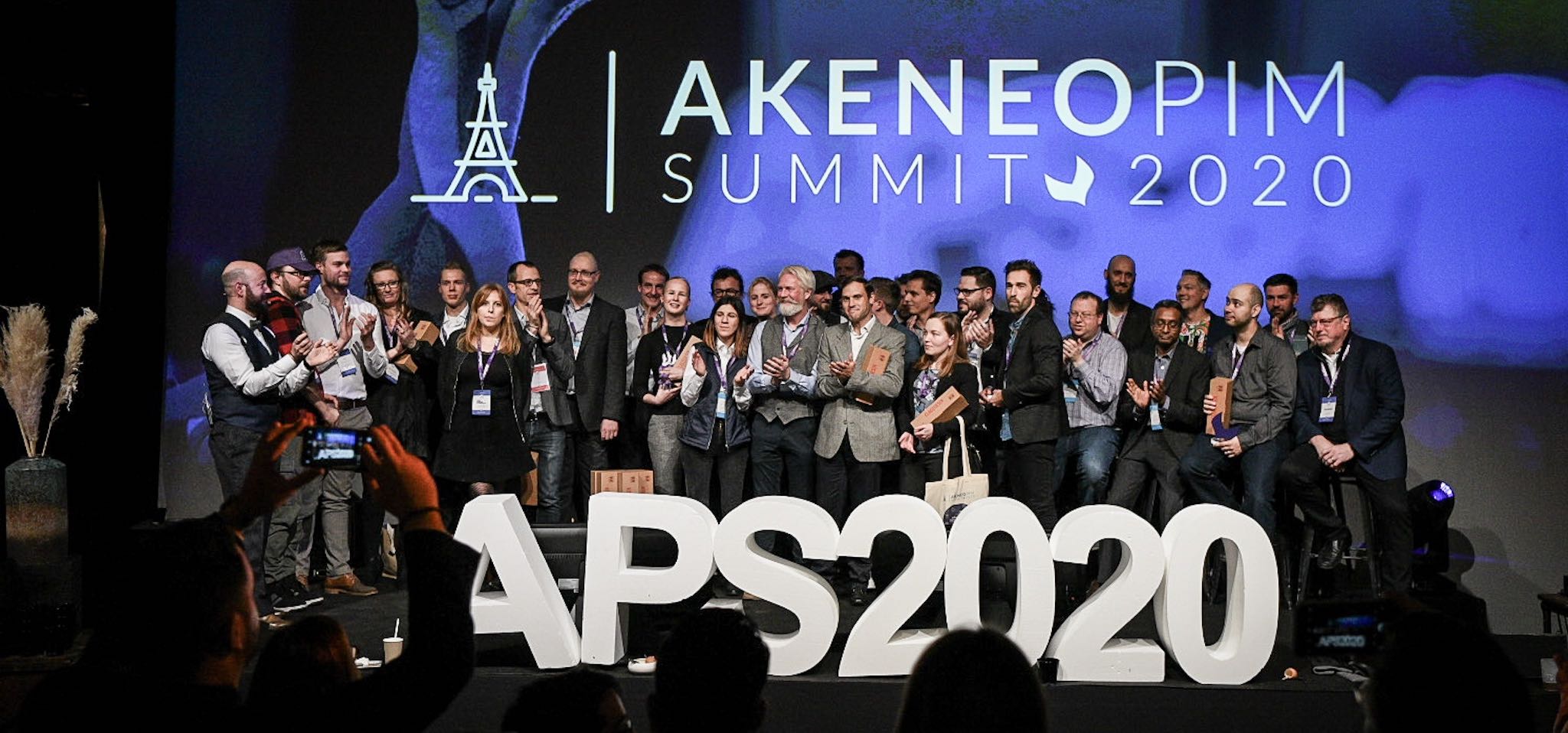
Earlier this month, Akeneo welcomed more than 500 members of the Akeneo family to Paris, France for the latest edition of the Akeneo PIM Summit. Over …
Earlier this month, Akeneo welcomed more than 500 members of the Akeneo family to Paris, France for the latest edition of the Akeneo PIM Summit. Over the course of two days, partners, customers, and special guests gave attendees a look at how PIM is being used to solve omnichannel challenges, examined the ways PXM is reshaping the PIM market and unveiled innovations to the assembled PIM devotees.
If you weren’t on hand at historic brewery and distiller Espace Clacquesin in Paris, site of #APS2020, today’s your lucky day. Here’s your chance to look back at highlights from the week that was — and if you were lucky enough to find yourself in the crowd on February 5 and 6, now’s your chance to relive some of your favorite moments.
1. Brewing the Perfect Product Experience
#APS2020 opened in style as Akeneo CEO Fred de Gombert and APS MC Francois Chaix showed off their setting-appropriate, Peaky Blinders-inspired attire, and welcomed guests to Espace Clacquesin, a historic brewery and distillery just outside of Paris.
Fred took the time to explain why this year’s event took place at such a venue. It isn’t just because Akeneo PIM has had plenty to celebrate over a pint in the past year, including the 7th anniversary of Akeneo’s founding, a new round of fundraising from Summit Partners, and much more!
It’s also because the craft beer industry in the United States provides a good showcase for the current state of product experience. Craft beer has become enormously popular in the United States, with small breweries opening up in cities and towns across the country, eager to get a share of the success of this newly popular space. However, beer consumption as a whole held steady to historic levels — which meant that these new companies were competing for the same small group of customers.
A similar phenomenon has taken place in a range of industries as eCommerce and omnichannel sellers flood markets with options, giving consumers more choice than ever before. That’s where product information and product experience come in. Because consumers have more choice than ever before, how you sell your products is incredibly important, Fred explained — meaning those who aren’t reaching customers on the right channels and communicating the right information will fall behind those that provide dynamic and compelling experiences to customers across every one of their touchpoints.
2. The Age of Amazon
While the recent rise of craft beer may have helped demonstrate its importance, product information is nothing new. Since the dawn of trade and retail, people buying products have craved information and expertise about the objects of their desire.
But as Neil Roseman, formerly of Amazon and now technologist-in-residence at Summit Partners, explained on the opening morning of #APS2020, the internet has presented unique opportunities, and posed new challenges when it comes to product information and its uses. This is especially true following the advent and popularization of massive marketplaces like Amazon, which put increased importance on product information. It’s been a bumpy ride for many companies working to take control of product information and put it to good use in the omnichannel age, as they work to deal with new general and industry-specific channels and marketplaces.
There is some good news, however. As Roseman told the assembled masses of PIM devotees at Espace Clacquesin, there are three lessons that modern sellers can take from the early days of eCommerce and omnichannel commerce.
The first is to start with the information the customer wants to know, and work backwards from that point, ensuring that you don’t leave shoppers searching for answers to their biggest questions. Next, while it may be a cliche, it’s still essential to remember that necessity is the mother of invention — so don’t be afraid to try out a new approach or solution when confronted with a new problem. Finally, Roseman reminded those in attendance that, while some would have you believe otherwise, failure is always an option. So, while it’s crucial to move quickly in this digital world, it’s also important to take the time to continue to work on a project until it’s completed and ready for the big time.
3. Technodom, Staples Canada, and Groupe Atlantic take home the top prize
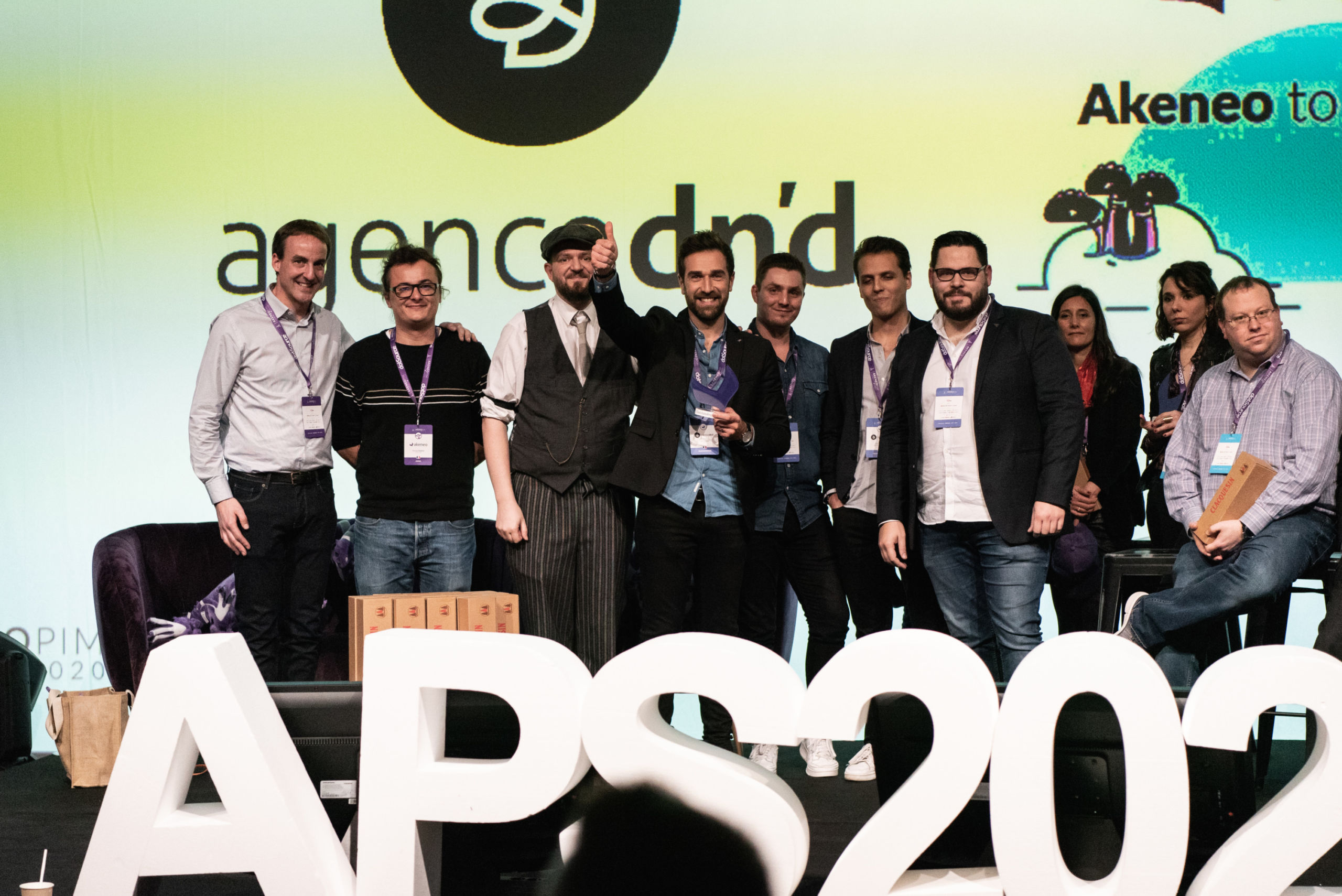
After APS attendees had their fill of PIM and PXM expertise for one day and the moon had risen, some Akeneo customers and partners got their moment in the sun as the winners of APS’ three awards were announced.
Akeneo customer Technodom, along with their partner Scandiweb, showed that you don’t need experience to flex some PIM expertise. The pair took home the Rising Star Award for the work in turning Kazakhstan-based seller Technodom into an efficient eCommerce machine by optimizing their website and product data to accelerate time-to-market and improve conversion rates.
The B2C Award, meanwhile, went to Staples Canadaand their partner Bounteous. The pair had worked on a full digital transformation since 2018, beginning with the replatforming of their B2C eCommerce site and the adoption of Akeneo PIM. By the time the project was complete, Staples had integrated its previously existing product information into Akeneo PIM, connected their new PIM with their new eCommerce platform and other solutions, and improved its product information quality.
Finally, Groupe Atlantic and their partner Smile took home the B2B award. The two French companies had worked to make Akeneo PIM a single source of product information truth for HVAC sellers Groupe Atlantic, which previously had information trapped in various departments and silos. Atlantic now has more than 100 families, 2,000 attributes and 6,000 categories in their PIM and is scaling the solution to cover even more of their products.
4. Akeneo PIM 4.0 Takes Centerstage
After attendees had dined to their hearts’ (or stomach’s) content and the awards had been awarded, it was time for Day 2 of #APS2020 — and what a day it was! The day started off on a high note as a team of Akeneo experience experts, including Emilie Gieler, John Evans, Camille Fant, and Benjamin Gouraud, took to the stage to unveil Akeneo PIM 4.0, the newest version of Akeneo PIM!
So what new features, upgrades, and improvements does this new and improved version of Akeneo PIM offer?
Let’s start with the new Asset Manager capabilities offered by Akeneo PIM Enterprise Edition. As more and more consumers migrate to digital channels, assets like photos, videos, and documents have become crucial to brands and retailers alike, as they help tell customers a story, increasing trust and emotional impact. To help your team take control of digital assets and enhance your product experience, Akeneo PIM 4.0 offers enhanced asset management capabilities for both B2B and B2C businesses by offering greater flexibility, better asset organization, improved asset transformation and linking capabilities, and a dedicated asset library to help you visualize all your digital assets.
But the Asset Manager isn’t the only new feature coming to Akeneo PIM 4.0. It also offers a new capability known as Data Quality Insights, designed to help improve your product experience by raising product data quality. To do so, this feature searches for and identifies misspellings, inconsistencies, formatting issues, and other product quality challenges, and helps you quickly and efficiently correct these mistakes and inconsistencies.
Another Akeneo PIM 4.0new feature is designed to take Akeneo’s open source foundation to the next level. With the new Connections feature, users can now more easily connect and configure extensions from within the PIM, allowing them to easily add add Source Connections (inbound feeds) from systems such as your ERP, MDM, DAM, or others, or Destination Connections (outbound feeds) meant to distribute product information.
But that’s not all. Akeneo PIM 4.0 also offers enhancements to several existing features, including continuous delivery of updates and patches, and additional incremental performance improvements.
Want to learn more about Akeneo PIM 4.0? Check out the Akeneo PIM 4.0product page or press release.
5. Out of the Black, into the Green
The new features of Akeneo PIM 4.0 aren’t only designed to help give omnichannel customers great experiences, Virginie Blot, Akeneo’s PIM evangelist, noted from the Espace Clacquesin Stage on the morning of Day 2.
As she and Philipp Engelmann, head of product management at MyTheresa.com, explained, they’re also designed to help brands and retailers put their values on full display. The pair noted that as buyers have become more concerned with customer experiences, they’re also paying increased attention to socially responsible aspects of the companies they do business with. While this creates product information challenges for companies who now need to show customers that they’re creating a great product, but doing it in an environmentally-friendly and ethically-responsible way, it also creates opportunities.
Organizations can now promote their company values and highlight product experiences that appeal to these buyer preferences — that is, if their product information is up to the task. MyTheresa and Akeneo, the pair explained, have looked to take advantage of these opportunities by taking an active stance, and using Akeneo PIM’s product experience capabilities to feature the company’s efforts surrounding sustainability.
6. A first-hand look at the power of PIM
After hearing about all that Akeneo PIM 4.0 has to offer, it was time for the attendees of #APS2020 to get a first-hand look at the practical power of PIM from some of Akeneo’s most successful customers, including Midland Scientific and Which?, among others.
Rodrigo Neves, technology officer at Midland Scientific, took to the stage to explain just how Akeneo PIM had helped the scientific instrument maker and seller move into the digital age. He noted that the company had tapped Akeneo to replace legacy product information management processes and systems after struggling to manage information for a large and diverse product catalog while providing highly technical, specific, precise, and accurate information to customers.
The result was a decrease in inaccurate or inconsistent product information, which helped the company improve its relationship with buyers and boost its customer experience. Akeneo PIM also helped Midland Scientific accelerate time-to-market, Neves said, as the company could now enrich its print catalog, a process that previously took an entire calendar year, in six months, and enrich 10x as many eCommerce products per week as it did before implementing PIM.
Lewis Skinner, digital product manager, and Leon Harvey, senior delivery manager, also took to the Espace Clacquesin stage to explain the impact PIM had on online seller Which?. The pair explained that, while the company may be known for helping customers find the best options for everything from home goods to technology, it’s real business is product information.
However, much of Which?’s data was trapped in high risk, high maintenance legacy systems, which threatened time-to-market and product data quality. So, Skinner and Harvey said, the company looked to Akeneo PIM to serve as an all-in-one solution. The PIM-powered digital transformation was a success, as the company was able to cut enrichment time in half while improving their content creation and curation processes, improving their businesses experience and customer experience in the process.
Thanks to all our customers, partners, and sponsors for making the 2020 Akeneo PIM Summit such a special event. We can’t wait to see you again next year! Want to relive more memorable moments from the event? Search for #APS2020 on Twitter!
It’s not easy to be a brick-and-mortar retailer these days — just look at the numbers.
eCommerce has continued its meteoric rise into a se…
It’s not easy to be a brick-and-mortar retailer these days — just look at the numbers.
eCommerce has continued its meteoric rise into a serious engine of business. According to the U.S. Commerce Department, eCommerce sales rose once again last year, this time by 15 percent, and now account for more than 14.3 percent of all retail sales in the U.S.
Now, as a result, retailers around the U.S. and around the world are experimenting with and embracing new strategies for getting customers in the door and spending money. Some are working to bring new and innovative tech like augmented reality and cashier-less payment technology to their stores. Others are embracing omnichannel initiativesand looking to introduce new technology to emerging digital channels, including new features like visual search.
But increasingly, many retailers are turning their attention back toward a retail strategy that seemed to fall out of favor more than a decade ago — showrooming. Showrooming, or the practice of consumers examining merchandise in a traditional brick-and-mortar retail store, then buying it online, often at a lower price, was considered something to avoid at all costs. The fear was it would become something that could threaten brick-and-mortar retail’s very existence.
But now, a growing group of merchants is looking to use the practice to their advantage — and with good reason. More than 50 percent of consumers in both the U.S. and U.K. showroom shop, won over by the convenience and low prices.
So how can you use this growing trend to your advantage?
The answer lies in your product information.
Using product information to create a showrooming success
Succeeding with showrooming requires that you have your product information up to par — there’s just no two ways about it.
When consumers showroom shop, they’re often going to get a firsthand look at a product that they might not feel comfortable buying online without seeing in person. This is especially common with products like electronics, clothing, and household items. This way, they’re able to get face-time with the product, then find it online for a price that suits them later on.
Companies can appeal to showroom shoppers and make this a viable revenue stream — if they have the right ingredients in place. However, this requires high-quality product information coupled with equally high-quality digital assets — images, videos, and other forms of media that harken back to the in-store experience and serve as a reminder for customers looking up your products online.
Without this high-quality information, consumers who return home to search using specific terms they remember from their trip to a brick-and-home won’t be able to find your products. If you want to succeed with showrooming efforts, search engines need to be able to find your products with ease. After all, if customers can’t find your products, it won’t matter your they are the best ones out there, at the best possible price.
Of course, simply being able to find your products isn’t enough. Your product information also needs to be accurate, consistent, complete and compelling. If showroom shoppers don’t trust your product information or don’t like the experience you provide, you’ll quickly be finding your customers will make their purchases elsewhere.
PIM handles webrooming too
Showrooming isn’t the only trend retailers need to worry about. Its cousin, webrooming, is also a growing phenomenon among modern shoppers — and perhaps even more popular than showrooming itself.
According to Chain Store Age, nearly three-quarters enjoy webrooming when shopping, often for many of the same products they showroom shop for. So what is webrooming, you ask? It’s the name given to the practice of online browsing and buying in-store. Fortunately, product information can also help here.
Even B2B businesses are embracing webrooming. Home furnishings manufacturer Tarkett, for example, offers a webrooming capability via its website. While customers cannot order directly via the webrooming app, the app does send users to a distributor’s website, where they can make a purchase.
Whether you’re a B2B or B2C seller, the same things that win over showroom shopping customers — accurate, correct, consistent, and easy-to-find product information and a top-notch customer experience, coupled with high-quality digital assets that not only show the product but also put it in context in a room and help you create a look.
When it comes to webrooming, customer experience and consistency are more important than ever before. Companies investing in these experiences will need to provide a customer journey that walks your customers right from their online searches to the register with their product in hand.
Turn your showroom efforts into a success with PIM
Make your showrooming efforts shine with PIM! Learn how Akeneo can help give your team the product information and workflow tools to make any showroom a success.
Learn how PIM and PXM can help you make sure all your new sales efforts reach their full potential by reading our blog on Turning A New Commerce Channel Into A Success or get in touch today!
Everyone can use some help from their friends, even us here at Akeneo. That’s why we’ve worked to build an outstanding community of partners — a…
Let’s say you need help getting Akeneo PIM installed, implemented and up and running, or adding integrations and extensions to your Akeneo PIM instance — where do you turn?
Or perhaps you could use a little assistance from a crack team of Akeneo experts to, explain new features and functionalities like a pro, or develop your business — what’s the solution?
For many Akeneo PIM users, the answers to these questions, and to many other Akeneo PIM installation and integration challenges is Trilix GmbH. The German software development company offers expert insights in a host of Akeneo PIM areas, including installation, implementation, and integrations, especially those between Akeneo PIM and Magento 2.
Implementation experts
Here at Akeneo, we know that implementing a PIM solution is an exciting time in a company — but it can also be a stressful and busy one. Software integrations of any kind bring along a host of challenges, from time management to employee training to technical issues, and everything in between.
That’s why we’ve worked to build a community chock full of partners that are ready to help you get Akeneo PIM up-and-running at your organization with the snap of a finger, and that includes Trilix. The experts at Trilix are ready to help you with the full implementation process, including bundle development, solution architecture, back-end, and front-end development, code assurance, and more.
Trillix offers complete integration support and is prepared to help you with every stage of your installation and implementation process, including preparation, discovery, planning, design, launch, and support. What’s more, the company’s strong history of market understanding, high-performance eCommerce stores, and experience with Akeneo mean you can rest assured that your implementation process will go off without a hitch.
Magento marvels
While Trilix can easily and efficiently get your PIM system up and running, it also believes that sometimes, simply installing and implementing a PIM solution alone isn’t enough.
To truly experience the full potential of Akeneo, you’ll likely need to extend your PIM’s capabilities by connecting with your eCommerce platform — and Trilix can help with that too. The company has built itself on a foundation of integrating solutions, with a specific focus on innovation and quality that has helped them develop impactful and inspired integrations for a range of solutions — including Akeneo PIM and eCommerce platform giant Magento.
With Trilix’s PIM2Magento REST API Integration, your team can make sharing information a cinch. The extension works to push data from Akeneo PIM to Magento, minimizing dependencies between the two applications, offers a simplified workflow for importing product information into Magento 2, provides synchronization between product data in Akeneo and Magento, and helps improve the accuracy and consistency of product information.
That way, you can easily import high-quality, accurate, consistent, and compelling product information to your Magento website and other channels, ensuring your customers are presented with an exciting and captivating experience across every touchpoint.
Inspired integrations
Trilix’s integration intelligence doesn’t stop with PIM2Magento, however.
The company also provides the popular Events API Bundle, designed to offer a smooth and simple way to create integrations that respond to activities in Akeneo PIM. With the Events API, creating, deleting, or updating a category, attribute, family, product, or product model triggers a mechanism that automatically sends those events to various Request URLs as HTTP posts, making it easier to build and develop integrations that respond to specific activities. What’s more, by pairing the Events API Bundle with the web-based service IFTTT (If This Then That), your team can receive email notifications for all Akeneo events or integrate Akeneo event notifications into other applications such as Trello, helping your team work more quickly and efficiently.
Trilix also has more integrations on the way. Coming soon to the Akeneo Marketplace is an extension designed to help companies better import product information that’s trapped in a spreadsheet — the Google Sheets Integration. By helping your team automatically pull data from Akeneo in real-time via the REST API, eliminating the need to export data from Akeneo manually, and ease reporting, monitoring and analysis processes in Google sheets, this extension offers powerful real-time collaboration tools that help your team more easily and efficiently visualize, process, and communicate data.
With Trilix, your team can be sure that all parts of your PIM journey, from implementation to integration and everything in between, can be done easily and efficiently.
Want to discover the potential and capabilities of Akeneo’s open source PIM community? Check out the Akeneo Marketplace for more information on these and other extensions! Have questions about implementations, integrations, or anything else? Check out Trilix’s website for more information on their offerings, or contact Akeneo.
These days, it seems like everyone wants to go viral — even, and maybe especially, brands.
That’s right, it’s not only aspiring fashionis…
These days, it seems like everyone wants to go viral — even, and maybe especially, brands.
That’s right, it’s not only aspiring fashionistas, budding bodybuilders, and other consumers who try to find the perfect image to reel in the “likes” and launch them to fame and fortune on Instagram. Increasingly, B2B and B2C sellers are going social and taking to platforms like Instagram.
That’s because nearly 3.5 billion people around the world (or 45% of the population), count themselves as active social media users, and Instagram is increasingly the platform of choice.
Already, the platform boasts more than 1 billion users and counting, meaning that there’s no shortage of potential customers to reach with the perfect photo. What’s more, these social media scrollers are typically open to being influenced by something they see on the app. According to one survey, 72% of Instagram usersreport making purchase decisions based on something that they saw while browsing the app, making this platform a place for more than just pretty advertising.
Finding success on Instagram, however, isn’t as simple as snapping a selfie and watching the sales roll in. Selling via any social channel, particularly Instagram, poses additional challenges for companies, from added channel complexity to specific channel requirements, and much more.
So how do you make sure this information is up to par and ready to turn scrollers into buyers?
Don’t waste a second
Time is of the essence on Instagram and other social media sites.
New posts are added every second, and consumer tastes change nearly as quickly, meaning your team needs to be able to move quickly and capitalize on emerging trends or opportunities to have success on Instagram. What’s more, when Instagram users click on a branded post, they’re taken to a product description page where they will see information like product images, descriptions, and prices, along with a link to your website. Customers expect to find the answers to their questions within moments — but if your team is wasting time with time-consuming and tedious processes, you won’t be able to provide the kind of information your customers expect and demand.
Tackle these tedious tasks with Akeneo’s PXM solution. Akeneo offers features designed to help you add accurate measurements, compelling product descriptions, emotionally resonant images, and other assets to your product information quickly and easily, making sure that you make the most of every second.
Get it right the first time
Just as quickly changing timelines and trends necessitate speed, they also require accuracy.
Consumers, particularly social shoppers, won’t spend time searching for information or data about your product. If they can’t find the info they want quickly, they’ll abandon the purchase or patronize another merchant who tells them what they want to know. The same can be said if they don’t trust the information or if the information is wrong — and even customers who are convinced to make a purchase will return the product and likely won’t shop with you again afterward.
This means that product information must be airtight — accurate, consistent, and easy to find. Use PIM features like automation, catalog completeness, and more to ensure that no incorrect or inconsistent product information gets anywhere near your customers.
Put it all into perspective
Even if your information is accurate and easy to find, it won’t much matter if you aren’t speaking directly to Instagram users when selling on the platform.
Context is king when it comes to social selling. Just because something works on your eCommerce store doesn’t mean it will work on other digital platforms, including Instagram. That’s also true of other social media platforms. It’s all about high-quality images and long captions on Instagram, not so on other platforms. As a result, it’s crucial to tailor content to fit the guidelines and unique elements for each social media network, otherwise, you won’t properly connect with your customers.
With Akeneo features like export profiles, which ensure marketers export only the data they need, and route it to the desired channel and locale, along with Akeneo’s diverse and dynamic ecosystem of partners and connectors make it easy to send product information in context to all of your sales channels.
Get emotional
Instagram is such a powerful engine for sales in large part because of the emotion it can generate among customers.
When shoppers see an item on Instagram that catches their eye, they’re often acting on an emotional impulse. But those powerful emotional impulses don’t appear out of thin air — you need to cultivate an emotional response from social media shoppers by providing them with the compelling and emotionally resonant customer experiences that will convert them from followers to customers. Offering that customer experience starts and ends by providing product experiences built on a foundation of high-quality, compelling product descriptions, dynamic digital product assets like photos and videos, and more.
By utilizing robust PXM solutions to tackle tedious, time-consumingwork, your marketing team will have more time to create these assets and foster emotional customers between you and your customers on Instagram.
Make your brand instafamous with PIM
Instagram holds no shortage of opportunities for brands of every shape and size — especially fashion, tech, and sportswear brands, which already experience plenty of popularity on the site. But no matter what kind of business you run, interacting with customers via social media platforms like Instagram can allow you to expose yourself to new customers and market your products without spending a dime, and help you open a whole new sales channel.
But in order to take advantage of these opportunities, your product information needs to be up to par. Use PIM features and tools like automated business rules engines, validation workflows, export profiles, and more to more efficiently and successfully sell your products via social media networks like Instagram.
Get instafamous by boosting the quality of your product experience!! Learn how PIM and PXM can help your company turn social media into a serious driver of sales and revenue by reading our blog on Turning A New Commerce Channel Into A Success or get in touch today!
Amazon, Alibaba, eBay, and other marketplaces have already changed the way consumers shop — according to recently released research, more than half…
Amazon, Alibaba, eBay, and other marketplaces have already changed the way consumers shop — according to recently released research, more than half of online purchases were made via marketplaces last year, with consumers spending more than $1.86 trillion in 2018.
Now, that same disruption is coming to B2B businesses. B2B sellers have embraced marketplaces in recent years, and are projected to spend a whopping total of more than $6 billion via these digital platforms in 2019 alone, and most estimates expect this figure to rise in the coming years.
But while these platforms are already well understood by consumers and early-adopting businesses, many B2B sellers remain in the dark when it comes to marketplace commerce. And it’s crucial that those who aren’t already selling on marketplace platforms do so soon, because as more millennials and other digital natives enter the workforce and rise to positions of B2B buying responsibility, they increasingly want and expect this process to be as simple, convenient, and enjoyable as the B2C buying process.
So how do you start selling on B2B marketplaces, and how do you find success? Read on to find out.
Why are B2B businesses flocking to marketplaces?
The biggest reason for the increase in B2B sales via marketplaces is also the simplest — companies are going to marketplaces because that’s where their customers are.
As we mentioned earlier, B2B buyers, especially younger workers or digital natives, increasingly want a buying experience that is similar to the B2C customer experience. That means they value convenience, speed, and an enjoyable experience over other factors that were in the past more important, such as price. Marketplaces give B2B buyers all of this, offering a wide selection of manufacturers, products, and prices along with an easy-to-use and consistent buying experience. Any seller, whether offering products to consumers or other businesses, wants to be where their buyers are, which makes the influx of B2B sellers to marketplace platforms quite understandable.
But that’s not the only reason that B2B manufacturers and distributors are embracing marketplace commerce. Selling on marketplaces is also often much cheaper and faster than creating and developing a stand-alone eCommerce store. B2B sellers who are looking to embrace omnichannel commerce but don’t want to invest time, money, and other resources in building their own offering only to see it struggle to catch on see marketplaces as an attractive alternative.
What marketplace should my B2B business sell on?
When B2B businesses make the decision to start selling via these marketplace platforms, they have another decision to make: Which platform, exactly, should they sell on?
Unfortunately, as is the case with so many other questions, there’s no one-size-fits-all answer.
As of 2019, the biggest platforms in the space include some well-known names from the consumer marketplace industry, including Asian giants Alibaba, and the B2B division of American titan Amazon, known simply as Amazon business. Other, B2B-specific platforms have also flourished in recent years, including eWorldTrade, Wholesale Central, and Joor.
It’s crucial to consider more than just the size and customer base of each specific marketplace, of course. Make sure you take into account the niche the platform serves, the geographic markets it will deliver to, and the marketplace platforms most often used by other companies in the industry.
That last factor can be particularly important as, increasingly, industry-specific marketplaces have found success as more B2B buyers have embraced omnichannel commerce. GoDirectTrade, for example, has become a go-to shop for aviation parts, while the Hanes Closeout Marketplace, offered by the well-known consumer brand of the same name, has found success by operating as a liquidation marketplace for other clothing brands, such as Champion, Bali, and Maidenform.
How do I turn a new marketplace channel into a success?
When it comes to online marketplaces, one of the most important things you can do to find success is to make sure your product information is perfect.
As we mentioned above, B2B buyers may want a convenient and enjoyableexperience, but they also expect accuracy and consistency when it comes to product data. If they can’t find the data they need, or if they don’t trust it’s accurate, they won’t buy from your company, and will likely patronize a competitor.
Accurate product data isn’t enough, however, because, with dozens, if not hundreds of similar or identical items each being listed on the same marketplace, yours needs to stand out. You can achieve this by forging an emotional connection with your buyer via compelling product information.
It’s also important to put all this information into context, as each platform has its own rules/regulations— and if you don’t comply, you could be shut out. So, use PIM to take control of product information and turn your marketplace endeavor into a success.
Take Control Of Black Friday, Cyber Monday and Holiday Shopping With PIM! Learn how PIM can help your team conquer expansions with relative ease by reading our blogs on Turning A New Commerce Channel Into A Success and Expanding To New Locales today!
Check out Akeneo’s 12 Days of PIM-Mas to see what gifts has our product information “Ziggy Claus” has brought for all the good boys and girls around the PIM world!
This year, however, there’s also a new carol you may hear, particularly if you encounter carolers with a passion for omnichannel commerce and digital transformation. Or should we call it a new version of an old classic?
No matter what you call it, the season’s latest and greatest holiday song making its way around the offices of Akeneo and its partners and customers around the world is all about one thing: Product Information Management (PIM). Now, we’re happy to share these 12 Days of PIM-Mas with product information enthusiasts around the world.
Just like in the classic Christmas Carol, there’s a gift ready to go for each of the 12 days. But, rather than poultry in fruit trees and golden rings, we’ve got some gifts that should help get you in the holiday spirit by solving your biggest product information problems and challenges.
So, what gifts has our product information “Ziggy Claus” brought for all the good boys and girls around the PIM world? Let’s find out…
1. A single source of truth for product information
First and foremost in Ziggy Claus’ bags of gifts this year is a truly valuable gift for brands and merchants the world over: product information accuracy.
A robust PIM system gives you a single source of truth for product information. This single source of truth can then be used to enrich all of your product catalogs on all channels for each locale with the accurate, compelling product information that forms the building blocks for a captivating product experience.
With this product experience acting as your foundation, you can create enticing and exciting omnichannel experiences not just around the holiday season, but 365 days of the year.
2. Easier cross-border expansion
Once you’ve crossed a single source of truth for product information off your wishlist, you’ll unlock a host of new potential and possibilities. That includes easier and more efficient cross border expansion!
Cross-border commerce requires that you speak your new customers’ language. This goes beyond simple translation and also includes making other changes to product catalogs. That means adapting your product assortment, digital assets, product descriptions, units of measurement, and even packaging to meet the norms and regulatory requirements of your new market.
It may sound like a daunting process, but a gift of PIM from Ziggy Claus can help you deal with all of the changes needed to succeed internationally. Akeneo PIM’s localization features, along with its well-stocked marketplace of connectors and integrations, can help you handle cross-border commerce easily and efficiently.
3. Optimized omnichannel commerce
Selling in new markets isn’t the only expansion that Ziggy Claus and his PIM presents are here to help with, however. Opening up new sales channels is also made far easier with Akeneo PIM.
Each channel has its own unique properties, rules, and best practices, and your product information needs to be put in context for the specificities of your new channel. When selling on social media networks like Pinterest and Instagram, for example, you’ll need to adapt all of the elements of your product information, including digital assets and product descriptions differently than when selling via desktop eCommerce sites or mobile apps. Even individual social media networks or marketplace platforms can have their own unique requirements, making it even more important that you adapt product information when selling on multiple channels.
No matter whether you’re selling to consumers or other businesses, you can’t have a good customer experience without a good product experience. Take control of your omnichannel product experience with Ziggy Claus’ gift of omnichannel optimization.
4. Dynamic digital experiences
Successfully expanding to emerging digital channels requires compelling and dynamic digital experiences. Offering these in an omnichannel world requires forging an emotional connection with your customers across all channels and touchpoints.
This is especially important around the holiday season. Emotion can weigh even heavier on customers’ buying decisions during this festive time, so it’s crucial that your team puts your assets in the proper context to create relevant and timely experiences for customers. However, it’s also important to adapt your digital assets all year round — after all, no one wants to watch a video of a snowy mountainside in the middle of the summer.
This all likely sounds like a daunting process, but Ziggy Claus may not be able to help with. But that’s where you’re wrong! With a timely gift of Akeneo PIM from Ziggy Claus, our digital asset management capabilities can help you manage all of your digital assets. Take control of your digital product experience by managing assets independently from products, allowing you to automate actions to edit them, saving precious time and resources when enriching products.
5. Team Efficiency
Now that your product information is correct, consistent, complete, and ready for expansion to new markets and emerging channels, it’s time to pick up the pace. That means accelerating time-to-market by freeing up your marketing team from menial, tedious tasks, and gives them more time to focus on creating the optimized omnichannel experiences we discussed earlier.
Fortunately, Ziggy Claus’ PIM present has just the thing — automation and a Business Rules Engine. Akeneo PIM’s business rules engine allows users to create smart product attributes that will be automatically completed according to a rule. It can also help you create content for attributes, and automatically classify products.
That way, you can move faster and ensure the quality and accuracy of your product information.
6. Work smarter
Now that your team is more efficient through automation, what else can they do to work smarter? Fortunately, Ziggy Claus and his magical PIM have that one taken care of.
With Akeneo, your PIM is now more than a container, it can also deliver product data. Akeneo’s Product Data Intelligence solution, Franklin Insights, is designed to automatically match input product attributes with your catalog product attributes, suggest new data you can include, and validate existing attribute values you have. Once you’ve subscribed to a product identifier, your product data will be continuously updated to ensure the highest data quality.
This way, you can make sure you have the most up-to-date, accurate, and compelling product information possible
7. Enhance your product experience
Managing product information is, of course, an essential ingredient for omnichannel and international success — but companies with the most compelling omnichannel experiences go even further.
When it comes to fashion and apparel, home furnishings, and other high-level products, for example, form often matters as much as function. Customers in these and other industries expect and demand to be able to easily find and research products from unique brands, designers, collections, colors, and more, using features like shop the look. B2B brands, meanwhile, also need to manage information about suppliers and brands that can support your existing product information, and can also seek to offer product configurators and other tools to help buyers envision how a product will look once installed.
Ziggy Claus has just the solution. Akeneo’s Reference Entities feature can help you organize your product catalog around pieces of common information shared among products, including everything brands and designers to materials, colors and more. Your team can use these reference entities to easily and efficiently link information to relevant products in your PIM system to create content-rich product pages. You can also link enriched information to your product, including colors, ingredients, materials, and care instructions for a faster, easier enrichment process.
8. Access to Ziggy Claus’ workshop
Need a little help making sure your omnichannel platforms sing like Christmas carolers? No problem, Ziggy Claus has just the thing.
Akeneo’s open-source product information management solution allows you to connect your PIM instance to fit your every need. Akeneo’s inspired integrations and dynamic and exciting ecosystem, meanwhile helps you connect top the top eCommerce platforms and extensions to make sure all your sales channels are holiday season ready.
Plus, you can get access to Akeneo’s diverse and active community of PIM enthusiasts and evangelists. Get help with product information management challenges from more than 3,000 active members and keep your project moving, or pitch-in with advice or insight to other community partners. Because what would the holiday season be if you didn’t share it with others?
9. Reduced returns (accurate product information)
No one wants to wake up on Christmas morning to find the wrong present sitting under the tree — and thanks to Ziggy Claus, they won’t have to.
When your product information is unclear or inaccurate, customers don’t get what they feel they paid for, and will rush to return products. While some returns can be chalked up to buyer behavior, according to many analysts, the vast majority of returns — nearly two-thirds, in fact — are the result of bad and inaccurate product descriptions or assets, which leave shoppers with the wrong impression or idea of what they purchased.
The answer to reducing returns lies in Akeneo PIM’s ability to ensure only high-quality data is available and reduce returns by up to 40 percent!
10. Accelerated time-to-market
Speaking of spending the holiday season with those close to you, we all know that “teamwork makes the dream work” when it comes to holiday shopping success. Ziggy Claus has the trick to make your dreams soar to new heights this year!
Make sure your workflow is as smooth as silk this holiday season while accelerating time-to-market, and eliminating errors and inconsistencies with PIM. With better governance over processes and a more streamlined flow, organizations using a PIM report significantly faster time-to-market — like the case of Australian retail giant Myer, which saw time-to-market accelerate by 400% after adopting Akeneo PIM.
What’s more, with Akeneo’s Teamwork Assistant, Ziggy Claus help fosters collaboration across your teams of elves by tracking product data completeness to ensure no incomplete makes it to your sales channel. But that’s not all — by helping you audit your enrichment processes and notifying your marketing team when a product is missing attributes, needs translation, is ready to be exported in your eCommerce or is added to the PIM.
11. Increased conversions
By combining his offerings of better cross-border and omnichannel operations, reduced returns, accelerated, workflows, and more, Ziggy Claus can offer the give your company the greatest gift of all: increased sales and conversions.
By providing higher-quality and more comprehensive product experiences that include impactful emotional information, you’ll convert customers at a higher rate. What’s more, when this data is put into context for the channel — by adapting and adjusting digital assets media and product descriptions to meet the specific needs of each channel — it can boost your conversion rates even further. And, thanks to those reduced returns, your revenues can grow as high as Ziggy Claus’ reindeer fly!
Add it all up, and a dedicated PIM solution can help your team increase conversions by as much as 40 percent!
12. Sleep easy
Thanks to Ziggy Claus, you can settle in for your long winter’s nap confident in the knowledge that you have the answer to an issue with any of your PIM presents: Akeneo’s dedicated and dashing user support team!
Each Akeneo Enterprise Edition license comes with an SLA-backed support agreement, a dedicated Customer Success Manager, and Project Success Assistance. No matter what issue you have, how it happens, or when it happens, Akeneo will be there to help with everything from implementation to workflow to export.
With Ziggy Claus and his happy helpers at Akeneo at your side, you can make sure you don’t get left out in the cold this holiday season!
Perfect your product information and build dynamic product experiences this holiday season all year long with Ziggy Claus’ greatest gift to B2B and B2C merchants and manufacturers big and small: Akeneo PIM! Get in touch today to get started on your PIM project!
Commerce Is Going Global — Is Your Product Information Ready?
Get ready to go global with PIM! Find out how localizing your product information via can ensure your expansion efforts are successful.
The world’s digital transformation over the course of the past two decades has turned just about every part of commerce on its head — well-known retail stores are closing, new online titans are rising, and consumer habits are changing rapidly.
But of all the changes this digitization hath wrought, the biggest disruption may be the increase in international trade.
According to a recently published research, the advent of eCommerce and mobile shopping, which has boosted the U.S. GDP four percent and created about 2.4 million jobs, has been a boon for companies doing business in multiple countries. Now, cross-border commerce is attracting the eyes and ears of not just companies looking to boost revenue, but everyone from lawmakers to industry advocacy organizations.
But while expanding to a new market can bring real rewards to merchants, it can also be a stressful time for many brands and retailers and brings with it a huge amount of tedious and time-consuming new work.
So how can you make your international expansion a success without breaking the bank or burning out your employees? It’s all about your product information.
Why expansion requires high-quality product information
The biggest reason for ensuring that your product information is up to par when you expand to a new locale comes down to making, and keeping, your newest buyers happy. Because, no matter what country you’re expanding to, customers expect you to be able to speak their language.
This, of course, means translating product descriptions and info to the language of your new locale — but it also goes much further than this.
Truly speaking your customer’s language also includes localizing all product information and assets to fit the needs of your new customers. That means converting units of measurement (for example, changing measurements typically listed in centimeters to feet and inches when selling in the U.S.), modifying product catalogs to appeal to your new customers, adapting product descriptions or multimedia assets to local norms. It could even include changing packaging or making additional disclosures to comply with the legislation and regulation in your new market.
Those that don’t take the obligation to adapt product information to new customer bases seriously will suffer equally serious consequences. Researchers have found that product information plays a big factor in purchasing decisions among cross-border customers. One European Commission survey of internet users across the European Union, for example, found that 9 in 10 internet users always visit a website in their own language when the option exists.
What’s more, the majority of consumers, even those who generally feel confident and comfortable buying products from other countries, will flat out refuse to do business with your company if you don’t speak their native language. Errors or inconsistencies in product data, meanwhile, including information such as size, weight, or other measurements, are the leading cause for product returns, at 70 percent.
Taking control of product information with PIM
There’s no shortage of product information challenges that arise when expanding internationally. To conquer these challenges, you need a high-quality, purpose-built solution for managing and enriching product information — you need a PIM.
Without a dedicated solution for managing product information, your expansion efforts will struggle to get off the ground, much less become successful. Marketers and product owners will need to spend hour upon hour going through the tedious process of translating and updating info, while media managers will need to manually manage all the photos, videos, and other assets needed to expand effectively. This can turn expansion into a slow, painful process, one that eats away at revenue instead of boosting it.
A robust PIM, or product information management, solution, meanwhile can take the pain out of enriching and managing product information for cross-border commerce with a range of features designed to help you take control of product information. Akeneo PIM, for example, offers features that can help you expand to new markets with ease, including:
Advanced rights management tools:Provides control and permissions access to third-parties like translators to help speed up enrichment
Automation and a business rules engine:Automatically converts various values to support different units of measurement, which helps reduce the manual effort needed to enrich product information and ensure high-quality data
Digital Asset Manager:Manages digital assets like images and videos independently from products themselves, making it easier to automate actions to edit them
Validation workflow:Helps you put a data governance strategy in place to ensure oversight and accuracy of localized attributes to eliminate errors in publishes catalogs
Versioning and publication features:Maintains multiple versions of product data at the same time to slash time to market and eliminate errors when expanding abroad.
By using PIM, solutions to expand and enter new markets, your business can cut down time-to-market by as much as 300 percent, boost sales by 400 percent, and reduce returns, all while making your marketers more productive.
Get ready to go global with PIM! Find out how localizing your product information via can ensure your expansion efforts are successful. Learn how PIM can help your team conquer expansions with relative ease by reading our new eBook, Global Multilingual Commerce: Components of a Winning Cross-Border Strategy blog on Expanding To New Locales today!
This Black Friday, brands like French cosmetics startup Typology, U.S. outdoor retailer REI, and a growing group of other merchants won’t make a sin…
This Black Friday, brands like French cosmetics startup Typology, U.S. outdoor retailer REI, and a growing group of other merchants won’t make a single cent in profit.
That’s because instead of slashing prices and scrambling for customers, the company is launching a campaign called “#BlackForGood”, donating its profits to environmental charities. “This campaign is intended to be a positive and encouraging call to action for those who agree that Black Friday could be better,” according to the movement’s founder, Ning Li.
In recent years, Black Friday has evolved into a worldwide sensation, even as some companies, like Typology, fight back against the rising tide of consumerism. Just a few years ago, Black Friday was a purely American phenomenon.
But now, in storefronts from New York City to Paris, and everywhere in between, companies are looking to make their mark on the holiday season by appealing to discount shoppers on Black Friday and Cyber Monday — or by appealing to shoppers who just can’t take one more Black Friday promotion.
Black Friday, Cyber Monday go global
The Black Friday shopping frenzy has now truly gone global. This year, shoppers everywhere from Latvia to Brazil are flocking to their local malls and fighting over discounted handbags, clothing, and consumer electronics.
Along the way, Black Friday has metastasized from a single day into a week-long festival of consumerism. Stores now start “Grey Thursday” sales on Thanksgiving night, and shoppers can also look forward to spin-off events like Small Business Saturday, Cyber Monday, and Fair-trade Tuesday.
Then there are the other special discount events, from Amazon’s Prime Day to Overstock.com’s Overstocktober, and local copycats like Mexico’s Buen Fin and the UAE’s White Friday events. This year, Macy’s, eBay, Target, and Walmart even staged a “Black Friday in July” summer sales event.
These events, and dozens of others like them, prove that there is definite consumer appetite for seasonal promotions, not just around the winter holidays, but at almost any time of the year.
Swimming against the tides
Amid the near-universal sea of sales, how is any one brand supposed to stand out? One alternative Black Friday strategy is simply to refuse to participate.
That’s why we find Typology’s approach so interesting. As everyone else rushes to slash prices, companies that swim against the current, and think a little differently or a little more creatively, have a real chance to grab shoppers’ attention.
Similarly, since 2015, outdoor retailer REI has won endless column-inches with its #OptOutside campaign, with its 12,000 employees receiving a paid day off, and customers being urged to get out and enjoy some fresh air instead of trudging through a crowded mall. Other, slightly less committed companies make a point of closing their doors or limiting their hours on Thanksgiving Day, and brag about giving their employees a chance to spend some time with their families.
That’s what makes REI’s decision to opt-out of Black Friday altogether impressive, eye-catching, and certainly on-brand —but hard for most companies to replicate. (Try telling your shareholders you’ve decided not to open on the busiest day of the year!) That’s why Typology’s #BlackForGood campaign is so smart: instead of simply turning its back on Black Friday consumerism, it’s hoping to harness it for good.
The history behind bucking Black Friday trends
Typology and REI may be relatively unique in the discount-dominated holiday shopping market, but they’re far from the first retailers to buck the trend of discounts and promotions around the end of the year.
American consumers have seen #BlackForGood-style events before. In 2016, for example, Patagonia saw a fivefold uptick in Black Friday sales after pledging to donate 100% of daily takings to environmental causes. More recently, online fashion retailer Everlane has pledged to remove 1lb of plastic from the ocean for every product it sells, while Cuyana is matching every item it sells with a donation to victims of domestic violence.
For companies outside the United States, though, such campaigns are as new as Black Friday itself. That’s why it’s so exciting to see companies like Typology seeking new, socially conscious approaches instead of simply emulating American box stores, slashing prices, and hoping for the best. By bucking even a relatively recent trend, they’re making their mark on the space and standing out from the competition.
The future of Black Friday
It’s clear that shoppers, both in America and around the world, are hungry for creative, socially conscious approaches to Black Friday.
According to one global survey, for example, 81% of consumers want companies to help the environment, and almost half would switch from market-leading brands to support smaller, eco-friendly companies. And while four-fifths of shoppers remain motivated by discounts and special offers, two-thirds say they’ll forgo those savings and pay extra to support sustainable brands.
That makes eco-friendly, socially responsible promotions like Typology’s #BlackForGood campaign a smart branding exercise. Increasingly, products are seen as embodiments of brands, and while consumers always want to get a great deal, they also want to support brands that share their values.
At Akeneo, we’re seeing that trend play out across all the markets we serve, in Europe, the United States, and worldwide. Companies are starting to understand that it’s important to be mindful about how they manage products, and to take a more careful and internationally informed approach to commerce. We’re seeing more and more clients warm to initiatives such as fair-trade sourcing, carbon footprint reduction, and recycling or second-hand purchasing programs. The #BlackForGood campaign is a sign of how effective it can be to commit to such strategies, and take mindful marketing and product management to the next level.
As Black Friday spreads around the world, it’s creating big opportunities for brands that are bold enough to stand apart from the pack, and broadcast their values instead of simply slashing prices. If your company is brave enough to stand apart from the pack, take risks, and find creative, value-driven sales strategies, you too could find that this year’s Black Friday will be a holiday to remember.
Take Control Of Black Friday, Cyber Monday and Holiday Shopping With PIM! Learn how PIM can help your team conquer expansions with relative ease by reading our blogs on Turning A New Commerce Channel Into A Success and Expanding To New Locales today!
WEBINAR: Product Content And Intelligence Powers Modern B2B Commerce
Take control of product information and master omnichannel selling for B2B! Discover how to build a successful modern omnichannel business in this new webinar!
The Experience Economy is here. Product experience is increasingly important in B2B purchasing decisions while eCommerce and other emerging channels are surpassing print and traditional B2B sales channels.
As more millennials and digital natives grow into positions of B2B buying responsibility, the procurement process has taken on more and more attributes of B2C selling, including an emphasis on eCommerce and other emerging channels. Researchers expect B2B eCommerce to reach nearly $2 trillion in revenue in the U.S. alone and account for nearly 20 percent of all B2B sales by 2023.
Now, this digital transformation is forcing teams to embrace new digitally-enhanced selling motions for manufacturers, distributors and wholesalers – and a new view of product content. Smart sellers are increasingly investing time and money in improving their user experience, and with good reason — Forrester has found that 79% of B2B buyers say they value information that’s tailored to fit their industry, role, or department.
The way to meet this high bar for product content to your potential buyers is with high-quality, accurate, and consistent product information. Without this, your efforts to tackle these new buying realities will almost certainly fall short, as customers abandon purchases from your site and move on to other manufacturers or distributors.
Make sure your team is ready to succeed in this brave new B2B world with this new webinar from Akeneo and featured guest Allen Bonde, Vice President & Research Director at Forrester, taking place on December 11, 2019. We’ll examine the state of omnichannel commerce in the B2B space, review Forrester’s new B2B marketplace research, and see how consumer-style experiences are shaping the future of B2B relationships. We’ll also explore the ways we see PIM breaking out of its operational roots to play a broader role in experience delivery.
Watch now to learn:
Why digital channels like marketplaces are gaining traction with buyers and sellers
How B2C sets the standard for B2B when it comes to choice, convenience, and overall customer experience
How sellers need to rethink their marketing approaches for omnichannel commerce
What it means to embrace an “adaptive PIM” mindset
Akeneo Named Top PIM Provider By FeaturedCustomers
The results are in, the votes have been tallied, and Akeneo has come out on top! Akeneo was recently named a Market Leader in the Product Information Management Software category for the Fall 2019 Customer Success Report published by FeaturedCustomers.
The results are in, the votes have been tallied, and Akeneo has come out on top! Akeneo was recently named a Market Leader in the Product Information Management Software category for the Fall 2019 Customer Success Report published by FeaturedCustomers.
FeaturedCustomers, a leading customer success content marketing platform for B2B business software & services, evaluated the entire Product Information Management Software space for their report. After reviewing almost 800 customer testimonials and case studies, selected just 18 companies that met their criteria. This includes Akeneo, which was named a winner of the Market Leader Award in the PIM category!
The Market Leader designation was awarded based on a review of almost 800 customer testimonials and case studies, with Akeneo, the most used PIM platform in the world, receiving an average rating of 4.7 out of 5. The full report, along with Akeneo’s profile, which includes detailed product scorecards and numerous testimonials from satisfied Akeneo customers, is available for you to download here. Thanks to FeaturedCustomers for including us in the report!
Get the best in product information management with Akeneo! See how product information and data lie at the heart of B2B eCommerce success by downloading our newest eBook, PIM — Unlocking Rapid Omnichannel Growth, or contact us today.
 Summer Release