Give Your Product Information Teams And Employee Experience Worth Falling In Love With
These days, there’s no shortage of importance heaped onto the role of customer experience, and for good reason. Experience is increasingly a driving…
These days, there’s no shortage of importance heaped onto the role of customer experience, and for good reason. Experience is increasingly a driving factor in B2B and B2C purchasing decisions. But what about your employee experience?
While employee experience may not get the same hype or receive the same attention that customer experience attracts these days, it’s crucial to provide your employees with an experience they don’t just like, but love. Because giving your employees an experience worth falling in love with, you can help them work more efficiently and be more productive than ever before, giving them an increased sense of satisfaction, morale, and fulfillment at work.
That’s especially true when it comes to product enrichment. Giving your product enrichment team a better way to create and manage high-quality product information increases efficiency, accelerates time-to-market, and improves your product data quality. Most importantly, it helps your team deliver a product experience that can unlock growth for your business.
So, how do you give your product enrichment team a great employee experience?
Make working together better than ever
Part of giving your product team a great employee experience should include making it easier — and more fun — for them to create a great product experience for your customers.
So, give your team the tools that help them work together more efficiently. This includes tools that help them understand precisely what information they are or are not responsible for, so they don’t waste time and aren’t burdened by seeing irrelevant information. It also includes tools to help accelerate and ease your workflow and help managers review and approve changes to product information to ensure a high-quality experience for your customers.
Be sure to also give them the tools they need to collaborate more easily with other workers both inside and outside your organization. This can include various departments of your company or even external teams such as suppliers or translations teams.
Help your team work faster and smarter
Teammates always prefer better collaboration with co-workers, but collaboration alone won’t do away with boring and repetitive tasks.
Help your team decrease their manual workload by finding a solution that can automate tedious and low-value tasks so they can focus on the most essential part of their jobs — creating a great experience for your customers. To do this, give them capabilities like automation and bulk actions, which can help your team work faster and smarter going forward. Look for solutions that can even auto-populate fields using a business rules engine so manual effort is further reduced.
You should also give them a tool that can help them continue to improve over time. A strong solution will score product data, highlight errors in product information and suggest improvements, so your employees know exactly where they can improve the product information. This sure beats manually checking thousands or millions of SKUs!
And if you do have millions of SKUs, it’s probable that your teammates each have their own area of responsibility and need for access to the data. Pick a solution that allows you to manage access rights, privileges, and offers a way to only expose them to the product and information for which they are responsible. Being able to control which information is presented, grouping relevant data together, and being able to create sets of relevant products to work will make it a lot easier for employees to navigate the data, which will make them be able to work faster and with greater efficiency.
Get your data where it needs to go
Well-enriched and managed product information is a critical part of your omnichannel experience, but it’s crucial to remember to provide a unified, but not uniform product experience.
That means tailoring your information to the many channels and locales you may sell in. This is especially important with both cross-border and omnichannel sales on the rise. But between the large and ever-growing collection of channels used by consumers, the various rules and requirements of each channel, and other concerns, distributing your product data can often be a challenge. Help your team conquer that challenge by giving them tools to help ensure your information is ready for a wide range of channels and locales with tools designed to help them more easily translate, localize, and contextualize product information.
This means arming them with capabilities that can help with versioning, export, and publication processes. It also includes connectors to various marketplaces and other websites, integrations with popular eCommerce platforms, print publication platforms, and more.
Give your team increased flexibility
Finally, it’s important to remember that your team is comprised of a wide range of personalities and people. Each of these employees will likely think and work in their own unique way.
So, be sure that you’re giving them the flexibility to support the way they work — whatever way they work! This means giving them the ability to manage everything needed to build a great product experience in one place, rather than forcing them to go to a wide range of solutions and tools to get the information they need.
This includes capabilities like simplified product forms, a way to manage digital assets like photos and videos together with text-based product information, the ability to organize and group various products together, and more.
Give your team the right tool for the job
So what’s the secret to offering your employees an awesome experience worthy of their love and devotion? A strong PIM solution like Akeneo PIM!
Akeneo PIM has all of the tools you need to not only help your employees feel more efficient and be more productive than ever before, but also provide them with increased satisfaction, morale, and fulfillment. So, if you want to help your team collaborate more effectively, help them decrease their manual workload to work faster and smarter than ever before, get your product data where it needs to go, and give them the flexibility to work the way they want, give them Akeneo PIM!
Ready to learn more about what PIM can do for your team? Check out our Customer Stories to see how Akeneo PIM has helped businesses around the globe unlock growth!
Spaghetti and meatballs. Rest and Relaxation. Lennon and McCartney. Some things are perfectly fine on their own, but are truly at their best when work…
Syndication platforms can be a powerful tool to distribute the compelling product experiences you create. But to use that syndication platform to its true potential, you need to have a best-in-class Product Experience Management (PXM) practice anchored by a strong PIM solution. That way, you’ll have the high-quality product information you need to create a truly dynamic experience for customers in an omnichannel world thanks to your PIM solution, and the tools and capabilities to help you push the right data to the right channel with ease and efficiency with help from your Syndication platform.
Still don’t believe that PIM and Syndication go together like two peas in a pod? Read on to find out what syndication is, why the pair combine to create such a dynamic duo, and how Akeneo helps you harness their combined powers to create a great product experience across each and every one of your sales channels.
What is Syndication?
There are two types of sales channels where brands and manufacturers sell their products: owned and unowned sales channels. Owned channels are those that you control: your eCommerce site, your print catalog, your physical stores. Unowned channels are defined and run by someone else: this includes marketplaces like Amazon or Alibaba, social media platforms, and comparison sites like Google Shopping.
Generally speaking, syndication platforms enable you to publish a unified (but not uniform) product experience that remains as consistent as possible across your unowned sales channels. More specifically, best-in-class syndication platforms:
Allow merchants to adapt to the ever-changing requirements of marketplaces and other unowned channels
Help optimize product data for specific sales channels and ensure readiness.
Make it easier to push product data to marketplaces, social media platforms, affiliates, and advertising platforms
If you are seeking to be present on many marketplaces that each have specific product listing requirements – and they all do – then a syndication platform can be a useful tool for managing those feeds and keeping your product listing compliant with marketplace requirements.
PIM and Syndication: perfect partners
So, now that we know what Syndication is and what Syndication platforms do, it’s time to take a closer look at exactly what makes PIM and Syndication such a dynamic duo.
Some syndication platforms offer embedded PIM capabilities. But there is a very good reason why it makes sense to consider them separately. If you are selling primarily on owned channels, syndication isn’t necessary. PIM tools like Akeneo allow you to enrich and configure your product information for use in your owned channels and offer API-based connectors to eCommerce platforms as well as print channels where syndication isn’t needed. And as you add unowned channels, the product requirements are different. By decoupling your architecture to use both a PIM tool and a syndication platform, you can insulate each channel from the complexity and change happening in another, while keeping your core product information complete and consistent. This will deliver greater agility and reduce errors in your product listings across your different sales channels.
So what is it about these two that allows them to elevate your product experience management practice? The answer lies in a PIM solution’s ability to elevate the utility and value of syndication platforms. A syndication platform can be dangerous without a PIM — the last thing you want to do is syndicate poor quality, incomplete, error-laden product information to hundreds of channels! But when working together with syndication, PIM ensures brands and merchants can create an experience that is consistent across a wide range of channels but remains dynamic by complying with and taking advantage of the rules and properties for each sales channel.
As we say here at Akeneo, there’s no one product experience to rule them all. In other words, it’s impossible to deliver the same experience, or even similar experiences, via both a voice assistant and a social network, for example. Instead, omnichannel commerce requires you to create a unique and tailored experience for each channel in order to resonate with customers. Syndication platforms help you accomplish this by making it easier to send the right data to the right channel in the blink of an eye, ensuring that your customers are greeted with a dynamic yet consistent experience across your many sales channels.
How Akeneo helps PIM and Syndication work even better together
To truly take advantage of all that syndication has to offer, you need the right PIM solution. That’s where Akeneo comes in. Akeneo’s best-in-class PIM solution gives you the tools you need to create accurate, consistent, and dynamic product information. But that’s not all.
You also need a solution with a deep and wide network of partners to take your syndication skills to the next level, especially if you’re a brand or manufacturer looking to start selling direct to consumers via marketplaces like Amazon or industry-specific marketplaces. Fortunately, with Akeneo’s team of more than two dozen technology partners, including syndication partners like Productsup and Lengow, you can find the right solution to help you syndicate your enriched product data to a wide range of sales channels with relative ease. The Akeneo Marketplace offers several extensions to help you and your team find the perfect syndication platform to strengthen your PIM and build the best product experience management practice around.
So if you want to help create the next dynamic duo, pair syndication with Akeneo PIM and discover why they truly are a match made in heaven.
Want to learn more about Akeneo PIM and syndication? Request a demo!
If you’re a frequent reader of the Akeneo blog, you know that your product experience is the foundation of your business and the key to winning over…
If you’re a frequent reader of the Akeneo blog, you know that your product experience is the foundation of your business and the key to winning over B2C shoppers and B2B buyers alike in the omnichannel age. But did you know that product data quality is the cornerstone of your product experience?
Well, it’s true. If you don’t build your product experience with accurate, consistent, complete product information, that foundation will crumble over time, leaving you to deal with the rubble of a bad product experience. That’s why it’s crucial to ensure that your product data is correct, consistent, and complete, and leaves your customers with a perfect understanding of who you are and what you sell.
But while enriching products with correct, consistent, and complete product data may sound relatively simple, it’s often a daunting task that can seem impossible on its face. That’s why we put our heads together to come up with this easy-to-follow, three-step guide to perfecting your product data quality and building a strong product experience.
Step 1: Collect and standardize product data
If you want to improve your product data quality, the first step is gathering and standardizing your existing product data.
Raw product data will exist in a wide range of systems, including your ERP, suppliers, existing spreadsheets, and other source systems. So, start by identifying your best and most trusted source of information and gathering all of your product data in one place. Be sure to keep an eye out for varying file formats, which often slows down the collection process. Once your product information has been gathered into one single source of truth, it’s time to standardize and structure your product information for future enrichment.
This includes the varying file formats we mentioned above, along with any inconsistencies in the format of the data itself and the attribute values associated with this product data. In order to accelerate this process without introducing errors, find a solution that can use capabilities like automation, a business rules engine, and bulk actions that allow you to edit many fields in one step.
Step 2: Identify and correct sources of incorrect and inconsistent product data
You’ll also need to identify what information is missing or incorrect — and where that inconsistent or inaccurate information is coming from.
This can seem easy or even obvious but is often easier said than done, so lean on the members of your team with the most intimate knowledge of each product and product attribute. Usually, these people are “business users” – those with deep knowledge of the data and can quickly spot inconsistencies. They can provide a starting point that your technical resources can then supplement. Once you’ve identified the inconsistent and incorrect information that plague your product experience and found the source of your product data problems, it’s time to clean up inaccurate product data.
Start by trying to correct the source of your problems to ensure that your product data is accurate and consistent going forward, then use your PIM to update individual pieces of information. It’s also crucial to make sure your customers aren’t left with more questions than answers when browsing your sales channels. So, ensure that your product data isn’t just correct and consistent, but complete as well, by adding any data that may be missing from your sales channels.
Step 3: Iterate to great
Rome wasn’t built in a day, and your PIM system won’t solve all of your problems with product data quality overnight.
That’s why it’s crucial to remember that offering a great product experience built on a foundation of high-quality product data is not a one-time project. It’s an ongoing effort that must be updated and maintained over time. Product information is dynamic — customer preferences and trends are always changing, products and technologies are continually being phased in and out.
This means your product data and your governance policy alike will need to be updated in order to accommodate and reflect those changes so it remains accurate and consistent. It’s also vital to remove data that has become irrelevant. Once your PIM is live, you can progressively work towards improving your data by assigning your product team small side projects around certain attributes or parts of the product catalog.
Step 4: Monitor your product data quality
Now that you’ve taken the important first steps to get your product data quality to the level it needs to be, you need to monitor its current state and how it evolves over time.
Ideally, your PIM solution will give you insights into not only the state of your entire catalog’s data quality but also for each individual product. That’s why Akeneo offers a Data Quality Insights feature that evaluates and scores product data quality in terms of consistency and enrichment. With the distribution of scores at the catalog level (and as with most things in Akeneo PIM, by channel and locale) you can see at a glance how data quality rates overall and how it evolves by different time increments – daily, weekly, and monthly – along with key indicators for important enrichment topics. An additional benefit of this feature is that it helps your teams easily identify where additional work on quality needs to be done so they can efficiently focus on the most important areas.
So, find a PIM solution that helps you identify low-quality product data and gives you ideas to fix it. This includes giving you a quick overview of your product enrichment and consistency and measure your data quality, helping you more rapidly detect poor data and quickly improve it to reduce your time-to-market. That way, you can be sure you’re providing a compelling product experience to your customers and see increased conversion rates as a result!
Perfect your product data quality with Akeneo PIM
Improving your product data quality is no small feat. It takes a knowledgeable and agile team of product information experts and enthusiasts working together to gather product data, identify and correct problematic information, and maintain high standards for product data into the future.
It also requires a high-quality solution that is purpose-built to help you collect, standardize, and enrich product information. That’s where Akeneo PIM comes in. It can help you quickly and efficiently upgrade your product data quality without introducing inaccuracies or inconsistencies, leading to a top-notch product experience. And, with our Data Quality Insights feature, you can measure and follow up on your product data quality with a simple, color-coded grading system that helps you identify bad product information and improve your product data quality.
It’s no stretch to say that 2020 didn’t go according to most people’s plans. Our expectations were shattered early in the year, as news of COVID…
It’s no stretch to say that 2020 didn’t go according to most people’s plans. Our expectations were shattered early in the year, as news of COVID-19 first made real waves in February and has persisted ever since.
This strange and unexpected year has made its impact felt in myriad ways, from the ways we celebrated major milestones and holidays to ways we do something as simple as buy groceries. And as a result, shoppers the world over were forced to rethink their buying habits and change the way they made purchases for everything from essential items to luxury gifts.
So as 2020 turns to 2021 and the hope of a return to some form of pre-pandemic normal appears on the horizon, what can we expect in the new year?
To answer that question, we’ve searched far and wide to find predictions on what trends, technologies, initiatives, and more are in store for the year to come. Here’s a recap of notable commerce trends happening in both B2C and B2B, and our perspective on how they will impact your product experience.
More multichannel shoppers
The lockdowns and stay home orders that marked 2020 left brick-and-mortar shoppers with virtually no choice. They would need to change their shopping habits and embrace multichannel shopping – and research shows that most shoppers did just that. eCommerce sales volume grew by nearly 50% year over year in 2020, and many buyers became even more channel-agnostic than they had been in the past: nearly three-quarters of customers are using multiple channels during their shopping journey, and what’s more, as many as 90% prefer the omnichannel experience to single-channel shopping.
While many brick-and-mortar stores are now once again welcoming shoppers back into their stores, there’s no reason to believe that the end of lockdown restrictions will be the end of omnichannel shopping. In fact, researchers expect this trend to continue into the new year, meaning that it will be crucial that merchants are able to meet their customers where they are. That means adding new commerce channels to their arsenal and ensuring that you provide a unified, but not necessarily uniform, product experience with accurate, consistent and compelling product information across all channels.
Social shopping
As consumers raced to embrace multichannel shopping options in response to pandemic-related restrictions, a few new channels arrived on the scene at seemingly the perfect time — social shopping channels like Facebook, Instagram, and most recently, TikTok. These platforms accounted for more than $23 billion in sales in 2020, a notable increase from 2019 sales, which totaled just under $20 billion.
This is another trend that’s likely to continue into the new year. Researchers expect the social commerce market to grow by 31% as more social media networks add shopping pages to their sites, leading to a global market growth of more than $200 billion over the next four years. So, what’s the key to success on these social shopping sites? Contextualization, or ensuring that you’re providing the right information and experience for the channel that you’re selling on. So, make sure you have a solution in place that can help you manage your product information and syndicate it to the right channels, every time.
BOPIS Is Here to Stay
As we head into 2021, many observers expect brick-and-mortar retailers to make a big push to encourage consumers to return to stores, particularly with hopes of a vaccine and an end to restrictions around the corner. But with omnichannel buying on the rise, these companies will be fighting against consumer habits that have become ingrained over the past year, including some of the trends we’ve already discussed. So, expect many brick-and-mortar stores to continue to invest in buy online, pick up in-store (AKA BOPIS) services.
These have already been popular among some retailers hoping to encourage increased foot traffic. But while BOPIS programs can have big results for brick and mortar stores, such as U.S. retailer Rural King, they aren’t as simple as flipping a switch and allowing consumers to pick up purchases in person. It requires organizations to implement a solution that can help them deliver the most up-to-date product data, including information about the size, weight, shape, and other relevant pick-up information.
Increased emphasis on brand values
Research shows that shoppers increasingly consider a brand’s ethics and values, including its diversity, environmental impact, its impact on the local community, and more when making purchasing decisions. Nearly half of consumers now describe themselves as “purpose-driven” shoppers, who seek products and services aligned with their values. B2B buyers are also increasingly purpose-driven. Akeneo’s own research found that product and brand values have become the leading purchasing criteria following price, with 61% of respondents citing it as a major impact on purchasing decisions.
This is especially true of Gen Z, millennials, and other younger shoppers with 90% saying they believe companies must act to help social and environmental issues, indicating that this trend will remain prevalent in the coming years. So what does this mean for you and your business? It means that it’s crucial that you understand what motivates your buyers, broadcast your brand beliefs and show how you put them into action, and give your customers the information they need to make a good purchasing decision. This includes providing information about the origin of a product, organic materials used in a product, a given manufacturer’s social responsibility or carbon footprint, and more.
Continued supply chain transformation
Merchants and distributors the world over were forced to find new suppliers this year as deliveries were delayed or even canceled as a result of the pandemic. This left many organizations scrambling to find new business partners and onboard their product information. In 2021, look for more companies to continue to turn to new suppliers, ideally with an eye to finding more local partners, to be more responsive should a similar situation arise again.
This means these organizations will need to be ready to tackle the issue of efficiently onboarding supplier product data, which can often be a time-and-budget-consuming process. What’s needed is a solution that enables willing suppliers to provide their product information directly to you, the retailer or distributor, in the format you need, without having to go through the painful, time-consuming manual process of editing Excel sheets, copying and pasting data, and manually reviewing and approving their submissions.
Make sure your organization is ready for 2021 and beyond
So, how can you make sure your organization will be prepared for whatever 2021 throws at it, be it social shopping, BOPIS, supply chain changes, or anything else?
The answer lies in your product information and product experience. When adding to new suppliers, broadcasting your brand values, and adding BOPIS to your offering, you’ll need to be able to easily integrate and enrich product data to have success. And in order to take advantage of increased omnichannel and social shopping, you’ll need to be able to distribute that information to a wide range of channels easily and efficiently.
So, make sure you invest in a solution that can help you deal with these changes in product information and create a product experience that will help you succeed in 2021 and beyond.
Want to learn more about the power and potential of product information for your business? Check out some customer stories to see other organizations that have benefited from Akeneo PIM!
It’s been a strange year, one filled with makeshift home offices, video calls, virtual events, and more. But believe it or not, we’ve finally reac…
It’s been a strange year, one filled with makeshift home offices, video calls, virtual events, and more. But believe it or not, we’ve finally reached the end of 2020.
After a year that surprised everyone, we here at Akeneo want to take a chance to say “thank you” to our community for sticking with us this year. For the work you did to adjust and adapt to rapidly changing conditions. For your continued effort to create exciting product experiences across a wide range of channels. And, more than anything, thank you for your trust and support through the up and downs of this wild year.
So, with that in mind, the Akeneo Family says goodbye to 2020 and hello to 2021 with our new video. Check it out, share with your own family, friends, and colleagues, and enjoy the holiday season! We can’t wait to continue our journey together into the new year!
So, you’ve decided you want to unlock growth through better product experiences. How do you start? We’ve got just the thing. Welcome to our series abo…
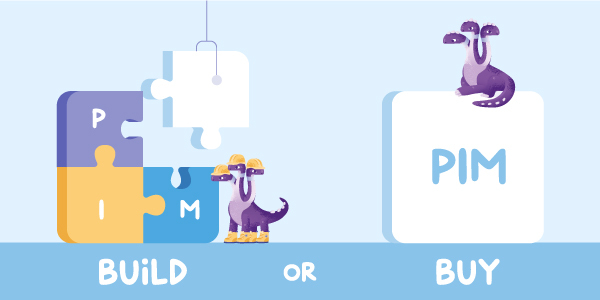
So, you’ve decided you want to unlock growth through better product experiences. How do you start? We’ve got just the thing. Welcome to our series about developing the profession of PXM at your company. In this edition, we’re helping you decide whether to Build or Buy: What’s right for your PIM?
So, you’ve decided it’s time for your organization to adopt a product information management (PIM) platform.
Now, it’s time to make another, perhaps even more important decision — to build or buy. Will you call on your team of developers to build your own PIM, or will you buy a subscription to a PIM platform from one of the many solution providers on the market?
While both building and buying a PIM have pros and cons, we believe that for most organizations, there is a definitive answer to this question — namely, buying a purpose-built PIM solution from a software vendor. Why are we so confident in that? Allow us to explain!
Cost
Let’s start with the most obvious perceived advantage that home-grown systems have over their licensed counterparts — the initial cost. If your company already employs software developers or designers, you may be thinking, why not use those resources to create a PIM rather than pay a large upfront cost or an ongoing licensing fee? You may avoid the upfront operational expense of a packaged PIM subscription when you develop your own solution, but you won’t avoid the ongoing maintenance and upkeep that your custom application will require.
When running as an on-premises application, you’ll need to factor in the capital cost of hardware acquisition and upkeep, as well as integration, connectivity, and remote access, especially now. With a purchased, cloud-based PIM, however, the software provider deals with all of the costs associated with maintaining the solution, including, but not limited to enhancements, fixes, upgrades, and more, allowing you to avoid spending money on depreciating assets like hardware, and the expense to support a technology that is on the critical path to getting your products ready for sale.
Resources
Hardware and software costs are not the only resources you need to consider. To build your own PIM will require significant resources. Consider what a software vendor requires to develop a solution: dozens of dedicated software engineers, product and project managers, and technical support resources who work 100% on PIM, and nothing else. These dedicated individuals spend thousands of person-hours and hundreds of thousands of lines of code, or more, to make a PIM solution that can support all your channels, products, and markets.
In order for your organization to even begin to realize the benefit from a PIM solution, you’ll have to make a major investment, not just with your money, but with your people, your processes, and your priorities. Or, if you want to run your business in the most efficient manner possible, you could work with a PIM vendor that has already invested all of this, and more, into their solution.
Control
When it comes to building your own solution, one of the biggest benefits is control. When you’re the owner, creator, and manager of a PIM platform, you have complete control over how the software works. You and your team get to decide what features are the most important to include, what UI is best for your team, and how to prioritize updates, fixes, and other decisions that need to be made. But with great power comes great responsibility.
Building your own PIM system means that you are responsible for updating that solution, which in turn means making all of the decisions when it comes to adding new features or making changes to the solution. But when you buy, your software vendor will constantly be updating the SaaS PIM solution with an ongoing stream of upgrades and enhancements, doing so at a rate that your IT team simply won’t be able to keep up with. By working with a solution provider, you don’t have to worry about enhancing or maintaining your solution, and instead be able to focus more on using that solution to provide the best product experiences possible.
Features
Most likely, if you’re reading this blog, you’re not a software developer yourself. You’re an artisan working to design beautiful and comfortable furniture, a manufacturer shipping products to retailers around the world, a retailer yourself, or a distributor. If you want your PIM solution to have the latest and greatest capabilities, including tools like embedded workflows, user management features, support for product variants, an integrated way to manage digital assets, data quality insights, and more, you shouldn’t be opting for a homegrown solution.
Buying a PIM is the fastest and easiest way to keep pace with advances in the solution needed to keep your business growing. That way, you can focus on selling your products and not worrying about maintaining the tools you use to get them ready to sell. So, rather than spending valuable resources outside of your core competency, leave designing a PIM solution to the experts who concentrate on doing this on a daily basis. That way, you can focus on running your business while your solution provider takes care of running your PIM instance smoothly and securely on a cloud infrastructure.
Speed
We’ll wrap up with one of the biggest benefits of any PIM, bought, built, or otherwise, is the enhanced product creation and enrichment speeds, leading to accelerated time-to-market. This gives your team more selling days while reducing enrichment costs, helping drive revenue skyward.
But developing, designing, and perfecting a PIM is a complex, time-consuming endeavor. If you’re wasting time building your own home-brewed solution, your team may never realize these benefits! Buying a packaged solution allows you to get your new PIM up and running almost instantly, allowing you to start experiencing the benefits and tracking the ROI of your investment in PIM.
Build or Buy — what’s right for you?
When you consider all of the factors that go into making the decision to build or buy software — from the time and cost of implementing a new solution to the speed you can implement it in and even the features it offers — it’s clear that buying a PIM system is the right answer for most organizations. Buying a PIM system allows you to focus on creating great experiences for your customers and growing your business without wasting time, money, effort, or any other resources outside of your core competency.
But which solution on the market is right for you and your team? If you need help answering that question, check out our guide to the issues to consider when (s)electing a PIM candidate!
How integration with Akeneo PIM can help you access digitized sales processes
This is a guest post from Tamara Bolsewicz of Akeneo partner Divante.
B2B business is going digital.
According to McKinsey, 90% of B2B org…
This is a guest post from Tamara Bolsewicz of Akeneo partner Divante.
B2B business is going digital.
According to McKinsey, 90% of B2B organizations have moved to a digitized sales process in 2020 and more than half of them find it as effective or more effective than previous models. The enforced changes to business-as-usual have revealed huge benefits to companies.
However, salespeople still see the value of face-to-face interactions, and many customers still prefer the feel of a handshake deal. As we all adapt to the reality that our habits must change for the foreseeable future, salespeople are looking for tools that encourage clients to move online but still retain the feel of the personal relationships they have always valued. The answer lies in digitized sales processes fueled by conversational commerce.
What is a digitized sales process, and why invest in it?
If you are looking for a loose synonym for a digitized sales process outside of the B2B domain, then conversational commerce fits the bill. This term was only coined in 2015 but has already become a fundamental strategy for increasing sales and customer loyalty in eCommerce.
It refers to the system of direct communication between a brand or business and its customers. Conversational commerce uses instant digital messages shared on platforms, and incorporates the ability to make purchases online. It is a response to the 2.5 billion people who communicate using messaging apps on mobile phones for general communication and are coming to expect the same kind of easy and quick communication with their favorite brands.
In recent years, companies have started to use chatbots to open new sales channels and save significant amounts of money. This trend is growing fast —about 80% of businesses plan to use chatbots for their online businesses by 2020. Around half of shoppers say that they willingly interact with eCommerce chatbots; the next step is then to go beyond chatbots that answer questions and move to a more digitized sales process.
In spite of this rapid development, bots will probably never replace human-to-human interactions between the consumer and the brand. They are improving all the time but will likely never be able to build relationships, understand emotions, and answer complex questions about products.
How using a digitized sales process boosts your online sales
New sales channels
It’s not just end-customer relationships that can benefit from conversational commerce. A digitized sales process becomes a whole new revenue stream. McKinsey estimates that it brings 5 times faster revenue growth, 30% higher acquisition efficiency, and a 40-60% reduction in sales costs.
Building relations and trust
Digitizing your sales processes helps you build better relationships with your partners and clients. It also gives clients a better chance to keep connected and stay informed.
Greater conversion, shorter time
A digitized sales process will also increase conversion rates and shortens transaction times. Sales reps can propose and suggest new products and upgrades more subtly as they talk freely with your customers.
Kickstart a digitized sales process in just 24 hours
There is no shortage of benefits to implementing a digitized sales process—but doing so is often easier said than done. The typical obstacles to success include long implementation times, a high cost of eCommerce development, and a common lack of experience with online sales strategies and tools.
There is an urgent market demand for a tool that can easily connect customers with consultants in a virtual sales meeting. One that helps increase sales without disrupting existing processes.
This demand has become more urgent due to the necessity of remote work; moreover, in a time of restrictive budgets, the solution should also be affordable, user friendly, and implementable in a short period of time so that Sales Representatives can start their online sales immediately.
That’s where Meetsales comes in. It’s a cloud-based solution that puts the shopping cart right inside the call, letting sales reps present and compare products, discuss prices, generate offers and orders, and close deals directly in the video interface. It integrates with different PIM systems, including Akeneo PIM, to bring the product catalog to life and facilitate digitized sales processes.
Meetsales integrates with the PIM system and draws all product information such as types, numbers, sizes, and colors of products. It also imports data from the CRM and exports data to ERP. The sales rep then receives this data in an application in the sales dashboard. During a meeting, a salesperson can add, edit, or remove specific items from the basket.
With Meetsales, there are no document scans, no emails with offer summaries, and no frustrating price negotiations. After the call, the customer gets an overview of the accepted order, and the sales rep receives the same information in a pdf. It is a simple, mostly-automated process that saves time and eliminates the risk of mistakes.
The web app is aimed at medium and small businesses that have not yet taken the step to integrate with eCommerce platforms but are already aware of the need for digitization. Meetsales is a perfect fit in such cases because it can be implemented and integrated within 48 hours. As a SaaS solution, the full functionalities are all in the price of the license and there is no need to install software beyond a simple integration with a widget that will help your new leads to get in touch with Sales.
This new approach to the B2B sales process will help encourage customers and partners to explore the value of online meetings and have a substantial impact on their choices. It also allows salespeople to take a more active part in a remote buyer’s purchase decision, suggesting alternative options or complementary products to add to the cart. When sales consultants can add value to the online buying process, customer confidence and satisfaction automatically skyrockets.
Learn more about digitized sales processes, Divante, and Meetsales at Divante.com
Here in the United States, Thanksgiving is just around the corner, Ziggy is on a mission to show just how grateful she is by giving back to those in n…
Here in the United States, Thanksgiving is just around the corner, Ziggy is on a mission to show just how grateful she is by giving back to those in need — and she needs your help!
We’d like to invite you to leave a review on G2, and let us know how you feel about Akeneo PIM. In return, you’ll have our (and Ziggy’s) undying gratitude, of course. But that’s not all! For every review made between November 16th and December 31st, Akeneo will make a donation to the Red Cross’s Gift of Giving program.
So, if you’re ready to help us spread the gospel off PIM, and make the world a little better at the same time, then follow the link below to leave Akeneo PIM a review on G2.
So, you’ve decided you want to unlock growth through better product experiences. How do you start? We’ve got just the thing. Welcome to our series abo…
So, you’ve decided you want to unlock growth through better product experiences. How do you start? We’ve got just the thing. Welcome to our series about developing the profession of PXM at your company. In this edition, we’ll explain how to sell PIM to your boss.
You know there’s a problem in your company, one that’s slowing your team down, causing them to make mistakes, and, most importantly, costing your organization revenue. It’s your product information management tools and processes.
Fortunately, you also know of the perfect solution — a PIM, or product information management solution. So how do you convince the people in charge to adopt a new tool and new approach?
Getting buy-in from company executives is key to making your PXM strategy a success. So, if you’re wondering how to approach each position, read on to discover our tips for on how to sell PIM to your boss.
CMOs and Heads of eCommerce
Marketing and eCommerce executives are typically bastions of brand identity and guardians of growth, asked to push their teams forward to new channels and locales in search of new customers. They know that their success hinges on the quality of the product experience customers are presented with when they shop on any channel and are constantly looking to connect with customers in new and innovative ways.
That’s why it’s crucial to ensure they understand just how powerful PIM can be when it comes to crafting a compelling product experience. Explain that your company will be able to enhance its brand identity and growth objectives with an exceptional product experience. This will lead to reduced returns and higher conversion rates.
Product marketers and catalog managers
Speed and accuracy — those are the two biggest priorities for product marketing and catalog managers. These professionals are obsessed with productivity gains and reducing errors. Their goal? To make every process faster, more efficient, and more accurate. So, to convince these managers to invest in a PIM solution, you’ll need to work fast to convince them that your new tool will help you pick up the pace without falling victim to errors or inconsistencies. The good news? PIM may be the perfect combination of speed and precision when it comes to product enrichment.
A good PIM solution will simplify the lives of product marketers and catalog managers by automating and accelerating their current processes. Eliminating manual tasks helps cut enrichment time, and accelerates time-to-market — and reduces the incidence of typos, missing data, incomplete data, and other errors commonly found when manually managing product information. What’s more, with all of this manual work taken care of, they’ll be able to focus on more value-added tasks, like creating compelling product experiences. Talk about an easy sell!
IT decision-makers
When it comes to IT managers, they don’t just care whether a job is done — they want it done right. They’re interested in getting the right tools to help marketers do their jobs the right way and ensuring those tools work well in their existing technology infrastructure. What’s more, IT teams typically are dealing with a litany of issues and requests from around your organization, so they want to empower data experts, facilitate data governance, and eliminate gaps from legacy systems in order to ensure your product information processes run as smoothly as possible.
So, explain that a PXM solution is specifically designed to play nicely with your existing tech stack. You can also tell them that PIM is a purpose-built tool designed to help control who does what with the product information and sync with other enterprise applications, so they won’t have to worry about who has access to the data. Finally, remind them that a good PIM solution will offer flexible SaaS deployment options and a robust ecosystem of technology and solution partners to help implement, support, and extend the solution.
C-level decision-makers
When it comes to the C-suite, it’s all about the money. Sure, they want to find a solution that can help their teams work more efficiently and reduce manual tasks. But what they really care about is the bottom line — the cost of a solution, whether it will help cut costs, and the impact on revenue the investment in a new solution will deliver. This emphasis on revenue and return on investment may seem daunting, but the bottom line is that PIM truly does help your bottom line.
It’s a solution that helps you cut enrichment costs by accelerating time-to-market and reducing your team’s workload while helping you grow revenue by making it easier to expand to new channels and new markets. In fact, Akeneo clients have seen their enrichment costs fall by as much as 80%, conversion rates climb by 400%, and even shopping cart sizes grow by as much as 500%. So, show your executive team how to calculate your PIM ROI and use our helpful list of KPIs to track the performance of your new PIM once you’ve sold your team on its effectiveness.
Sell PIM to your boss
Whether it’s your head of IT, product marketing manager, head of eCommerce, or even your CEO, PIM has something for everybody. The key is to know your audience and make sure you’re telling a story that speaks to what matters most to them.
Do they still need further convincing? Tell them they can learn more about the benefits of PXM achieved by other organizations by checking out some Akeneo customer stories or help them discover more about the sweet science of product experience management with our eBook, PXM for Dummies.
9 Issues to consider when (s)electing a PIM candidate
You’ve followed the coverage. You’ve studied all of the different candidates, scoured the web for insights from experts, and tried to find the rig…
You’ve followed the coverage. You’ve studied all of the different candidates, scoured the web for insights from experts, and tried to find the right one for you and your needs. So what’s it going to be?
Don’t worry — we’re not talking about the election. Instead, we’re talking about the process of selecting the right PIM (product information management) solution. But picking a political candidate and picking a PIM solution have more in common than may first meet the eye. In both situations, to choose the candidate that’s right for you, you need to know where they stand on the issues you care about — your use cases.
So, how do you find out which PIM candidate is right for you? We’ve polled the team of product experience experts here at Akeneo to find the nine issues you should consider as you evaluate PIM candidates. Take a look at their suggestions, and use this guide to help you make a smart PIM choice!
Issue No. 1: Architecture
Let’s start with the core of any PIM solution — its architecture. A good PIM candidate will be a cloud-first offering that’s built with a modern SaaS architecture. This architecture should be designed to give your team access to the power of PIM without forcing your organization to implement and manage costly on-premises IT infrastructure. That way, you can focus on running your business while your solution provider takes care of running your PIM instance smoothly and securely on a cloud infrastructure.
It should also offer a robust, well-documented API. This allows for the quick and easy development of integrations, connectors, and extensions that can simplify connecting to your sales channels and advance the PIM capabilities.
Issue No. 2: Data Collection
A good PIM candidate should make it much easier for your team to manage and enrich product information — a process that starts with collecting and centralizing your data in one place. But this data exists in a wide variety of systems, including internal sources like your Enterprise Resource Planning (ERP) system, marketing database, other systems, and external sources such as suppliers, which can make data collection a challenge.
That’s why a good PIM candidate will offer a deep roster of capabilities designed to make it easy for you to collect and centralize product information. This includes tools such as connectors, APIs, and import features to collect data from various applications. The best candidates will even provide product content directly from trusted sources, so look for a solution that offers an integrated capability to onboard product data directly from your suppliers.
Issue No. 3: Standardization
Once you’ve centralized your product information in one place, you’ll need to clean and standardize that data to make it easier to consolidate and configure for use in your product catalog. Standardizing product data is necessary because the raw source product data comes from systems with varying file formats, naming schemes, attribute values, and more. The PIM should help your team to accurately map and consolidate your raw data from these different sources.
A good PIM candidate should also make it much easier to categorize products, including supporting product variants (i.e., products that vary by color, size, etc.), and organize your product data for the requirements for different channels and languages. Look for a solution that saves labor and increases efficiency in this area via automation and business rules.
Issue No. 4: Enrichment
Once data is collected and standardized, you need to use that product data to create accurate, compelling product information to deliver exciting, emotionally resonant product experiences. This includes enriching the products’ technical data with usage information and emotional information – content that makes customers feel connected to your brand and confident in making a purchase. What does it take to forge this personal connection with your buyers? Compelling, in-depth product descriptions, digital assets like photos, videos, and documents, related information to help communicate your brand values, and more.
A good PIM candidate will shorten your time-to-market, making the enrichment process easier and faster by providing features such as an easy-to-use interface, bulk actions, and mass editing capabilities, validation workflows, and collaboration tools to help streamline your team’s day-to-day work. It will also help you reduce manual enrichment effort via features like automation and business rules, and provide a mechanism to measure product data quality and ensure a high-quality product experience.
Issue No. 5: Localization and Contextualization
If you are selling in multiple regions and on multiple channels, you need to localize and contextualize your product experiences for the requirements of each region and the rules of each channel. Localization is all about adapting product data for specific markets, translating it for different locales, and providing images that are relevant and appropriate — even altering your product assortment to meet the needs of your new customers. Contextualization, meanwhile, means ensuring that the appropriate product data is used for each channel. This includes managing and meeting different product listing requirements for each marketplace, customizing product descriptions or digital assets for various channels, and providing a product experience that’s tailored to the touchpoint your customers are using.
A good PIM candidate won’t merely be a container for your product data and assets. Instead, it will help you improve your data quality and product experience by crafting localized and contextualized product descriptions, images, and other data for each channel you sell on and every locale you sell in. It will also measure and improve the data quality that identifies low-quality product information and offers suggestions to enhance your product experience in the process.
Issue No. 6: Distribution
After you have a complete catalog tailored for different markets and channels, this catalog will need to be distributed across your owned channels such as your webshop, print materials, and mobile app, and syndicated to your unowned channels such as marketplaces. So, make sure your preferred PIM candidate can quickly and efficiently deploy your catalog to the desired channels. A good solution will track when your products are complete and ready to sell and offer connectors and export capabilities designed to publish catalogs that work for each channel.
It will also offer features designed to ensure your team only exports the right data to each channel by allowing them to filter export data based on selected product attributes, families, categories, and other identifiers. Finally, a good PIM candidate will enable your marketing team to save these export profiles for future usage.
Issue 7: Manageability
When managing information for hundreds, or even thousands, of products, human error will inevitably introduce product data inconsistencies. That’s why it’s crucial that a good PIM candidate helps you catch these errors before you publish with features designed to verify the accuracy of individual contributions to product data, as well as its overall completeness. Your PIM should also help define the minimum level of quality and completeness required for a product to be published to a given channel and locale.
A good PIM will also help you manage not only your product data, but also your team’s workload, with capabilities that allow you to more easily identify your team and define your product information management processes. This includes tools that ensure your employees only have access to the product and field values they need, along with features that use validation workflows to improve productivity.
Issue No. 8: Maturity
Implementing a PIM solution and building a top-notch PXM practice is not a one-and-done effort. The needs and goals of your organization, market conditions, customer behaviors, and other factors are continually changing and shifting, meaning that the work of building a top-notch product experience is never truly over. Teams should work collaboratively to track progress over time, so you can adapt and evolve to support your business needs.
Your PIM candidate should offer a path to help you with this progress along your product experience journey. This path should light the way to becoming a more mature organization when it comes to managing product information and continuing to create better product experiences. Make sure you find a solution that has a maturity path and plan in place. That way, you and your team can ensure that they’re following that plan closely as they continue to progress along their journey.
Issue 9: Community & Ecosystem
Our final issue focuses not on the PIM solution itself, but on the support system surrounding it. A good PIM candidate will have a strong ecosystem of solution partners to help you implement your PIM easily and efficiently, along with a thriving community of technology partners that are there to ensure you get the most out of your PIM instance, and that it suits the needs of your company.
The sign of a healthy ecosystem isn’t just a high quantity of integrators or extensions. Perhaps more importantly, your PIM candidate should also offer a range of high-quality partners and vendors. These partners shouldn’t just be there to sell an additional solution. Instead, they should support you, work transparently to help you achieve your goals, and offer resources such as thought leadership and best practices, a roadmap to success, and a vision for the future.
Choose the right PIM candidate for your needs
Choosing the right PIM candidate isn’t easy, and there are lots of issues to consider when it comes time to make your decision. Each PIM use case and project is unique, so make sure you find a well-suited solution to your organization’s individual needs and objectives.
If you have any questions as you travel along your PIM journey, feel free to reach out to our team of product information and product experience experts. They’re here to answer and product information query and conquer any challenge that stands in your way.
 Summer Release