Your AI policy may specify approved data sources, human-review requirements, and limits on automation, but could you reconstruct exactly how an AI-generated product claim reached a live channel six months later? Discover why decision lineage is becoming essential as product teams introduce more AI agents, what information to capture at every step, and how to build an audit trail that connects source data, automated recommendations, human judgment, and final outcomes.
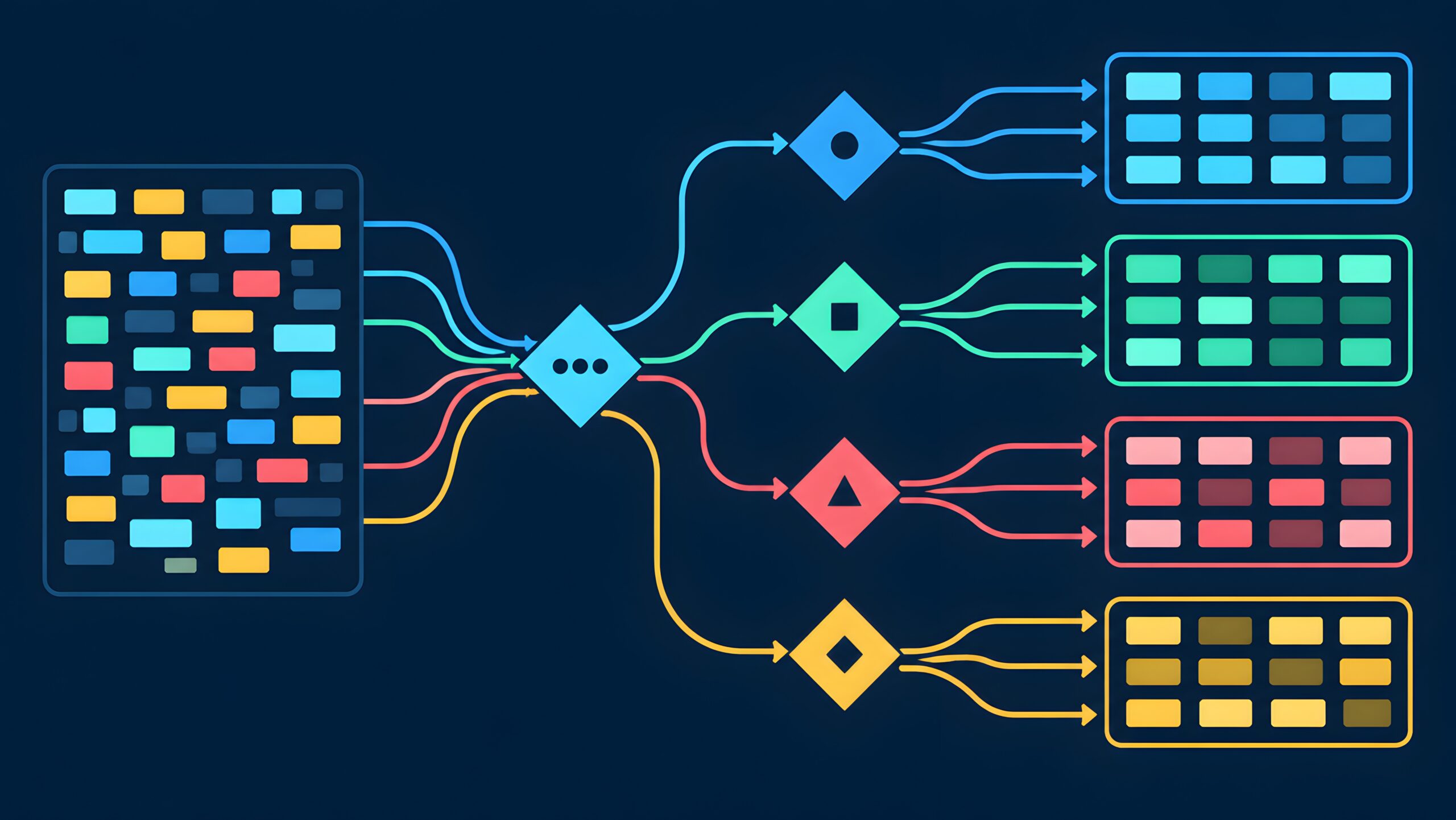
Table of Contents
Keywords
As AI becomes more deeply embedded in product operations, governance is moving quickly from a theoretical concern to a practical one.
Product teams are starting to build agents that recommend attributes, generate content, flag compliance issues, prepare localized versions, and influence what ultimately reaches customers across different channels.
Most organizations recognize that these capabilities need boundaries. They create policies that define which tools may be used, which data sources are approved, when human review is required, and which decisions should never be automated.
That is an essential starting point, but it does not answer every question that arises once AI becomes part of a live product workflow.
A policy can tell you what should have happened. It cannot necessarily show you what actually happened.
That is where decision lineage comes in. Decision lineage creates a connected record of how source information became an AI recommendation, how that recommendation was reviewed or changed, and how the final decision reached a product record or live channel. It turns governance from a set of written expectations into evidence that can be inspected, explained, and improved.
As product teams introduce more agents and automate more of the product lifecycle, that evidence becomes increasingly important. Without it, even a well-written governance policy can leave teams piecing together decisions across approval tools, system logs, emails, and spreadsheets. With it, they can trace a product claim back to its source, understand why a decision was made, correct errors more quickly, and use recurring patterns to strengthen future rules and workflows.
An effective AI governance approach therefore needs both: a policy that defines how AI should operate, and decision lineage that shows how it did.
An AI governance policy is the rulebook for how your organization selects, builds, deploys, and uses AI.
For product data teams, it should define:
A useful policy should guide everyday decisions without trying to predict every future AI use case. NIST’s AI Risk Management Framework treats governance as an ongoing part of designing, deploying, using, and evaluating AI systems, not as a document that is completed once before launch.
The policy establishes boundaries. It does not, on its own, create evidence that those boundaries were followed; that’s where decision lineage comes into play.
Decision lineage is the connected record of how an AI-assisted recommendation moved from source information to a business outcome.
For product data, that record should show:
Decision lineage is more than a model log, an approval timestamp, or product version history. Those are individual pieces of the record, and lineage connects them.
That becomes essential when several agents act on the same product. A Supplier Data Agent might update a specification while an Enrichment Agent uses that value to complete related attributes and a Content Agent then turns those attributes into customer-facing copy.
If the original specification is later challenged, your team needs one connected history, not three separate logs held by different systems.
This is what we like to call unified observability: a shared history connecting source evidence, agent actions, human reviews, and product changes.
A policy can state that regulated or commercially sensitive claims require human review. Decision lineage shows whether that review happened before publication, what the reviewer considered, and whether a later change invalidated the original approval.
This distinction is reflected in established AI-governance guidance.
NIST recommends maintaining histories and audit logs, documenting the degree of human oversight, tracking overrides and reported errors, and recording accountable “go” and “no-go” decisions.
The OECD’s AI Principles similarly emphasize giving stakeholders meaningful information about the data, inputs, factors, processes, or logic behind an AI outcome. Its guidance describes traceability as a way to support later analysis, understand outcomes, prevent repeated mistakes, and improve trustworthiness.
For high-risk AI systems, the EU AI Act includes requirements for automatic event logging and effective human oversight. Not every product-data agent will fall within that classification, but the direction is useful: responsible governance increasingly requires evidence of system behavior, not simply written statements of intent.
Create an inventory of the decisions each agent makes or influences.
“We use generative AI for product content” is too broad. “The Enrichment Agent recommends missing dimensions from approved supplier documents” is specific enough to govern.
For each decision, record the product families affected, the potential consequence of an error, and whether the action can be reversed. This helps you distinguish routine automation from decisions that need stronger controls.
Specify what each agent may complete automatically, what it may recommend for approval, and what must remain human-led.
Use practical review triggers rather than a general instruction to “keep a human in the loop.” Human review might be required when:
Assign the reviewer, explain what evidence they need, and define how they can approve, override, correct, or roll back the action.
Your policy should identify which sources are authoritative for each category of product information.
A current manufacturer datasheet may outrank a legacy spreadsheet for technical dimensions. An approved certification may be mandatory before a sustainability claim can be published. A retailer specification may control formatting without becoming the source of truth for the underlying product value.
The policy should also explain what happens when sources disagree. An agent should not quietly select whichever value appears most convenient or most frequently.
Require every material AI-assisted decision to capture a consistent set of information:
The amount of detail can vary according to risk. An image-tag suggestion does not need the same record as a safety, technical, or environmental claim.
Give each material change a shared identifier that follows it through enrichment, validation, content creation, localization, and activation.
This makes it possible to answer a practical question: if the original source value changes tomorrow, which descriptions, translations, product records, and published destinations need to be reviewed again?
Isolated logs tell you what each tool did. Connected lineage tells you what happened to the product.
Do not wait for a retailer, customer, auditor, or regulator to test your records.
Periodically select a published claim or attribute and work backwards. Can your team identify:
Then test whether the information can be stopped, corrected, and republished.
Track how long reconstruction takes, where evidence is missing, how often reviewers override agents, and which corrections repeat. Those patterns should feed back into your data model, prompts, mappings, business rules, and review thresholds.
As AI becomes part of everyday product operations, governance cannot remain a document that teams consult only during procurement, implementation, or compliance reviews. It needs to be reflected in the way product information is sourced, recommendations are made, approvals are recorded, and changes move through the product lifecycle.
A well-designed governance policy provides the necessary structure. It establishes ownership, defines acceptable uses, sets boundaries around automation, and clarifies when human judgment is required. Decision lineage carries those principles into practice by preserving the evidence behind each material decision: the source an agent relied on, the rules it applied, the recommendation it produced, the person who reviewed it, and the product records or channels affected.
As more agents begin contributing to product information, the ability to generate an answer will be only one part of responsible AI. Teams will also need to explain where that answer came from, how it was evaluated, why it was accepted, and what happened next. That is what turns an AI governance policy from a statement of intent into a system people can understand, trust, and continuously improve.
Discover the 10 AI agents reshaping product operations, and the trusted product data foundation you need to make them work together at scale.


 Release