Large language model-powered search is reshaping B2B discovery just as quickly as it is transforming consumer commerce. Discover why traditional SEO is no longer enough, the product data challenges that can keep B2B offerings out of AI-generated answers, and the practical steps organizations can take to make their products easier for intelligent systems to understand, trust, and recommend.

Table of Contents
Keywords
B2B organizations have traditionally moved more cautiously than consumer brands when adopting new digital technologies.
That caution is understandable. B2B buying journeys are complex, sales cycles are long, and product information can include hundreds of technical attributes, certifications, compatibility rules, pricing structures, and implementation requirements.
But large language model (LLM)-powered search and discovery is not waiting for B2B businesses to catch up.
Business buyers are already using AI tools to research suppliers, compare products, evaluate technical fit, and create shortlists before speaking to a sales representative. According to Forrester, 89% of B2B buyers now use generative AI during the buying process, making it a primary source of self-guided information.
That makes Answer Engine Optimization, or AEO, a strategic priority. AEO is the practice of structuring content and building sufficient authority so AI engines can confidently cite and recommend a company’s products.
Traditional search engine optimization helps pages rank for keywords and attract website traffic. AEO focuses on whether an AI system can understand, trust, cite, and recommend a product in response to a buyer’s question.
The distinction matters because AI engines do not simply return a list of links. They interpret intent, compare options, evaluate available evidence, and synthesize a direct response.
A B2B buyer might ask:
“Which industrial pump is compatible with corrosive chemicals and meets ATEX requirements?”
“What warehouse management platform is best for a multi-site distributor?”
“Which packaging material meets food-safety standards and supports recyclability targets?”
Answering those questions requires structured, complete, current, and credible information.
A product can perform well in traditional search and still be absent from an AI-generated recommendation if its specifications are incomplete, buried in PDFs, inconsistent across channels, or difficult for machines to verify. We call this the Invisible Shelf; when a product shows up in traditional search, but is largely ignored from LLM searches.
B2B organizations face several distinct obstacles.
First, their product data is highly complex. One product may have hundreds of attributes, technical dependencies, region-specific certifications, and compatibility requirements. When those details live in unstructured documents or disconnected systems, AI engines may not be able to interpret them confidently.
Second, B2B product information is frequently fragmented. Manufacturers, suppliers, distributors, partners, marketplaces, and sales teams may all publish different versions of the same product record. Contradictory specifications and outdated claims create uncertainty, and AI systems are less likely to recommend products they cannot verify.
Third, B2B buying intent is nuanced. Buyers are often searching for a solution to an operational, regulatory, or commercial problem, not simply a product category. A product record that lists dimensions and materials but lacks information about operating environments, integrations, total cost of ownership, or implementation requirements may fail to answer the buyer’s actual question.
Finally, many organizations treat AEO as a visibility exercise rather than a product data challenge. Monitoring whether products appear in AI answers can reveal a problem, but it cannot correct missing attributes, govern supplier information, manage enrichment workflows, or distribute updated content across channels.
Review sales conversations, support requests, website searches, request-for-proposal language, and industry terminology. Identify the prompts buyers are likely to use and test whether your products appear in the responses.
Prioritize commercially valuable topics such as compatibility, compliance, performance, installation, and industry-specific applications.
Centralize critical product information and establish clear ownership for attributes, identifiers, certifications, claims, and updates.
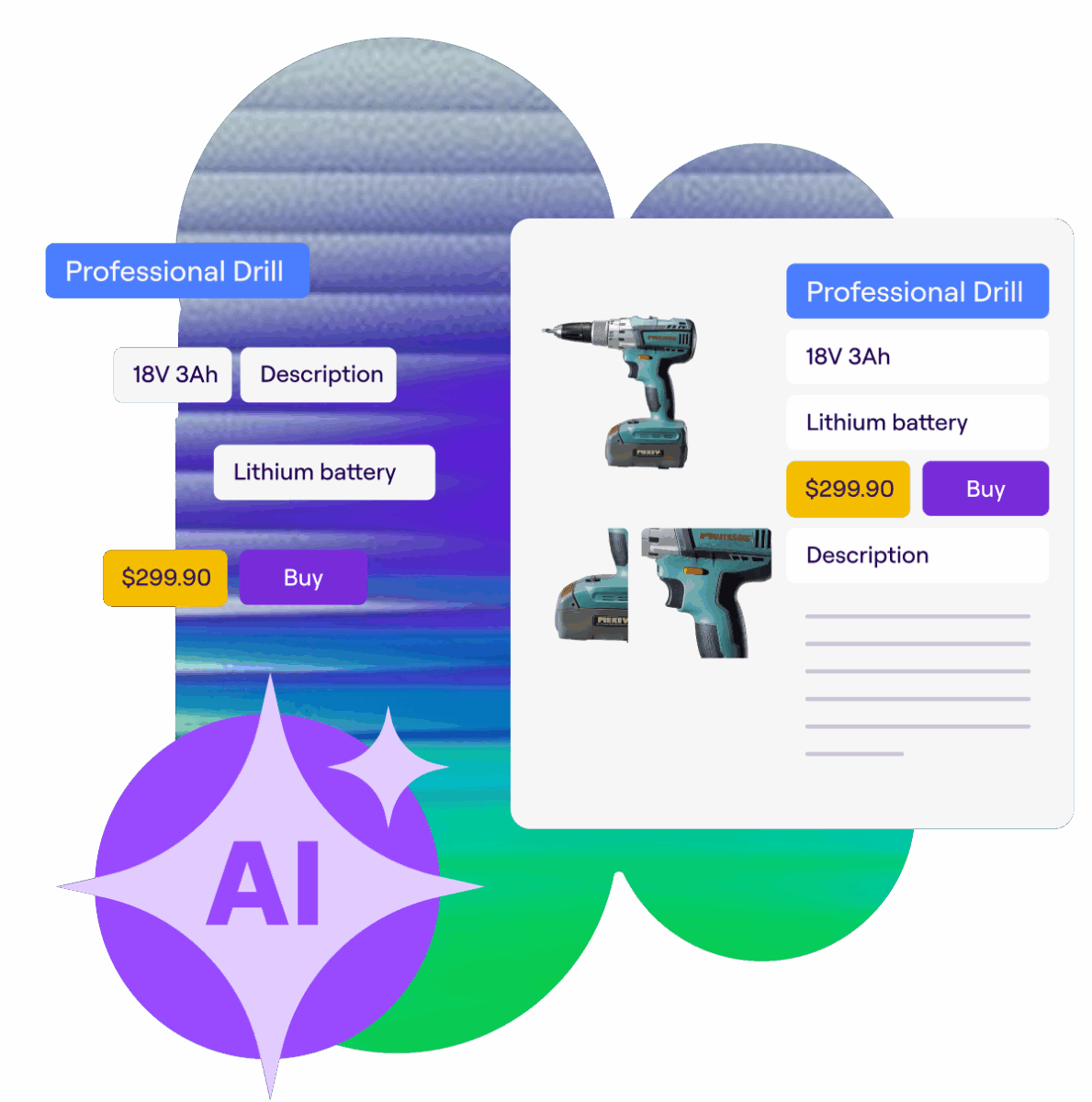
A machine-ready catalog must serve two audiences simultaneously: people need persuasive narratives and context, while AI systems need structured, standardized, and unambiguous facts.
Use structured product schema, standardized categories, global identifiers, clear product relationships, and consistent attribute fields. Move essential facts out of PDFs and dense prose wherever possible.
Do not make an AI engine infer that a component is suitable for outdoor use. Provide explicit attributes such as “outdoor-rated,” temperature range, ingress-protection rating, compatible materials, and supported environments.
Technical completeness makes a product understandable. Context makes it recommendable.
Enrich product records with the problems products solve, the industries they serve, the environments they support, and the systems they work with. Replace vague claims such as “fast installation” with specific, verifiable evidence, such as “reduces average installation time from four hours to 90 minutes.”
AI discoverability will continue changing as models, buyer behavior, competitors, and commerce channels evolve. Regularly check for outdated records, conflicting specifications, emerging buyer questions, and changes in certifications or availability.
Align information across websites, distributor feeds, marketplaces, partner directories, analyst sources, and industry publications. AI engines cross-reference these environments, so inconsistencies can quickly undermine trust.
B2B organizations do not need to transform every product record at once. Start by identifying where commercially important products are invisible, prioritize the highest-impact gaps, and create a repeatable process for improving product information.
The goal is not to produce more content for its own sake. It is to make products easier for intelligent systems to understand, and safer for them to recommend.
As AI becomes more influential during research, evaluation, and purchasing, B2B companies that invest in trusted, machine-ready product information will be better positioned to earn visibility, credibility, and consideration.
For a deeper look at the data, governance, and content practices behind AEO for both B2B and B2C organizations, download ‘The Invisible Shelf’ today.
Download the AEO playbook and learn how to make your products visible, trusted, and recommended in the era of AI commerce.

 Summer Release