Summer Release
Découvrez la première Product Experience Platform véritablement agentique
En savoir plus Summer Release
Découvrez la première Product Experience Platform véritablement agentique
En savoir plusA Master Data Management (MDM) solution serves as a centralized source of truth for key business data—such as products, customers, suppliers, employees, and locations. By unifying and standardizing this critical information across systems, MDM helps eliminate data silos, reduce errors, and improve decision-making. It streamlines operations and ensures consistency, so businesses can deliver trusted data across all teams, channels, and customer experiences.

MDM (Master Data Management) is a system or solution that helps businesses centralize, manage, and synchronize critical data—such as product, customer, supplier, location, employee information—across the entire organization. The primary goal of MDM is to ensure that accurate, consistent, and up-to-date master data is accessible across all systems, teams, and touchpoints, enabling better decision-making, streamlined operations, and trusted customer experiences.
Key features include:
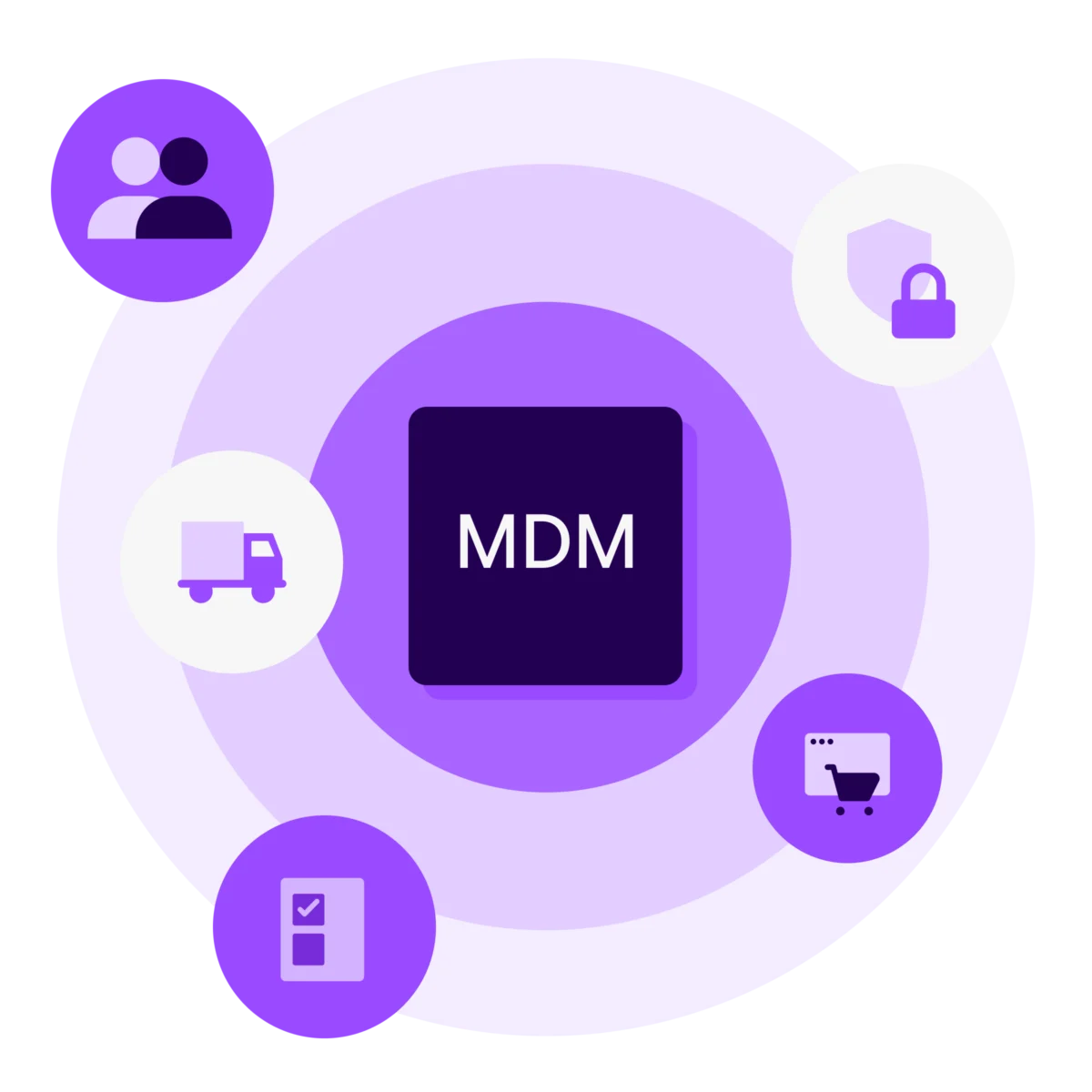
MDM systems manage critical business data across domains such as customers, suppliers, products, employees, and locations. This includes everything from customer contact details and product SKUs to vendor contracts and store addresses. By centralizing and synchronizing this information, MDM ensures data accuracy and consistency across all systems and teams.
MDM improves data quality by eliminating duplicates and inconsistencies, giving teams a single, trusted source of information. It enhances operational efficiency, supports regulatory compliance, and enables more confident, data-driven decisions. With unified master data, businesses can collaborate more effectively and scale more easily across systems, markets, and teams.
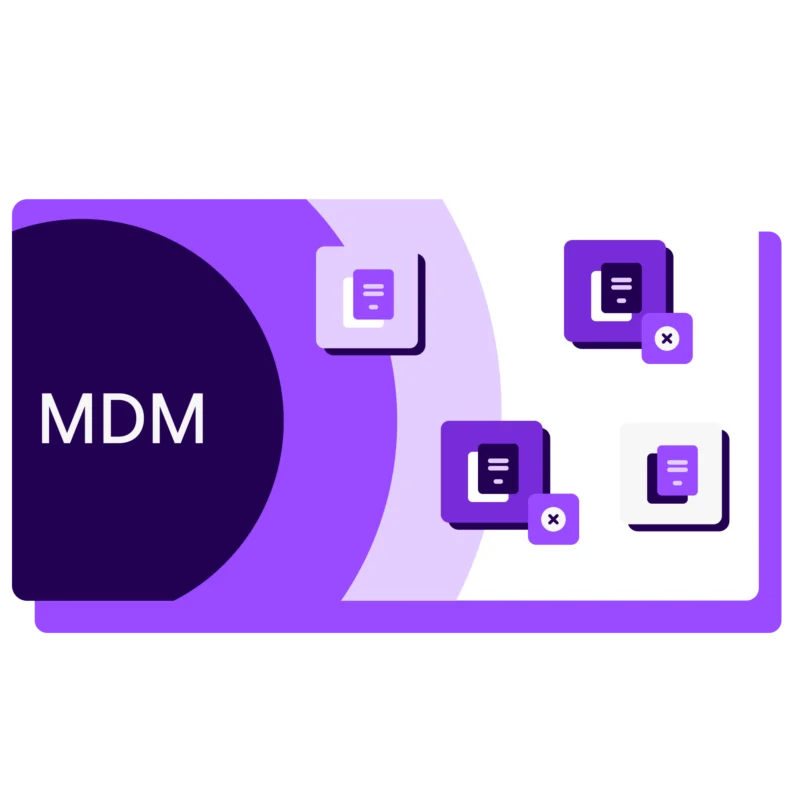

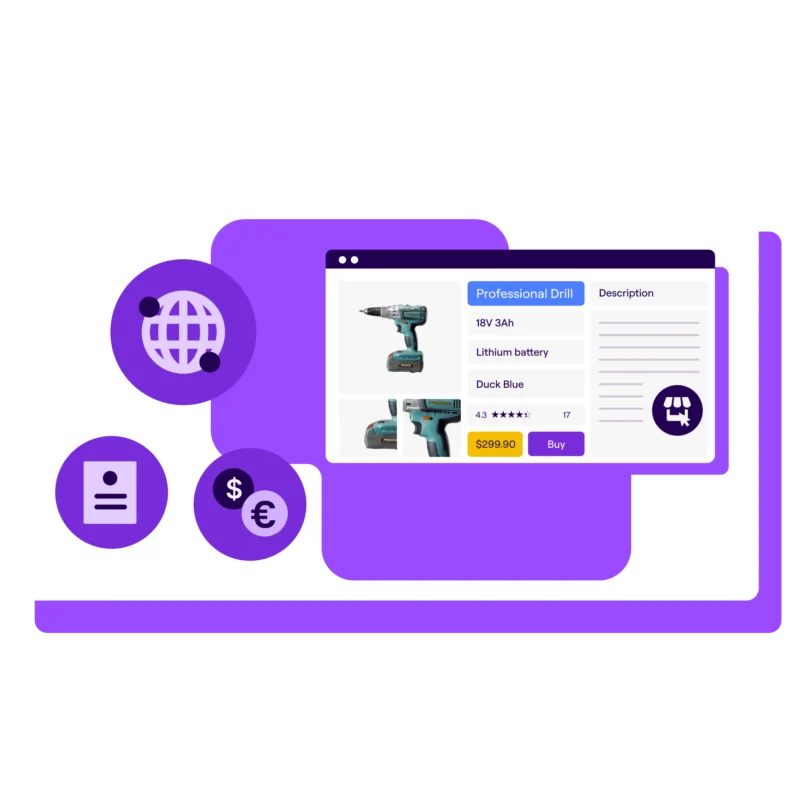

MDM supports marketers by providing clean, accurate customer and product data across systems—so campaigns are based on facts, not guesswork. With centralized data on customers, segments, and locations, marketers can personalize messaging, target campaigns more effectively, and track performance with confidence. Consistent, high-quality data enhances campaign ROI, brand credibility, and overall customer experience.

MDM gives eCommerce managers a single, reliable view of core data—products, suppliers, customers, and inventory. This ensures consistency across platforms, improves catalog accuracy, and streamlines product launches. With well-governed data feeding into eCommerce systems, teams can reduce manual corrections, automate updates, and scale operations smoothly across markets and channels.

MDM delivers strategic value by eliminating data silos, reducing operational inefficiencies, and ensuring confident decision-making across the business. By providing a single source of truth for critical domains—like product, customer, and supplier data—MDM drives better compliance, stronger performance insights, and supports scalable digital transformation. It enables leaders to innovate with clarity and drive growth with confidence.

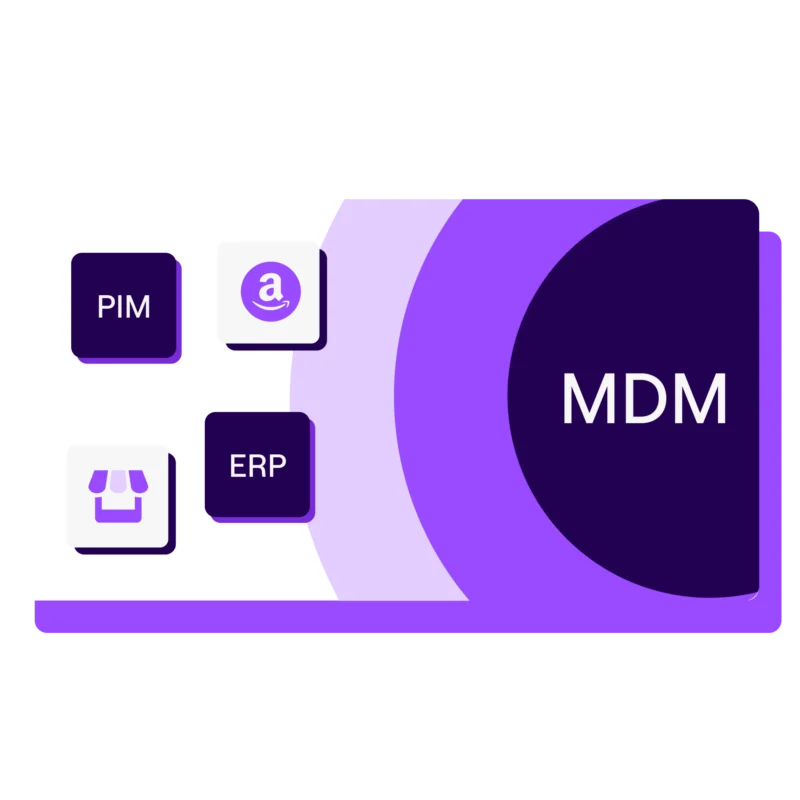
MDM simplifies enterprise data management by consolidating fragmented systems into a unified, governed architecture. IT teams benefit from easier integration, improved data quality, and reduced maintenance overhead. With automation, governance tools, and interoperability across platforms (ERP, CRM, PIM, etc.), MDM minimizes manual data handling, strengthens data security, and frees IT to focus on higher-impact initiatives.
While MDM focuses on maintaining a consistent, accurate, and unified view of core business data—including product, customer, and supplier information — Akeneo’s Product Information Management (PIM) and Supplier Data Manager (SDM) solutions extend the power of MDM specifically for product data. Together, they help businesses transform structured master data into rich, channel-ready experiences that drive growth and customer trust.
Akeneo PIM integrates seamlessly into an MDM ecosystem to enhance and enrich the product-related portion of your master data. It enables business teams to add marketing-ready content, such as rich descriptions, images, translations, and channel-specific attributes, thereby transforming raw product data from your MDM system into compelling product experiences across eCommerce, marketplaces, mobile apps, and more.
Akeneo SDM complements MDM by simplifying the collection, normalization, and validation of product data from external suppliers. Through collaborative Supplier Access, brands can provide structured templates, guidelines, and workflows to partners. This ensures accurate and standardized product data enters the MDM and PIM systems, supporting better governance and product readiness from the start.
By connecting MDM with Akeneo PIM and SDM, companies reduce manual data re-entry, streamline collaboration across internal and external teams, and accelerate time-to-market. Akeneo’s platform ensures that all stakeholders (from procurement to digital commerce) are working from a single, reliable source of truth, with automated workflows and validation rules in place to reduce errors and maintain data quality at scale.
MDM, or Master Data Management, is the process of creating and maintaining a single, consistent, and accurate view of an organization’s critical data (such as product, customer, supplier, and location…
MDM, or Master Data Management, is the process of creating and maintaining a single, consistent, and accurate view of an organization’s critical data (such as product, customer, supplier, and location data) across all systems and departments.
MDM works by consolidating, standardizing, and governing data from multiple sources into a central repository. It ensures that all business functions work with the same trusted data, reducing duplicat…
MDM works by consolidating, standardizing, and governing data from multiple sources into a central repository. It ensures that all business functions work with the same trusted data, reducing duplication and enhancing data quality across the enterprise.
Implementing MDM typically involves identifying core data domains (e.g., product, customer, supplier), mapping data sources, setting governance policies, and deploying MDM technology to manage and dis…
Implementing MDM typically involves identifying core data domains (e.g., product, customer, supplier), mapping data sources, setting governance policies, and deploying MDM technology to manage and distribute the master data. It often includes collaboration between IT and business teams to align strategy, data models, and workflows.
MDM manages a broad range of enterprise master data (like customer, supplier, and location data), while PIM focuses specifically on managing and enriching product-related data for marketing, commerce,…
MDM manages a broad range of enterprise master data (like customer, supplier, and location data), while PIM focuses specifically on managing and enriching product-related data for marketing, commerce, and customer-facing channels.
No, Akeneo PIM is not a replacement for an MDM system. Rather, it complements MDM by managing the product content layer, enriching product data, and preparing it for multichannel distribution. It work…
No, Akeneo PIM is not a replacement for an MDM system. Rather, it complements MDM by managing the product content layer, enriching product data, and preparing it for multichannel distribution. It works best when paired with an MDM that governs foundational data.
Akeneo SDM helps centralize and streamline the collection and standardization of product data, particularly from suppliers or external sources. It ensures that only clean, validated, and correctly for…
Akeneo SDM helps centralize and streamline the collection and standardization of product data, particularly from suppliers or external sources. It ensures that only clean, validated, and correctly formatted product data is passed into your PIM, thereby reducing errors and accelerating market readiness.
Yes! Akeneo PIM integrates seamlessly with most MDM platforms, allowing you to import foundational product data from MDM and enrich it for eCommerce, marketing, and sales use cases. This integration e…
Yes! Akeneo PIM integrates seamlessly with most MDM platforms, allowing you to import foundational product data from MDM and enrich it for eCommerce, marketing, and sales use cases. This integration ensures a connected data flow from governance to experience.
Connecting MDM with Akeneo PIM and SDM helps eliminate data silos, reduce manual tasks, and improve product data accuracy. Teams benefit from a streamlined enrichment process, faster product onboardin…
Connecting MDM with Akeneo PIM and SDM helps eliminate data silos, reduce manual tasks, and improve product data accuracy. Teams benefit from a streamlined enrichment process, faster product onboarding, and greater consistency in how products appear across digital channels.
Not necessarily, but using both provides the most efficient results. Akeneo PIM handles enrichment and omnichannel distribution, while SDM supports upstream collaboration with suppliers and partners. …
Not necessarily, but using both provides the most efficient results. Akeneo PIM handles enrichment and omnichannel distribution, while SDM supports upstream collaboration with suppliers and partners. Together, they form a powerful extension to your MDM strategy, ensuring data is accurate, complete, and market-ready.
Our Akeneo Experts are here to answer all the questions you might have about our products and help you to move forward on your PX journey.